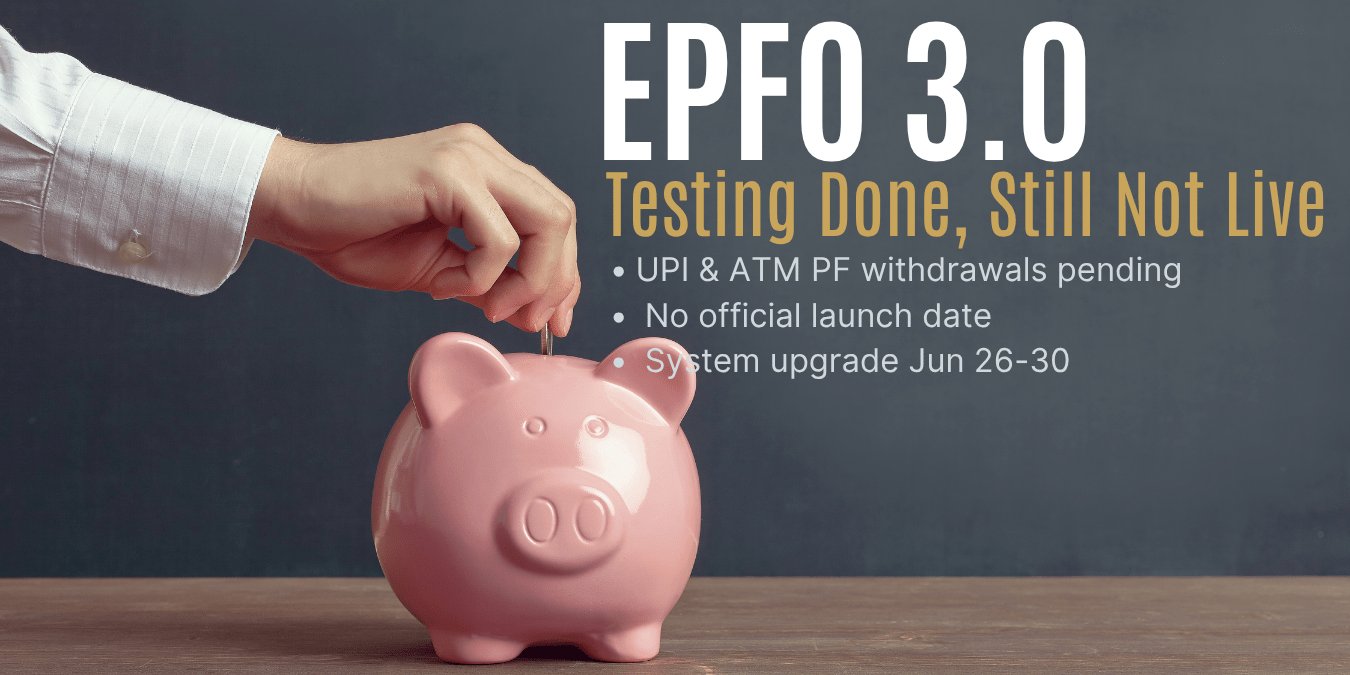
EPFO 3.0 Testing Is Done But Still Not Live — What's Stopping UPI and ATM-Based PF Withdrawals From Launching Right Now?
India’s 8 crore Employees’ Provident Fund Organisation (EPFO) subscribers have been waiting for a promise that keeps moving its finish line. The testing is officially done. The minister has confirmed it on record. The infrastructure is largely in place. Yet, as of the last week of June 2026, you still cannot withdraw your hard-earned Provident Fund savings via UPI or walk up to an ATM and pull out your PF balance. This article breaks down exactly where EPFO 3.0 stands, what technical, regulatory, and institutional walls are still holding back the launch, and what you should realistically expect as a subscriber.
The Timeline That Kept Slipping
To understand the current situation, you need to understand just how many times this launch has been announced and then quietly deferred. The story begins in December 2024, when Union Labour and Employment Minister Mansukh Mandaviya announced in the Lok Sabha that EPFO 3.0 would be ready by March 2025. When March came and went without a launch, the timeline shifted to “May–June 2025.” When that window closed, officials pointed to “ongoing technical testing” as the reason for the delay. By December 2025, the minister was again quoted on ABP News confirming the system would begin “sometime before March 2026”. As of June 2026, Moneycontrol reported that EPFO was planning a 3-day server blackout to update features, with the rollout expected by “month-end” — yet another promised window. This pattern of announcement-and-delay is not accidental; it reflects the genuine complexity of building a real-time financial system that touches retirement savings for nearly one in every ten working Indians.
What EPFO 3.0 Actually Promises
Before examining what’s holding it back, it’s worth being precise about what EPFO 3.0 is designed to deliver. The flagship feature is the ability for eligible members to withdraw their PF funds directly through UPI — the same payment rails you use for grocery payments or cab rides — with the withdrawn amount landing directly into their linked bank accounts within seconds. The second headline feature is ATM-based withdrawal, where a dedicated “EPFO Mode” would be enabled at UPI-linked ATMs, allowing members to tap or scan and access funds without going through the EPFO portal. Beyond withdrawals, EPFO 3.0 also includes the elimination of mandatory employer approval for claims, an increase in the auto-settlement limit to ₹5 lakh, integration with WhatsApp for balance checks and eligibility queries, OTP-verified account updates, and a new dedicated EPFO app linked to BHIM and other UPI applications. The current system, by contrast, processes claims in 7 to 10 days, flags withdrawals above ₹1 lakh for manual verification, and frequently rejects claims due to minor document mismatches. The gap between the two systems is enormous — and that gap is precisely why the technical challenges are proving so stubborn.
The Testing Is Confirmed — So What Does That Mean?
Minister Mandaviya stated clearly: “We have completed the testing of the facility where members can withdraw EPF through the use of the UPI payment gateway. The withdrawn amount will be directly transferred into the bank account of the member”. Livemint independently confirmed that EPFO has completed testing of the new system and that the minister has stated the rollout will be “announced soon” — but with no official launch date or month provided. Testing being “done” in the government infrastructure context rarely means what it means in, say, a fintech startup. In large-scale government deployments, “testing complete” typically refers to one or more rounds of unit testing and integration testing in a controlled environment. It does not necessarily mean stress testing under full live load, edge-case security audits, or successful end-to-end trials across all participating banks and ATM networks. Facebook’s announcement on this was even more candid, noting that “full rollout is pending as software issues are being resolved”. This distinction — between lab testing and production readiness — is the first and most critical piece of the puzzle.
The Deep Technical Roadblocks
The secretariat’s investigation into the delay revealed several specific technical hurdles that go well beyond surface-level software bugs. The most fundamental challenge is the authentication architecture mismatch. EPFO’s existing identity verification is built entirely around Aadhaar — a biometric, document-linked identity system. UPI, on the other hand, is built around mobile numbers, bank account links, and UPI IDs. Bridging these two systems requires an additional secure integration layer that must work in real-time, reliably, across hundreds of millions of potential transactions, without creating a new attack surface. This is not a small API call; it is an entirely new authentication middleware. The second major blocker is the ATM side of the equation. For PF withdrawals to work at ATMs, every participating ATM must receive specific software updates and API integrations that are completely separate from its standard debit card operating system. This means EPFO, the National Payments Corporation of India (NPCI), and individual banks all need to coordinate a synchronized rollout across their ATM networks. The “EPFO Mode” referenced in official documents has to be physically enabled machine by machine — or at minimum, bank by bank through centralized software pushes. Full implementation requires not just technical readiness but official gazette notifications, adding a regulatory layer that no amount of engineering can shortcut.
The Security Problem Nobody Is Talking About Loudly Enough
Here is the issue that deserves far more public attention than it is currently receiving. PF savings are not grocery money. The average EPF balance in India runs into lakhs of rupees, and for many salaried workers, it represents their single largest financial asset outside of real estate. Enabling ATM-based access to these funds introduces a dramatically expanded risk surface. ATM fraud — card skimming, hidden cameras capturing PINs, shoulder surfing, and cloned card attacks — is a well-documented problem in India, particularly at ATMs in semi-urban and rural areas. Banks would need to formulate a foolproof security architecture before rolling out PF access through machines that were never designed to guard retirement savings. The authentication system for ATM-based PF withdrawals is still being finalized — whether it will use biometric verification (fingerprint via Aadhaar), a standard 4-digit ATM PIN, or a more robust OTP-based challenge is not yet confirmed publicly. Given that fraudsters actively monitor announcements of new financial access systems to prepare their attack vectors, launching prematurely could be catastrophic both for subscribers and for the institutional credibility of EPFO itself. A single high-profile case of stolen retirement savings via ATM fraud could set back digital PF adoption by years. This is a legitimate reason for caution, not bureaucratic delay.
Why the Phased Rollout Creates Its Own Complications
EPFO has confirmed that the rollout will happen in phases — meaning not every subscriber will get access simultaneously. This is sensible from an infrastructure standpoint, but it creates its own set of complications. A phased rollout requires clear eligibility criteria for who gets access first. It requires a communication strategy so that eligible users know they have access while ineligible users do not spend hours trying to use a service they cannot access. It also requires backend systems that can dynamically track which users are in which phase and update access permissions in real-time without creating data inconsistencies. The UMANG app integration, which is the primary front-end for checking “eligible balance” versus “locked balance,” must be able to reflect these phase-wise permissions accurately for all 8 crore users. Any mismatch between what the app shows and what the backend permits becomes a customer service nightmare at scale. EPFO’s current grievance infrastructure is not designed to absorb the volume of complaints that would follow a botched launch of this magnitude.
The Regulatory and Legal Layer
There is also a procedural dimension to this delay that rarely gets discussed in mainstream coverage. For a government body like EPFO to formally launch a new financial service — particularly one that changes the nature of how retirement savings can be accessed — it typically needs formal amendments or notifications under the Employees’ Provident Funds and Miscellaneous Provisions Act, 1952, and potentially under related NPCI guidelines. The Central Board of Trustees (CBT) already introduced major withdrawal rule changes in October 2025, including allowing partial withdrawals of up to 75% of the accumulated corpus and reducing the minimum service period to one year for advance withdrawals. These rule changes need to be fully encoded into the EPFO digital system before UPI and ATM access goes live — because the moment a member can withdraw with a tap, the system must automatically enforce these limits without human oversight. Building that enforcement into real-time transaction processing is a non-trivial engineering and compliance task.
The Bank Infrastructure Gap
Another underappreciated bottleneck is on the banking side. Moneycontrol confirmed that EPFO plans to launch a new app linked to subscribers’ bank accounts, BHIM app, and other UPI applications. But this means every bank where EPFO subscribers hold accounts must be capable of receiving and processing these new transaction types correctly. India’s banking ecosystem ranges from fully digital-first banks with robust API stacks to cooperative banks and small finance banks with legacy core banking systems. A UPI payment initiated through EPFO’s new app must work just as seamlessly for a subscriber whose bank account is at a rural cooperative as for one banking with HDFC or ICICI. The failure mode — where the UPI debit is attempted, the money is debited from the PF account, but it fails to credit at the receiving bank — is exactly the kind of scenario that could trigger a regulatory crisis and mass subscriber distress. This is why Moneycontrol’s report on the planned 3-day server blackout is significant: EPFO is essentially planning a hard cutover of its backend systems to the new architecture, after which the old and new systems will no longer coexist. That kind of hard migration requires absolute confidence in data integrity across all linked banks.
What the ₹5 Lakh Auto-Settlement Threshold Changes
One feature of EPFO 3.0 that has received relatively little attention but will have immediate, practical impact on millions of subscribers is the increase in the auto-settlement threshold to ₹5 lakh. Under the current system, claims above ₹1 lakh trigger mandatory manual verification — a process that adds days or weeks to settlement times and is a major source of frustration. Raising this to ₹5 lakh means the vast majority of standard PF advance claims (for medical emergencies, housing, education, or unemployment) will be settled automatically without any human touch. This feature may actually go live before the UPI/ATM withdrawal features, since it requires changes only to EPFO’s internal processing logic and does not depend on external bank or ATM integration. Subscribers who have been waiting for large advance claims to be settled should monitor EPFO’s official communications closely in the coming weeks.
What Subscribers Should Do Right Now
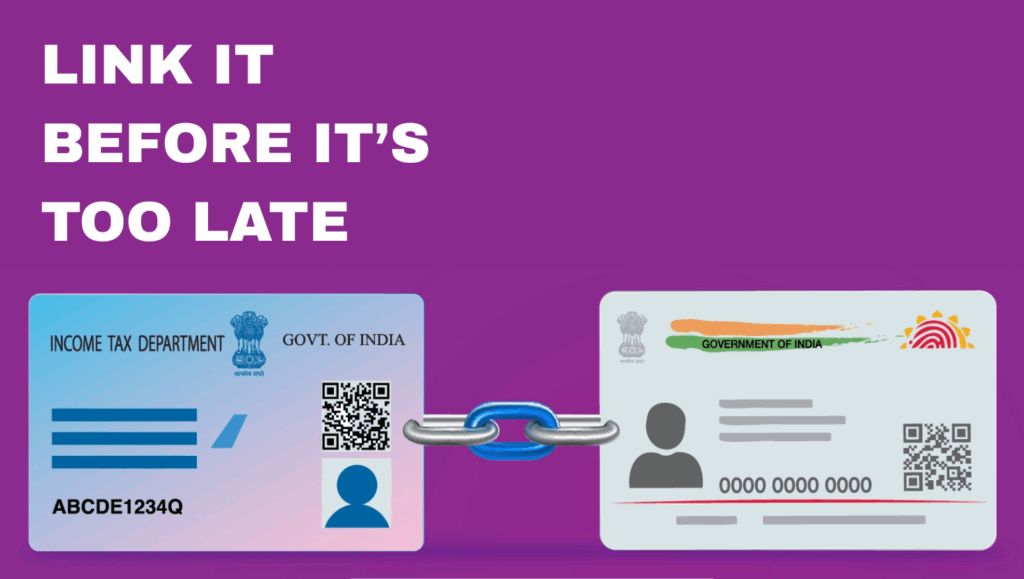
Until EPFO 3.0 goes fully live, you are not powerless. The most important thing you can do today is ensure your account is fully compliant with the requirements that will be needed for UPI/ATM access from day one. Your UAN must be active, your Aadhaar and PAN must be linked and verified to your UAN, and your name and date of birth must match exactly across your PF records and your Aadhaar Card. Even a single-letter discrepancy between your name as it appears on Aadhaar versus your EPFO records will block you from using the new system on launch day. Mismatches in name or date of birth are currently the single biggest cause of claim rejections in EPFO, and EPFO 3.0 does not eliminate this requirement — it makes it more critical, because there is no human reviewer to overlook a small discrepancy. Additionally, ensure your mobile number is linked and active on your UAN, since OTP-based authentication will be a core part of the new withdrawal flow. Check your KYC status on the EPFO unified portal today, and raise a correction request through your employer if any mismatch exists.
The Realistic Outlook
Based on the current trajectory — testing complete as of late May 2026, a 3-day server blackout planned, and the minister publicly committing to a launch “by month-end” in June — the most credible scenario is a limited initial rollout in July 2026, with broader access expanding through Q3 2026. The ATM-based withdrawal feature is likely to take longer than the UPI feature, given the hardware and bank coordination involved, and may roll out in a second wave. The WhatsApp chatbot integration and the full UMANG app experience will likely follow in subsequent updates. India Today reported in early 2025 that the system was designed for a phased rollout — and that phasing means some geographies and subscriber segments will get access months before others. Subscribers in metros with strong Aadhaar-bank linkage and accounts in major commercial banks are likely to be in the first wave. Rural subscribers with cooperative bank accounts may wait longer.
The Bigger Picture: Why This Matters Beyond Convenience
EPFO 3.0 is not simply about making it slightly more convenient to access your retirement savings. It represents a fundamental shift in how India’s largest social security institution thinks about its relationship with its members. The current EPFO model is adversarial by design: it presumes that every withdrawal request needs to be scrutinized, that employers must approve before funds can move, and that the default answer to any ambiguity is “wait.” EPFO 3.0 inverts this logic. It says that if you are verified, your KYC is clean, and you meet the eligibility criteria, the money is yours and you should be able to access it in seconds. This is a meaningful philosophical shift in a system that manages ₹24 lakh crore in accumulated savings. The delay in launching is frustrating, but it should be understood in the context of the scale and stakes involved. Getting this right on the first launch matters more than hitting a deadline. Eight crore subscribers — their medical emergencies, their home loans, their children’s education — depend on a system that works perfectly the first time it is used. That is the weight that sits on EPFO’s shoulders as it prepares to press go.
Related reading: how the 75% UPI withdrawal limit actually works, and EPFO’s 13 withdrawal rules reduced to three categories.
This article is based on verified public statements from government officials, reports from Livemint, Moneycontrol, NDTV, Economic Times, and official EPFO communications as of June 2026. It is intended for informational purposes for EPF subscribers and does not constitute financial or legal advice.