Indian stock market trends: Why the June 2026 rally turned selective, what is driving BSE Sensex and NSE Nifty 50 now, and which sectors may lead next
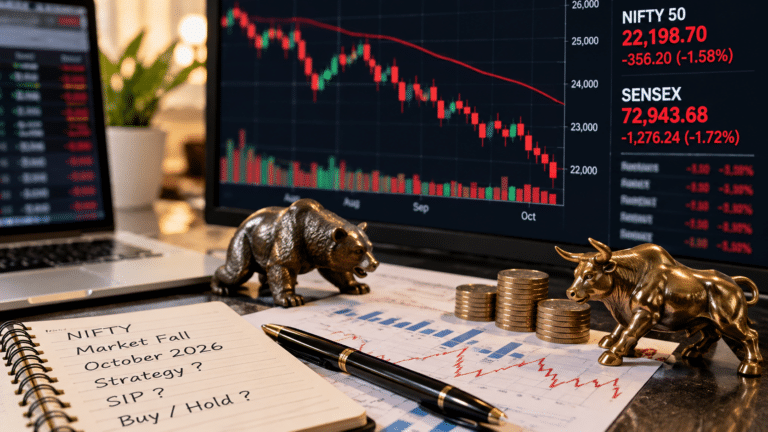
India’s stock market has entered a more selective phase in June 2026: the broad trend is still constructive, but leadership has rotated sharply between IT, pharma, banking, and consumption, making stock picking more important than index chasing. For Tuesday, 22-06-2026, the market mood was supported by a rebound in the Sensex and Nifty, with benchmarks recovering after the prior week’s weakness and closing near 77,094.07 for Sensex and 24,102.90 for Nifty 50, while pharma and IT led gains and Asian Paints, Titan, and Nestle India were among the laggards.
Indian market overview
The Indian equity market on 22 June 2026 opened with firm sentiment and stayed positive through the session, helped by falling crude prices, improving risk appetite, and renewed buying in large-cap defensives and export-oriented names. Sensex closed at 77,094.07, up 291.17 points, and Nifty 50 ended at 24,102.90, up 89.80 points, showing that buyers were willing to step back in after the short-term pullback seen late last week.economictimes.
Bank Nifty also benefited from the broader rebound in financials, although the move was more uneven than the headline indices because investors remained selective within banks and NBFCs. The more important signal is that domestic institutional support and bargain buying were enough to offset some global caution, which keeps the medium-term trend intact even though intraday volatility remains elevated.
Investor sentiment is best described as cautious optimism. Strong domestic flows and expectations of solid economic growth continue to support India’s valuation premium, but foreign participation remains sensitive to global rates, oil, and the direction of the US dollar. In simple terms, the market still wants to go higher, but only if earnings and macro data keep validating the rally.
Key economic drivers
India’s macro backdrop remains one of the strongest among major economies. Official and widely reported estimates point to FY26 real GDP growth in the 7.4% to 7.7% zone, with multiple agencies continuing to upgrade India’s growth outlook on the back of consumption resilience and public investment. That matters for equities because sustained growth supports corporate revenue expansion, bank credit demand, and investor confidence in the structural India story.
CPI inflation is still an important market variable because it influences future rate expectations and consumer demand. The RBI’s June 2026 policy kept the repo rate unchanged at 5.25% and retained a neutral stance, while also lifting its inflation assumptions and trimming growth expectations for FY27, which tells markets that the central bank is still watching price pressures carefully. For equities, stable rates are helpful, but a cautious RBI usually means rate-sensitive sectors may not get a strong tailwind unless inflation softens further.
Unemployment data and labor-market stress are still watched closely by investors because they affect rural demand, discretionary spending, and loan quality. Even without a single headline number dominating the session, the broader narrative is that India’s job market must keep absorbing new entrants if consumption is to stay healthy through FY26 and FY27. That is why the market has increasingly rewarded companies with pricing power, stable margins, and visible earnings growth.
NIFTY today in detail
Here is the market action on 22 June 2026 in point form for quick reading:
- Nifty 50 closed at 24,102.90, gaining 89.80 points or 0.37%.
- Sensex closed at 77,094.07, up 291.17 points or 0.38%.
- The rebound came after recent weakness in IT and a broader five-session volatility burst.
- Pharma and technology stocks were the main drivers of the recovery.
- Crude oil softness helped sentiment by easing inflation and margin concerns.timesofindia.
- Market breadth improved as select large caps recovered from recent pressure.
- The rally was not broad-based enough to call it a full risk-on breakout, which means traders still need to watch follow-through in the next sessions.
The main takeaway is that Nifty’s structure is improving, but it is still a stock-led market rather than a fully synchronized index rally. That usually favors investors who buy on earnings strength instead of simply chasing the benchmark.
Sensex vs Nifty June 2026
| Metric | BSE Sensex | NSE Nifty 50 |
|---|---|---|
| Close on 22-06-2026 | 77,094.07 | 24,102.90 |
| Daily change | +291.17 | +89.80 |
| Market tone | Large-cap recovery after recent volatility economictimes. | Stable rebound above the 24,100 zone |
| Key leadership | Financials, pharma, IT, energy timesofindia. | Pharma, IT, select banking names |
| Weak pockets | Consumer names, some defensives, a few rate-sensitive pockets | FMCG, paint, select consumer stocks |
| Trend read | Strong but selective uptrend | Uptrend intact, but momentum depends on earnings follow-through |
The sense from June 2026 is that Sensex and Nifty are moving in the same direction, but the internal composition differs. Sensex is more heavily influenced by heavyweight financials, energy, and IT, while Nifty’s broader basket exposes it more clearly to sector rotation and mid-trend profit booking.
Latest news highlights
The biggest immediate market-moving stories on 22 June 2026 were centered on crude oil, global peace-related headlines, foreign inflows, and sector rotation toward defensives and export names. One of the major near-term boosts came from falling oil prices, which eased pressure on India’s import bill and reduced fears of margin compression across transport, paints, chemicals, and consumer stocks.timesofindia.indiatimes+2
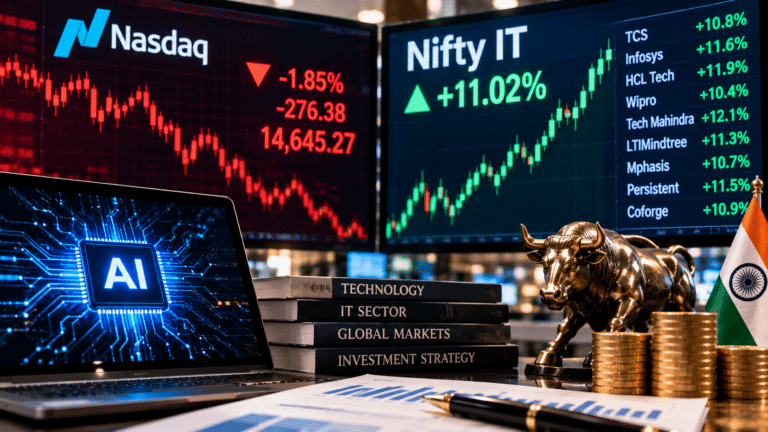
Another key factor was renewed buying in pharma and IT after those sectors had recently seen pressure. Cipla, Tech Mahindra, Dr. Reddy’s, Infosys, and Sun Pharma were among the stronger performers, signaling that investors were rotating back into earnings visibility and export sensitivity after the prior week’s drag on technology. That move helped stabilize the indices even while some consumer names remained weak.
Foreign cues also mattered. US markets were mixed on 22 June, with the S&P 500 lower, the Nasdaq weaker, and the Dow modestly positive, which usually creates a mixed opening for Indian equities rather than a clear trend impulse. When US technology is under pressure, Indian IT often feels the aftershock, but on 22 June that weakness was partly absorbed by sector-specific bargain buying in India.
Immediate impact point wise
- Falling crude oil prices supported India’s inflation outlook and helped sentiment for oil-sensitive sectors.
- Pharma and IT strength offset weakness in some consumer and defensive names.
- Foreign fund flows improved enough to help the benchmark rebound.
- Mixed US market signals capped the strength of the rally and prevented a runaway move.
- RBI’s cautious but stable policy backdrop continued to anchor rate expectations.good
Foreign indices impact
Global indices still matter because India trades within a worldwide risk framework. When the S&P 500 and Nasdaq weaken, Indian IT and high-duration growth stocks can come under pressure, while a stronger Dow can sometimes support cyclical optimism. That relationship was visible in June 2026, where a weak Nasdaq background briefly pressured Indian IT, but local buying and sector-specific catalysts prevented broader damage.
Foreign indices that influenced Indian markets on this stretch include:
- S&P 500, which closed lower on 22 June and also showed earlier volatility during the week.
- Nasdaq Composite, which weakened more sharply than the broader US market, reinforcing caution for IT-linked names.finance.
- Dow Jones Industrial Average, which was relatively resilient and helped stabilize broader global risk sentiment.
- Treasury-linked US policy expectations, which still influence global valuation multiples and FII appetite.
- Asian risk benchmarks such as Nikkei and Hang Seng, which typically shape the early Indian session via regional risk appetite, even when their exact same-day move is not the dominant narrative.
Sector performance India 2026
Sector leadership in 2026 has been much more rotational than directional. IT and pharma have often drawn support during periods of global uncertainty, while banking remains important because credit growth and liquidity conditions continue to determine whether the market can sustain a larger-cap index advance. Consumer stocks, by contrast, have been more vulnerable whenever input-cost fears, valuation fatigue, or demand concerns surface.
| Sector | June 2026 read | What is driving it |
|---|---|---|
| IT | Recovered on 22 June after recent weakness | Export earnings visibility, bargain buying, weaker Nasdaq spillover but local rotation support |
| Banking | Mixed but constructive | Credit demand, repo stability at 5.25%, and selective FII interest |
| Pharma | Strong relative performer on 22 June | Defensive flows, US market rotation, steady earnings visibility |
| Consumer goods | Softer on the day | Valuation fatigue, margin caution, and uneven demand signals |
| Metals | Under pressure in the session | Global growth sensitivity and commodity volatility |
| Energy | Supported by crude softness and index strength | Better margin expectations and lower input-cost anxiety |
The broader lesson is that 2026 is still rewarding sectors with either earnings certainty or macro insulation. That is why pharma, IT, and selected financials have repeatedly reappeared as leadership clusters when volatility rises.
Top stocks to watch
Below is a practical list of top NSE/BSE stocks to watch in 2026, chosen for a mix of earnings visibility, sector strength, balance-sheet quality, and recurring market relevance. These are not guaranteed buys, but they are the kinds of names investors have been tracking when looking for bluechip stock picks and market prediction India themes.
| Stock | Why it stands out | Valuation lens | Dividend yield | Sector trigger |
|---|---|---|---|---|
| HDFC Bank | Large private bank, strong franchise, rate-cycle resilience | Premium but justified by stability | Low to moderate | Credit growth, deposit re-pricing |
| ICICI Bank | Strong operating momentum and better earnings consistency | Reasonable relative to quality | Moderate | Loan growth, NIM stability |
| Reliance Industries | Energy, retail, telecom diversification | Market-leading large-cap | Low | Oil softness, retail scale, Jio monetization |
| Infosys | Export IT recovery candidate | Typically fair to premium | Moderate | US tech demand, deal pipeline |
| TCS | Earnings quality and cash generation | Premium quality valuation | Moderate | Rupee moves, large-deal execution |
| Sun Pharma | Defensive pharma leader | Usually commands quality multiple | Low | US generics, specialty pipeline |
| Dr. Reddy’s | Strong pharma momentum on 22 June | Often fair to premium | Low | Export-led growth, product launches |
| Cipla | One of the biggest gainers on 22 June | Sensible for a quality pharma name | Moderate | Domestic/US pharma traction |
| Bharti Airtel | Structural telecom story with operating leverage | Premium but earnings-backed | Low | ARPU growth, subscriber expansion |
| L&T | Capex and infra beneficiary | Fair to premium | Moderate | Government spending, execution visibility |
A useful way to read this list is to separate “quality compounding” stocks from “event-driven” stocks. Quality compounders tend to suit longer holding periods, while event-driven names benefit when the market rotates into their sector.
Top gainers and losers
The market’s top movers on 22 June 2026 were led by pharma and technology names, while consumer and select defensive names lagged. This is useful because the day’s winners often reveal where institutional money is rotating.upstox+2
Top 10 gainers
| Stock | Move | Quick read |
|---|---|---|
| Cipla | +4.8% to +5.0% range | Strong pharma buying and leadership on the day |
| Tech Mahindra | +1.6% to +1.9% range | IT rebound after recent pressure |
| Dr. Reddy’s | +1.9% to +2.0% range | Defensive pharma support and steady demand |
| Infosys | +1.9% to +2.0% range | Bargain buying after IT weakness |
| Sun Pharma | positive on the day | Pharma momentum and defensive positioning |
| Reliance Industries | positive on the day | Energy plus telecom stability |
| Bajaj Auto | strong gain in the top list | Auto leadership and quality franchise |
| BEL | positive gain | Defence/PSU order-book optimism |
| HDFC Life | positive gain | Insurance support and defensive buying |
| HDFC Bank | positive gain | Financial heavyweight support |
Top 10 losers
| Stock | Move | Quick read |
|---|---|---|
| Asian Paints | about -2.1% to -2.2% | Consumer-margin caution and valuation fatigue |
| Titan | about -1.0% to -1.1% | Profit booking in premium consumer names |
| Nestle India | lower on the day | Defensive consumer stock under pressure |
| Power Grid | about -1.0% | Defensive rotation weakness |
| ITC | among laggards | Consumer defensiveness not enough to attract fresh flows |
| Trent | among laggards | Valuation-sensitive consumer retail profit booking |
| SAIL | -3.39% | Metals weakness and cyclical selling |
| VBL | -3.31% | FMCG-style profit booking |
| IndusInd Bank | -3.02% | Banking-specific pressure despite broader strength |
| Waaree Energies | -2.04% | Infrastructure-linked profit booking |
These lists matter because daily gainers and losers are often a cleaner snapshot of current leadership than the index itself. On 22 June, the strongest message was that the market preferred earnings visibility and defensiveness over broad consumer beta.
Stock recommendations for today
For a 2026-style portfolio, the better approach is to combine core compounders with satellite sector plays. That reduces the risk of missing out when the market rotates from banks to pharma, or from IT to energy.tradingeconomics+2
Conservative profile
- HDFC Bank for core stability and financial quality.
- Sun Pharma for defensive earnings and sector support.
- Reliance Industries for diversified large-cap exposure.
- TCS for cash generation and long-term IT quality.
- Why this works: lower volatility, cleaner balance sheets, and better shock absorption.
- Main risk: returns can lag during sharp momentum rallies.
Balanced profile
- ICICI Bank for earnings growth plus scale.
- Infosys for IT recovery and export exposure.
- Cipla for pharma momentum and sector rotation.
- L&T for capex and infra participation.
- Bharti Airtel for telecom operating leverage.
- Why this works: decent growth with reduced single-sector dependence.
- Main risk: mixed macro conditions can create uneven monthly performance.
Aggressive profile
- Dr. Reddy’s for pharma upside.
- Tech Mahindra for tactical IT rebound.
- BEL for defence-linked momentum.
- Bajaj Auto for quality cyclical strength.
- Trent for consumer growth, but only with valuation discipline.
- Why this works: higher upside if sector rotation persists.
- Main risk: more sensitive to earnings misses and global risk-off events.
A sensible rule in 2026 is not to overexpose yourself to one theme, even if that theme is working today. India’s market is strong enough to support multiple winners, but not every sector can lead at the same time.
Final Thought
The deepest insight from Tuesday, 22-06-2026 is that Indian stock market trends remain positive, but leadership is narrowing and rotating instead of expanding broadly. That is why the best opportunities right now are in quality stocks with clear earnings visibility, supported by a macro backdrop of strong GDP growth, controlled repo rates at 5.25%, and a still-manageable inflation trajectory.
For investors, the message is simple: stay constructive on India, but be selective on sectors and disciplined on valuations. The 2026 market is not just a rally to ride; it is a market to choose carefully, because the next big move may come from sector rotation rather than index-level enthusiasm.