Is Your Savings Account Quietly Losing You Money — and How Much Should You Actually Keep in It?
Is Your Savings Account Quietly Losing You Money — and How Much Should You Actually Keep in It?
Large banks pay about 2.5% to 2.75% a year on savings balances, while retail inflation rose to 5.54% in September 2026. Here is what idle cash really costs, how much to keep within reach, and safer places that pay more for the rest.
Check your bank app and look at the balance that has sat untouched for months. Perhaps it is a bonus you have not decided what to do with, money saved for a wedding next year, or simply the habit of letting salary pile up. It feels safe. It is safe, in the sense that the number will not fall. But the number is not what matters. What matters is what it can buy, and with prices rising faster than your bank’s interest, that is shrinking every month.
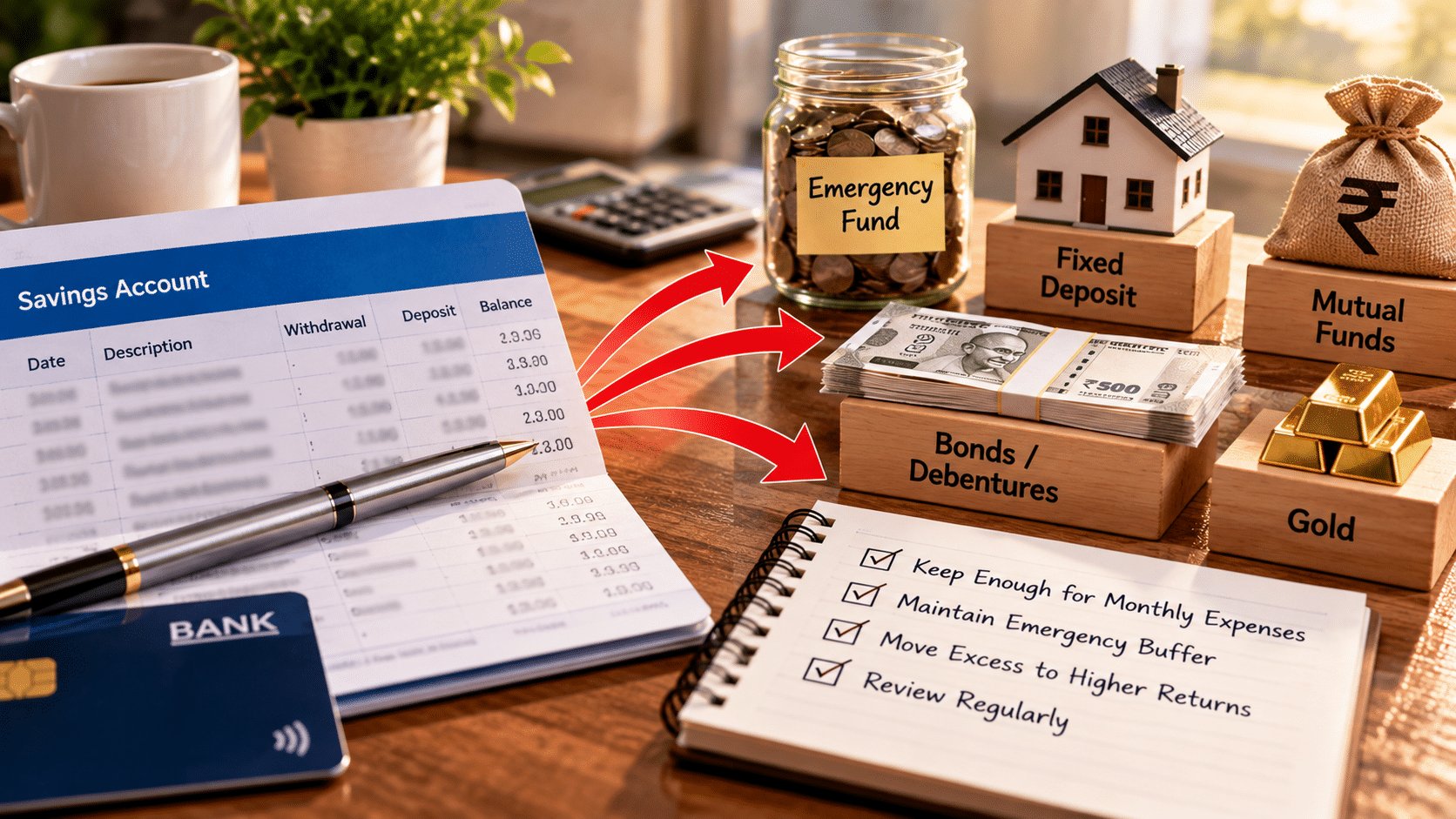
This is not an argument to empty your savings account. You need one, and you need cash in it. It is an argument to keep the right amount there and put the rest somewhere that at least keeps pace with prices, without taking risks you do not need. This guide shows how much idle money is really costing you, how much to keep, and five safe-to-moderate options for the surplus.
Quick Summary
Keep only your monthly spending plus an emergency buffer in a savings account; move the rest to options that beat inflation more closely. SBI pays 2.50% and HDFC Bank 2.75% on savings balances, according to rate changes announced in June 2025, while CPI inflation was 5.54% in September 2026. On ₹5 lakh, that gap could cost about ₹68,000 of purchasing power over five years if it persists. Sweep-in FDs, fixed deposits, liquid funds and Treasury bills offer more while remaining safe or low-risk. Bank deposits are insured up to ₹5 lakh per bank by DICGC.
What We Know
- CPI inflation rose to 5.54% in September 2026 from 4.83% in August; food inflation reached 7.74%.
- SBI cut its savings rate to 2.50% from 15 June 2025; HDFC Bank’s is 2.75%.
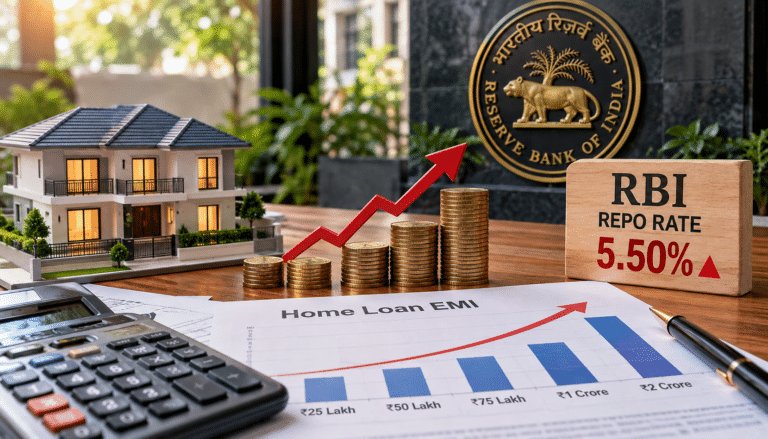
- The RBI raised the repo rate to 5.50% on 7 October 2026.
- SBI’s FD rates were unchanged as of 12 October: 6.25% for 1 to 2 years and 6.40% for 2 to 3 years.
- Bank deposits are insured by DICGC up to ₹5 lakh per depositor per bank.
What Is Still Unclear
- Whether banks will raise savings or FD rates after the October repo hike.
- How long inflation stays above the RBI’s 4% target; the RBI projects 5.2% for FY27.
- Whether the RBI raises rates again at its 2 to 4 December meeting.
- How much higher short-term market yields will move, which drives liquid fund returns.
The Slow Leak: What Inflation Does to Idle Cash
Inflation means the same rupee buys less over time. The Ministry of Statistics reported CPI inflation of 5.54% for September 2026, up from 3.48% in April, with food prices rising 7.74%. When your savings account pays 2.5% and prices rise 5.54%, your money’s real purchasing power falls by roughly 3% a year, before any tax on the interest.
The gap compounds. After five years, ₹5 lakh in a 2.5% account would buy what about ₹4.32 lakh buys today. The same money in an FD at 6.25% would hold slightly more than its value. The 7% bar represents a higher-paying account or deposit, such as those some small finance banks offer on certain balances; rates vary widely and depend on balance slabs.
The catch with high savings rates
Some small finance banks and newer banks advertise savings rates of 6% to 7%, but usually only on specific balance slabs, often above ₹1 lakh or ₹5 lakh, and rates can be cut at any time. Small finance banks are regulated and covered by DICGC like other banks, up to ₹5 lakh per depositor. They can be a useful option for part of your cash, but read the slab table and keep balances within the insured limit.
Why banks pay so little on savings
Savings deposits are among a bank’s cheapest sources of money. The RBI freed banks to set their own savings rates in 2011, and large banks have kept them low because most customers rarely move their balances. When the RBI cut rates in 2025, SBI, HDFC Bank and ICICI Bank cut savings rates within days, Outlook Money reported. When the RBI raised the repo rate in October 2026, SBI’s chairman said deposit rate action may not follow, citing ample liquidity. In other words, savings rates tend to fall quickly and rise slowly.
How Much Should Stay in Your Savings Account?
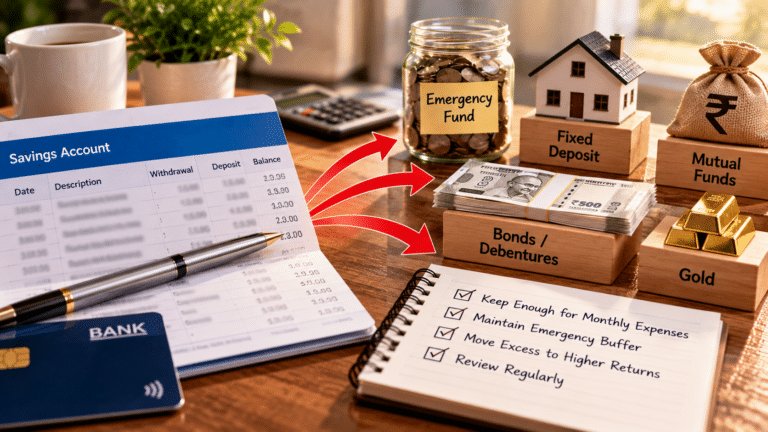
A savings account has one job: holding money you may need at short notice. That means this month’s spending, upcoming bills, and an emergency buffer you can reach instantly. A common planning guideline is an emergency fund of three to six months of essential expenses, more if your income is irregular or you support dependants. Not all of that needs to sit in the savings account itself.
- Zone 1Keep in savings1 to 2 monthsCurrent month’s spending plus upcoming bills and EMIs
- Zone 2Keep within a day2 to 4 monthsRest of the emergency fund in a sweep-in FD or liquid fund
- Zone 3Put to workEverything elseGoals 1 to 5 years away in FDs, RDs, T-bills or debt funds
Five Better Places for Money You Do Not Need This Month
1. Sweep-in or auto-sweep FD
Many banks let you link a fixed deposit to your savings account. Balances above a threshold you set move automatically into FDs, and come back when your savings balance runs short. You keep near-instant access and earn FD rates on the surplus. Terms, thresholds and how money is broken back differ by bank, so read the rules.
2. Fixed deposits and FD ladders
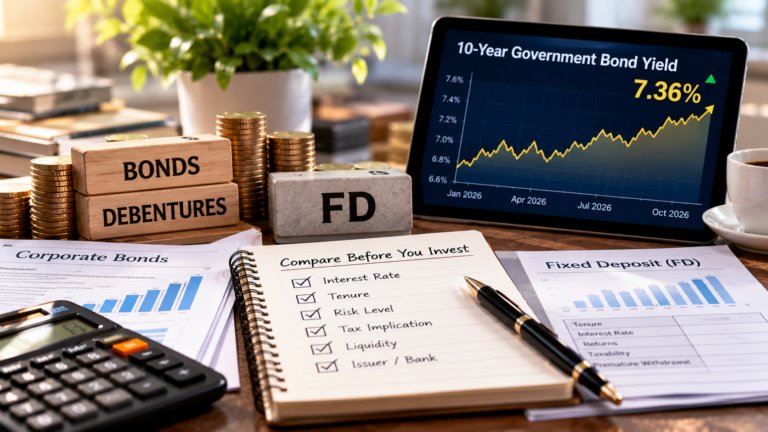
FDs pay a fixed rate for a fixed term and are covered by DICGC up to ₹5 lakh per depositor per bank. SBI’s rates for the general public were 6.25% for 1 to 2 years, 6.40% for 2 to 3 years, 6.30% for 3 to 5 years and 6.05% for 5 to 10 years as of 12 October, according to TLDR Money, with 0.50 points more for senior citizens. Splitting money across several FDs with different maturities, a ladder, keeps some money becoming available every few months.
3. Liquid and overnight mutual funds
Liquid funds invest in very short-term money market instruments and usually allow redemption the next working day. Their returns move with short-term interest rates, which are linked to the RBI’s repo rate, now 5.50%. They are not guaranteed and not insured, but credit and interest rate risk is low in well-run funds. Gains are taxed at your slab rate.
4. Treasury bills through RBI Retail Direct
Treasury bills are short-term government borrowings of 91, 182 or 364 days, sold at a discount and repaid at face value. They carry sovereign backing, can be bought online through the RBI’s Retail Direct platform, and suit money with a known date of need.
5. Recurring deposits for monthly surpluses
If you save a fixed amount each month, a recurring deposit earns FD-like rates on each instalment. It builds discipline for a goal such as a holiday or school fees.
| Option | Typical return | Access | Safety | Tax on income |
|---|---|---|---|---|
| Savings account, large bank | 2.50% to 2.75% | Instant | DICGC up to ₹5 lakh | Slab; ₹10,000 deduction in old regime |
| Sweep-in FD | FD rate on surplus | Usually same day | DICGC up to ₹5 lakh | Slab rate |
| Bank FD, 1 to 3 years | 6.25% to 6.40% at SBI | Premature exit with penalty | DICGC up to ₹5 lakh | Slab rate; TDS above threshold |
| Liquid fund | Tracks short-term rates | Next working day | Low risk, not insured | Slab rate on gains |
| Treasury bills | Market yield | At maturity, 91 to 364 days | Sovereign | Slab rate |
| Recurring deposit | Similar to FD | Premature exit with penalty | DICGC up to ₹5 lakh | Slab rate |
Rates are as reported in June 2025 for savings accounts and 12 October 2026 for SBI FDs; check current rates with your bank. DICGC cover of ₹5 lakh applies to all deposits combined per depositor per bank.
The Money Maths on ₹5 Lakh
A three-year comparison makes the gap clearer. ₹5 lakh in a 2.5% savings account earns about ₹38,400 over three years with annual compounding. In an FD at 6.40%, it earns about ₹1.02 lakh. The difference, roughly ₹64,000, is the price of leaving surplus cash idle.
A Four-Step Plan for This Week
- Day 1Add up monthly spendingRent, EMIs, bills and essentials; 3 months of bank statements help
- Day 2Set your emergency number3 to 6 months of essentials; more if income is irregular
- Day 3Turn on sweep-inSet a threshold of 1 to 2 months’ spending in savings
- Day 4 to 7Place the surplusFDs, RDs, T-bills or a liquid fund by goal date
- Jun 2025SBI cuts savings rate to 2.50%
- Apr 2026CPI inflation at 3.48%
- Aug 2026CPI rises to 4.83%
- Sep 2026CPI reaches 5.54%
- 7 Oct 2026Repo raised to 5.50%
- 2 to 4 DecNext RBI policy meeting
Watch the ₹5 lakh insurance limit
DICGC insures up to ₹5 lakh per depositor per bank, covering savings, FDs and RDs together. If you hold more than that with one bank, consider spreading deposits across banks, especially for small finance banks or co-operative banks. Large balances in a single bank are rarely necessary.
Make it automatic
The simplest way to stop money piling up is to move it on payday. Set a standing instruction or recurring deposit for the day after your salary arrives, so the surplus leaves your savings account before you spend it. Pair it with a sweep-in threshold so any extra that builds up moves on its own. Review once a quarter and adjust as your expenses change.
- Keep 1 to 2 months of spending in savings
- Hold 3 to 6 months of expenses as an emergency fund
- Use a sweep-in FD for the emergency surplus
- Ladder FDs so one matures every 6 to 12 months
- Stay within ₹5 lakh per bank for full DICGC cover
- Match each option to when you need the money
- Review your savings balance every 3 months
- Avoid locking emergency money for over 1 year
Frequently Asked Questions
How much money should I keep in my savings account?
Enough for one to two months of spending plus upcoming bills. Keep the rest of a three to six month emergency fund in a sweep-in FD or liquid fund, and invest money for longer goals elsewhere.
What is the SBI savings account interest rate?
SBI pays 2.50% a year on all savings balances, effective 15 June 2025. Check SBI’s website for any later change.
Is it bad to keep too much money in a savings account?
It is safe but costly. With inflation at 5.54% and savings rates near 2.5%, idle money loses about 3% of its purchasing power a year.
What is a sweep-in FD?
A facility that automatically moves money above a set limit from your savings account into FDs, and back when needed, so the surplus earns FD interest while staying accessible.
Is money in a savings account insured?
Yes. DICGC insures deposits up to ₹5 lakh per depositor per bank, including savings, FD and RD balances combined.
Are liquid funds better than a savings account?
They usually earn more and can be redeemed by the next working day, but returns are not guaranteed and they are not insured. They suit emergency surplus rather than daily spending money.
How is savings account interest taxed?
It is taxable at your slab rate. Under the old regime, up to ₹10,000 a year is deductible, and senior citizens can claim up to ₹50,000 on deposit interest.
Will banks raise savings rates after the RBI hike?
Not necessarily. Savings rates are set by each bank, and SBI said on 8 October that deposit rate action may not follow, given sufficient liquidity.
The Short Version
Large banks pay 2.5% to 2.75% on savings, while inflation was 5.54% in September 2026, so idle cash loses about 3% of its value a year. Keep one to two months of spending in savings and the rest of a three to six month emergency fund in a sweep-in FD or liquid fund. Put money for later goals in FDs, RDs, T-bills or debt funds matched to when you need it. Stay within ₹5 lakh per bank for DICGC cover, and review your balance every few months.