Why Is the Sensex at a Three-Month Low When India's GDP Is Growing 7.8%?
“Markets don’t wait for clarity — they move on the edge of uncertainty.” Welcome to your most comprehensive Indian stock market briefing for Monday, April 27, 2026 — where we decode every signal, stat, and sector so you can invest with conviction, not confusion.
🔴 Indian Market Overview — April 27, 2026
📊 Where Do Sensex, Nifty 50, and Bank Nifty Stand Today?
India’s benchmark equity indices are navigating a complex cocktail of domestic resilience and global headwinds as markets open on Monday morning. After last week’s rollercoaster — where geopolitical noise from India-Pakistan tensions, a surge in global crude oil prices, and mixed Q4 corporate earnings all converged — the Dalal Street bulls are being tested. Yet, domestic fundamentals remain structurally solid, and discerning investors see opportunity in the churn.
Key Index Snapshot (Pre-Market / Last Close, April 25, 2026):
- 🟠 Nifty 50: 23,897 (down 1.14% on previous session)
- 🔵 BSE Sensex: 76,664 (down ~1.29%)
- 🟢 Nifty Bank: 56,089 (down ~0.38%)
- 🟡 GIFT Nifty (Futures): 23,954 (trading -0.75% vs previous Nifty close)
Expert Commentary:
Analysts at BusinessToday highlight that for Nifty 50, immediate support lies around the 23,500 level, while a key resistance wall exists between 24,200 and 24,500. The market appears to be forming a base in the 23,600–23,400 zone. Both technical analysts and fundamentalists agree that the upcoming US Federal Reserve policy decision is the single biggest global catalyst to watch this week.
Investor sentiment on Dalal Street has shifted from aggressive accumulation to cautious optimism — a phase where quality large-caps tend to outperform. Domestic mutual fund inflows continue to provide a buffer; ₹2 lakh crore in domestic dry powder remains available for deployment, making India’s bulls structurally protected from the kind of free-fall that purely FII-driven markets witness.
💹 Key Economic Drivers — The Macro Story Behind the Market
🇮🇳 India GDP Growth: Still the World’s Fastest Engine
India’s economy continues to power ahead, cementing its status as the world’s fastest-growing major economy for the fourth consecutive year. India’s GDP growth for FY2025-26 (FY26) is officially estimated at 7.4%, driven by the twin engines of consumption and private investment, as highlighted in the Economic Survey 2025-26 tabled by Finance Minister Nirmala Sitharaman. In Q3 FY26 (October–December 2025), India recorded an impressive 7.8% GDP growth, retaining its pole position globally.
For FY27 (2026-27), the RBI has projected GDP growth at 6.9% under the new base year of 2022-23. Goldman Sachs, Bank of America, and HDFC Securities all remain bullish on India’s corporate earnings cycle, noting that the “year-long earnings downgrade cycle” is firmly over.
- Key GDP drivers: Strong final consumption expenditure, revival in manufacturing, buoyant services sector
- Infrastructure push: Centre’s capex at record highs, with state capex also picking up
- World Bank rank: India is now the 4th largest economy globally by GDP
📉 CPI Inflation — Under Control, But Inching Up
India’s retail inflation (CPI) stood at 3.40% in March 2026, slightly above February’s 3.21% but still well within the RBI’s comfort zone and below its 4% medium-term target. This is the highest CPI reading in the past 12 months, driven partly by food price pressures, but it remains manageable.
- Rural inflation: 3.63% | Urban inflation: 3.11%
- FY27 CPI forecast (RBI): 4.6% — slightly elevated due to food and energy pass-through
- Core (non-food, non-fuel) CPI forecast for FY27: 4.4%
The contained inflation environment gives the RBI valuable policy flexibility and supports consumer spending — a crucial tailwind for FMCG, retail, and discretionary stocks.
🏦 RBI Repo Rate — Neutral Stance Maintained
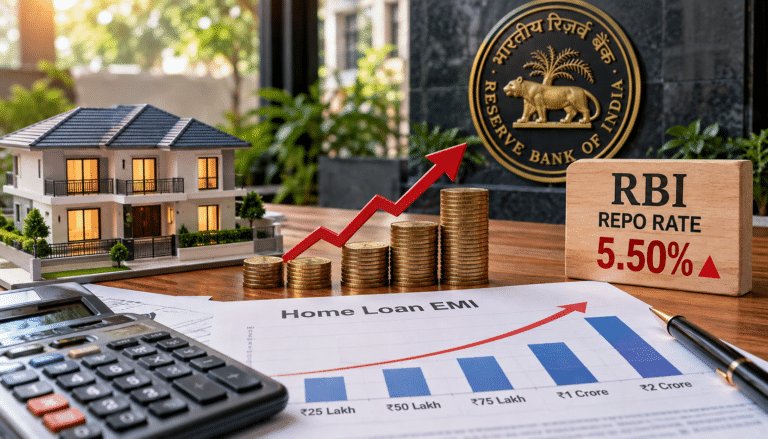
The Reserve Bank of India’s Monetary Policy Committee (MPC), in its April 8, 2026 meeting (first MPC of FY27), unanimously decided to hold the repo rate at 5.25%.
| Parameter | April 2026 Decision |
|---|---|
| Repo Rate | 5.25% (Unchanged) |
| Policy Stance | Neutral (Retained) |
| SDF Rate | 5.00% (Unchanged) |
| MSF / Bank Rate | 5.50% (Unchanged) |
| MPC Vote | Unanimous |
| FY27 CPI Forecast | 4.6% |
| FY27 GDP Forecast | 6.9% |
The neutral stance signals that the RBI is neither looking to tighten nor aggressively ease — a Goldilocks scenario for equity markets. With inflation well-controlled and growth momentum intact, rate cuts are possible in the second half of FY27 if global conditions cooperate, which would be a significant catalyst for banking and NBFC stocks.
📌 Nifty 50 — Detailed Analysis for April 27, 2026
Here is a crisp, point-by-point breakdown of where Nifty stands and what it means for traders and investors:
- Current Level: 23,897 (last close April 25, 2026) — down from the January 2, 2026 record close of 26,328.55
- 52-Week Range: The Nifty hit an all-time high of 26,340 in early January 2026
- YTD Performance: The index has corrected approximately 9–10% from its January peak, creating a potential re-entry opportunity for long-term investors
- Immediate Support Zone: 23,500–23,400 (as identified by multiple technical analysts)
- Key Resistance Zone: 24,200–24,500 (the supply zone that needs to be breached for a sustained uptrend)
- PE Valuation: Nifty is now trading at roughly 21x forward earnings, near the upper end of its historical valuation range but down from stretched levels
- FII Activity: Foreign Institutional Investors have been net sellers through much of Q1 2026, but domestic institutional buying (SIPs, mutual funds) is absorbing the selling pressure
- Market Breadth: Despite benchmark index weakness, broader market recovery is underway with select mid and small caps bouncing
- Key Trigger to Watch (April 27): The US Fed’s upcoming policy commentary, India-Pakistan geopolitical situation, and oil prices are the three key variables that will determine Nifty’s direction this week
- Goldman Sachs Target: The global investment bank has a year-end target of 29,000 for Nifty 50, implying ~21% upside from current levels
📊 BSE Sensex vs Nifty 50 — April 2026 Trends at a Glance
| Parameter | BSE Sensex | NSE Nifty 50 |
|---|---|---|
| Last Close (Apr 25, 2026) | 76,664 | 23,897 |
| Jan 2, 2026 Record High | 85,762 | 26,328 |
| YTD Change (Approx.) | -10.6% | -9.2% |
| Primary Constituents | Top 30 companies by market cap | Top 50 companies across sectors |
| Sectoral Weighting | Heavily Financial + IT | More diversified with PSU + Private |
| FII Influence | High | High |
| Support Level (Apr 27) | 75,000 zone | 23,500 zone |
| Resistance Level | 78,000–79,000 zone | 24,200–24,500 zone |
| Goldman Sachs Year-End Target | 98,000 | 29,000 |
| P/E Range (Current) | 22–23x | 21x |
| Dividend Yield | 1.2% | 1.3% |
| Investor Sentiment | Cautiously optimistic | Cautiously optimistic |
Both indices experienced a sharp correction from their January 2026 record highs, with the Sensex falling to as low as 71,948 in late March 2026 before staging a partial recovery. The correction has brought valuations to more attractive levels, with institutional analysts viewing the 23,400–23,600 Nifty zone as a historical buying opportunity.
📰 Latest News Highlights — What’s Moving Markets Today?
🔥 Breaking Market News — April 27, 2026
1. India-Pakistan Geopolitical Tensions
The Pahalgam terror attack in Kashmir — which killed 26 civilians — triggered one of the sharpest geopolitical escalations between India and Pakistan in years. India has suspended visas, recalled diplomatic staff, and retaliated to cross-LoC firing by Pakistani troops.
- Market Impact: Sensex fell over 900 points in post-attack sessions. Defence stocks like BEL, HAL, and Paras Defence surged as investors bet on increased defence spending
- Ongoing Concern: Analysts warn that persistent India-Pakistan tensions will continue adding market uncertainty and volatility in the near term
- The Pakistan KSE-100 index crashed 2,485 points on Thursday as Indian retaliatory measures took effect
2. Crude Oil Price Surge
Rising global crude oil prices have added inflationary pressure and are being closely watched by RBI policymakers. India imports over 85% of its crude oil needs, making every $5 per barrel increase a significant fiscal and monetary consideration.
- Immediate Impact: Oil marketing companies (OMCs) like HPCL and BPCL face margin compression; Aviation stocks like IndiGo and Air India also see pressure
- Rising crude can also delay potential future RBI rate cuts if it stokes domestic inflation above the 4.6% FY27 forecast
3. US Federal Reserve — Policy Decision Week
The US Fed’s upcoming meeting and its accompanying commentary on the interest rate trajectory is the biggest global trigger for Indian markets this week.
- If the Fed signals a pause or a rate cut, FII flows into emerging markets including India could revive strongly
- A hawkish Fed commentary would strengthen the US dollar further, potentially pressuring the Indian Rupee and driving more FII outflows from Indian equities
4. India Q4 FY26 Earnings Season
India’s Q4 FY26 corporate earnings season is underway. Early results from banking and IT majors are setting the tone for the broader market.
- Winners: ICICI Bank, HDFC Bank, and Axis Bank posted strong NIM expansion and improved asset quality
- Mixed: IT companies like TCS and Infosys delivered cautious Q4 guidance citing global macro uncertainty
- Disappointments: Select NBFC and auto ancillary stocks have guided lower for FY27
🌍 Foreign Indices That Influenced Indian Markets
India’s market does not move in isolation. Here’s how key global indices have been shaping domestic sentiment:
🏆 Top 10 Stocks to Buy on NSE/BSE for 2026
These bluechip and growth stock picks are based on valuation attractiveness, sector tailwinds, earnings visibility, and analyst consensus as of April 2026:
1. 🏦 HDFC Bank (NSE: HDFCBANK)
Rationale: India’s most trusted private sector bank with GNPA at just 1.24% and NNPA at 0.33%. Strong retail and corporate mix, digital banking leadership, and net interest margin expansion make it a core large-cap holding.
- P/E: 18x forward | Dividend Yield: 1.1% | Sector Trigger: Rate transmission, credit growth revival
2. 💰 ICICI Bank (NSE: ICICIBANK)
Rationale: ROE of 19.45% with diversified revenue streams across retail, corporate, and investment banking. Consistently growing profitability with best-in-class digital platform.
- P/E: 17x forward | Dividend Yield: 0.8% | Sector Trigger: Digital credit, retail loan growth
3. 🏗️ Larsen & Toubro (NSE: LT)
Rationale: India’s infrastructure supercycle is squarely in L&T’s favour. Record order books, strong execution on government capital expenditure, and international project wins make this a compounding machine.
- P/E: 28x | Sector Trigger: Govt capex, infrastructure spending
4. 📱 Bharti Airtel (NSE: BHARTIARTL)
Rationale: India’s telecom growth story remains intact with 5G monetisation, enterprise broadband, and Africa business adding diversified revenue. 52-week range: ₹1,577–₹2,174.
- P/E: ~53x TTM (growth premium justified) | Sector Trigger: ARPU improvement, 5G data monetisation
5. 💊 Sun Pharmaceutical (NSE: SUNPHARMA)
Rationale: India’s largest pharma company with a strong specialty portfolio in the US market. Specialty drugs growth + stable domestic formulations = consistent earnings compounder.
- P/E: 32x | Dividend Yield: 0.7% | Sector Trigger: US specialty ramp-up, branded generics
6. ⚡ Bharat Electronics Ltd (NSE: BEL)
Rationale: With India-Pakistan tensions and India’s ₹6+ lakh crore defence budget, BEL is perfectly positioned. Strong order pipeline, domestic defence indigenisation (Atmanirbhar Bharat), and consistent earnings growth.
7. 🚗 Bajaj Auto (NSE: BAJAJ-AUTO)
Rationale: India’s two-wheeler and three-wheeler market is in a strong growth phase. EV transition is being managed strategically. Bajaj Auto’s Chetak EV and export growth to Africa and LatAm add to the story.
8. 💹 State Bank of India (NSE: SBIN)
Rationale: India’s largest bank with ROE of 18.66% and a massive deposit base. YONO platform drives digital traction, and rural India’s growing financial inclusion is SBI’s biggest long-term moat.
- P/E: 10x (PSU discount) | Dividend Yield: 2.2% | Sector Trigger: Government scheme lending, agricultural credit
9. 🏭 Reliance Industries (NSE: RELIANCE)
Rationale: Jio’s 5G expansion, retail growth through JioMart, and the green energy pivot (40 GW by 2030 target) give Reliance multiple growth engines beyond its traditional oil-to-chemicals business.
- P/E: 24x | Sector Trigger: Jio monetisation, green energy capex, retail expansion
10. 🖥️ Infosys (NSE: INFY)
Rationale: Despite IT sector headwinds, Infosys remains a global IT services leader with GenAI-driven deal wins providing a medium-term earnings kicker. Attractive valuations and robust dividend history make it a portfolio anchor.
- P/E: 23x | Dividend Yield: 2.5%+ | Sector Trigger: GenAI adoption, cloud migration mega-deals
📈 Top 10 Gainers & Top 10 Losers — April 25, 2026 (Last Trading Session)
🟢 Top 10 Gainers (Nifty 50 Universe)
| Rank | Stock | Price (₹) | Change (%) | Why It Gained |
|---|---|---|---|---|
| 1 | Trent | 4,280 | +0.73% | Lifestyle retail demand; strong Q4 preview |
| 2 | Bajaj Finance | 921.70 | +0.42% | NIM improvement; consumer lending revival |
| 3 | State Bank of India | 1,098 | +0.36% | PSU bank re-rating; govt support narrative |
| 4 | HDFC Bank | 785.50 | +0.13% | Defensive buy; asset quality confidence |
| 5 | Kotak Mahindra Bank | 370.50 | +0.03% | Private banking sector resilience |
| 6 | BEL | 444.25 | Recovers from dip | Defence spending theme; geopolitical tailwind |
| 7 | Adani Ports | 1,434 | Near 52W highs | Port infrastructure, cargo volume growth |
| 8 | HAL | — | +Rising | Defence indigenisation; Atmanirbhar Bharat play |
| 9 | Bajaj Auto | 9,640 | Stable | EV traction + rural demand bounce |
| 10 | Sun Pharma | — | Steady | Specialty drug growth; US market strength |
🔴 Top 10 Losers (Nifty 50 Universe)
🏭 Sector Performance Overview — India 2026
Which Sector Is on Fire — and Which Is Struggling?
India’s sectoral landscape in 2026 is a tale of two worlds: policy-driven sectors like defence, infrastructure, and financial services are blazing higher, while consumer staples and IT face near-term turbulence. Here is the comprehensive sector scorecard:
Key Takeaway: The “Bounce Back Basket” identified by HDFC Securities includes Power, EMS (Electronics Manufacturing), Banking, and Manufacturing Exports — all supercharged by India’s currency depreciation tailwind and domestic-demand resilience.
🎯 Stock Recommendations for Today — April 27, 2026
Based on current market conditions, technical setups, and macro alignment, here are actionable stock recommendations for different risk profiles:
📌 For Conservative Investors (Low Risk):
- HDFC Bank — Buy on dips near ₹775–780; target ₹840–860 over 3–6 months. Strong balance sheet, predictable earnings, and low NPAs make it the safest large-cap banking bet
- SBI — Accumulate around ₹1,080–1,090; government backing, strong ROE of 18.66%, and 2%+ dividend yield offer an attractive risk-reward
- Infosys — Buy at current levels for dividend income + AI-driven deal recovery; 2.5%+ dividend yield provides a floor
📌 For Moderate Risk Investors:
- Bajaj Auto — Strong rural demand + EV scaling = a two-year growth story. Entry at ₹9,400–9,500 for a target of ₹11,000+
- BEL (Bharat Electronics) — Every India-Pakistan escalation is a fundamental trigger for defence spending. Accumulate on dips near ₹430–440
- Axis Bank — ROE of 16%+ and NNPA of 0.34% make it an undervalued private bank; buy near ₹1,320–1,340
📌 For Aggressive / High-Risk Investors:
- Trent (Zara/Westside parent) — Premium retail penetration in Tier 2 India is accelerating; momentum stock with strong earnings delivery
- Adani Ports — Infrastructure theme; rising cargo volumes and new terminal wins; pullbacks to ₹1,380–1,400 are buying opportunities
- Sun Pharma — US specialty ramp-up could significantly re-rate the stock; buy on any pharma-sector dip
⚠️ Stocks to Avoid / Watch Carefully Today:
- Hindustan Unilever — Volume growth remains sluggish; pricing power limited in 2026
- Shriram Finance — Reported a 34% QoQ fall in net profit; further downside risk until earnings stabilise
- Pure IT plays — Global macro uncertainty means IT stock selection needs to be highly specific to AI-enabled companies
🌈 Diversified Portfolio Suggestion — All Risk Appetites
Here is a suggested model portfolio balancing safety, growth, and aggressive bets for April 2026:
| Stock | Allocation | Risk Profile | Rationale |
|---|---|---|---|
| HDFC Bank | 20% | Conservative | Banking anchor, low NPA, compounding machine |
| SBI | 10% | Conservative | PSU giant, dividend income, low P/E |
| Infosys | 10% | Conservative | IT anchor, dividend yield, AI optionality |
| Bajaj Auto | 10% | Moderate | EV + exports + rural demand trifecta |
| BEL | 10% | Moderate | Defence super-cycle, Atmanirbhar play |
| Axis Bank | 10% | Moderate | Undervalued private bank with strong ROE |
| Reliance Industries | 10% | Moderate | Multi-engine growth, green energy + Jio |
| Trent | 7.5% | Aggressive | Premium retail momentum |
| Adani Ports | 7.5% | Aggressive | Infrastructure compounding, port volumes |
| Sun Pharma | 5% | Aggressive | US specialty + domestic pharma leadership |
Portfolio Rationale:
- 60% large-cap anchor (banking, IT, diversified) provides stability against macro shocks
- 25% cyclical growth plays (defence, auto, infrastructure) capitalise on India’s domestic investment cycle
- 15% momentum/aggressive picks for alpha generation above benchmark returns
💡 Final Thought — The India Story Is Intact. Don’t Let the Noise Distract You.
Here’s the honest truth about where Indian markets stand in April 2026: the fundamentals have never been stronger, but the path to higher levels will remain volatile. The Nifty 50 has corrected nearly 10% from its January 2026 all-time high, the geopolitical situation with Pakistan demands vigilance, crude oil is ticking higher, and the global macro environment is in flux ahead of the US Fed’s decision.
And yet — India’s GDP is growing at 7.4–7.8%, the fastest among major economies. CPI inflation is a low 3.40%, the RBI is in a neutral-to-accommodative zone with a repo rate of 5.25%, and ₹2 lakh crore in domestic institutional money is ready to deploy. Goldman Sachs has a 29,000 Nifty target for end-2026, implying more than 21% upside from current levels.
The message for Indian investors is clear: use the volatility, don’t fear it. Add quality large-caps in the 23,400–23,600 Nifty zone. Stay overweight on Banking, Defence, Infrastructure, and selective Pharma. Keep cash ready for sharp dips triggered by global events — those are often the best entry windows.
India’s bull market is not over. It is pausing to reload.
If you found this analysis useful, share it with a fellow investor, drop your thoughts in the comments, and bookmark this page for your daily market briefing. The markets open in a few hours — position yourself smartly. 🚀
⚠️ Disclaimer: This blog post is purely for educational and informational purposes. It does not constitute SEBI-registered investment advice. Always consult a certified financial advisor before making investment decisions. Past performance is not indicative of future returns.