Fed Rate-Hike Odds Nearly Doubled in Five Days — and One Sentence From Jackson Hole Did Most of It
Monetary Policy · Federal Reserve · Updated 2 September 2026
Fed Rate-Hike Odds Nearly Doubled in Five Days — and One Sentence From Jackson Hole Did Most of It
CME FedWatch put the chance of a quarter-point increase on 16 September at roughly 65 to 68 percent on Tuesday, against about 36 percent before Chair Kevin Warsh spoke on 28 August. Three data releases stand between here and the decision.
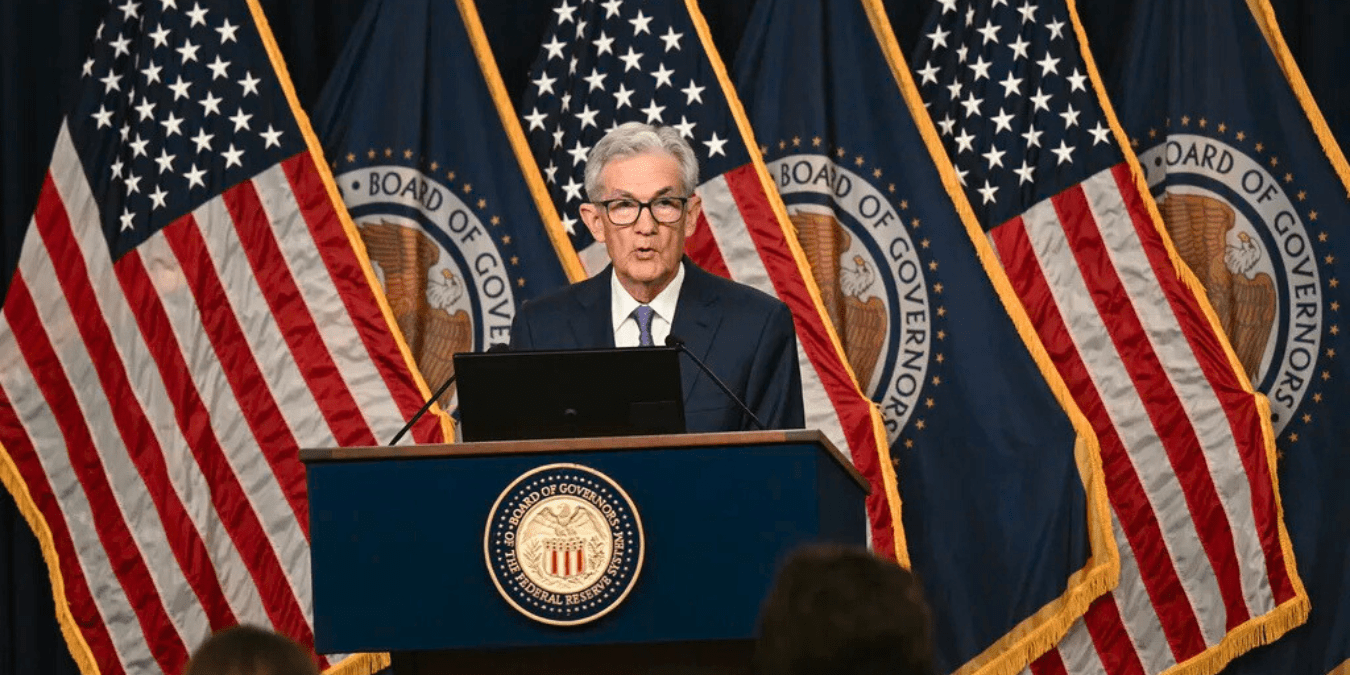
A fortnight ago the interest-rate market had made up its mind. Weak US data through the middle of August had pushed the implied probability of a September rate increase down to 33 percent, and the conversation had moved on to whether the Federal Reserve would still be on hold in December. Then the new Chair spoke for roughly forty minutes in Wyoming, and the entire front end of the curve was rebuilt around a different assumption.
Quick Summary
Market-implied odds of a 25 basis point hike on 16 September stood at approximately 65 to 68 percent on Tuesday, according to CME FedWatch, up from roughly 36 percent before Fed Chair Kevin Warsh’s Jackson Hole address on 28 August and about 40 percent a week earlier. The federal funds target range has been 3.50 to 3.75 percent since the December 2025 cut, so a hike would lift it to 3.75 to 4.00 percent. The trigger was Warsh’s statement that better summer inflation readings did not show underlying trends had meaningfully improved. Prediction markets are notably less convinced than futures: Kalshi and Polymarket sat near 48 to 49 percent immediately after the speech.
The repricing, measured in percentage points rather than adjectives
Rate expectations move constantly, and most of that movement is noise. This one is not. A shift of more than 30 percentage points in the implied probability of a policy change, inside a single week, with no new inflation print and no new employment report, is the market admitting it had misread the reaction function of a Chair who has been in the job since June.
68 percent
32 percent
Two things are worth noticing in that sequence. The first is that the move began before the speech: futures had already drifted from 33 percent in mid-August back to about 40 percent by the 25th, on nothing more than firmer energy prices and hawkish commentary from regional presidents. Jackson Hole accelerated an existing trend rather than creating one. The second is the gap between venues. Fed funds futures put the hike near 68 percent while Kalshi and Polymarket sat around 48 and 49 percent immediately after the address, and a spread that wide between two liquid markets pricing the same binary event is unusual.
There is no settled explanation for it. Futures pricing is derived from contracts whose primary purpose is hedging rather than prediction, which can distort the implied probability when hedging demand is one-sided, and the standard extraction method assumes the size of the move rather than observing it. Prediction markets price the outcome directly but are thinner. When they disagree by twenty points, the honest reading is that the market as a whole does not know, and that the headline probability you happen to be quoted depends on which instrument the writer chose.
What we know, from named and checkable sources
Rate speculation attracts more commentary than fact. These items are on the record and can be verified against primary material.
What is still unclear, and why the last 32 percent refuses to move
A two-thirds probability is not a decision. The gap between futures pricing and prediction-market pricing is unusually wide right now, and that gap is where the genuine uncertainty lives.
The sentence that moved a trillion-dollar market
Warsh has been Chair since June 2026, following the end of Jerome Powell’s tenure in May, and markets had not yet fully calibrated how he responds to incoming data. Jackson Hole was the first extended statement of his framework, and it landed harder than expected. Deutsche Bank described the address as surprising in its specificity and decidedly hawkish in its lean.
The operative passage was narrow and deliberate. Warsh acknowledged that the summer’s inflation readings had been better than expected, then said they did not tell him that underlying trends had meaningfully improved, and added that the committee must be confident inflation is moving to target clearly and at sufficient speed. Otherwise, in his phrase, there is work to do. Short-term yields rose immediately, with the 2-year Treasury reaching its highest level since late July.
Why the six-month number does the heavy lifting
A twelve-month inflation rate is a slow-moving average that still contains readings from last autumn. A six-month annualised rate strips those out and shows what prices have actually been doing lately. When the shorter window prints higher than the longer one, as 4.1 percent does against 3.7 percent, the disinflation trend has stalled or reversed. That is a technical point rather than a rhetorical one, and it is why a Chair can describe better-than-expected monthly readings and still conclude that nothing fundamental has improved.
Sitting underneath all of it is energy. Brent crude traded above $95 this week on the renewed US-Iran escalation, and US diesel crack spreads have been printing at record levels above $100 a barrel against a normal range of $15 to $25. Central banks are conventionally taught to look through supply shocks, on the reasoning that a one-off price rise does not become inflation unless expectations shift. The difficulty in 2026 is duration: a shock that has run since late February and repeatedly re-intensified stops looking like a one-off and starts looking like a permanently higher cost base, which is precisely the point at which looking through it becomes indefensible.
That is the argument J.P. Morgan Wealth Management made when it abandoned its on-hold call in early August, citing supply chains that had been slower to normalise than expected alongside investor doubt about the Fed’s willingness to keep inflation contained after the July hold. Note the second half of that sentence. It is a credibility argument, not a data argument, and credibility arguments are the ones that push a new Chair toward action.
A hike was already closer than most people noticed
Framing this as a surprise overstates it. The committee had been drifting hawkish for two months, and three separate pieces of evidence were sitting in plain sight before Jackson Hole.
Five days, three releases, one decision
Because the Fed has refused to name a threshold, each of the remaining data points is being read as a verdict on the hike rather than an input to it. This is the calendar that decides whether 68 percent becomes 95 percent or collapses back toward 40.
| Date | Release | What a hawkish print looks like | Likely odds effect | Market most exposed |
|---|---|---|---|---|
| 1 September | JOLTS job openings and ISM Manufacturing PMI | Openings holding up, ISM above 50 | Confirms or trims the 68 percent | 2-year Treasury |
| 4 September | August nonfarm payrolls and unemployment rate | Payroll growth firm, unemployment steady | The largest single swing factor | Front-end futures, dollar |
| Around 10 September | August consumer price index | Core month-on-month at or above 0.3 percent | Decisive if payrolls are ambiguous | Breakevens, gold |
| 16 September | FOMC decision, statement and projections | Hike plus an unchanged or higher dot plot | Resolves September, opens December | Everything |
| 8-9 December | Final FOMC meeting of 2026 | A second consecutive increase | Currently priced near 50 percent | Mortgages, credit |
The trap in reading a single print
Most economists pay little attention to month-to-month movement in any one data series, because the noise swamps the signal over short horizons. Market participants read them closely anyway, because their time horizon is days. That mismatch is why odds can swing 20 points on a report the committee itself may weight lightly. If you are making a financial decision this fortnight, the useful discipline is to act on the range of plausible outcomes, not on the number that happens to print on Friday morning.
What the bond market has already done, before any decision
The important practical point is that borrowing costs have moved regardless of what the committee does on 16 September. Markets tighten in anticipation, and much of the effect of a hike is delivered before the vote.
| Instrument | Latest level | Context | Date |
|---|---|---|---|
| Federal funds target range | 3.50 to 3.75% | Unchanged since the December 2025 cut | 2 Sept 2026 |
| 10-year Treasury yield | About 4.79% | Highest since January 2025 | 1 Sept 2026 |
| 30-year Treasury yield | About 5.28% | 55 days above 5% this year, the most since 2006 | 1 Sept 2026 |
| 2-year Treasury yield | Multi-week high | Highest since late July, moved on the speech | 28 Aug 2026 |
| 30-year fixed mortgage | 6.66% | Near two-decade highs | 27 Aug 2026, Freddie Mac |
| Eurozone headline inflation | 3.3% | Multi-year high, up from 2.9% in July | August 2026 |
One counterintuitive possibility deserves attention. Immediately after the Warsh speech, the curve bull-flattened, meaning long yields fell relative to short ones. If that pattern holds through the decision, a hike could leave 30-year mortgage pricing broadly unchanged or even slightly cheaper, because the bond market would read the move as evidence that inflation will be contained over the life of the loan. The opposite case is equally live: a strong payrolls print that implies the September hike is merely the first of several could push the 10-year above 4.9 percent and drag mortgage rates with it.
For anyone with a rate-sensitive decision in the next fortnight, that ambiguity is the whole practical problem. These are the readings that resolve it, in the order they arrive.
- The August employment report on 4 September. Firm payroll growth with a steady unemployment rate removes the last respectable argument for a hold and would likely push implied odds above 80 percent.
- The August CPI around 10 September. A core monthly print at or above 0.3 percent effectively settles the question. A soft print with weak payrolls is the only combination that plausibly returns the odds to a coin flip.
- The dot plot published on 16 September. The decision matters less than the projections that accompany it, because those set the expected path for 2027 rather than the level for this quarter.
- The December meeting pricing on 17 September. Whether the odds for 8 and 9 December rise or collapse after the September decision tells you if this is a single adjustment or the start of a cycle.
- Long-end behaviour on the day. If the 30-year falls while the 2-year rises, the market has accepted the Fed’s inflation story. If both rise together, it has not.
Worked example: what 25 basis points actually costs
Take a $40,000 home equity line at a rate that tracks prime. A quarter-point increase adds 0.25 percent of $40,000, or $100 a year, which is about $8.33 a month. On a $10,000 revolving credit card balance the same move adds $25 a year. These are small numbers, and that is the point Cleveland Fed President Beth Hammack has made publicly: a quarter point on its own does not do much. The consequence that matters is cumulative. Two hikes, September and December, would take the range to 4.00 to 4.25 percent and double those figures, and would reset the expected path for 2027 rather than just the level for 2026.
Four paths from here, and what each one implies
Rather than forecasting, it is more useful to map the outcomes and attach the market pricing that currently sits behind each.
0 percent
32 percent
68 percent
Near 50 percent for Dec
Not priced
The channel that reaches savers and borrowers outside the United States
A hawkish Fed does not stay domestic. Higher US short rates widen the yield advantage of dollar assets, which pulls portfolio capital out of emerging markets and strengthens the dollar against almost everything. For import-dependent economies already absorbing an energy shock, that is a second squeeze arriving on top of the first.
India is the clearest current example. The rupee traded from a low of 89.86 per dollar in early January to a record 96.84 on 20 May, recovered to about 94.35 by late June, and was quoted in the 95.00 to 95.60 area during August. The Reserve Bank has held its repo rate at 5.25 percent while headline CPI edged up to 4.45 percent in July from 4.38 percent in June. That combination of contained domestic inflation and external pressure is exactly the position in which a foreign central bank’s decision starts to matter more than a domestic one.
What this means if you are simply saving or borrowing
Two practical implications follow from a hawkish global turn, and neither requires forecasting anything. First, the window for locking a fixed rate is narrower than it was: a US 30-year mortgage at 6.66 percent and Indian deposit rates that would fall in a cutting cycle both argue for fixing rather than floating if your horizon is short. Second, the assumption that rates only go down from here has now been withdrawn by three separate sets of forecasters in a single fortnight. Plans built on cheaper money arriving in 2027 need a second scenario.
A decoder for the terms being used loosely this week
| Term | What it means | Current reading | Why it matters now |
|---|---|---|---|
| Basis point | One hundredth of a percentage point | A hike of 25 bp equals 0.25 percent | Every headline number is quoted in these units |
| Implied probability | Odds backed out of futures prices, not a poll | 65 to 68 percent for September | It updates continuously and can be wrong |
| Dot plot | Individual FOMC projections for the future rate path | Eight of seventeen dots pointed higher in June | Shows dispersion the statement conceals |
| Dissent | A voting member recording opposition to the decision | Three against the July hold | A leading indicator of the next move |
| Bull flattening | Long yields falling faster than short yields | Observed after the Warsh speech | Suggests the market believes tightening works |
| Terminal rate | The peak level the market expects in this cycle | 4.00 to 4.25 percent if December delivers | Anchors mortgage and corporate pricing |
| Look-through | Ignoring inflation from a one-off supply shock | Debated, given oil near $95 | The core of the hold argument |
Frequently asked questions
Why did Fed rate-hike expectations suddenly increase?
Because Fed Chair Kevin Warsh used his Jackson Hole address on 28 August to say that better summer inflation readings did not show underlying trends had meaningfully improved, and that the committee therefore had work to do. Implied odds of a September increase moved from roughly 36 percent before the speech to about 65 to 68 percent by Tuesday 1 September, according to CME FedWatch.
When is the next Fed meeting and what is the current interest rate?
The FOMC decision is on 16 September 2026, with the final meeting of the year on 8 and 9 December. The federal funds target range is 3.50 to 3.75 percent and has been since the December 2025 cut. A quarter-point increase would move it to 3.75 to 4.00 percent, the first rise in this cycle.
How likely is a Fed rate hike in September 2026?
Futures pricing put it at roughly 65 to 68 percent on 1 September, having risen through 56 percent on 28 August and 60.4 percent on 31 August. Prediction markets were more sceptical, with Kalshi near 48 percent and Polymarket near 49 percent immediately after the speech. Treat all of these as live prices that will move on the payrolls and CPI reports.
Why would the Fed raise rates when inflation readings have been improving?
Because the level remains far above target and the recent run rate is worse than the annual average. Warsh cited the PCE price index at 3.7 percent over 12 months and 4.1 percent over six months, against a 2 percent objective. When the shorter window prints higher than the longer one, disinflation has stalled, which is a different question from whether the last monthly report was encouraging.
Which data releases could still change the September decision?
Three. The August employment report on 4 September, the August consumer price index around 10 September, and the JOLTS and ISM manufacturing readings that landed on 1 September. The Fed has declined to specify what numbers would trigger a hike, so each release is being interpreted as a verdict rather than as an input to a formula.
How much would a 25 basis point hike cost a borrower?
Less than the headlines imply on a single move. A quarter point adds about $100 a year to a $40,000 home equity line and about $25 a year to a $10,000 revolving credit card balance. The cumulative path matters more: two increases would take the range to 4.00 to 4.25 percent and reset expectations for 2027, which is what feeds into fixed mortgage and corporate borrowing costs.
What does a hawkish Fed mean for the rupee and other emerging-market currencies?
Higher US short rates widen the yield advantage of dollar assets and tend to pull portfolio capital out of emerging markets. The rupee has already ranged from 89.86 per dollar in early January to a record 96.84 on 20 May, trading in the 95.00 to 95.60 area in August. Standard Chartered and UOB both moved to forecasting 50 basis points of RBI hikes in the same week.
Have Treasury yields and mortgage rates already moved?
Yes, and that is the practical point. The 10-year Treasury yield reached about 4.79 percent on 1 September, its highest since January 2025, and the 30-year sat near 5.28 percent after spending 55 days above 5 percent this year, the most since 2006. Freddie Mac put the 30-year fixed mortgage at 6.66 percent on 27 August, near two-decade highs.
The short version
A single speech converted a September hold into a September hike as the market’s base case, moving implied odds from roughly 36 percent to about 68 percent in five sessions. The substance behind it was already visible: eight of seventeen June dots pointed higher, three members dissented against July’s hold, and a six-month PCE rate of 4.1 percent sits above the twelve-month rate of 3.7 percent. What remains genuinely open is whether the labour market and the August CPI report cooperate, and whether September is one move or the first of two. Borrowing costs have tightened either way, which is the part that matters if you have a decision to make before the sixteenth.