Why Global Powers Are Racing to Secure Critical Minerals in 2026 and What It Means for the Next Trade War
The global scramble for critical minerals has reached a fever pitch in 2026, with major powers treating lithium, cobalt, copper, and rare earth elements as strategically vital as oil was in the 20th century. This isn’t merely about economic competition—it’s about national security, technological supremacy, and control over the future of clean energy, artificial intelligence, and defense systems. China currently dominates with around 60-70% of global rare earth mine output and nearly 85-90% of global refining and processing capacity, giving it unprecedented leverage in geopolitical tensions. The United States, European Union, India, and other nations are launching unprecedented industrial policies, strategic partnerships, and billions in investment to break this dependency, setting the stage for what experts warn could be the next major trade war.
The Minerals That Power Modern Civilization
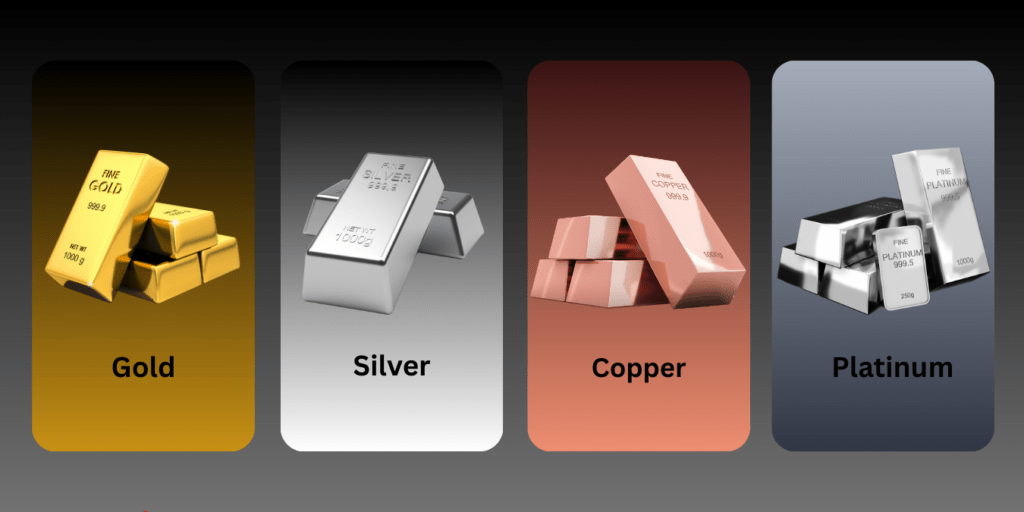
Critical minerals are not exotic abstractions—they are the physical foundation of every transformative technology defining our century. Lithium powers electric vehicle batteries that promise to replace combustion engines. Cobalt stabilizes those batteries and enables longer range. Copper conducts electricity in wind turbines, solar panels, and the expanding grid infrastructure needed for renewable energy. Rare earth elements like gadolinium, neodymium, and dysprosium create the powerful magnets essential for electric motors, defense guidance systems, and robotics. Graphite serves as the anode material in most lithium-ion batteries. Nickel increases battery energy density. These seven minerals—copper, lithium, nickel, cobalt, graphite, and rare earth elements—form the core of what the International Energy Agency calls the critical minerals revolution.
The demand projections are staggering and underscore why nations are racing so aggressively. The IEA projects global demand for lithium will see a forty-fold increase by 2030, while copper demand will increase by 40%. Under net-zero emission scenarios, lithium demand alone is projected to grow 7-fold by 2035, nickel and cobalt 3-fold, and copper 2-fold. By 2050, demand for critical materials will increase by 16 times compared with 2020. These aren’t incremental changes—they represent a fundamental restructuring of global commodity markets. Renewable technologies require greater quantities and varieties of minerals than fossil fuel infrastructure, making the transition to clean energy materially intensive rather than materially lightweight.
China’s Unparalleled Dominance and Strategic Leverage
China’s control over critical mineral supply chains represents the most concentrated strategic advantage in modern industrial history. The country controls approximately 90% of global processed mineral supply, creating a bottleneck that every major economy desperately wants to bypass. This dominance extends beyond mining: China processes nearly 90% of global rare earths, strengthening its control across the entire value chain from extraction to magnet manufacturing. In Chile alone, China captures over 70% of raw lithium exports as of 2024, plus 70-80% of global refined copper and lithium supply.
China also plays a dominant role in Africa, enjoying mining partnerships with 44 African countries. Chinese investment grew from $75 million to a staggering $4.2 billion between 2003 and 2020 through large-scale projects such as the Belt and Road Initiative. The Democratic Republic of Congo, accounting for 70-75% of global cobalt production, has become a critical node in China’s supply network. Chinese EV manufacturers have established facilities in Morocco, using its strategic geographic location to capture the European EV market.
This dominance became weaponized in April 2025 when China imposed export controls on seven rare earth minerals in response to US tariffs, marking the first major use of critical minerals as geopolitical leverage. In October 2025, China expanded restrictions to include five additional elements—holmium, erbium, thulium, europium, and ytterbium—and required foreign entities to obtain licenses to export products containing rare earths or manufactured using Chinese extraction, refining, or magnet-making technology. This essentially gave China control over rare earth products made anywhere in the world using Chinese materials or technology. China also announced it would not allow exports of rare earth materials for use by foreign militaries, the first restriction specifically targeting the defense sector.
The US Counter-Strategy: Project Vault and Diplomatic Offensive
President Donald Trump has responded with what officials call the most aggressive critical minerals strategy in American history. In February 2026, Trump announced “Project Vault,” a $12 billion investment in creating a national critical minerals reserve designed to insulate the US from supply shocks. This follows the 2022 Mineral Security Partnership, which the US is now expanding into a broader trade bloc. In February 2026, 55 countries including Japan, India, South Korea, the EU, and the Democratic Republic of Congo participated in a US-organized summit to discuss creating a trade bloc that would strengthen coordinated mining and refinement for critical minerals, explicitly aimed at undermining Chinese dominance.
The US has formed a special partnership with Argentina, which together with Chile and Bolivia constitutes the “Lithium Triangle” containing over half of global lithium reserves. This reflects the US objective to reduce its strategic vulnerability on Chinese supply, brought to the fore after China’s 2025 export restrictions. In 2025, the US provided a $553 million loan to strengthen the Lobito Corridor, a key railroad connecting the mineral-rich Katanga region in the DRC with Angolan and Zambian copper fields, specifically to secure US access to critical minerals and reduce reliance on Chinese-dominated supply chains.
The US also reinforced its position as the world’s second-largest rare earths producer in 2025, with output reaching 51,000 tonnes, accounting for 13.1% of global production. However, the US has almost no domestic capacity to process and refine rare earths into end-use components, and there are few alternatives for refined rare earth elements outside China, creating a critical vulnerability. Breaking China’s stranglehold on rare earth supplies is likely to take at least a decade, if not longer, experts warn.
Europe’s Struggle for Strategic Autonomy
Europe is falling behind in the critical minerals race, according to the EU’s own assessments. Europe’s latest measures to expand domestic critical minerals supplies lack the funding tools needed to spur investment and wrestle supplies from dominant countries like China. The EU’s Critical Raw Materials Act prevents the bloc from relying on a single non-EU country for more than 65% of any critical mineral and stipulates that 10% of mining and 40% of processing of critical minerals consumed by the EU should take place within the Union.
However, these targets face enormous challenges. Western mining investments in Africa have lagged behind over the last 20 years due to environmental and social concerns over mining activities, putting Europe at a disadvantage compared to China’s aggressive investment strategy. The EU is starting to change this approach, signing the Clean Trade and Investment Partnership with South Africa in 2025, aiming to improve EU access to critical minerals in exchange for EU investments facilitating South Africa’s transition to green technologies. Similar agreements are underway with the DRC, Zambia, and Namibia.
Industrial policy will remain the main tool for securing critical minerals in 2026, with most action centered in the EU and US. Governments are pursuing a twin-track strategy of expanding domestic mining and processing capacity while locking in overseas supply through investment, strategic partnerships, and offtake deals.
India’s Strategic Entry: Bilateral and Quad Agreements
India has emerged as a critical player in the 2026 minerals race, signing a landmark framework agreement with the United States in May 2026 to secure supplies of critical minerals and rare earths, including their mining and processing infrastructure. External Affairs Minister S Jaishankar and US Secretary of State Marco Rubio signed the agreement on the sidelines of the Quad ministerial, calling it a “tangible example” of the partnership between the two sides.
The pact focuses on collaboration across exploration, processing, refining, technology sharing, recycling, and long-term supply chain development for critical minerals including lithium, cobalt, nickel, graphite, and rare earth elements. With an eye on bypassing Chinese dominance of supply chains, the agreement aims to strengthen resilient and diversified supply chains. India holds significant reserves but depends heavily on imports—mainly from China, which dominates global production and processing.
To address this dependency, India has launched initiatives such as the National Critical Minerals Mission, policy reforms under the MMDR Act, and incentives for refining, recycling, and magnet manufacturing. India has also sought mining agreements with various African countries, including the DRC, South Africa, Zimbabwe, and Morocco, to secure access to resources like cobalt and graphite. The agreement aligns with broader efforts under the India-US Initiative on Critical and Emerging Technology (iCET), which promotes cooperation in semiconductors, artificial intelligence, defence innovation, and clean energy technologies.
Africa and Latin America: The New Arenas of Geopolitical Competition
The large and mostly unexploited mineral reserves of Latin America and Africa are becoming the key arenas for this geopolitical power play. Latin America holds over 60% of global lithium reserves and 40% of the world’s copper reserves, while Africa boasts one-third of global supplies of critical minerals like cobalt and lithium. Latin America is home to about 60% of the world’s identified lithium reserves and produces about 46% of its copper, with Peru and Chile leading production.
In the last two decades, over 10% of Foreign Direct Investment in Latin America has been directed toward mining industries, with the US accounting for 8% and China for 14% of these investments. Chile has been the main recipient, reflecting its output of almost a quarter of the world’s total raw copper supply. Brazil, with the second-largest rare earth reserves globally, has seen FDI in rare earths surge to $700 million in recent years as the US, China, and EU compete for its resources.
Africa is experiencing what critics warn might inaugurate a new era of resource colonialism. Governments and local populations, particularly in Africa, now have greater awareness and bargaining power over their mineral endowments, forcing miners to adapt to policy shifts. The G20—including Argentina, the African Union, Mexico, and Brazil—announced a Critical Minerals Framework in early 2026 under South Africa’s leadership, seeking to limit the outsourcing of control and incomes from national mineral resources to foreign powers, increasing transparency, national processing and refinement capacity, local ownership, and enhanced sustainability regulation.
Saudi Arabia is cultivating ties with countries like the DRC and has pledged $10 billion investment in African mining as part of its Vision 2030 plan of economic diversification. The United Arab Emirates has cultivated ties with Angola, Zambia, and Zimbabwe to improve access to lithium, cobalt, and copper and expand its green energy sector.
The Next Trade War: Tariffs, Export Controls, and Economic Warfare
The ongoing trade tensions have already highlighted how critical minerals will become the central weapon in the next trade war. US President Donald Trump announced that the US would impose a 100% tariff on Chinese goods, adding to existing tariffs, and banned exports of “critical software” to China. The crisis began in April 2025 when China imposed export controls on seven rare earth minerals in response to Trump’s tariffs.
In October 2025, a tentative trade framework was reached where China would delay export curbs on rare earths while the US would avoid imposing threatened 100% tariffs on Chinese goods. The deal also addressed agricultural trade with China resuming purchases of US soybeans, and the US consented to several compromises including a 10 percentage point reduction in tariffs on Chinese imports. However, experts warn that a one-year delay is just a delay, not a solution, with restrictions expected to remain delayed or suspended through November 10, 2026, but subject to change.
Recent tariffs and rare earth export controls show protectionist leverage will stay central to geopolitical competition. Trade friction between the US and China, export controls, and supply bottlenecks threaten growth in artificial intelligence, robotics, and defence, giving downstream manufacturers strong incentives to secure materials at the mine site. Supply bottlenecks threaten growth in these critical sectors, creating strong incentives for companies to secure materials directly at mining sites.
Market Implications: Prices, M&A, and Strategic Positioning
BMI, a unit of Fitch Solutions, expects most mineral and metal prices to edge higher in 2026 as net-zero demand, tighter supply, and an intensifying global race for critical minerals offset persistent weakness in Mainland China’s property sector. BMI describes a “cautiously optimistic” price environment with easing tariff uncertainties and robust demand from sectors tied to decarbonization underpinning the market.
The competition for energy transition inputs will keep merger and acquisition activity robust into 2026. Miners and metals producers are set to prioritize deals that increase exposure to copper, lithium, and rare earth elements. Large capital expenditure projects will remain on the agenda, though phased and brownfield developments are gaining favor as firms try to manage cost pressures and policy uncertainty.
BMI’s outlook suggests 2026 will be defined less by runaway price gains and more by strategic positioning, with industrial policy, critical minerals competition, and shifting bargaining power in frontier markets shaping where capital flows next in the global mining industry. Volatility remains a structural feature of the critical minerals landscape.
What This Means for Businesses, Investors, and National Security
For businesses, the critical minerals race creates both unprecedented risks and opportunities. Partnership between mining projects and technology, automotive, and aerospace firms are expected to deepen in 2026, as downstream manufacturers recognize that supply bottlenecks threaten their core operations. Companies in artificial intelligence, robotics, electric vehicles, renewable energy, and defense must now treat mineral security as a strategic priority equivalent to supply chain resilience or cybersecurity.
For investors, the competition is driving robust M&A activity and creating valuation premiums for companies with exposure to copper, lithium, and rare earth elements. However, frontier markets carry persistent concerns over resource nationalism, with governments and local populations demanding greater value capture from mineral endowments.
For national security, critical minerals are vital for economic growth and defense systems, making global competition for them a matter of strategic survival. The US-China trade war over rare earths demonstrated that supply chain dependencies can be weaponized with devastating effects on automotive manufacturing, defense production, and technology sectors.
The Path Forward: Diversification, Recycling, and International Cooperation
Breaking China’s stranglehold on rare earth supplies will require a multi-decade effort spanning domestic mining expansion, processing capacity building, strategic partnerships, and technological innovation. The US, EU, and associated countries are increasingly seeking to diversify supply away from China by expanding control over raw critical mineral supplies. The EU’s Critical Raw Materials Act establishes specific targets for domestic mining and processing, while the US is investing billions in Project Vault and diplomatic partnerships.
Recycling represents a critical opportunity that Secretary of State Marco Rubio highlighted at the inaugural Critical Minerals Summit in February 2026. America’s recycling opportunity could reduce dependence on primary mineral extraction while creating domestic supply chains. India and the US are expected to work together on recycling as part of their broader partnership.
International cooperation is essential given the geographically unequal distribution of resources. The Mineral Security Partnership, the Quad Critical Minerals Framework, and bilateral agreements like the India-US pact represent attempts to create coordinated approaches to mineral security. However, producers in Africa and Latin America are gaining geopolitical leverage, capturing value from rising demand and shaping operations of global mineral supply chains.
Conclusion: The Minerals That Will Define the 21st Century
The global race for critical minerals has only just started, but it already represents one of the most significant geopolitical contests of our time. As geopolitical dynamics continue to shape and be shaped by access to critical minerals, four major dynamics will define the race in 2026: US critical minerals diplomacy and project finance accelerating domestic production and expanding strategic partnerships; EU strategic autonomy and financing developing domestic production and diversifying supply chains; China’s 15th Five-Year Plan continuing dominance in processing and refining while prioritizing emerging technologies; and producer countries gaining geopolitical leverage by capturing value from rising demand.
This race serves as a reminder that even in an age of unprecedented technological, military, and economic power, the world’s powers remain dependent on the constraints of nature. The minerals securing our clean energy transition, artificial intelligence revolution, and defense systems will determine which nations lead the 21st century. As BMI forecasts, 2026 will be defined by strategic positioning rather than runaway price gains, with industrial policy and critical minerals competition shaping global mining investment.
The next trade war will not be fought primarily over steel tariffs or agricultural subsidies—it will be fought over lithium batteries, rare earth magnets, and copper wires. Nations that fail to secure access to these critical minerals will face strategic vulnerability equivalent to oil-dependent nations facing supply shocks in the 1970s. The race is upon us, and the stakes are nothing less than technological supremacy and national security in the century ahead.
For India specifically, this race presents both challenges and opportunities. With significant reserves but heavy import dependency, India’s National Critical Minerals Mission, MMDR Act reforms, and new partnerships with the US and African nations represent a strategic attempt to become a global player in the rare earth sector. Strengthening domestic capacity, fostering international collaborations, and ensuring sustainable extraction are key to making India competitive.
The global scramble for critical minerals will shape markets, geopolitics, and technological development throughout the 2020s and beyond. Understanding this race is essential for anyone interested in the future of energy, technology, defense, or international trade.