Sugar Stocks Just Had Their Best Week in Years. The Reason Is a Forecasting Error, Not a Boom
Markets · Commodities · India · Week to 20 August 2026
Sugar Stocks Just Had Their Best Week in Years. The Reason Is a Forecasting Error, Not a Boom.
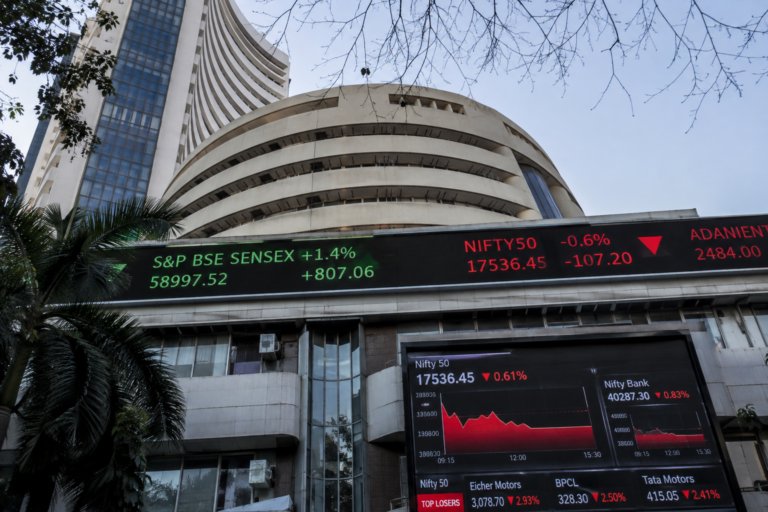
For three consecutive sessions this week, sugar counters were the most active corner of an otherwise flat market. Balrampur Chini Mills rose 12.92% in a single day. Dwarikesh Sugar added 11.95%, Bajaj Hindusthan Sugar 10.83%. Across August, Avadh Sugar and Energy has gained roughly 51% while the Sensex fell about 1.4%.
The obvious explanation is the right one as far as it goes: sugar has never been more expensive in India. Retail sugar in Delhi reached ₹64 a kilogram, up about 25% in a month. Kolhapur spot prices jumped roughly 25% in three weeks.
But the reason prices are at a record is not booming demand or a supply shock abroad. It is that India exported sugar it turned out not to have. That distinction matters enormously for anyone trying to judge how long this lasts.
Quick Summary
Sugar stocks rallied for three sessions to 20 August on record domestic prices and a government stockholding order. The underlying cause is a production estimate that fell from 30.95 to about 27.9 million tonnes across the season, after 0.8 million tonnes had already been exported. Opening stocks on 1 October are now estimated near 3.5 million tonnes. The government is weighing duty-free imports of up to 1 million tonnes, which is the single biggest risk to the rally.
What the ten largest listed sugar companies did
The table below records what each stock actually did in this week’s sessions, with the date and source of each figure. Intraday and closing prints differ, and several of the moves quoted in the press this week were intraday snapshots taken at different hours, which is why the same stock appears with different numbers in different outlets on the same day.
| Company | Price (date) | Move that session | August month to date | Profile |
|---|---|---|---|---|
| EID Parry (India) | About ₹800 (19 Aug) | Up over 2% | Rose with sector | Most valued sugar company; Murugappa group, also nutraceuticals |
| Balrampur Chini Mills | ₹735 (20 Aug) | Up 12.92% | Rose with sector | Second most valued; large UP miller with distillery capacity |
| Bannari Amman Sugars | ₹3,608 (19 Aug) | Up 1.81%, then up 14.78% on 20 Aug | Rose with sector | Tamil Nadu based, integrated sugar and power |
| Triveni Engineering | ₹285.50 (19 Aug) | Up over 3%, then 4.16% on 20 Aug | Up 26% to 38% | Sugar plus engineering, gears and water businesses |
| Dalmia Bharat Sugar | ₹468 (19 Aug) | Up 3.39% | Up 26% to 38% | Hit 52-week high of ₹439.10 on 13 Aug, since exceeded |
| Dhampur Sugar Mills | ₹188 (20 Aug) | Up 6.61% | Up 26% to 38% | UP miller, ethanol and power co-generation |
| Avadh Sugar and Energy | Not separately reported | Up 2% to 7% on 19 Aug | Up about 51% | Best August performer in the sector |
| Dwarikesh Sugar | ₹54.05 (20 Aug) | Up 11.95% | Up 26% to 38% | UP based, high retail shareholder participation |
| Shree Renuka Sugars | ₹25.90 (20 Aug) | Up 6.85% | Rose with sector | Wilmar backed; refining and export exposure |
| Bajaj Hindusthan Sugar | ₹22.60 (20 Aug) | Up 10.83% | Up 26% to 38% | Largest by crushing capacity; carries significant debt |
Two smaller counters moved even harder. Kothari Sugars rose 12.38% and Ugar Sugar Works 12.14% on 20 August, while Simbhaoli Sugars closed at ₹7.89. Low-priced, low-float sugar stocks routinely amplify sector moves in both directions, which is worth remembering when a screen shows the biggest percentage gainer.
The forecasting error behind the price
India entered the 2025-26 season expecting a surplus. In November 2025 the government permitted exports of 1.5 million tonnes, later raised to about 1.59 million tonnes. Then the crop estimates began falling, and kept falling.
estimate
February
late May
assessment
estimate
By the time exports were halted in May, roughly 0.8 million tonnes had already been shipped. Sugar that left the country could not be recalled when the estimates were cut. Closing stocks projected at 5.3 million tonnes a year earlier fell to about 4.3 million tonnes in ICRA’s May assessment, and by early August trade estimates put opening stocks on 1 October near 3.5 million tonnes — described in market commentary as the lowest in more than three decades.
That is the whole story of the price. Not demand, not a global shock, but a domestic inventory cushion that thinned faster than the policy machinery reacted.
Why one commodity generates so much policy
Few Indian commodities are managed as closely as sugar. The Centre fixes the Fair and Remunerative Price for cane, regulates how much sugar each mill may sell monthly, controls exports and imports, and sets how much cane may be diverted to ethanol. The industry supports roughly five crore cane farmers and directly employs about five lakh workers.
Each of those levers depends on the production estimate being roughly right. When the estimate is wrong, every lever is set wrong at once — which is exactly what happened this season.
The policy response, and why the market read it as bullish
The most counter-intuitive feature of this week was that stocks rose after the government moved to cool prices. Investors treated the intervention as confirmation that the shortage is real.
The first two measures restrict who may hold sugar; they do not create any. The third would create supply, and it is the one that matters. India has not imported sugar in roughly a decade. One million tonnes is small against annual consumption near 28.5 million tonnes, but it arrives precisely where the market is tightest, and the announcement alone would likely take the speculative edge off spot prices.
Higher sugar prices do not automatically mean higher profits
This is the part most weekly market coverage skips. A sugar mill’s margin is the gap between what it receives for sugar and what it pays for cane, and the mill controls neither.
| Lever | Who sets it | Current position | Direction of pressure |
|---|---|---|---|
| Cane FRP | Central government | ₹355 per quintal in 2025-26, raised to ₹365 from October 2026 | Rising, squeezes margin |
| State Advised Price | State governments | UP elections due next year | Likely to rise further |
| Sugar MSP | Central government | ₹31 per kg, unchanged since February 2019 | Industry seeking a rise |
| Monthly release quota | Central government | Reduced, contributing to tight availability | Discretionary |
| Ethanol diversion | Central government | 3.1 MT sugar equivalent in 2025-26 | May be cut to free up sugar |
| Market price | Market, within policy limits | Record highs, above ₹5,350 a quintal in Kolhapur | Currently favourable |
Only the last line is working in the mills’ favour, and it is the one the government is actively trying to change. Meanwhile the cost line is set to rise: FRP moves to ₹365 from October, and with Uttar Pradesh going to the polls next year, a further increase in the State Advised Price for 2026-27 is widely expected.
The number that has not moved since 2019
The minimum selling price of sugar has been fixed at ₹31 per kilogram since February 2019, while cane costs have risen repeatedly over the same period. The industry has lobbied for years for an increase.
An MSP hike is the clearest potential catalyst still unpriced. It is also the one the government is least likely to grant while retail sugar sits at ₹64 a kilogram and it is simultaneously trying to cool prices for consumers. Note the asymmetry: the policy environment that produced this rally makes the industry’s main structural demand harder to win, not easier.
Where this sits in the sugar cycle
Sugar is among the most reliably cyclical sectors on the Indian market. High prices encourage more cane planting and more crushing capacity; the resulting surplus depresses prices; mills lobby for export support; cash flows deteriorate; planting falls; and the cycle turns again.
Prices weak
Exports pushed
Prices spike
Imports, limits
Planting rises
Rallies driven by shortage tend to be sharp and to end when supply responds. That response is already being organised: imports are under consideration, cane diversion to ethanol may be reduced to free up sugar, and the FRP increase from October will encourage planting for 2026-27.
Not all ten companies are the same trade
Sector coverage tends to treat these ten as one basket that rises and falls together. In a week like this one they largely do, but the businesses underneath differ enough that the same sugar price produces materially different outcomes.
The clearest split is between pure millers and diversified groups. EID Parry, the most valued company in the sector, sits within the Murugappa group and carries a substantial nutraceuticals business alongside sugar. Triveni Engineering runs gears, water treatment and engineering operations that have nothing to do with cane. For both, a spike in sugar realisations moves a segment rather than the whole company, which is one reason both rose in the low single digits this week while pure millers rose double digits.
The second split is the balance sheet. Bajaj Hindusthan Sugar is the largest Indian sugar company by crushing capacity but has long carried significant debt, and heavily indebted commodity producers behave like leveraged bets on the commodity: they fall hardest in a downturn and rise hardest when realisations improve. Its 10.83% single-session move sits at the top of the range for exactly that reason, and the same mechanism operates in reverse.
The third is distillery exposure. Mills that invested in ethanol capacity built a second revenue stream that has cushioned several difficult seasons. That looked like an unambiguous advantage until this year, when sugar became more profitable than ethanol in both India and Brazil, and the government began considering a cut to cane diversion. A distillery-heavy mill is now holding capacity whose relative economics have weakened, even as its sugar economics improve.
The fourth is simply size and float. Kothari Sugars rose 12.38% and Ugar Sugar Works 12.14% on 20 August, and Simbhaoli Sugars traded at ₹7.89. Small-capitalisation, low-priced counters move further on the same news because it takes less capital to move them. That amplification is not a sign of a better business.
A useful question to ask of any sugar company right now
How much of what this company earns is decided by the government rather than by management? For a pure UP-based miller, the answer is nearly all of it: cane price by the state, selling price floor by the Centre, monthly volumes by the release quota, exports by notification, ethanol offtake by allocation.
For a diversified group, the answer is a fraction of it. Neither is better in the abstract, but they are different instruments and should not be compared on a single week’s percentage move.
The global picture, and why it matters less than usual
International prices have been firm alongside the domestic move. ICE raw sugar traded above 17 cents a pound, London white sugar reached a 15-month high, and European output has been reported at a ten-year low. In an ordinary season, firm global prices would be straightforwardly good for Indian mills, because the export door would be open and higher world prices would lift realisations on exported tonnes.
This season the door is shut. Exports were halted in May once the production outlook weakened, and the government is now considering imports rather than further shipments. That inverts the usual relationship: firm global prices are currently a cost risk for India, because they raise the landed price of any sugar the country brings in, not a revenue opportunity for mills.
It also complicates the import calculation. Duty-free imports relieve domestic tightness only if world sugar is cheap enough to land meaningfully below Indian spot. With London whites at a 15-month high, the relief that one million tonnes delivers may be smaller than the headline suggests, which is one reason the market rallied on 20 August even as the import proposal was being reported.
Brazil remains the variable that most often decides global direction. Its mills allocate cane between sugar and ethanol according to relative prices, and when sugar pays better, output swings toward sugar and world prices soften. That mechanism is currently pointing the same way as India’s: sugar is the more attractive product, which over time tends to increase global sugar supply and cap prices.
Why the monsoon is the quiet variable in all of this
Every estimate in this article rests on cane that has not yet been crushed. ISMA’s February revision was driven partly by lower yields in Uttar Pradesh, attributed to an ongoing varietal replacement programme, though recovery rates in the state were reported as better than the previous season.
Cane is a long-duration crop, and the 2026-27 outcome is being determined by rainfall and planting decisions now. Reports have suggested the 2026-27 crushing season may start late, which would extend the tight period into the festive season. A good monsoon and an early, large crop would do more to end this rally than any policy announcement.
The case each way
Both of the following are supported by this week’s evidence. Which dominates depends largely on decisions that have not been announced yet.
| The constructive case | The cautionary case |
|---|---|
| Opening stocks near a multi-decade low give mills unusual pricing power into the festive season | Duty-free imports of up to 1 million tonnes are under active consideration and would target exactly that tightness |
| Realisations are at record levels, improving cash flows and helping clear cane arrears | Over ₹12,000 crore of cane dues for 2025-26 remained unpaid as at 20 April, on ₹1,12,740 crore billed |
| Balrampur Chini told investors the tighter balance is helping offset higher cane and distillery costs | The same company said it is too early to take a definitive view on 2026-27 production |
| A long-sought MSP increase from ₹31 per kg remains a live possibility | Granting it while retail sugar is at ₹64 per kg is politically difficult |
| Ethanol capacity gives integrated mills a second revenue stream | Sugar is currently more profitable than ethanol, and diversion policy may be cut back |
| Global prices are firm, with London white sugar at a 15-month high | Some stocks have run 26% to 51% in three weeks, so a great deal is already in the price |
What a shortage rally does not tell you
A sector rising 30% in three weeks on a supply shortage is pricing a set of conditions rather than a permanent improvement in the businesses. The mills have not become structurally better; the sugar they hold has become temporarily more valuable.
The variables that would end it — an import notification, a good monsoon, an early and large 2026-27 crop — are mostly outside company control and largely unknowable in advance. Anyone treating this as a re-rating rather than a cycle position should be able to say specifically what has changed permanently.
The dated catalysts to watch
Reading sector coverage carefully
Frequently asked questions
Why did sugar stocks rise this week?
Domestic sugar prices reached record levels, with Delhi retail at about ₹64 per kilogram on 19 August and Kolhapur spot up roughly 25% from end-July. Sentiment was reinforced on 20 August when the government imposed stockholding limits on bulk consumers, which investors read as confirmation that supply is genuinely tight rather than as a negative.
Which sugar stock gained the most in August 2026?
Avadh Sugar and Energy, up about 51% month to date as reported on 19 August. Uttam Sugar, Dalmia Bharat Sugar, Dwarikesh Sugar, Dhampur Sugar, Triveni Engineering and Bajaj Hindusthan Sugar rose in a 26% to 38% band over the same period, against a fall of about 1.4% in the Sensex.
Why are Indian sugar prices at record highs?
Because production estimates for 2025-26 were repeatedly cut, from about 30.95 million tonnes to roughly 27.9 million tonnes net, while consumption is near 28.5 million tonnes. India also exported around 0.8 million tonnes before the shortfall became clear. Opening stocks on 1 October are now estimated near 3.5 million tonnes.
Will the government allow sugar imports?
It is under active consideration. Reports indicate a plan for duty-free imports of up to 1 million tonnes, with officials examining lowering or scrapping the 100% import duty. No decision had been notified as at 21 August 2026. India has not imported sugar in roughly a decade, so this would mark a significant policy reversal within a single season.
Do record sugar prices guarantee higher profits for mills?
No. Mills buy cane at prices set by government, sell within monthly release quotas, and face a minimum selling price fixed at ₹31 per kilogram since February 2019. The Fair and Remunerative Price rises to ₹365 a quintal from October 2026, and the UP State Advised Price may rise further before state elections. Realisations improved this season, but the cost side is also moving.
What is the biggest risk to the sugar rally?
The import decision. One million tonnes of duty-free sugar would land directly into the tightness that is driving prices. Beyond that, a strong monsoon and a large 2026-27 crop would rebuild inventories, and any reduction in cane diverted to ethanol would add further sugar to the domestic market.
How does ethanol policy affect sugar companies?
Cane diverted to ethanol does not become sugar. Around 3.1 million tonnes of sugar equivalent was expected to be diverted in 2025-26, which supports mill revenues and the fuel blending programme but reduces sugar available for sale. The government is considering relying less on cane juice and B-heavy molasses, which would raise sugar output and lower distillery income.
Are sugar stocks a good long-term investment?
That depends entirely on your objectives, risk tolerance and time horizon, and this article does not make recommendations. What can be said factually is that the sector is strongly cyclical, heavily dependent on government decisions on cane pricing, release quotas, exports and ethanol, and vulnerable to monsoon outcomes. Those characteristics apply regardless of the current price trend.
Are cane arrears still an issue for the industry?
Yes. As at 20 April 2026, mills had paid ₹99,961 crore of ₹1,12,740 crore due for cane supplied in the 2025-26 season, leaving over ₹12,000 crore outstanding. Higher realisations should help clear arrears, which is one reason policymakers may tolerate firm prices up to a point.
The short version
Sugar stocks rallied for three sessions to 20 August because domestic sugar prices hit records, and prices hit records because India ran its inventory down after permitting exports against a production forecast that proved roughly three million tonnes too optimistic. The mills are genuine beneficiaries while it lasts. But the cost side is rising with the FRP, the minimum selling price has not moved since 2019, the state advised price is likely to rise before UP goes to the polls, and the government is actively considering the one measure that would most directly reverse the price move. This is a cycle position responding to a policy error, not a structural re-rating, and it should be assessed on that basis.