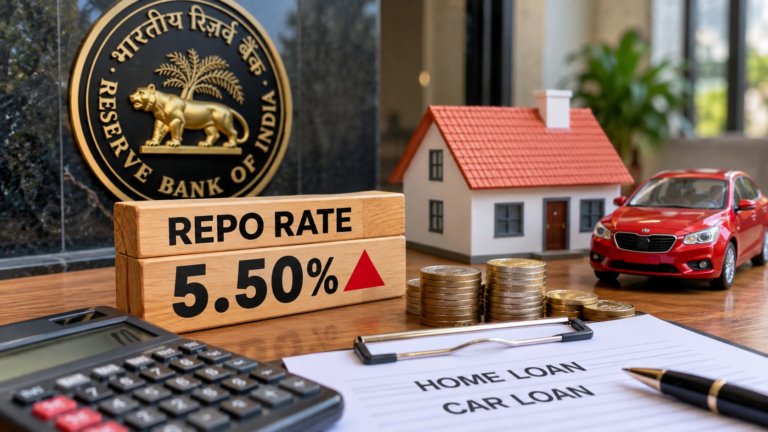
RBI Raises Repo Rate to 5.50%: Should You Delay Buying a Home or Car as Loans Get Costlier?
Personal Finance · RBI Monetary Policy · October 2026
RBI Raises Repo Rate to 5.50%: Should You Delay Buying a Home or Car as Loans Get Costlier?
The first repo rate increase since February 2023 adds about ₹16 per lakh to a 20-year home loan EMI. The bigger signal is the RBI’s new stance, which rules out rate cuts for now.
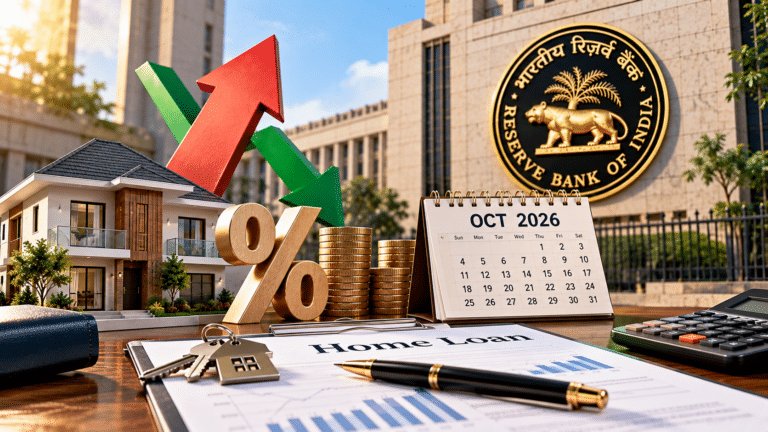
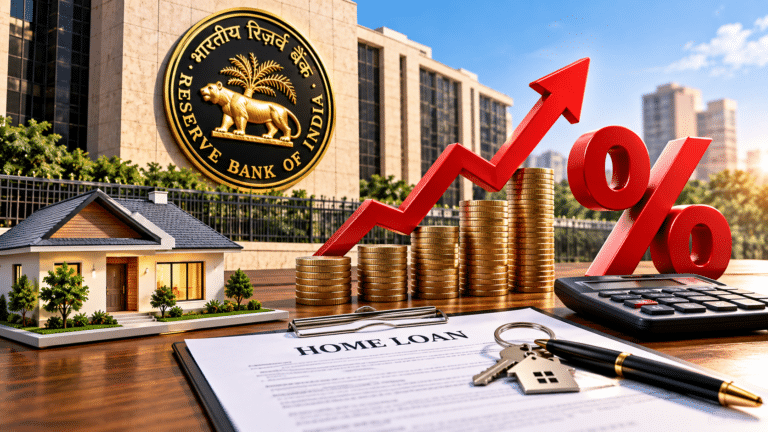
You have shortlisted the flat, or the car is booked for Dhanteras delivery. Then, on 7 October 2026, the Reserve Bank of India raised its repo rate for the first time in more than three and a half years. Within hours, public sector banks began lifting their lending rates. The natural question is whether to pause the purchase until the dust settles.
The answer has two parts. The first is arithmetic: what a quarter-point rise costs on a real loan. The second is timing: whether waiting can get you a better rate at all. The numbers suggest that for most buyers the hike is a reason to recheck the budget, not a reason to walk away.
Quick Summary
The RBI raised the repo rate by 25 basis points to 5.50% and moved its stance to calibrated tightening, meaning the next move is a hike or a pause. On a ₹50 lakh, 20-year home loan, one hike adds about ₹781 a month in our illustration. Waiting is unlikely to bring cheaper loans soon, so delay only if the EMI fails a stress test at a rate 1 percentage point higher.
What We Know
These points are confirmed by the RBI’s Monetary Policy Statement of 7 October 2026 and by bank filings reported by PTI.
- The six-member Monetary Policy Committee voted unanimously to raise the repo rate from 5.25% to 5.50%.
- The stance changed from neutral to calibrated tightening on a 4 to 2 vote. Governor Sanjay Malhotra said rate cuts are off the table in the near term.
- The Standing Deposit Facility rate is now 5.25%. The Marginal Standing Facility rate and Bank Rate are 5.75%.
- The RBI projects CPI inflation at 5.2% and real GDP growth at 7.1% for 2026-27.
- Punjab National Bank, Bank of India, Indian Overseas Bank and Indian Bank raised repo-linked rates with effect from 8 October.
- MPC minutes are due on 21 October. The next meeting is on 2 to 4 December 2026.
What Is Still Unclear
Several things that matter to a buyer cannot be known yet, and it is better to plan around them than to guess.
- Whether December brings a second hike. Before the policy, Nomura forecast increases in both October and December, and SBI Research argued for 50 basis points by December. Two MPC members preferred a neutral stance, which leaves a pause possible.
- How quickly every lender passes it on. Several public sector banks moved within a day. Other banks and housing finance companies had not all announced revisions at the time of writing.
- What happens to deposit rates. Banks decide these individually, so the timing and size of any fixed deposit increase is uncertain.
- How festive demand responds. Developers and carmakers may adjust offers if buyers hesitate, but nothing firm has been announced.
Why a Quarter Point Arrived Now, With Growth Still Strong
This was not a rescue move for a weak economy. The RBI raised its growth forecast for 2026-27 to 7.1% from 6.7% in the same statement. The hike is about prices. Headline CPI inflation rose to 4.8% in August from 4.5% in July, according to figures cited in the policy, and the central bank expects it to reach 6.0% in the October to December quarter.
That 6.0% figure matters because it sits at the upper edge of the RBI’s tolerance band of 2% to 6% around its 4% target. Reports on the policy resolution point to higher crude oil prices linked to tensions in West Asia, a weaker monsoon and firmer global bond yields as the main pressures.
The phrase that changes the buying calculation
The rate rise is small. The stance change is the larger news. Calibrated tightening, in the RBI’s own explanation, means the committee will choose between raising rates and holding them. Cutting is not on the menu for now. Anyone hoping to wait a few months for cheaper loans is waiting for something the central bank has said it does not plan to deliver.
How Much Extra Your Home Loan EMI Could Carry
Most home loans sanctioned by banks since October 2019 are floating-rate loans tied to an external benchmark, usually the repo rate. When the repo moves, the lender’s benchmark moves by the same amount, and your loan follows at its next reset.
To keep the maths transparent, the figures below are our own calculations for a 20-year loan moving from 8.00% to 8.25%. Your actual rate will differ, but the increase per lakh stays close to ₹16 a month across the usual range of home loan rates.
The stress-test table worth saving
A single hike is manageable for most households. The sensible question is what the EMI looks like if rates rise further. This table shows the monthly EMI on a 20-year loan at four rates, so you can read across your own row.
| Loan amount | At 8.00% | At 8.25% | At 8.50% | At 9.00% |
|---|---|---|---|---|
| ₹20 lakh | ₹16,729 | ₹17,041 | ₹17,356 | ₹17,995 |
| ₹30 lakh | ₹25,093 | ₹25,562 | ₹26,035 | ₹26,992 |
| ₹50 lakh | ₹41,822 | ₹42,603 | ₹43,391 | ₹44,986 |
| ₹75 lakh | ₹62,733 | ₹63,905 | ₹65,087 | ₹67,479 |
| ₹1 crore | ₹83,644 | ₹85,207 | ₹86,782 | ₹89,973 |
When the higher rate actually reaches you
The repo rate changed on 7 October, but existing borrowers do not pay more that day. RBI rules require external benchmark loans to be reset at least once every three months. Depending on your reset date, the change lands somewhere between a few weeks and three months from now. New sanctions are priced at the revised rate straight away.
Loans still linked to the older MCLR or base rate systems respond more slowly, because those benchmarks follow a bank’s cost of funds, not the repo rate directly.
| Lender | Benchmark | Revised rate | Change | Effective |
|---|---|---|---|---|
| Punjab National Bank | RLLR | 8.35% | From 8.10% | 8 Oct 2026 |
| Bank of India | RBLR | 8.35% | +25 bps | 8 Oct 2026 |
| Indian Overseas Bank | RBLR | 8.35% | +25 bps | 8 Oct 2026 |
| Indian Bank | Repo-linked | Revised | +25 bps | 8 Oct 2026 |
| Tamilnad Mercantile Bank | RLLR | 8.50% | From 8.25% | October 2026 |
Car Loans Behave Differently, and That Changes the Advice
Here is what many buyers get wrong: they assume a car loan reacts like a home loan. Often it does not. Many car loans in India are fixed-rate for the full tenure, so the rate you sign at is the rate you keep. Some banks do offer floating car loans linked to the repo rate, so check the sanction letter.
For a fixed-rate car loan, the logic of delay runs backwards. If you were going to buy anyway, waiting through a period when the next move is a hike or a pause risks a higher fixed rate later, with no chance of it falling at reset.
On an ₹8 lakh, five-year loan, the EMI moves from ₹16,607 to ₹16,704, a difference of ₹97 a month. A festive discount, an exchange bonus or a change in the car’s sticker price will usually move the total cost far more than that. Ventura Securities notes that carmakers have raised passenger vehicle prices by around 2% to 5% across segments during 2026.
Buy Now or Wait? A Four-Zone Test Based on Your EMI Load
The interest rate is the wrong thing to time. The right question is how much room your budget has if rates rise again. Add up all your EMIs, including the new loan, and divide by monthly take-home pay. Then repeat the sum with the new loan priced 1 percentage point higher.
Why waiting rarely beats the hike on a home
Consider what delay costs. A household paying ₹25,000 a month in rent spends ₹1.5 lakh over six months of waiting. The hike it is trying to avoid costs ₹781 a month on a ₹50 lakh loan, or about ₹4,700 over the same six months. And because the loan floats, a buyer who waits still pays whatever the rate becomes.
There is one fair argument for patience. If higher rates cool demand, sellers may negotiate harder. A report cited by Business Today shows housing demand up 7% and 69,718 new launches in the July to September quarter, so supply is plentiful. That is a reason to bargain firmly, not proof that prices will fall.
If you are midway through a purchase
Buyers of under-construction homes sit in a slightly different position. The lender releases the loan in stages, and interest is charged only on the amount disbursed so far. A rate change therefore affects a smaller balance today and the full loan only once construction is complete. A sanction letter does not freeze a floating rate either, so there is little to gain by rushing a disbursement.
If you decide to wait and keep building a down payment, the hike offers a small consolation. Banks may lift rates on fresh fixed deposits in the coming weeks, which would help short-term savings earn a little more. A larger down payment reduces the loan, and that lowers the EMI by more than any quarter-point move adds to it.
Already Paying an EMI? Five Moves Before Your Next Reset
Existing borrowers have more control than they often realise. RBI rules introduced in 2023 require lenders to give floating-rate borrowers a choice at reset, and the default option is not always the cheapest one.
- Find your reset date. It is in the loan agreement and usually in the lender’s app. That is when the 25 basis points will apply.
- Choose EMI over tenure if you can. A higher EMI costs ₹781 a month on ₹50 lakh. Keeping the EMI flat adds about 12 months of payments.
- Prepay a small amount. Banks cannot charge prepayment penalties on floating-rate home loans to individuals. Even one extra EMI a year shortens the loan noticeably.
- Check your spread. Your rate is the benchmark plus a spread. If newer borrowers get a lower spread, ask for a repricing or consider a balance transfer.
- Be careful with fixed-rate switches. Fixed home loan rates are typically priced above floating ones, and a conversion fee may apply. Compare the full cost first.
The Dates That Decide What Happens Next
Three dates in the next two months will show whether October was a one-off adjustment or the start of a series.
Frequently Asked Questions
Should I delay buying a home after the RBI repo rate hike?
Not for the rate alone. One 25 basis point hike adds about ₹781 a month to a ₹50 lakh, 20-year loan in our illustration, and the RBI has said the next move is a hike or a pause, so waiting is unlikely to bring a cheaper loan soon. Delay only if the EMI would exceed roughly 40% of take-home pay after a 1 percentage point stress test.
What is the RBI repo rate now?
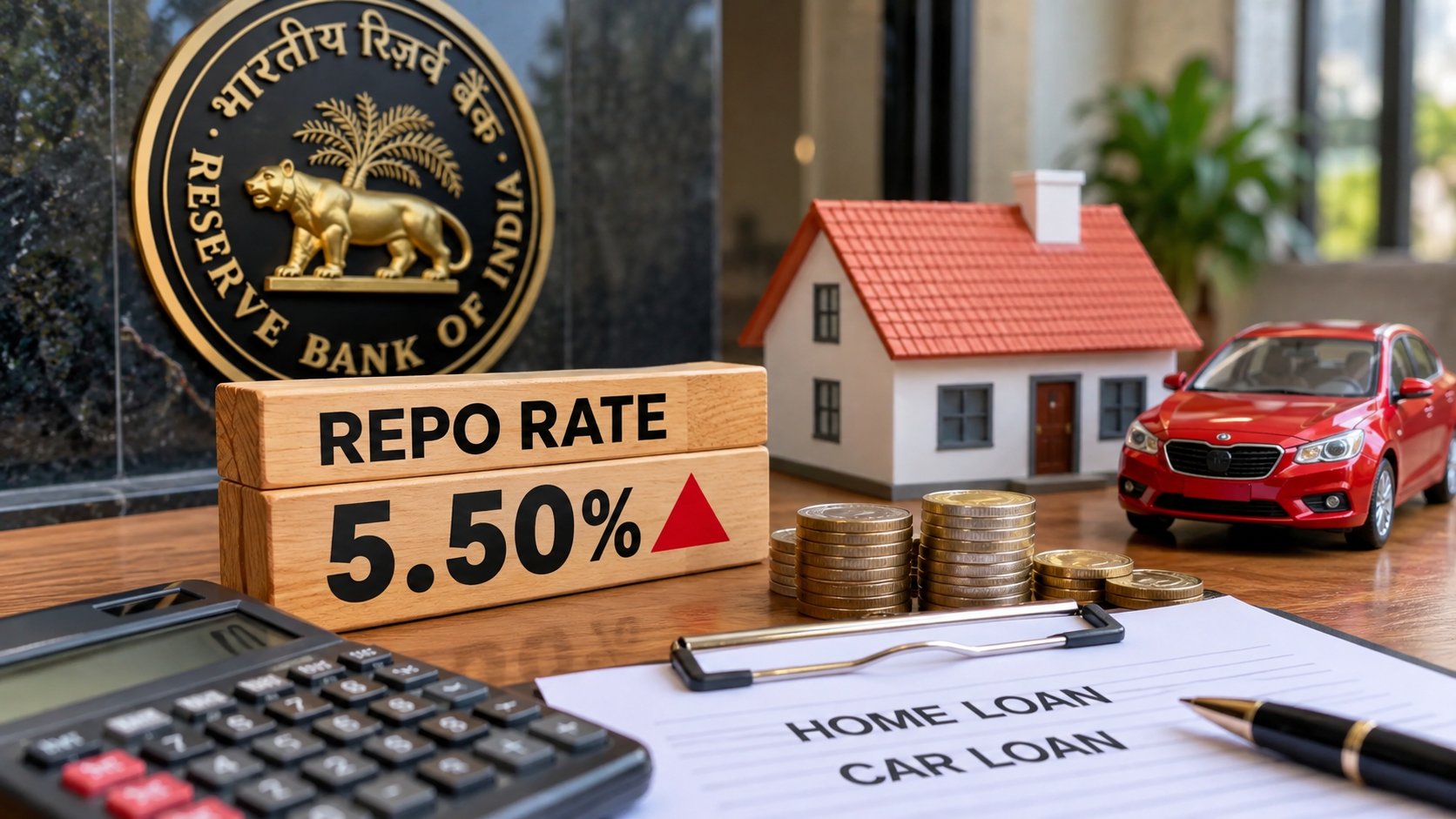
The policy repo rate is 5.50%, after the Monetary Policy Committee raised it by 25 basis points from 5.25% on 7 October 2026. The Standing Deposit Facility rate is 5.25%, and the Marginal Standing Facility rate and Bank Rate are 5.75%.
How much will my home loan EMI increase after a 25 bps hike?
About ₹16 per lakh per month on a 20-year loan. If the rate moves from 8.00% to 8.25%, the EMI rises by about ₹469 on ₹30 lakh, ₹781 on ₹50 lakh and ₹1,563 on ₹1 crore. Your own figure depends on your rate, outstanding balance and remaining tenure.
When will the higher rate apply to my existing home loan?
On your next interest reset date. Repo-linked floating loans must be reset at least once every three months, so most borrowers will see the change within one to three months. Check your loan agreement or the lender’s app for the reset date.
Will my existing car loan EMI go up?
Usually not. Many car loans in India carry a fixed rate for the full tenure, so the EMI stays the same. If your car loan is a floating-rate loan linked to the repo rate, it will reset like a home loan. New car loans sanctioned from now may be priced higher.
Is it better to increase the EMI or extend the tenure?
Increasing the EMI costs less overall if your budget allows it. In our illustration, keeping the old EMI on a 20-year loan after one 25 basis point hike stretches the loan by about 12 months. Lenders must offer the choice at reset, so tell them your preference.
Will the RBI raise rates again in December 2026?
It is not known. The stance is calibrated tightening, which the RBI says leaves only a hike or a pause as options. Two of six members voted to keep a neutral stance. The next MPC meeting is on 2 to 4 December 2026.
Will fixed deposit rates go up after the repo rate hike?
They may, but not automatically. Banks set deposit rates according to their own funding needs, so increases tend to come gradually and vary by bank. Existing fixed deposits continue at the booked rate until maturity.
The Short Version
The RBI’s move to 5.50% makes loans slightly dearer and, more importantly, closes the door on rate cuts for now. A quarter point adds about ₹16 per lakh to a 20-year home loan EMI and under ₹200 a month to most car loans. Waiting will not bring cheaper credit while the stance is tightening, and a floating loan follows the rate wherever it goes. Buy if the EMI still fits at a rate 1 percentage point higher. If it does not, the fix is a smaller loan or a larger down payment.