Why Is the Sensex at a Three-Month Low When India's GDP Is Growing 7.8%?
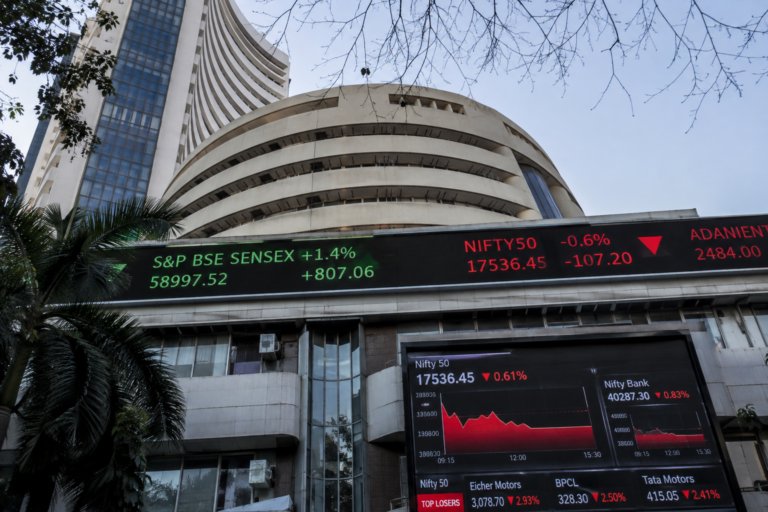
Indian equity markets closed sharply lower on May 29, 2026, with the NSE Nifty 50 settling at 23,547.75, breaching the critical 23,550 support level after erasing early gains. The BSE Sensex crashed 1,092.05 points or 1.44 percent to close at 74,775.74, marking one of the most volatile trading sessions of the year. This decisive breakdown comes amid a perfect storm of sustained foreign institutional investor selling, surging crude oil prices driven by West Asia geopolitical tensions, weak monsoon forecasts, and MSCI index rebalancing pressure that triggered heavy final-hour selling.
For Indian investors holding portfolios across large-cap, mid-cap, and small-cap stocks, this market correction raises critical questions about near-term direction, sectoral risks, and strategic positioning. Understanding the underlying drivers behind this decline is essential for making informed decisions as we head into the weekend and prepare for the next trading week.
The FII Selling Exodus: Record Outflows Shake Market Confidence
Foreign Institutional Investors have emerged as the primary catalyst behind this market weakness, extending a troubling trend that has defined 2026 so far. On May 29 alone, FIIs sold shares worth approximately Rs 1,040 crore, continuing their net selling streak. However, this single-day outflow represents just a fraction of the broader exodus that has already reached staggering proportions this year.
In just the first four months of 2026, FIIs offloaded Indian equities worth nearly Rs 2.06 lakh crore, a figure that already exceeds the total outflows for the entire year of 2025, which stood at Rs 1.66 lakh crore. The monthly breakdown reveals the intensity of this selling pressure: January saw Rs 41,435 crore in net sales, March witnessed Rs 1,17,775 crore in outflows, and April recorded around Rs 60,847 crore. So far in May, FIIs have sold net equities worth Rs 14,275.19 crore, demonstrating that the selling momentum shows no signs of abating.
Several interconnected factors are driving this aggressive FII exit. The escalation of the US-Iran conflict has triggered a global risk-off sentiment, prompting international funds to pull capital from emerging markets like India and relocate to safer assets such as US Treasury bonds and gold. According to the US Department of the Treasury, private foreign investors fuelled a net inflow of $147.30 billion into long-term US securities in February alone, seeking the safety of dollar-denominated debt.
Rising crude oil prices compound the problem for Indian equities. The surge in Brent crude past the $110 per barrel mark, driven by supply chain threats in West Asia, has heightened concerns around India’s macroeconomic vulnerability. High oil prices create a dual burden: they widen India’s trade deficit as imports become more expensive, and they depreciate the rupee against the dollar, which effectively taxes FII returns each time they convert profits back to dollars. The Indian rupee has hit record lows, trading near 95.40 against the US dollar and declining over 6 percent year-to-date, making it Asia’s worst-performing currency.
The allure of US yields also plays a significant role. The Federal Reserve’s higher-for-longer interest rate stance has kept the US 10-year Treasury yields near 4.50 percent. For risk-averse foreign investors, a guaranteed 4.50 percent return often becomes more attractive than a volatile 10-12 percent return in an emerging market with a depreciating currency.
Additionally, FIIs have rotated capital toward North Asian markets, particularly South Korea and Taiwan, which are direct beneficiaries of the global AI and semiconductor hardware boom. Compared to these markets, Indian IT stocks have faced pressure due to slowing US discretionary spending, making them a primary target for FII selling. Financial services stocks have recorded the highest outflows, with Rs 79,981 crore or about $8.44 billion withdrawn, while IT stocks have seen selling of roughly Rs 22,000 crore.
Crude Oil Surge: Geopolitical Tensions Threaten India’s Economic Stability
The crude oil situation has emerged as another critical threat to Indian markets and the broader economy. Brent crude oil prices surged above $113 per barrel in early trade on May 5, 2026, driven by renewed tensions in the Strait of Hormuz, a key global oil transit route through which nearly one-fifth of global oil supply passes. At one point, Brent crude futures rose to over $114 per barrel in early Asian hours before easing slightly to around $113.77, while the US benchmark WTI traded near $104.44.
The sharp price movement follows highly volatile sessions where Brent prices briefly crossed $115 per barrel, compared to opening levels near $106, as geopolitical risks intensified in West Asia. Fresh missile and drone attacks in the past 24 hours heightened fears of supply disruption, with reports indicating that the United Arab Emirates intercepted multiple missiles and drones launched from Iran, resulting in injuries and further escalating tensions.
For India, the world’s third-largest oil importer and consumer, these price levels pose significant economic challenges. India ships in more than 80 percent of its crude needs and 60 percent of its oil consumption comes from imports, making the economy highly vulnerable to oil price shocks. The Reserve Bank of India’s Annual Report for 2025-26, published on May 28, 2026, explicitly warned that the oil price surge amid global supply disruption poses near-term downside risks to economic growth and upside risks to inflation.
The RBI noted that while India’s economy remains resilient to external shocks, with the country expanding at 7.6 percent in FY25 and headline inflation at 2.1 percent, evolving upside risks to inflation may emanate from multiple factors including spike in global fuel and commodity prices amid geopolitical tensions, potential spillovers to input and wage costs, and volatility in exchange rate. The central bank projected CPI inflation for 2026-27 at 4.6 percent with risks tilted to the upside.
The Finance Ministry initially stated that the recent crude oil spike is unlikely to raise India’s inflation significantly in the short term, citing low current inflation levels near the lower bound of the central bank’s tolerance band. The RBI’s Monetary Policy Report from October 2025 estimated that a 10 percent rise in crude prices, assuming full pass-through, could raise inflation by 30 basis points. However, brokerage firm Nuvama Institutional Equities maintains that as long as the Strait of Hormuz remains a contested military zone, oil prices are structurally anchored in the $110 to $150 range.
Prolonged high crude oil prices threaten profitability across sectors due to demand softness and constrained cost pass-through, potentially widening the current account deficit and straining fiscal targets. Higher fuel prices will make most agricultural, industrial, and services costlier and could trigger an inflation surge, with estimates suggesting both retail and wholesale inflation may cross 6 percent by September-October if oil prices remain elevated.
Weak Monsoon Forecast Adds Rural Demand Concerns
Beyond FII selling and crude oil pressures, the market faces additional headwinds from concerns over India’s monsoon outlook. The India Meteorological Department reportedly reduced its rainfall estimate for the June-September period from 92 percent to 90 percent of the long-period average, raising concerns about agricultural output, rural consumption, and overall economic growth.
A weaker monsoon can affect crop production and put pressure on food prices, creating challenges for policymakers and businesses. Adding to the concerns, several regions of the country continue to experience intense heatwave conditions, and investors are closely watching the possibility of El Niño-like weather patterns developing in the Pacific Ocean, which could further impact rainfall.
In an interview, Managing Director Jatin Singh said there is nearly a 60 percent probability of drought-like conditions emerging this year. Although the IMD is not officially classifying the situation as a drought, concerns over below-normal rainfall have increased market nervousness, particularly for sectors dependent on rural demand such as FMCG, two-wheelers, and agricultural inputs.
MSCI Rebalancing Triggers Final-Hour Selling Spree
The sharpest fall in the May 29 session came after 3 pm when selling intensified across sectors. Market participants attributed the sudden decline largely to the MSCI May 2026 index rebalancing exercise. MSCI rebalancing often leads to significant buying and selling by global funds tracking the index, and as passive funds adjust their portfolios, volatility tends to rise, particularly during the final hour of trading.
This mechanical selling pressure compounded the existing weaknesses from FII outflows and monsoon concerns, pushing markets sharply lower and ending the session on a weak note. The combination of monsoon worries, foreign selling, and MSCI-related adjustments created a perfect storm that erased early gains and led to the decisive breakdown below 23,550.
Technical Perspective: Key Support and Resistance Levels
From a technical standpoint, the breakdown below 23,550 is significant. According to SBI Securities Head of Technical and Derivatives Research Sudeep Shah, the immediate support for Nifty is placed in the 23,570-23,550 zone, which has now been breached. This breakdown opens the door for further downside movement.
The technical roadmap indicates several critical levels to watch. The pivot point is at 23,770, which serves as the line in the sand for near-term direction. If Nifty sustains above 23,770, a tactical bounce toward immediate resistance is expected, with a bullish target of 23,977. A daily close above this level could ignite a fresh upside rally toward 24,260.
However, if the index fails to hold the consolidation zone and slips below 23,770, momentum shifts to the bears. A breach of 23,550 opens doors for 23,600-23,550, with further downside risk to 23,460 followed by 23,310. Any sustained selling pressure below 23,300 can take Nifty to 23,230 as well.
On the upside, immediate resistance lies between 23,870 and 23,900, with targets up to 24,200 in the short term. The broad zone between 23,300-23,500 will act as a decent base heading into expiry, with the broad range for Nifty expected to be 23,500-24,000.
Sectoral Impact: Which Sectors Face the Most Pressure
The market decline was widespread across various sectors, with certain segments experiencing heavier selling pressure. The Nifty Metal, PSU Banks, Realty, and FMCG indices experienced the most significant drops, each falling between 1 percent and 2 percent. Capital Goods and Consumer Durables also saw heavy selling.
Information Technology and Pharmaceutical stocks offered some stability, bucking the overall downward trend. However, IT stocks have faced sustained FII selling due to slowing US discretionary spending, making them a primary target for foreign fund outflows.
Oil and gas beneficiaries like ONGC and Oil India emerged as key gainers during market crashes driven by rising crude prices, as higher oil prices improve their profitability margins. This sectoral divergence highlights the importance of portfolio positioning during periods of oil price volatility.
Financial services stocks have recorded the highest FII outflows, with Rs 79,981 crore withdrawn, making banking and financial stocks particularly vulnerable to continued foreign selling. Private banking space has shown some robust buying support, helping Bank Nifty outperform broader indices, but the sector remains under pressure from macro concerns.
What Indian Investors Should Do This Weekend
Given the confluence of negative factors affecting Indian markets, investors should adopt a measured and strategic approach rather than making knee-jerk reactions. Here are key considerations for portfolio positioning:
First, avoid panic selling. Historical data suggests that equities typically recover within two months as oil prices cool, even after significant declines triggered by crude surges. Despite a nearly 9 percent fall in Nifty 50 due to surging crude oil prices in 2026, past trends show relief once oil stabilizes.
Second, focus on quality large-cap stocks with strong fundamentals. Research indicates that investors should accumulate high-quality, fairly-valued stocks on market weakness rather than exiting positions entirely. Large-cap stocks generally demonstrate better resilience during periods of FII selling and macro uncertainty.
Third, monitor crude oil trends closely. Market direction will depend heavily on tensions in West Asia easing and crude oil prices stabilizing below $100 per barrel. Keep track of geopolitical developments around the Strait of Hormuz and US-Iran negotiations, as these will directly influence oil price movements and market sentiment.
Fourth, consider gold as a hedge. Gold may remain strong during periods of geopolitical uncertainty and risk-off sentiment, providing portfolio diversification benefits. Gold gains typically correlate with heightened geopolitical tensions and flight-to-safety flows.
Fifth, maintain adequate cash reserves. Volatility is expected to remain elevated owing to monthly F&O expiry and ongoing geopolitical uncertainty. Having cash on hand allows investors to capitalize on potential buying opportunities if markets overshoot on the downside.
Sixth, diversify across sectors and asset classes. Research, diversify, and seek value rather than concentrating positions in sectors most vulnerable to the current headwinds. Consider exposure to sectors that benefit from high oil prices or demonstrate defensive characteristics.
Seventh, watch domestic institutional investor activity. While FIIs continue selling, domestic institutional investors have supported the market by infusing over Rs 3 lakh crore in the same period, marking a permanent shift in the ownership of the Indian stock market. DII buying has consistently provided a floor during FII selling spells, with DIIs remaining supportive with buying worth Rs 3,802 crore even when FIIs sold Rs 2,458 crore.
Long-Term Outlook: When Might Markets Stabilize?
While near-term volatility is expected to persist, several factors could signal a stabilization or reversal in market sentiment. Analysts believe that an immediate trend reversal in May remains unlikely in the absence of decisive easing in geopolitical risks, but flows could begin to stabilize in the near term and gradually turn positive over the course of 2026 as global uncertainties recede and India regains its relative appeal among emerging markets.
For markets to move higher sustainably, three conditions need to be met: a clear resolution in the Middle East, crude oil prices staying below $100 per barrel, and domestic money continuing to outweigh foreign selling. India’s relative underperformance over the past 12-18 months, elevated market valuations, and the US-Iran war have driven FIIs away, but these factors can reverse as conditions improve.
Indian promoters have turned net buyers in 2026, investing over $4 billion into their own companies after two years of selling $56 billion in shares, signaling confidence in long-term value. This promoter buying activity provides a positive counterpoint to FII selling and suggests that domestic stakeholders see value at current levels.
The sustained selling trend reflects a mix of factors including India’s relative underperformance, elevated valuations, and a clear shift in global capital toward markets such as Japan, South Korea, and Taiwan, which are currently benefiting from the AI-driven investment cycle. However, as global uncertainties recede and India’s growth story remains intact with 7.6 percent GDP expansion, foreign capital may eventually return.
Risks to Watch in the Coming Week
Investors should remain vigilant about several key risks that could further impact markets. The VIX, or volatility index, was up by 4.47 percent to close at 19.63, indicating elevated fear levels in the market. Rising VIX typically signals increased uncertainty and potential for larger price swings.
Weak monsoon concerns remain a critical watch item, as the IMD continues to revise rainfall forecasts and heatwave conditions persist across multiple regions. Any further downward revision in monsoon outlook could trigger additional selling in rural consumption-dependent sectors.
The US-Iran conflict trajectory will continue to influence oil prices and market sentiment. Fresh missile and drone attacks, along with uncertainty around peace talks, keep markets factoring in prolonged disruption. Any escalation in hostilities could push oil prices higher and trigger further risk-off selling.
MSCI index rebalancing effects may persist in the near term, as passive fund adjustments continue to create volatility, particularly during final trading hours. Investors should be prepared for intraday swings around expiry dates.
Final Thoughts: Navigating Uncertainty with Discipline
The Nifty’s breakdown below 23,550 represents a significant technical and psychological milestone, reflecting the convergence of multiple headwinds affecting Indian markets. Sustained FII selling driven by geopolitical risk-off sentiment, surging crude oil prices threatening India’s macro stability, weak monsoon forecasts raising rural demand concerns, and MSCI rebalancing pressure have combined to create a challenging environment for equities.
However, history shows that markets recover from such corrections. The strong DII buying support, promoter buying activity, and India’s resilient economic growth trajectory provide underpinnings for eventual recovery. For disciplined investors with a long-term perspective, current weakness may present accumulation opportunities in quality stocks at more attractive valuations.
The key is maintaining portfolio discipline, avoiding panic decisions, staying informed about geopolitical and macro developments, and positioning for both protection and opportunity. As we head into this weekend, monitoring crude oil trends, FII-DII flow data, monsoon developments, and any updates on US-Iran negotiations will be critical for preparing for the next trading week.
Remember that stock market investments are subject to market risks, and this analysis is for informational purposes only. Consult with SEBI-registered financial advisors before making investment decisions, especially during periods of heightened volatility.