Why Did Sensex Shed 429 Points Minutes After the RBI Hiked Rates for the First Time Since 2023?
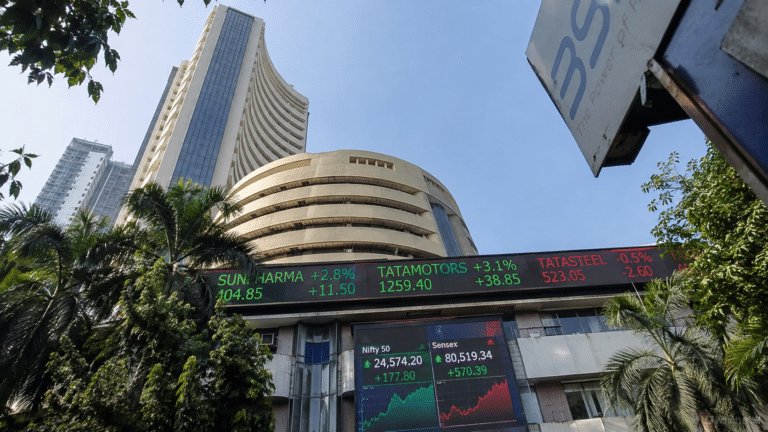
Indian equities are riding a wave of optimism this week, and if you are wondering whether the rally has legs or is just a dead-cat bounce, you are asking exactly the right question. On Thursday, July 2, 2026, the BSE Sensex rocketed 579.48 points to close at 77,502.12, a gain of 0.75%, while the NSE Nifty 50 climbed 169.85 points to settle at 24,175.70, up 0.71%. Bank Nifty, meanwhile, stayed nearly flat at 58,031.65, weighed down by selective weakness in private banking names. This blog decodes the Indian stock market trends shaping investor sentiment this Friday, July 3, 2026, blending fresh index data, macroeconomic signals like India GDP growth and CPI inflation, RBI repo rate direction, sector performance India 2026, and actionable stock recommendations for bluechip and momentum investors alike.
Indian Market Overview: Sensex, Nifty 50 and Bank Nifty Snapshot
The mood on Dalal Street has turned distinctly bullish after two sessions of consolidation, driven largely by a sharp comeback in IT heavyweights. Broad-based buying was visible across IT, Auto, Realty, Consumer Durables, Metals and FMCG counters, signalling that the rally isn’t confined to a handful of large caps.
- BSE Sensex closed at 77,502.12, up 579.48 points or 0.75 percent, marking one of the strongest single-day gains in recent weeks.
- NSE Nifty 50 settled at 24,175.70, adding 169.85 points or 0.71 percent, reclaiming the psychologically important 24,150 mark.
- Nifty Bank ended nearly unchanged at 58,031.65, down a marginal 1.40 points, as select private lenders capped the upside.
- Market breadth was healthy, with participation extending well beyond index heavyweights into mid and smallcap pockets.
- Investor sentiment improved on falling crude oil prices and easing geopolitical tensions, both of which support India’s import bill and inflation outlook.
Analysts tracking Indian stock market trends note that this breadth of participation is what separates a genuine trend reversal from a short covering bounce, and Friday’s session will be a key tell for whether bulls can hold onto these gains.
Key Economic Drivers Behind the Market Moves
India GDP Growth Trajectory
India’s growth story remains the backbone of investor confidence heading into the second half of 2026. The Ministry of Statistics and Programme Implementation revised FY26 real GDP growth upward to 7.6 to 7.7 percent, the sharpest expansion since the FY22 pandemic rebound, cementing India’s position as the fastest growing major economy in the G20. The IMF separately lifted its FY26 growth forecast to 7.3 percent, citing stronger than expected momentum in the December quarter, when the economy expanded 7.8 to 8.2 percent year on year.
Looking ahead, growth is expected to moderate slightly as base effects fade. The Economic Survey 2026 projects FY27 real GDP growth in a range of 6.8 to 7.2 percent, while EY and Goldman Sachs peg it closer to 6.9 percent, still comfortably among the fastest in the world. This resilience, powered by robust private consumption, strong gross fixed capital formation, and a rebound in manufacturing, gives equity markets a durable macro tailwind even amid global trade uncertainty from US tariffs.ddnews.
CPI Inflation Trends India
Inflation trends have turned decisively favourable for risk assets. After cooling to an eight month low near 2.1 percent in the RBI’s FY26 projections, CPI inflation edged back up through the year, reaching 3.21 percent in February, 3.48 percent in April, and 3.93 percent in May 2026. Even at these levels, inflation remains comfortably within the RBI’s 2 to 4 percent tolerance band, giving the central bank room to stay supportive of growth without panicking over price pressures.
RBI Repo Rates and Monetary Policy Stance
The Reserve Bank of India, under Governor Sanjay Malhotra, has leaned dovish through much of 2026, revising its FY26 CPI forecast down to as low as 2.1 percent earlier in the year before inflation crept back up. This easing bias has been a key driver of liquidity flowing into equities, particularly rate sensitive sectors like banking, auto and realty. With inflation still inside the comfort zone and GDP growth robust, the RBI has scope to maintain an accommodative repo rate stance, a critical variable market prediction India models are watching closely for the remainder of the fiscal year.
Unemployment and Labour Market Signals
While headline growth numbers are strong, employment data has been more mixed, with agricultural sector job growth slowing even as services and manufacturing add jobs at a healthy clip. This uneven labour market recovery is one reason the RBI continues to weigh growth support alongside inflation control in its policy calculus.
Nifty Today: Point-by-Point Breakdown
Here is exactly how the Nifty 50 behaved during the July 2 session, a template that traders are using to map out today’s likely opening moves.
- Nifty 50 opened 57 points higher at 24,062, reflecting positive overnight global cues.
- The index touched an intraday high of 24,194 before profit booking capped further upside.
- Nifty 50 closed at 24,175.70, up 169.85 points or 0.71 percent for the session.
- Immediate support for Nifty is placed at 24,100, a level bulls need to defend to keep the uptrend intact.
- Immediate resistance stands at 24,300, a breakout above which could trigger fresh momentum buying.
- Bank Nifty opened 101 points higher at 58,134, hit a high of 58,395, but faded to close at 58,031, reflecting the Nifty Bank trend of underperformance relative to the broader index.
- Bank Nifty support is at 57,800 and resistance at 58,200, a tight range suggesting consolidation in financials.
- IT stocks were the single biggest swing factor, with the Nifty IT index surging over 4.5 percent on the day.
- Falling Brent crude, trading near 70.56 dollars per barrel, supported the broader risk-on tone by easing inflation and fiscal deficit worries.
BSE Sensex vs Nifty 50 Trend Comparison: June to July 2026
| Metric | BSE Sensex | NSE Nifty 50 |
|---|---|---|
| Closing level (July 2, 2026) | 77,502.12 | 24,175.70 |
| Daily change | +579.48 points (+0.75%) | +169.85 points (+0.71%) |
| Late June trend | Volatile, dipped below key support amid profit booking | Slipped below 23,900 on June 30 before rebounding |
| July 1 close | Rose over 440 points, reclaiming 76,900 zone | Reclaimed the 24,000 mark |
| Key driver of the move | IT sector rebound and falling crude oil prices | Broad-based buying across IT, Auto, Realty, Metals |
| Immediate technical support | Near 77,000 psychological zone | 24,100 |
| Immediate technical resistance | Near 77,800 to 78,000 zone | 24,300 |
| Sector leadership | IT, Auto, Realty led gains; Energy lagged | IT surged 4.64 percent; Financial Services muted at 0.24 percent |
The pattern across late June into early July 2026 shows both benchmarks moving in near lockstep, but Sensex has slightly outpaced Nifty on percentage gains during the recovery phase, largely because of its differing weightage toward IT and select conglomerate stocks.
Latest Market News Highlights and Their Immediate Impact
- IT sector staged a sharp rebound after weeks of underperformance, with Infosys, TCS, Tech Mahindra and HCLTech leading gains; this lifted the Nifty IT index over 4.5 percent and was the single largest contributor to Thursday’s rally, immediately boosting overall market breadth and investor confidence in export-oriented sectors.
- Brent crude slipped below 71 dollars a barrel on encouraging signals from indirect US-Iran talks, a development that directly eases India’s import bill, supports the rupee, and reduces pressure on the fiscal deficit, a combination that historically correlates with stronger FII inflows into Indian equities.
- Global risk sentiment improved as bond yields softened and geopolitical tensions eased, even though several Asian markets stayed volatile on tech sector weakness; Indian markets managed to outperform regional peers, reinforcing the narrative of India as a relative safe haven within emerging markets.
- Battery, energy storage and green mobility stocks saw a strong session, with Exide Industries jumping over 7 percent and Kabra Extrusion gaining 5.6 percent, reflecting growing investor appetite for the clean energy transition theme even as some large-cap energy names like Reliance and L&T saw mild profit booking.
- RBI’s continued dovish policy commentary through 2026, alongside inflation staying inside the 2 to 4 percent tolerance band, has kept borrowing costs supportive for rate-sensitive sectors, an important undercurrent for the ongoing rally in auto, realty and NBFC stocks.
- India’s upgraded GDP growth estimates, now pegged near 7.6 to 7.7 percent for FY26, have reinforced foreign institutional confidence in India’s medium-term earnings growth story, a key reason global brokerages continue to favour Indian equities within their Asia allocation.
Foreign Indices Influencing Indian Markets
Global cues remain a critical filter through which Indian stock market trends must be read every morning. The following foreign indices and commodity benchmarks are currently the most influential for domestic sentiment.
- Wall Street indices, particularly the S&P 500 and Nasdaq, set the overnight tone for tech-heavy Nifty IT movements given India’s deep IT services linkage to US corporate spending.
- Asian markets including Nikkei, Hang Seng and Shanghai Composite influence regional risk appetite; Asian tech weakness has recently created a mild drag even as Indian IT outperformed on domestic triggers.
- European indices such as the FTSE 100 and DAX, which edged higher on defensive sector strength, provide secondary confirmation of global risk-on or risk-off tone.
- Brent crude oil price, hovering near 70.56 dollars per barrel, functions almost like an unofficial index for Indian markets given the country’s heavy dependence on crude imports and its direct link to inflation and the rupee.
- Gold prices, trading near 4,066.52 dollars per ounce, reflect global safe-haven demand and often move inversely to broader risk appetite in Indian equities.
- US Federal Reserve commentary and upcoming US jobs data are being watched closely, since dollar strength or weakness directly affects FII flows into Indian markets.
Top 10 Stocks to Buy on NSE and BSE for 2026
Based on current earnings momentum, valuation comfort and sector tailwinds visible in the latest market commentary, here is a curated bluechip stock picks list for long-term positioning through 2026.
- Infosys — Rebounded over 5.6 percent in a single session on strong deal pipeline optimism and a weaker rupee tailwind for export revenue, making it a core pick within the IT recovery theme.
- TCS — Gained over 4.3 percent as institutional buyers returned to India’s largest IT services company, benefiting from steady annuity-style revenue and consistent dividend payouts
- Tech Mahindra — Up 4.34 percent, riding the broader IT sector rebound, with margin improvement initiatives supporting earnings visibility.
- HCLTech — Rose 4.24 percent on strong institutional buying, benefiting from diversified service lines and resilient client spending.
- Bajaj Finserv — Gained 3.23 percent, reflecting continued strength in India’s financial services and insurance penetration story, a key beneficiary of GDP growth translating into consumer credit demand.
- Exide Industries — Surged over 7 percent on battery and energy storage demand tailwinds, positioning it as a direct beneficiary of India’s electric mobility transition.
- Adani Green Energy — Gained over 1 percent, supported by continued policy push toward renewable capacity addition under India’s clean energy roadmap.
- NTPC Green Energy — Advanced 1.2 to 1.5 percent, benefiting from the government’s accelerating green power capacity targetss.
- Olectra Greentech — Rose nearly 2 percent, capturing investor enthusiasm in the electric mobility and public transport electrification theme.
- Amara Raja Energy and Mobility — Gained around 2.6 percent, reflecting healthy investor sentiment toward battery manufacturing as India localizes its EV supply chain.
These picks blend traditional IT bluechip stock picks with emerging green energy and battery theme stocks, giving investors exposure to both stable earnings compounding and high-growth thematic bets tied to sector performance India 2026 trends.
Top 10 Gainers and Losers: NSE and BSE Snapshot
| Rank | Top Gainers | Change | Rank | Top Losers | Change |
|---|---|---|---|---|---|
| 1 | Infosys (INFY) | +5.64% | 1 | MaxHealthcare (MAXHEALTH) | -1.10% |
| 2 | Exide Industries | +7.0% | 2 | Larsen and Toubro (LT) | -0.81% |
| 3 | Tech Mahindra (TECHM) | +4.34% | 3 | Tata Motors PV (TMPV) | -0.53% |
| 4 | TCS | +4.31% | 4 | Nestle India | -0.52% |
| 5 | HCLTech | +4.24% | 5 | Axis Bank | -0.45% |
| 6 | Kabra Extrusion | +5.6% | 6 | Reliance Industries | -0.46% |
| 7 | Bajaj Finserv | +3.23% | 7 | JSW Energy | -0.66% |
| 8 | Websol Energy | +5.0% | 8 | Praj Industries | -0.52% |
| 9 | Olectra Greentech | +2.0% | 9 | EKI Energy Services | -0.7% |
| 10 | Amara Raja Energy | +2.6% | 10 | GAIL | -0.03% |
Sector Performance India 2026: IT, Banking, Pharma and Consumer Goods Compared
| Sector | Session Change | Key Drivers |
|---|---|---|
| Information Technology | +4.64% | Sharp rebound in Infosys, TCS, Tech Mahindra, HCLTech; weaker rupee aiding export margins; renewed deal pipeline optimism |
| Realty | +1.45% | Continued buying on rate cut expectations and steady housing demand momentum |
| Consumer Durables | +1.43% | Healthy gains as consumption growth remains robust per GDP data |
| Auto | +1.21% | Broad-based strength tied to festive season demand outlook and EV transition tailwinds |
| Metals | +0.88% | Positive momentum amid improving global risk appetite |
| FMCG | +0.56% | Defensive buying continued despite index-wide risk-on mood |
| Pharma | +0.50% | Selective accumulation in healthcare stocks, though MaxHealthcare saw profit booking |
| Financial Services | +0.24% | Mixed performance; Bank Nifty stayed range-bound as select private banks lagged |
| Energy | -0.15% | Mild profit booking despite falling crude supporting broader sentiment |
This sector performance India 2026 snapshot underscores a rotation story: IT has reclaimed leadership after months of relative underperformance, while traditionally defensive Energy and select Financial Services names are pausing after a strong prior run.
Analysis and Actionable Recommendations
Diversified Portfolio Suggestions by Risk Appetite
Conservative investors should anchor portfolios around large-cap IT bluechips like TCS and Infosys alongside FMCG staples such as Nestle India, benefiting from steady dividend yields and defensive earnings even though near-term upside may be capped by valuation comfort rather than explosive growth. Pros include lower volatility and consistent cash flows; cons include comparatively muted upside versus thematic plays.
Moderate risk investors can blend banking exposure through names benefiting from RBI’s accommodative repo rate stance with select auto and realty stocks riding the consumption and GDP growth tailwind. Pros include participation in India’s structural growth story with manageable volatility; cons include sensitivity to any surprise inflation uptick that could delay rate cuts.
Aggressive investors seeking market prediction India upside should consider green energy and battery theme stocks like Exide Industries, Adani Green Energy and Olectra Greentech, which are capturing outsized gains tied to India’s electrification push. Pros include high growth potential aligned with national policy priorities; cons include elevated valuations and higher volatility tied to global crude and interest rate swings.
Stock Recommendations for Today
- Track Nifty’s 24,100 support and 24,300 resistance closely, since a decisive breakout could trigger fresh momentum buying across IT and auto counters.
- Watch Bank Nifty’s tight 57,800 to 58,200 range, as a breakdown could signal renewed weakness in private banking names, while a breakout above 58,200 would confirm participation from financials in the broader rally.
- Consider partial profit booking in IT stocks that have rallied over 4 percent in a single session, since such sharp moves often see near-term consolidation.
- Accumulate battery and green energy theme stocks on dips, given the structural policy tailwind supporting India’s clean energy transition through 2026.
- Stay cautious on select large-cap energy and infrastructure names like Reliance and L&T that saw mild profit booking despite the broader market strength, as sector rotation may continue.
- Monitor Brent crude near the 70 dollar mark, since any renewed spike could quickly reverse the inflation-linked positive sentiment supporting Indian equities.
- Keep an eye on upcoming RBI commentary and CPI data releases, as inflation trends India staying within the 2 to 4 percent band remains the single biggest variable for continued monetary policy support.
Final Thought: What Friday’s Session Could Mean for Indian Investors
The unique data insight from this week’s action is that Indian stock market trends are currently being shaped less by any single mega-event and more by a confluence of supportive factors, falling crude oil, a dovish RBI stance, resilient GDP growth near 7.6 percent, and a long-awaited IT sector comeback. Sensex crossing 77,500 and Nifty holding above 24,150 confirm that bulls have regained control, but Bank Nifty’s flat performance is a reminder that not every sector is participating equally in this rally.
For readers tracking sector performance India 2026 and hunting for their next bluechip stock picks, the message is clear: diversification across IT recovery plays, green energy themes, and steady consumption names offers the best balance of growth and resilience. As always, keep watching the RBI repo rate trajectory and CPI inflation prints closely, because these two levers will ultimately decide whether this rally has the fuel to push Sensex toward fresh highs or whether markets settle into a consolidation phase through the rest of July 2026.