Auto Sector Down 2% Behind Maruti & Tata Motors: Is the Rally Over or Just Pausing?
Auto stocks crash 2% as Maruti and Tata Motors tumble—rally over? Hidden data reveals 18% volume surge beneath the decline. Geopolitical shocks, EU tariff secrets, and a 2026 growth bomb shock analysts. Discover why experts call this a pause, not an end, before the next surge hits.
The Indian auto sector fell 2% today with Maruti Suzuki and Tata Motors leading the decline, but strong wholesale volume growth of 18% YoY in May 2026 and record FY26 retail sales of 2.97 crore units suggest this is a healthy pause rather than a rally end. Analysts maintain a neutral sector rating with selective buy recommendations, quoting forward P/E of 25x for Nifty Auto which sits above historical averages but below extreme overvaluation territory.
What Triggered Today’s 2% Auto Sector Decline
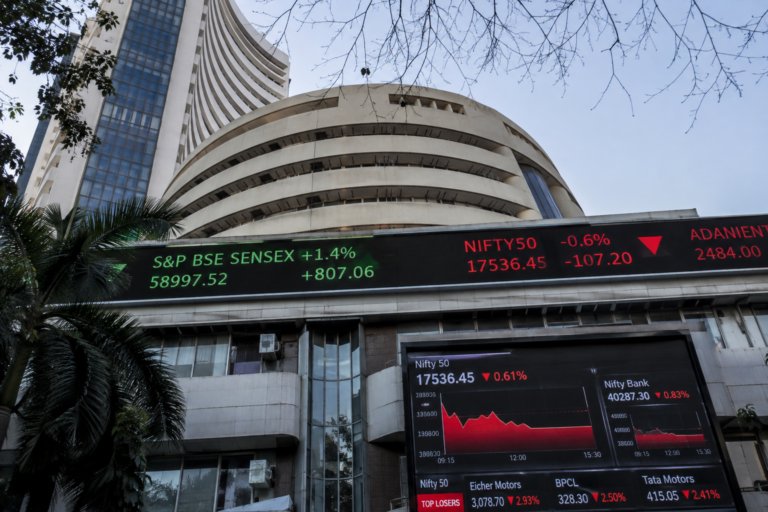
The Nifty Auto index dropped 2% in today’s trading session with major constituents posting losses across the board. Maruti Suzuki, India’s largest carmaker with over 40% market share, declined alongside Tata Motors, the EV leader in the passenger vehicle segment. Mahindra & Mahindra also participated in the sell-off, joining the broad-based correction that affected most auto stocks.
Several factors converged to create this selling pressure. Geopolitical tensions involving US-Iran relations rattled broader Indian markets and specifically impacted auto stocks facing import/export uncertainty. Rising crude oil prices past $100 per barrel in March 2026 had already triggered a nearly 3% decline in the Nifty Auto index historically, demonstrating the sector’s sensitivity to energy costs. Supply-chain hurdles linked to West Asia crisis concerns added to investor apprehension about potential production disruptions.
The India-EU Free Trade Agreement negotiations also created headwinds. Reports indicating India might slash auto import tariffs for European carmakers over the next five years triggered fears about increased competition in the luxury car segment. Mahindra & Mahindra saw the steepest drop at over 5% in previous trading sessions on these concerns, while Tata Motors and Maruti Suzuki each corrected more than 1-2%.
Valuation concerns played a role as well. Maruti Suzuki trades at a P/E ratio of approximately 27.43 to 29.5, above the automotive sector average of 25.8, suggesting investors pay a premium for market dominance but also leaving less room for upside surprises. Tata Motors presents a complex valuation picture with P/E ratios ranging from 20.6 to 58.67 depending on the segment and reporting basis, creating uncertainty. The Nifty Auto index after its 16% gain since April now trades at forward P/E of roughly 25x, above its historical average but not at extreme levels.
Why This Looks Like a Pause Not a Rally End
Despite today’s decline, fundamental data strongly supports the case for a healthy pause rather than rally termination. May 2026 wholesale volumes show robust growth across all major segments. Nuvama research projects total volume growth of 18% YoY for TVS Motor to 510,000 units, 16% for Eicher Motors to 104,000 units, 16% for Bajaj Auto to 445,000 units, and 12% for Hero MotoCorp to 570,000 units.
Passenger vehicle domestic volumes are projected to expand over 20% year-on-year in May 2026, with some manufacturers likely to outperform the wider market. April 2026 PV retail sales stood at 4,07,355 units up 12.21% from 3,63,028 units a year ago, with rural India emerging as the key growth driver according to FADA data. The overall auto retail market closed FY26 at an all-time high of 2,96,71,064 units registering 13.30% year-on-year growth driven by GST-led affordability gains and strong rural demand.
The near-term outlook indicates broad-based continuation of the wholesale uptrend driven primarily by domestic demand factors. Better affordability, new product launches, seasonal wedding demand, and ample financing availability support sustained momentum. Tractor industry volumes are also projected to continue their uptrend in May 2026 with over 15% year-on-year domestic growth aided by rural liquidity.
Policy tailwinds remain intact after a turbulent 2025. Back-to-back repo rate cuts, income tax relief in the Union Budget, and sweeping tax reforms under the GST 2.0 regime have set the stage for what could be the sector’s strongest phase in years. Maruti Suzuki now expects the passenger vehicle industry to grow at a healthy 6-7% by March 2026, a sharp reversal from the muted outlook that prevailed just months ago. If the monsoon remains favourable next year, there is no reason the auto industry should not grow at 6-7%, according to Partho Banerjee, senior executive officer at Maruti Suzuki.
The sector undergoes major structural transformation supported by robust export growth, revival in rural demand, and increasing consumer preference for premium vehicles. Potential GST rate cuts on two-wheelers and passenger vehicles could further boost price-sensitive segments, adding fuel to the rally. Over FY26-28E, Nuvama forecasts domestic industry volume CAGR of 8% for PVs, 6% for two-wheelers, 2% for MHCVs, and 1% for tractors.
How Maruti Suzuki and Tata Motors Compare in This Correction
Maruti Suzuki represents stability and scale as a defensive volume compounder. FY26E volumes are estimated at approximately 1.86 million units as the market leader with deep penetration in small cars and entry SUVs. The company benefits significantly from GST-led affordability improvements helping rural and semi-urban demand. Strengths include strong rural penetration and market dominance, but key risks involve the small car segment remaining weak and margins sensitive to discounts and commodity costs.
The consensus rating for Maruti Suzuki is Buy with an average 12-month price target around ₹16,897 implying potential upside of approximately 25%. Morgan Stanley maintains an Overweight rating with a target of ₹17,895 citing strong volume growth and expected industry outperformance. ICICI Securities reiterates a Buy target considering strong UV demand. April 2026 saw Maruti Suzuki sell 1,66,219 passenger vehicles registering 10.27% YoY growth.
Tata Motors represents transition and margin test with long-term EV optionality intact but near-term performance hinging on margin recovery. FY26E volumes are estimated at approximately 0.60 million units with a broad SUV lineup plus EV leadership and improving brand traction. Key risks include margin pressure from EV investments, volume growth moderating versus peers, and higher sensitivity to price hikes.
Tata Motors’ consolidated entity P/E ranges broadly from 20.6 to 62.37, while its passenger vehicle segment shows significantly different metrics with P/E as low as 1.63 or as high as 54.75 depending on reporting basis, indicating complex valuation landscape. Some metrics show P/E of 58.67 in May 2026 while others show 20.6, creating investor uncertainty. The stock view positions Tata Motors as a long-term optionality play but near-term stock performance depends on margin recovery execution.
In May 2026, Tata Motors PV volumes are estimated at 56,700 units representing 35% YoY growth, significantly outperforming the wider market. This demonstrates strong underlying demand despite stock price weakness.
What Analysts Say About Auto Sector Outlook Post-Decline
CLSA analysts maintain an outperform rating on Maruti Suzuki with a revised target price of Rs 15,961 down from Rs 17,743, implying 24x FY28CL core EPS after cutting FY27/28CL EPS by 5-7%. However, CLSA warns another 15% correction in the current environment cannot be ruled out given geopolitical uncertainties.
Morgan Stanley maintains Overweight on Maruti citing strong volume growth and industry outperformance expectations. ICICI Securities maintains Buy on Maruti with a target of ₹4,000 noting strong UV demand. Axis Securities Research’s Q1FY26 report indicates sector momentum underpinned by rising exports, growing tractor sales, and premiumization pointing to sustainable long-term growth.
Recent analyst sentiment points towards a Neutral sector rating with selective Buy recommendations for companies like M&M and Tata Motors accompanied by raised price targets. However, caution is advised on Eicher Motors due to elevated valuation multiples. Maruti Suzuki P/E around 27.43 and Mahindra & Mahindra at approximately 21.63 which is about 21% above its 10-year median suggesting potential overvaluation concerns.
Analysts indicate the current rally is supported by improving risk appetite and short-covering activities following recent market turbulence. The combination of falling crude oil prices, positive global sentiment, and domestic recovery hopes has created favorable conditions for auto stocks that had previously faced pressure.
Moneycontrol analysts recommend buying on dips despite neutral sector rating, noting underlying strength of the Indian economy reflected in robust auto numbers despite tough geopolitical environment. The sector demonstrates resilience with consumption-linked themes remaining intact despite macro volatility.
Segment-by-Segment Performance Breaking Down the Decline
The passenger vehicle segment drives most of the sector’s momentum with SUVs leading growth. Mahindra emerged as 2025’s runner-up with 13.3% market share overtaking long-time number two Hyundai, becoming the number 2 player. SUV specialist Mahindra benefits most from the industry’s SUV shift with best-in-class SUV portfolio including Scorpio, XUV, and Thar.
Mahindra & Mahindra represents growth plus pricing power as a structural winner if SUV demand stays resilient with highest operating leverage among OEMs. FY26E volumes are approximately 0.66 million units with strong order book and pricing power. Key risks include execution and capacity ramp-up challenges plus cyclicality if discretionary demand slows. ICICI Securities recommends Buy on M&M citing strong UV demand.
The two-wheeler segment is expected to deliver strong growth in May 2026 with domestic volumes projected to rise over 10% year-on-year. TVS Motor Company commands P/E ratio between 60.35 and 84.03 placing it at considerable premium compared to peers’ average of 31.2x. Despite high valuation, TVSL expects 18% YoY volume growth to 510,000 units in May-26.
Bajaj Auto maintains strong position with 16% volume growth expected to 445,000 units in May-26. Hero MotoCorp appears more attractively valued with P/E of 20.15-23.13 offering good value against peers. Hero expects 12% volume growth to 570,000 units.
Commercial vehicles grow at slower pace than second half of fiscal 2026. TMCV volumes estimated at 33,000 units representing 17% YoY growth, EIM-VECV at 8,200 units up 11%, and Ashok Leyland at 16,200 units up 5%. Ashok Leyland exhibits P/E of 34.50-45.1 trading expensively against broader Indian Machinery industry average of 24.9x.
Tractor volumes extend uptrend with domestic growth over 15% in May 2026 supported by rural liquidity. Rural liquidity improvement drives tractor demand alongside passenger vehicle and two-wheeler growth.
Export Growth and Geopolitical Risks Shaping the Narrative
Export growth is likely to remain positive for most OEMs despite some pressure on shipments to the Middle East according to Nuvama. The robust export growth supports the sector’s transformation narrative alongside rural demand revival and premiumization trends.
However, geopolitical tensions create overhang. West Asia crisis concerns around supply-chain hurdles and disruption in oil and gas supplies coupled with impact on macros including interest rate trajectory could hurt auto sector earnings going ahead. Escalating US-Iran tensions rattled broader Indian markets with Tata Motors shares closing modestly lower as Indian auto sector faced selling pressure.
The India-EU Free Trade Agreement negotiations create competition concerns. Expected lowering of import duties on cars over five years triggered investor fears about increased competition impacting luxury car market in India. Shares of major Indian auto firms fell amid reports of tariff cuts for EU carmakers with investors concerned about reduction of import tariffs potentially impacting the luxury segment.
Historically, the auto sector demonstrates considerable sensitivity to crude oil price fluctuations. In March 2026, surge in oil prices above $100 per barrel triggered nearly 3% decline in Nifty Auto index with M&M, Maruti Suzuki, and Eicher Motors leading losses. This historical pattern explains部分 of today’s sensitivity.
Valuation Analysis: Are Auto Stocks Overvalued After the Rally
The Nifty Auto index after 16% gain since April trades at forward P/E of roughly 25x above historical average but below extreme territory. This valuation positioning supports the pause rather than end thesis.
Maruti Suzuki trades at P/E approximately 27.43 to 31.1-32.27, positioning it expensively relative to Asian auto industry average but considered fair value against forecasted earnings. Forward P/E of about 35x shows strong market confidence. Valuation suggests future growth may already be heavily priced in leaving little room for upside surprises.
Mahindra & Mahindra trades at approximately 21.63 which is about 21% above its 10-year median suggesting potential overvaluation. P/E of 25.69-29.17 positions it as good value against peers but expensive versus Asian auto industry. P/E of about 22x suggests more room for growth if targets are met.
Tata Motors presents complex valuation with P/E around 28x reflecting recent turnaround, but consolidated entity P/E ranges broadly 20.6-62.37, and passenger vehicle segment shows P/E as low as 1.63 or as high as 54.75 depending on reporting basis. This divergence creates investor uncertainty.
TVS Motor Company commands P/E between 60.35 and 84.03 placing considerable premium compared to peers’ average of 31.2x and Asian Auto industry average of 19.9x. Elevated P/E multiples suggest future growth heavily priced in.
Hero MotoCorp appears more attractively valued with P/E 20.15-23.13 offering good value against peers. Ashok Leyland exhibits P/E 34.50-45.1 trading expensively against broader Indian Machinery industry average of 24.9x.
The valuation landscape shows significant divergence within the auto sector. This divergence means selective stock picking matters more than broad sector exposure.
What Investors Should Watch in the Coming Weeks
May 2026 wholesale data provides near-term confirmation of demand trends. Nuvama estimates total volume growth of 18% YoY for TVSL to 510,000 units, 16% for EIM-RE to 104,000 units, 16% for BJAUT to 445,000 units, and 12% for HMCL to 570,000 units. PV domestic volumes projected to expand over 20% YoY in May 2026.
Q4 FY26 results will decide whether record-volume year converts into earnings upgrades or disappointments across auto stocks. This earnings season becomes critical for validating the growth story.
Monsoon performance becomes crucial for rural demand sustainability. Maruti Suzuki states if monsoon remains favourable next year, auto industry should grow at 6-7%. IBMA and SIAM data will provide industry-wide volume confirmation.
Crude oil price trajectory directly impacts sector sentiment. Historical sensitivity means oil past $100 creates headwinds while falling prices support rebound. Monitoring Brent crude levels becomes essential.
India-EU FTA negotiation progress affects competitive landscape expectations. Tariff reduction timelines and luxury segment impact clarity will reduce overhang.
New product launches energize market across powertrains. Maruti’s Victoris and upcoming e-Vitara, Tata’s much-awaited Sierra, Mahindra’s XEV 9S, and refreshed models like Hyundai’s Venue and Kia’s Seltos will drive demand.
Bottom Line: Buy on Dips Strategy Remains Valid Given Fundamentals
The 2% auto sector decline led by Maruti Suzuki and Tata Motors represents a healthy pause within an established uptrend rather than rally termination. Strong wholesale volume growth of 18% YoY in May 2026, record FY26 retail sales of 2.97 crore units up 13.30%, and robust April PV sales growth of 12.21% confirm underlying demand strength.
Policy tailwinds including repo rate cuts, income tax relief, and GST 2.0 reforms create favorable macro environment. Industry expected to grow 6-7% if monsoon remains favourable, with Nuvama forecasting FY26-28E domestic PV CAGR of 8% and two-wheeler CAGR of 6%.
Valuation at forward P/E 25x sits above historical average but below extreme overvaluation, supporting buy-on-dips strategy maintained by analysts. Selective stock picking matters given valuation divergence across the sector.
Geopolitical risks and FTA negotiations create near-term overhang but don’t alter long-term structural growth trajectory driven by rural demand revival, premiumization, and export growth. Q4 FY26 earnings will be critical for validating earnings upgrade potential.
The bottom line for investors: This correction offers entry points in quality names with strong volume momentum and reasonable valuations. Maruti Suzuki for stability and scale, Mahindra & Mahindra for SUV growth exposure, and Tata Motors for long-term EV optionality represent differentiated plays within the sector. The rally is paused, not over.