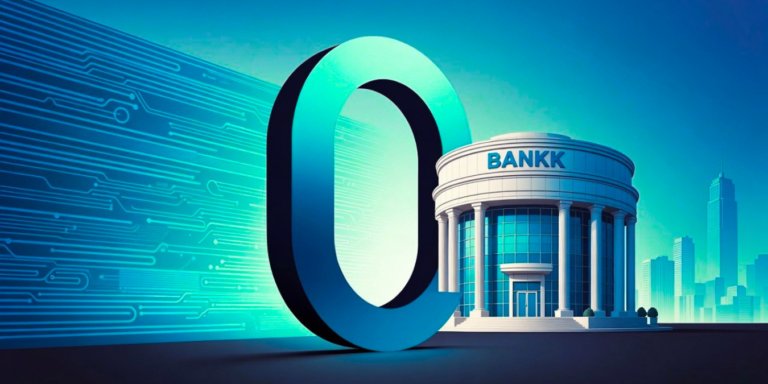
Zero Balance, Full Power: The New-Age Digital Current Accounts in 2026 That Are Making Traditional Bank Accounts Obsolete
The way Indian businesses bank has changed permanently. What once required a stack of physical documents, branch visits, a hefty minimum balance, and weeks of waiting can now be accomplished in under 24 hours — entirely from a smartphone. New-age digital current accounts in 2026 are not just a convenience upgrade; they represent a fundamental restructuring of business finance in India, and the numbers back this up unambiguously.
The Minimum Balance Myth Is Finally Dead
For decades, the minimum balance requirement was the most painful friction point between a business and its bank. Small business owners, freelancers, early-stage founders, and solo entrepreneurs often paid penalty after penalty simply because their working capital was deployed in inventory, payroll, or growth — not sitting idle in a bank account earning nothing. Traditional banks treated this idle balance as a quiet revenue stream at the expense of businesses that could least afford it. That model is collapsing in 2026, and it is collapsing fast.
From April 1, 2026, the Reserve Bank of India has mandated that all banks must offer full digital banking services — including mobile and internet banking — to holders of Basic Savings Bank Deposit accounts, with no minimum balance requirements and no charges on cash deposits at branches or ATMs. This is not just a policy change; it is regulatory confirmation that the era of penalizing low-balance account holders is over. The market had already moved in this direction, but now the regulator has locked it in as a baseline expectation for every bank in India.
What Makes a Digital Current Account “New-Age”
The term “digital current account” gets used loosely, so it is worth being precise about what separates a genuinely new-age account from a traditional bank that has simply added a mobile app. A new-age digital current account is built on a technology-first architecture, where the account opening, KYC verification, fund management, API integrations, payroll processing, vendor payments, and GST invoicing are all native to the platform — not bolted on as afterthoughts.
Axis Bank’s NEO for Business platform, for instance, delivers a fully active current account in under 24 hours through end-to-end digital onboarding using Video KYC with PAN, Aadhaar, and GST documentation. The platform integrates built-in GST accounting, instant invoicing, auto-matching, inventory management, and real-time P&L reports within the same dashboard. For a small business owner in Lucknow or a startup founder in Bengaluru, this means the accounting, banking, and compliance functions that previously required separate software, a CA visit, and multiple bank trips are now unified in a single interface.
RazorpayX has taken this further by building what it calls a “Business Banking+” suite that is trusted by 70% of India’s unicorns. The platform powers current accounts in partnership with ICICI Bank, Yes Bank, Axis Bank, and RBL Bank, and offers bulk payouts of up to 50,000 transactions in a single OTP, penny-drop bank account verification, multi-user workflows with granular access controls, automated payroll and HR management, and access to credit through Razorpay Capital. At FTX26 in March 2026, Razorpay launched the next evolution of its business banking dashboard specifically designed for Indian startups — a signal that the product roadmap in this space is accelerating, not plateauing.
The Neobank Ecosystem Powering This Revolution
While platform-layer solutions like RazorpayX operate in partnership with licensed banks, a parallel neobank ecosystem has grown to serve individual professionals, gig workers, freelancers, and small business owners who need banking that matches their lifestyle. According to projections that have now been validated by ground-level adoption, two in five Indian adults have a digital bank account in 2026, up from one in five just five years ago. Around 26% of Indians were already using digital-only banks by 2023, and adoption has only accelerated since.
Leading neobanks including Fi Money, Jupiter, Niyo, Freo, and Open have built category-specific banking experiences that traditional banks structurally cannot replicate. Fi Money, partnered with Federal Bank, offers zero-balance savings accounts, goal-based “Fi Jars,” and smart financial insights designed to make money management intuitive rather than intimidating. Jupiter, also on Federal Bank’s infrastructure, offers auto-savings pots, instant UPI, and AI-driven spending insights. Niyo focuses on salary accounts, global payments, and multi-currency travel cards for India’s internationally mobile workforce.
For business banking specifically, Open Money and InstantPay have carved out significant positions. InstantPay offers instant current accounts, bulk transfer APIs, and multi-bank partnerships that let businesses route payments with near-zero friction. These platforms do not compete with banks — they sit on top of licensed banking infrastructure and extract the maximum value from it through better software, better UX, and better integrations.
API Banking: The Silent Engine
The single most transformative feature of new-age digital current accounts is something most business owners never directly touch but benefit from every day: API banking. Application Programming Interfaces allow businesses to connect their current account directly to their ERP software, e-commerce platform, payroll system, GST portal, and payment gateway — so that money moves automatically based on business logic, not manual intervention.
RazorpayX’s instant bulk payout APIs allow e-commerce startups to process real-time refunds to cards, UPI IDs, and bank accounts automatically without any human intervention in the transaction chain. A Shopify store processing 500 returns a week does not need a finance team member manually initiating each refund transfer — the API does it the moment the return is logged. This is not a luxury feature reserved for large enterprises; it is now accessible to any startup or SME with a RazorpayX Business Banking+ account.
UPI 2.0 Autopay has added another powerful layer to this architecture. By allowing businesses to authorize recurring payment mandates that auto-debit customers on a schedule, subscription-first businesses — SaaS companies, D2C brands with replenishment models, EdTech platforms — can now collect recurring revenue with the same reliability as NACH-based mandates but with the speed and simplicity of UPI. The 2026 compliance update expanded the standard transaction limit structure to allow up to Rs. 1 lakh for specific high-value categories like insurance, mutual funds, and credit card bill payments without additional authentication. From April 2026, UPI transactions also now require two-factor authentication with at least one dynamic security factor — a move that strengthens trust without meaningfully adding friction for legitimate users.
Zero Balance Does Not Mean Zero Power
One of the most persistent misconceptions about zero-balance digital current accounts is that they come with stripped-down features. In 2026, that argument has no basis in reality. The Axis Bank Delite Current Account, specifically designed for retailers, offers zero monthly average balance, nil monthly service charges, extended benefits on cash deposits and withdrawals, free NEFT and RTGS transfers, and multiple debit card tier options. This is not a compromised banking experience — it is a complete one, without the penalty structure.
DBS Bank’s digiSavings account offers interest rates up to 7% per annum on balances between Rs. 4 lakh and Rs. 5 lakh, with no minimum balance requirement, instant account opening via mobile app, a free virtual debit card, and unlimited ATM withdrawals. When a zero-balance account earns 7% interest and comes with unlimited free transactions, the traditional argument that minimum balance accounts deliver better value collapses entirely.
Forbes Advisor’s 2026 ranking of the best current accounts in India highlights Axis Bank’s New Economy Group Current Account for its nil monthly balance requirement alongside a feature set designed for modern business needs. The competitive pressure from neobanks has forced traditional banks to match these terms or lose the next generation of business customers entirely — and this is exactly the disruption playing out across the Indian banking sector right now.
The Regulatory Tailwind Making This Permanent
What differentiates the 2026 digital banking revolution from earlier waves of fintech excitement is that this one has regulatory infrastructure underneath it. The RBI has not merely tolerated the shift toward digital — it has actively accelerated it. The April 2026 BSBD mandate requiring all banks to offer free digital banking services with no minimum balance to basic account holders is the most explicit regulatory endorsement yet. Banks that fail to comply now face scrutiny, not just competitive disadvantage.
The revised norms also mandate free ATM and debit card issuance with renewal, minimum cheque-book entitlement, free account statements, and no minimum balance requirements for BSBD customers. This regulatory floor is significant because it means even the most conservative public sector bank customer in a Tier 3 city is now entitled to the same digital access that was previously a premium feature of fintech-first accounts. Financial inclusion is no longer a policy aspiration — it is an enforceable standard.
Why Traditional Bank Accounts Are Losing the Battle
Traditional bank accounts are not disappearing overnight, but they are losing the most valuable segment of customers: young professionals, small business owners, gig economy workers, and tech-forward entrepreneurs who make up the engine of India’s economic growth. These customers do not want to visit a branch. They do not want to maintain a minimum balance. They do not want to wait 3-5 business days for NEFT settlements during bank holidays. They want their banking to work the way their other software works — instantly, reliably, and on their terms.
Neobanks and digital current accounts deliver on all four counts. Account opening is completed digitally with Aadhaar-based Video KYC in minutes. Transactions are processed 24×7, including on public holidays, unlike traditional banking windows. Interest rates on savings within these platforms can reach 7-9% compared to the 3-4% typically offered by traditional banks. Fees are minimal or entirely absent, and budgeting tools, expense categorization, GST invoicing, and payroll integrations come built into the account experience rather than requiring separate subscriptions.
The neobank model also addresses a fundamental structural inefficiency of traditional banking: the cost of physical infrastructure. Traditional banks spend enormous capital maintaining branch networks, ATM fleets, and legacy core banking systems. Neobanks and digital-first platforms have none of these costs, which is why they can offer zero-fee, zero-balance accounts while still building viable businesses through lending, cross-selling, and interchange revenue.
Choosing the Right Digital Current Account in 2026
With so many options available, the right choice depends on the specific nature of your business. For early-stage startups and unicorn-track companies managing high-volume payouts, vendor payments, and payroll, RazorpayX Business Banking+ is the dominant choice — trusted by 70% of India’s unicorns and continuously updated with enterprise-grade features. For MSMEs and retailers who need simple, zero-balance business banking with branch access as a fallback, Axis Bank’s NEO for Business and Delite Current Account offer the best combination of digital convenience and legacy infrastructure.
For freelancers, independent professionals, and gig workers, neobanks like Fi Money, Jupiter, and Freo deliver the most intuitive and rewarding personal banking experience, with zero balance requirements, smart savings tools, and cashback rewards that traditional banks have never offered at this price point. For businesses with international operations, payment needs, or multicurrency requirements, Niyo’s global banking offering and RazorpayX’s forex capabilities make them the logical starting points.
The decision matrix is straightforward: if you are a business owner, evaluate RazorpayX or Axis NEO. If you are a solo professional or gig worker, evaluate Fi Money or Jupiter. If you have global payment needs, evaluate Niyo or RazorpayX’s forex module. None of these accounts will penalize you for not keeping idle cash in them — and all of them will give you tools that make your financial operations faster, smarter, and more automated than anything a traditional branch-based account can offer.
The Bigger Picture: India’s Financial Stack Is Maturing
The rise of zero-balance digital current accounts is not an isolated product trend — it is one visible layer of a maturing financial stack that includes UPI, GSTN, Aadhaar-based eKYC, Account Aggregator frameworks, and OCEN (Open Credit Enablement Network). Each of these infrastructure layers reduces the friction cost of financial access by one more degree, and digital current accounts are the front-end interface where businesses and individuals experience the cumulative benefit of all that infrastructure.
India processed over 18 billion UPI transactions in a single month in late 2025, a volume that would have been inconceivable five years ago and that is only possible because account-level infrastructure has kept pace with payment-layer innovation. New-age digital current accounts are the vessel through which that payment infrastructure flows — the place where collections land, where payouts originate, where reconciliation happens, and where growth capital eventually becomes accessible. When the vessel is slow, expensive, and branch-dependent, the whole system underperforms. When it is instant, zero-cost, and API-native, it becomes a genuine competitive advantage for every business that uses it.
The businesses winning in 2026 are not necessarily those with the largest teams or the most funding. They are the ones whose financial operations are the most automated, the most integrated, and the most resilient. A well-configured digital current account on RazorpayX or Axis NEO, connected to a payment gateway, a GST portal, and a payroll system, effectively gives a 10-person startup the financial infrastructure that once required a full finance department. That is not incremental improvement — it is a structural shift in what is possible for businesses at every stage of growth in India today.
The author draws on publicly available product information, RBI regulatory updates, and industry adoption data to provide an informational overview. Readers should independently verify current product terms and fees with respective banks and fintech platforms before making financial decisions.