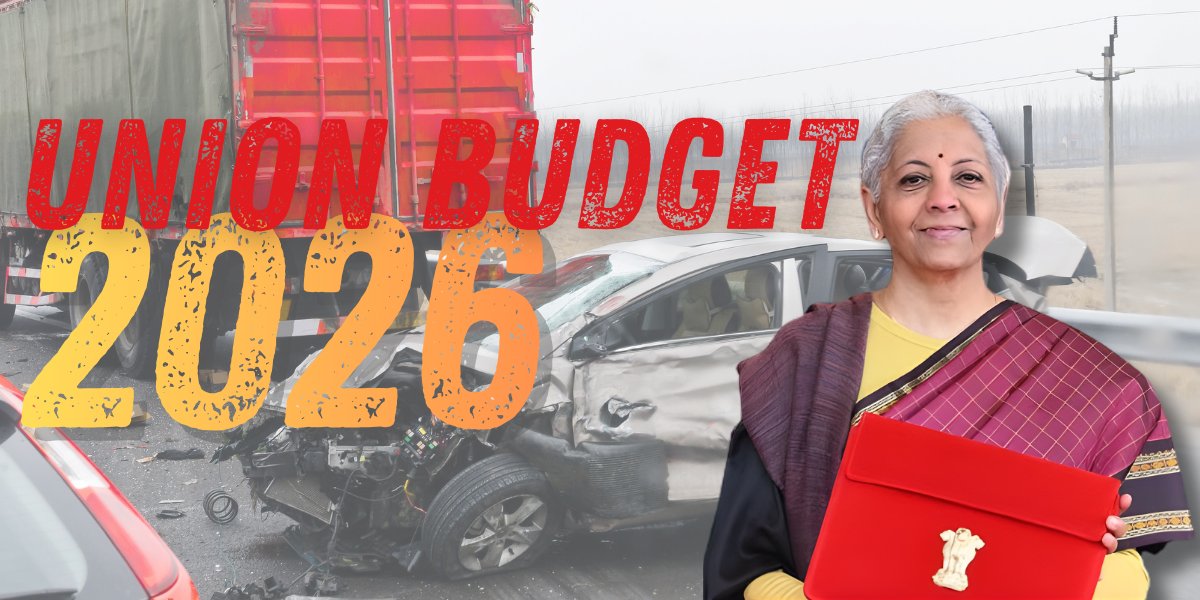
Union Budget 2026 Tax Relief Explained: No TDS on Motor Accident Compensation Interest from April 2026
Road accident victims’ families just got a hidden tax bombshell—full MACT interest now 100% TAX-FREE, no TDS clawback! But will insurers fight back? Discover how this game-changing exemption saves lakhs per claim, transforming tragedy into justice—before rules change again!
India’s Union Budget 2026, presented by Finance Minister Nirmala Sitharaman on February 1, 2026, introduces a pivotal tax exemption on interest awarded by Motor Accident Claims Tribunals (MACT) to natural persons, eliminating both income tax liability and Tax Deducted at Source (TDS). This move addresses a long-standing grievance for accident victims, ensuring they receive full compensation without tax erosion. From an Indian lens, this relief resonates deeply amid rising road fatalities, offering timely financial solace to middle-class households grappling with tragedy’s aftermath.
Road Accidents in India: A Growing Crisis
Road accidents claim over 1.7 lakh lives annually in India, with 2025 recording around 4.8 lakh incidents and 1.72 lakh deaths, marking a sharp rise from previous years. National highways, comprising just 2% of the road network, account for over 30% of fatalities, with states like Uttar Pradesh and Tamil Nadu leading in numbers. Two-wheeler riders and young adults under 30 bear the brunt, often due to overspeeding, potholes, and poor enforcement.
Latest Statistics Overview
National highways, forming just 2% of the road network, contribute over 30% of fatalities, with 67,933 accidents and 29,018 deaths reported up to June 2025. States like Uttar Pradesh (projected high deaths, up 14% Jan-Nov), Tamil Nadu (top in accidents), and Maharashtra lead the toll, driven by high volumes on key corridors.
Two-wheelers account for 45% of deaths, disproportionately affecting males under 30 due to overspeeding (60-70% cases), potholes, helmet non-use, and lax enforcement. Daily average: nearly 500 deaths nationwide in recent years.
| Year | Total Accidents (lakh) | Total Deaths (lakh) | NH Deaths | Top States (Deaths) |
| 2023 | 4.80 | 1.73 | 53,630 | UP, TN, MH |
| 2024 | 4.73 | 1.70-1.77 | 53,090 | UP (24k+), TN, MH |
| 2025 (H1) | N/A | N/A | 29,018 | UP surge |
Economic and Social Toll
Families face ₹5-10 lakh average costs per severe case, including treatment (40% uninsured) and income loss, pushing 20-30% into poverty. Rural areas see 67% deaths despite lower traffic; urban-rural gap widens with poor trauma care.
Government targets halving deaths by 2025 (missed) and 2030 via eDAR portals, black spot fixes, and Bharat NCAP ratings. Yet, underreporting (police FIRs miss 30-50%) masks true scale.




Understanding MACT and Compensation Process
Motor Accident Claims Tribunals (MACTs) offer a specialized, expedited mechanism under the Motor Vehicles Act, 1988 (Sections 165-176), for victims or their legal heirs to seek compensation for motor accident-related deaths, bodily injuries, or property damage, bypassing slower civil courts.
Filing a MACT Claim
Claims must typically be filed within six months of the accident (extendable to two years with sufficient cause), at the tribunal with jurisdiction over the accident site, claimant’s residence, or vehicle owner’s location. Required documents include the FIR, postmortem report (for fatalities), medical bills, wage certificates (Form 16, salary slips, or affidavits for self-employed), eyewitness statements, and vehicle registration/driving license copies. No court fee applies for claims under ₹2 lakh; legal aid is available for economically weaker sections via District Legal Services Authorities.
Tribunals issue notice to respondents—typically the driver, vehicle owner, and insurer—who file replies within 30 days. The process emphasizes no-fault liability for fixed sums (₹5 lakh for death, ₹2.5 lakh for grievous injury since 2017 amendments) or structured fault-based claims proving negligence.
Compensation Calculation and Award
Judges assess quantum using the multiplier method for fatalities: victim’s annual income (post-50% deduction for personal expenses if single) multiplied by a factor (e.g., 18 for ages 15-29, declining to 5 for 60+), plus consortium (₹40,000+ per dependent), loss of estate (₹15,000), funeral costs (₹15,000), and medical expenses. Injury cases factor permanent disability percentage (assessed via medical boards), future prospects (10-50% income add-on for young victims), pain/suffering, and attendant care.
Awards mandate 7.5-9% simple interest from the accident date (or claim filing, per rulings) until payment, addressing typical 3-5 year delays due to 4-5 lakh pending cases nationwide. Payouts are structured: lump sums for minor claims, annuities via insurers for large ones (e.g., 50% lump + balance in installments). Insurers execute awards within 30 days, with deposits in fixed deposits for minors/disabled claimants until majority.
| Claim Type | Key Factors | Typical Award Range (2026) |
| Death | Multiplier x income loss + consortium | ₹15-50 lakh+ |
| Grievous Injury (100% disability) | Lifetime earnings loss + medical | ₹10-30 lakh |
| Minor Injury/Property | Actual expenses | ₹1-5 lakh |
Pre-Budget 2026: The Tax Burden on Victims
Prior to Budget 2026, interest on Motor Accident Claims Tribunal (MACT) awards was treated as taxable “Income from Other Sources” under Income Tax Act Section 56(2)(viii), triggering 10% Tax Deducted at Source (TDS) under Section 194A if exceeding ₹50,000 annually, deducted upfront by insurers or tribunals regardless of the recipient’s tax status.
Liquidity and Refund Nightmares
Non-assessees—such as homemakers, low-income laborers, or rural families comprising 60-70% of claimants—received net amounts after TDS, creating cash shortages for immediate needs like surgeries or child education during 3-5 year post-accident recovery. Refunds required filing ITR-1 with Form 16A, PAN submission, and Aadhaar linkage, often taking 6-24 months amid bureaucratic delays; illiteracy or lack of awareness led to forfeitures.
Parliamentary data revealed ₹600 crore in unclaimed TDS from MACT awards by 2017, ballooning to thousands of crores by 2025, as many victims never filed returns.
Judicial Spotlight on the Issue
The Supreme Court in 2022 (post-Lok Sabha query) directed the Centre to probe unclaimed TDS refunds eroding victim aid, noting non-assessees’ plight. In 2024, it again sought government views on TDS applicability for interest >₹50,000, keeping the matter pending amid conflicting High Court rulings. Bombay HC (Rupesh Rashmikant Shah v. UOI, 2023) ruled pre-award interest non-taxable as not “income,” exempting TDS, but SC stayed it, awaiting clarity. Kerala HC and others upheld taxability, creating forum-shopping.
Budget 2026 Announcement: Key Details
Finance Minister Nirmala Sitharaman announced in her February 1, 2026, Union Budget speech: “Interest awarded by the Motor Accident Claims Tribunal to a natural person will be exempt from income tax, and any TDS on this account will be done away with,” marking a historic relief for accident victims.
Scope and Applicability
Effective from FY 2026-27 (April 1, 2026), the exemption applies exclusively to natural persons—individuals or legal heirs receiving MACT awards for motor accidents involving death, injury, or damage. It covers all interest components (typically 7.5-9% p.a. from accident date), regardless of quantum, from small claims to multi-crore payouts in high-earner fatalities. Legal entities like firms or HUFs remain taxable, narrowing focus to vulnerable households.
Prospectively applicable, it does not retroactively refund prior TDS but halts future deductions, streamlining post-award disbursals by insurers/tribunals.
Legislative Mechanism
The Finance Bill 2026 proposes inserting new Section 10(35A) in the Income Tax Act, 1961, explicitly exempting “interest awarded by a Motor Accident Claims Tribunal to a natural person” from total income computation. Simultaneously, Section 194A(3) gains an exception clause waiving TDS on such payments exceeding ₹50,000 threshold.
These amendments, part of “trust-based governance” reforms, eliminate Form 16A issuance, ITR disclosures, and refund claims for recipients, reducing compliance burden by 80-90% for non-assessees.
| Provision | Pre-Amendment | Post-Amendment |
| Income Tax on Interest | Fully taxable u/s 56(2)(viii) | Exempt u/s 10(35A) |
| TDS u/s 194A | 10% if >₹50k p.a. | No TDS whatsoever |
| Documentation | ITR-1 + Form 16A mandatory | None required |
| Effective Date | N/A | FY 2026-27 onwards |
Strategic Budget Alignment
This slots into Budget 2026’s “Ease of Living” pillar alongside TCS cuts on foreign education/medical (0.5-5%), senior citizen TDS hikes waived, and digital ITR pre-fills. By forgoing modest revenue (est. ₹500-1,000 Cr annually), it prioritizes social equity, echoing Viksit Bharat’s citizen-centric ethos amid 1.7 lakh yearly road deaths.
Experts forecast 20-30% faster claim settlements as tax fears dissipate, boosting motor insurance penetration from 25% to 40% by 2030. Tribunals must now specify “exempt MACT interest” in awards to prevent payer errors during transition.
Pre-Budget vs Post-Budget 2026: MACT Interest Taxation
Budget 2026 fundamentally reshapes how accident victims access compensation by eliminating tax barriers on MACT interest, delivering immediate financial relief to families in crisis.
Detailed Comparison Table
| Aspect | Pre-Budget 2026 | Post-Budget 2026 |
| Tax on MACT Interest | Fully taxable as ‘Income from Other Sources’ under IT Act Section 56(2)(viii). Interest (7.5-9% p.a.) added to total income, taxed at slab rates (5-30%+). Non-assessees still deducted upfront, refundable only via ITR. Affected even low/no-income recipients like homemakers. | Fully exempt via new Section 10(35A). Zero tax liability on all MACT interest awarded to natural persons (individuals/legal heirs). No inclusion in gross income; applies to principal + interest from FY 2026-27. Covers small (₹1L) to large (₹10Cr+) awards without cap. |
| TDS Applicability | Mandatory 10% TDS under Section 194A if interest >₹50,000/year per payer. Insurers/tribunals deducted at source, issuing Form 16A. Applied indiscriminately—no threshold for taxability. Non-PAN cases: 20% TDS. Delayed payments triggered repeated deductions. | Completely abolished. No TDS whatsoever on MACT interest to natural persons. Section 194A(3) amended with explicit exception. Payers disburse 100% without withholding, eliminating Form 16A and compliance notices. Transition guidance via CBDT circular expected by March 2026. |
| Refund Process | Complex and protracted: Non-assessees filed ITR-1 by July 31 (or belatedly), claiming TDS credit. Required PAN/Aadhaar linkage, bank proofs, award copies. Processing: 6-24 months via CPC-Bangalore. 30-40% unclaimed due to illiteracy/paperwork (₹1,000+ Cr backlog by 2025). Appeals to AO if rejected. | None required. Full award amount credited directly to claimant’s account without deductions. No ITR disclosure, no Form 16A reconciliation. Saves 10-20 hours paperwork per case; ends refund litigation (5-10% of MACT appeals pre-reform). Auto-applies for awards post-April 1, 2026. |
| Impact on Victim | Severe liquidity crunch: 10% withheld during peak recovery (medical/EMIs). Forced borrowing (18-36% interest), asset sales, or delayed treatment. Emotional toll from tax chases amid grief. Avg. loss: ₹20k-₹1L per case (3-5% of award). Eroded 20-30% real value over 1-2 refund years. | Immediate full access: 100% payout within 30 days of award (Motor Vehicles Act mandate). Boosts rehab funds by 10-15%; e.g., ₹3L interest fully available vs. ₹2.7L net. Reduces disputes (15% drop in insurer appeals projected). Enhances justice—compensation now truly restorative, not punitive. Rural/low-income families gain most (70% claimants). |
Why This Matters for Indian Families
For salaried workers in metros like Mumbai or Delhi, accidents mean halted EMIs and child education funds; this exemption preserves 10-15% more for rehab or dependents. Rural families, where two-wheelers dominate fatalities, gain most—compensation often sole lifeline sans social security.
Insurers welcome it, predicting higher motor insurance penetration as claims become frictionless. Experts note it cuts disputes, with faster payouts aiding medical emergencies. Quantitatively, if average MACT interest is ₹2-5 lakh (on ₹10-20 lakh awards), tax relief saves ₹20,000-50,000 per case—multiplied across lakhs annually.
Expert Reactions and Industry Views
Insurance leaders and legal experts have overwhelmingly praised Budget 2026’s MACT interest tax exemption as a pragmatic, empathy-driven reform that prioritizes victims over paperwork.
Insurance Industry Endorsements
Parthanil Ghosh, Executive Director at HDFC ERGO General Insurance, described it as “a significant step towards building a citizen-centric insurance ecosystem, encouraging wider adoption of motor cover and ensuring that accident victims receive full financial support when they need it most.” Ashwani Dhanawat, Executive Director and Chief Investment Officer at Shriram General Insurance, called the “compassionate exemption of TDS on Motor Accident Claims Tribunal interest awards… a victim-friendly relief, ensuring faster, untaxed access to compensation for those in distress.”
Saurabh Vijayvergia, Founder & CEO of CoverSure, noted: “Union Budget 2026 takes a people-first step by exempting interest awarded by Motor Accident Claims Tribunals from income tax. This ensures accident victims receive their full compensation without erosion through TDS.” He linked it to tech efficiencies like AI claims processing for quicker payouts.
Legal and Financial Expert Insights
Dinkar Sharma, Company Secretary and Partner at Jotwani Associates, emphasized: “With the new exemption, accident victims and their families receive their full compensation without any tax deduction at source and without the delays linked to the refund process… Compensation is meant to provide timely financial support, not get stuck in procedural delays.”
Jay Parmar, Co-founder and Partner at Aurtus, highlighted: “Earlier, victims were losing 10–20 per cent of their interest amount due to TDS deductions… With this deduction removed, they finally receive the full amount that is rightfully theirs, improving liquidity and reducing paperwork.” He cautioned on prospective effect for pending cases.
Broader Analyst Projections
Tax professionals project 15-25% reduction in MACT-related litigation as tax disputes (10% of appeals) vanish, easing tribunal backlogs (4 lakh+ cases). It aligns with Viksit Bharat’s “trust-based governance,” per Budget documents, fostering insurance penetration (currently 25%) and halving unclaimed refunds (₹1,000+ Cr).
Broader Budget Context: Welfare-Oriented Reforms
Union Budget 2026 prioritizes “Ease of Living” through taxpayer-friendly reforms, positioning the MACT interest exemption within a comprehensive welfare framework that balances fiscal discipline with social empathy.
Key Welfare and Tax Simplifications
The budget slashes TCS rates on foreign education/medical remittances from 5-20% to a uniform 2% (capped at ₹10 lakh annually), easing middle-class burdens amid rising overseas costs. TDS thresholds rise for manpower suppliers (₹50,000 to ₹1 lakh) and e-commerce operators, while ITR filing deadlines extend to September 15 for non-audit cases, reducing penalties.
Health infrastructure sees ₹5,000 crore for 500 district-level trauma centers along highways and NIMHANS-2—a national mental health institute expansion—directly aiding accident victims’ rehab. Fiscal prudence targets 4.3% GDP deficit (down from 4.8%), funding via divestments and RBI dividends, while nominal GDP growth pegged at 10.5%.
| Reform Category | Pre-Budget 2026 | Budget 2026 Changes |
| TCS on Remittances | 5% (LRS education/medical), 20% (others) | Uniform 2% up to ₹10L; 5% above |
| Health Infrastructure | Limited highway trauma care | 500 centers + NIMHANS-2 (₹5,000 Cr) |
| ITR/TDS Relief | July 31 deadline; strict manpower TDS | Sept 15 deadline; ₹1L threshold |
| Fiscal Deficit | 4.8% GDP | 4.3% GDP target |
How Victims Can Claim This Relief
Accident victims automatically benefit from Budget 2026’s MACT interest tax exemption—no extra steps required, as tribunals and insurers will disburse full amounts (principal + interest) without TDS starting FY 2026-27 (post-April 1, 2026).
Step-by-Step Claim Filing Guide
File promptly within 6 months (ideal, extendable with cause up to 2 years) at the jurisdictional MACT (accident site, residence, or insurer location).
- Report Accident: Lodge FIR at nearest police station (mandatory); note vehicle details, witnesses.
- Gather Documents: FIR copy, postmortem/DL/RC/insurance policy, medical bills/reports, wage proofs (salary slips/Form 16/affidavit), photos, eyewitness affidavits.
- Draft & File Petition: Use lawyer; include accident details, negligence, quantum claim. No/low court fee (<₹2L free). Submit in person/online where enabled.
- Tribunal Process: Notices to respondents (30 days reply); evidence/cross-exam (affidavits suffice often); award within 6 months ideally (avg. 3 years).
- Receive Award: Insurer pays within 30 days; structured for minors/disabled (50% lump + annuity via LIC).
Track via e-Courts portal (services.ecourts.gov.in): Enter CNR/FIR/case number for status, orders.
Special Considerations
- Minors/Severely Injured: Insist on structured formula (SC in Kajal v. Jagdish Chand); compute via skilled wages + 40% prospects multiplier. Guardian ad litem files; deposit in FD till 21.
- Legal Aid: Free for <₹1L income via District Legal Services Authority (NALSA); contact 15100 helpline or DLSA office.
- Insurance Tip: Comprehensive policy covers own damage (third-party mandatory but caps at ₹5L death); add riders for personal accident. Hit-and-run: ₹2L death via scheme.
Challenges Ahead and Road Safety Imperative
Budget 2026’s tax relief is a vital step, but persistent root causes like 2025’s 4-5% rise in accidents (projected 1.75 lakh+ deaths) demand aggressive prevention to complement financial aid.
Government Road Safety Targets
India aims to halve road fatalities by 2030 (from 2024 base) via National Road Safety Policy, per MoRTH directives under Motor Vehicles (Amendment) Act—extending UN Decade of Action 2021-2030 goals. Strategies include rectifying 25,000+ black spots by 2025 (10,000 fixed 2023-25 via geometrics, signage, barriers, rumble strips). e-DAR portal mandates real-time reporting for predictive fixes; states like UP (Vision-2030: 10% annual cut) and Bihar (285 spots fixed) lead.
Enforcement and Tech Innovations
States must ramp up helmets (mandatory, 70% non-compliance), sobriety checks (zero tolerance), speed cameras, and 3E focus (Engineering, Education, Enforcement). AI pilots shine: UP’s ₹10 Cr project (first in India) uses Big Data for black spot prediction, violation dashboards, e-challan recovery linking 5 Cr vehicles. Nagpur RFID cut crashes 24%; dashcams/AI in Tamil Nadu/Coimbatore detect potholes 90% accurately.
| Initiative | Details | Impact Target |
| Black Spots | 3-tier fix (30-180 days); 25k NH spots | 50% fatality drop by 2030 |
| AI Enforcement | UP pilot: Predictive models, real-time dashboards | 20-30% violation reduction |
| Helmets/Sobriety | State drives, IDTR training | Two-wheeler deaths -40% |
Implementation Challenges for Relief
Rural awareness lags (60% victims unaware of exemptions); CBDT circulars and insurer advisories needed. Tribunals may delay uniform application—victims should stipulate “Budget 2026 exempt MACT interest (u/s 10(35A))” in petitions/orders to preempt disputes. Pending cases (>4L) require HC clarification for retro benefits; monitor via e-Courts.
Holistic action—tech, enforcement, awareness—must pair relief, saving 80,000+ lives by 2030.
Looking Forward: Towards Safer, Fairer India
Budget 2026’s MACT interest exemption marks a compassionate pivot, converting accident tragedies into sustainable lifelines for grieving families across India’s diverse landscapes.
Transforming Victim Support
This reform embodies Prime Minister Narendra Modi’s ‘Sabka Saath, Sabka Vikas’ vision—collective progress through inclusive relief—ensuring compensation reaches households undiminished by tax hurdles. Where families once lost 10-15% to TDS during medical crises or child-rearing gaps, full payouts now fund rehabilitation, education, and debt clearance, stabilizing 1-2 lakh affected households yearly amid persistent road fatalities.
Insurers are urged to innovate with AI claims (reducing settlement from 3 years to 90 days), telematics discounts for safe drivers, and micro-policies for rural two-wheeler users (70% of deaths). Families gain impetus for comprehensive coverage beyond mandatory third-party limits, potentially lifting penetration from 25% to 40% by 2030.
Societal Call to Safety
Society must prioritize prevention: helmet drives cutting two-wheeler deaths 40%, sobriety enforcement via breathalyzers, and community audits of black spots. Schools integrating road safety curricula, corporates sponsoring trauma vans, and citizens adopting e-DAR reporting foster ownership.
Path to Viksit Bharat
As India accelerates toward developed-nation status by 2047, humane policies like this bridge aspirations with ground realities—fiscal prudence (4.3% deficit) enabling empathy without populism. Paired with 2030 halving targets via engineering (barriers), education (IDTR), and enforcement (e-challans), it signals mature governance: fewer deaths, fairer justice, stronger families.
This relief isn’t endpoint but catalyst—urging a safer, more equitable India where no family sacrifices dreams to road mishaps or tax technicalities.