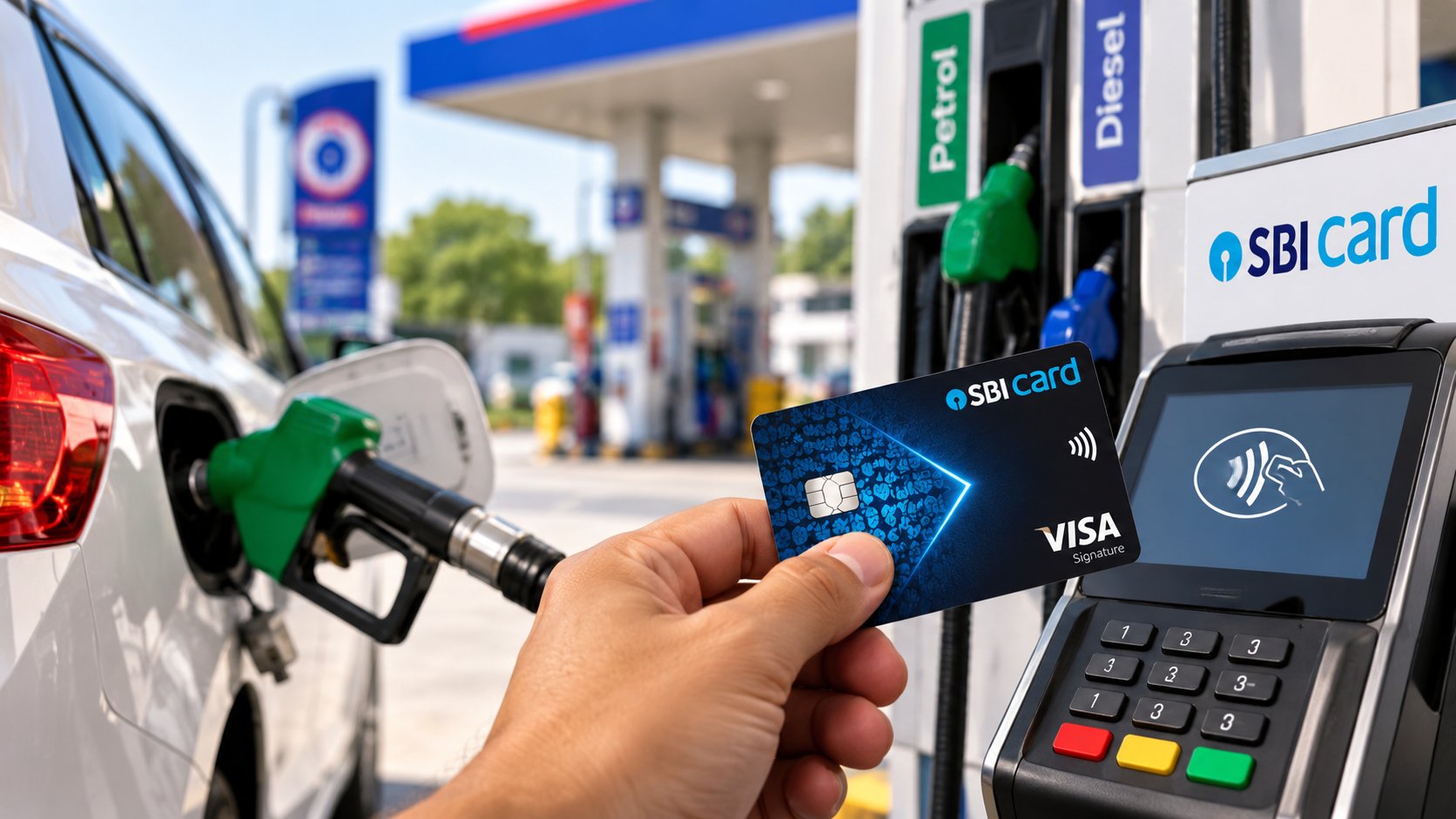
SBI Credit Card at the Petrol Pump: Is 7.25% Back Real — and Where Do Rewards Stop?
SBI Credit Card at the Petrol Pump: Is 7.25% Back Real — and Where Do Rewards Stop?
SBI’s BPCL fuel cards advertise up to 7.25% value back on petrol. That figure adds two different benefits, works only at BPCL pumps and hits a ceiling at ₹10,000 of fuel a month. Here is what to check before you swipe.
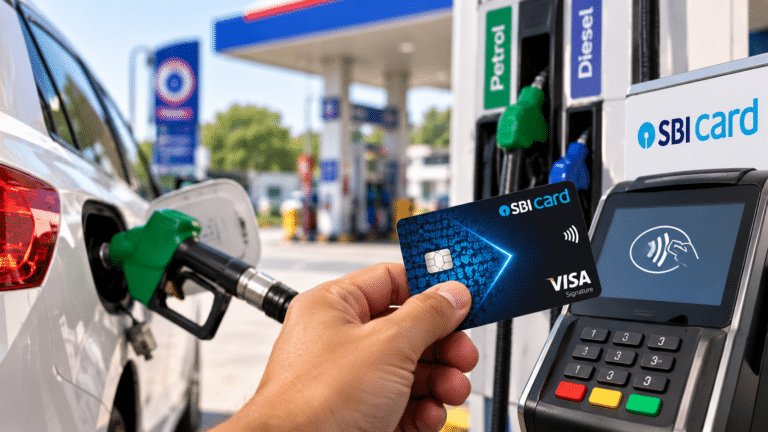
You pull into a petrol pump, tap the card in your wallet and fill the tank. A line on the screen says nothing about rewards, and the receipt does not either. Weeks later the statement shows some points, or none. The message circulating online, to check a particular SBI credit card before you fill petrol, is built on a real difference: some pumps pay you back and some pay nothing at all.
The message rarely names the card, so we looked at the SBI fuel cards that carry the biggest claims. They are the BPCL SBI Card and its premium sibling, the BPCL SBI Card Octane. We did not find a verified announcement of a new rule this month. What we did find is a set of caps, exclusions and fee thresholds that decide whether the card saves you money or costs you ₹1,769 a year.
Quick Summary
Use an SBI BPCL card only at BPCL pumps. The Octane pays off above roughly ₹3,300 of monthly fuel there; below that, the plain BPCL SBI Card is the better fit. The Octane’s 7.25% is 6.25% in reward points plus a 1% surcharge waiver, and both stop at caps: ₹625 in points and ₹100 in waiver each month. Above ₹10,000 of monthly fuel, the effective return falls. At non-BPCL pumps, the card earns no fuel reward points.
What We Know
- The BPCL SBI Card Octane gives 25 reward points per ₹100 at BPCL fuel, which is 6.25% at 4 points per rupee, capped at 2,500 points a month.
- Both BPCL SBI cards carry a 1% fuel surcharge waiver capped at ₹100 per statement cycle.
- The Octane fee is ₹1,499 plus taxes, waived at ₹2 lakh of annual spend. The plain BPCL SBI Card costs ₹499 plus taxes.
- Reviews state that non-BPCL fuel and mobile wallet loads earn no reward points.
What Is Still Unclear
- Whether the ₹4,000 figure limits the surcharge waiver, the reward points or both, and whether it applies per transaction or per month. Sources conflict.
- Whether an IndianOil SBI card matches the BPCL terms. We found no verified current terms for it.
- Whether SBI Card will change fuel terms again. Its April 2026 revisions did not clearly touch fuel.
Which SBI Card Is This About, Exactly?
SBI Card has several co-branded and general cards that mention petrol, but the heavy fuel claims sit with the two BPCL cards. The plain BPCL SBI Card is the entry model. The Octane is the premium version with a larger fuel reward, lounge visits and a higher fee. Treat any other SBI card as a general-purpose card for fuel: it will usually earn the base rate or nothing.
That distinction matters because many shoppers assume a credit card pays rewards wherever they spend. Fuel is the category where that assumption fails most often. Issuers treat petrol as a low-margin spend, so rewards are either excluded, capped or tied to one oil company. Here are the four numbers that frame the Octane, the stronger of the two cards.
The Octane also pays 10 points per ₹100 on dining, groceries, department stores and movies, capped at 7,500 points a month. The plain card pays 5 points per ₹100 on similar categories. Neither pays a meaningful rate on other spends: one point per ₹100 is 0.25%.
Why 7.25% Is Two Different Benefits Added Together
The 7.25% headline comes from adding 6.25% in reward points to a 1% surcharge waiver. They are not the same kind of money. The reward points are worth ₹0.25 each, and review pages say they can be redeemed only against BPCL fuel. The waiver is a refund of the fuel surcharge the pump adds to card payments, and it appears as a credit on your statement.
That makes the headline slightly generous. The waiver is calculated on the fuel amount, but its cap is ₹100 per statement cycle, so it is fully used at ₹10,000 of spend. The points cap of 2,500 is also fully used at ₹10,000. Both reach their ceiling together, which is why ₹10,000 a month is the key number on this card.
One practical effect follows. Points that can only be spent on BPCL fuel are worth less than cash if you ever stop using BPCL. A driver who moves cities and finds no BPCL pump nearby is left with a currency they cannot easily spend.
The Ceiling: What Happens After ₹10,000 a Month
Caps change the economics for heavy users. Consider a delivery driver or a family with two cars filling ₹15,000 of petrol a month. The rewards and the waiver stop at ₹725 a month combined, so the extra ₹5,000 earns nothing. The effective return slides from 7.25% to 4.83%. For a very heavy user at ₹20,000 a month it falls to 3.62%.
This is not a flaw in the card. It is the design of every capped fuel card. But it means the sensible comparison for a heavy user is the second card, or a second fuel source, rather than assuming the first card keeps paying at the headline rate.
The Fee Sum: Does the Card Pay for Itself?
The Octane’s annual fee is ₹1,499 plus 18% GST, which is ₹1,768.82. SBI Card waives it if you spend ₹2 lakh in a year across all categories. A driver filling ₹5,000 of petrol a month spends only ₹60,000 a year on fuel, so the waiver depends on how much else goes on the card. Our table assumes you pay the fee in full, which is the conservative case.
| Monthly BPCL fuel | Points value | Waiver | Monthly total | Annual total | Octane net of fee | Plain card net of fee |
|---|---|---|---|---|---|---|
| ₹2,000 | ₹125 | ₹20 | ₹145 | ₹1,740 | −₹29 | +₹431 |
| ₹3,000 | ₹188 | ₹30 | ₹218 | ₹2,610 | +₹841 | +₹941 |
| ₹5,000 | ₹313 | ₹50 | ₹363 | ₹4,350 | +₹2,581 | +₹1,961 |
| ₹8,000 | ₹500 | ₹80 | ₹580 | ₹6,960 | +₹5,191 | +₹3,491 |
| ₹10,000 | ₹625 | ₹100 | ₹725 | ₹8,700 | +₹6,931 | +₹4,511 |
| ₹15,000 | ₹625 | ₹100 | ₹725 | ₹8,700 | +₹6,931 | +₹4,511 |
The plain card figures use 13 points per ₹100 (3.25%) plus the same waiver, capped at 1,300 points a month, with a fee of ₹588.82. All figures exclude welcome points, other categories and the fee waivers, and are indicative desk calculations rather than SBI Card statements.
Octane or the Plain BPCL SBI Card? Your Spend Decides
The plain BPCL SBI Card is cheaper to hold: ₹499 plus GST, with the fee reversed on ₹1 lakh of annual spend. CardAdvisor reports that threshold was raised from ₹50,000 on 1 May 2026. It pays 4.25% on BPCL fuel, which is 3.25% in points plus the same 1% waiver. The Octane pays 7.25% but costs ₹1,180 more a year.
The gap between them, 3 percentage points of return on fuel, closes that fee difference at about ₹3,300 of monthly BPCL spend. Below that level, the cheaper card wins. Above it, the Octane wins until its own cap flattens the advantage at ₹10,000. After that, the Octane’s lead stays fixed at ₹2,420 a year and does not grow.
The ₹4,000 Puzzle: Why One Big Fill May Earn Less
Several sources mention a ₹4,000 figure for the BPCL fuel benefits. They disagree on what it limits. One review of the plain card says fuel rewards apply on transactions up to ₹4,000. A listing for the Octane says the 1% waiver applies to fuel spends up to ₹4,000, while its FAQ calls it a per-transaction limit. We could not reach SBI Card’s own terms to settle it.
The spread, ₹145 on a single fill, is more than the whole month’s waiver cap. If your usual fill is above ₹4,000, such as a large SUV or a diesel truck, ask SBI Card’s customer care to confirm in writing how the limit applies. If you can, keep each fill under ₹4,000 until you know.
Three Drivers, Three Different Answers
Averages hide the real choice, so it helps to picture actual drivers. The numbers below use the same published terms and the same conservative assumption that the annual fee is paid in full. They are illustrations, not forecasts of what any one statement will show.
The city commuter at ₹3,000 a month
A two-wheeler rider or a small-car owner who fills up about once a week spends roughly ₹3,000 a month. The plain BPCL SBI Card nets about ₹941 a year after its fee, while the Octane nets ₹841. The cheaper card wins by ₹100, and it also needs only ₹1 lakh of yearly spend to waive its fee. If you do not spend much elsewhere on the card, the plain model is the sensible pick.
The family with one large car at ₹8,000 a month
A household that commutes daily and travels at weekends can reach ₹8,000 of fuel a month without trying. Here the Octane nets about ₹5,191 a year against ₹3,491 for the plain card, a lead of ₹1,700. Add dining and grocery spends at 10 points per ₹100 and the gap widens further, which is how the higher fee starts to look small. This is the driver the Octane was designed for.
The heavy user at ₹15,000 or more a month
Cab drivers, delivery riders and families with two cars hit the caps well before the month ends. The Octane stops paying at ₹725, so the last ₹5,000 earns nothing. Such users should look at a second fuel source, a different brand’s card for the days they cannot reach BPCL, or a card with a higher waiver cap. For them, a capped single-brand card captures only part of the spend.
A Ten-Minute Statement Audit Anyone Can Run
The caps and exclusions mean your own statement is the only reliable source on what you earned. Cards do not warn you when a swipe falls outside the rules, and the shortfall shows up only later, if at all. Open the latest statement and work through these steps once. After that, a quick monthly glance is enough.
- List every fuel transaction and mark which ones were at BPCL outlets. Any other brand should show no fuel reward points, and that is expected.
- Add the BPCL amounts. If the total passes ₹10,000, the Octane’s 2,500-point cap was reached and the excess earned nothing.
- Look for the 1% surcharge waiver credit. If a fuel transaction carried a surcharge but no waiver appears within a cycle or two, raise it with SBI Card.
- Check any single fill above ₹4,000 and compare the points it earned with 25 per ₹100. A shortfall points to how the limit is applied.
- Confirm the total spend year to date against ₹2 lakh for the Octane or ₹1 lakh for the plain card, so you know before renewal whether the fee will be reversed.
Keep the findings. If points are missing, a written query with the transaction date, pump name and amount gives customer care something to check. Reward disputes are usually settled faster when the transaction can be matched to an outlet code, which the statement narration often shows.
Five Checks Before the Nozzle Goes In
A card that pays back 7.25% only at one brand is a good deal for some drivers and a poor one for others. These five checks take under a minute and decide which group you belong to.
Reading the Fine Print: A Decoder for Fuel Card Terms
Fuel card pages use a handful of phrases that sound similar and mean different things. This table covers the ones that matter on the BPCL SBI cards.
| Phrase | What it means in practice | The number to remember |
|---|---|---|
| Up to 7.25% value back | 6.25% in points plus a 1% waiver, only up to the caps, only at BPCL | ₹725 a month at most |
| Fuel surcharge waiver | A statement credit of 1% of the fuel amount, not a discount at the pump | ₹100 cap a cycle |
| 25X reward points | 25 points for every ₹100, each point worth ₹0.25 | 2,500 points a month |
| Annual fee reversal | The fee is refunded after you pass a yearly spend, not waived upfront | ₹2 lakh for Octane, ₹1 lakh for plain |
| Non-BPCL fuel | Any other brand’s pump, which earns no reward points | 0 points |
| Welcome benefit | Bonus points after you pay the joining fee, redeemable on BPCL fuel | 6,000 points, worth ₹1,500 |
| Finance charge | Interest on unpaid balances, which wipes out any reward | 3.50% a month, 42% a year |
The last row deserves attention. A reward of ₹725 a month is cancelled by about one month of interest on a ₹20,000 unpaid balance. Fuel rewards are for people who pay in full each month.
How the Octane Compares With Other Fuel Cards
The Octane is the best option at BPCL, not the best fuel card overall. CardAdvisor’s October 2026 comparison lists several competitors with fuel returns that, in some cases, exceed the Octane. These figures are as reported by that site, not verified against each issuer, and each card is tied to a different oil company.
The comparison also shows fee and waiver differences. RBL’s card has a ₹1,500 fee waived at ₹2.75 lakh of spend and a ₹200 monthly waiver cap, according to the same page. The point is not that one card wins everywhere. Your nearest pump decides your best card more than any rate does.
The First-Year Timeline: When the Money Actually Arrives
Rewards on these cards arrive in stages, and the biggest single benefit comes before you buy any fuel. Here is the sequence for a new Octane holder, based on the terms reviewed.
The welcome benefit is the part many reviews treat as a bonus and many buyers treat as the reason to apply. It is worth ₹1,500, but only once, and only if you use it on BPCL fuel. Year two is the honest test of the card.
Habits That Keep the Rewards Flowing
Frequently Asked Questions
Which SBI credit card is best for petrol?
For BPCL pumps, the BPCL SBI Card Octane gives the highest reported return, 7.25% up to the caps, but it costs ₹1,499 plus GST a year. The plain BPCL SBI Card costs ₹499 plus GST and pays 4.25%. For other fuel brands, a co-branded card from that brand’s partner bank may suit you better.
Do SBI credit cards give rewards on petrol at any pump?
Not on the BPCL cards. Reviews state that non-BPCL fuel spends and mobile wallet loads earn no reward points. General SBI cards may offer a base rate or exclude fuel, so check the card’s Most Important Terms and Conditions.
What is the fuel surcharge waiver on an SBI card?
Pumps add a surcharge when you pay by card. The BPCL SBI cards refund 1% of the fuel amount as a statement credit, capped at ₹100 per statement cycle. That is a refund of a fee, and it is separate from reward points.
What is the maximum reward on the BPCL SBI Octane card?
Reviews report a cap of 2,500 reward points a month on BPCL fuel, worth ₹625 at ₹0.25 each, plus the ₹100 waiver. That makes ₹725 a month, or ₹8,700 a year, reached at about ₹10,000 of monthly BPCL fuel.
Is the BPCL SBI Octane card worth the annual fee?
It depends on spend. By our calculation, at ₹5,000 of monthly BPCL fuel the card returns about ₹4,350 a year against a ₹1,769 fee, a net gain of ₹2,581. At ₹2,000 a month the net is about −₹29. The break-even is roughly ₹2,000 of monthly spend.
How can the Octane annual fee be waived?
Reviews state the annual fee is reversed if you spend ₹2 lakh in a year on the card. The plain BPCL SBI Card’s threshold was raised from ₹50,000 to ₹1 lakh on 1 May 2026, as reported by CardAdvisor. Confirm the current figure with SBI Card.
Can I redeem BPCL SBI reward points for anything other than fuel?
One review page says Octane points can be used only against BPCL fuel. Another says the plain card’s points can also be redeemed through the Shop n Smile catalogue. Terms may differ by card and date, so check your card’s redemption page.
Did SBI Card change fuel rules in 2026?
SBI Card revised several card rules on 1 April 2026, including cashback caps and exclusions on some products. A secondary report found no confirmed change to fuel surcharge or BPCL earn rates. The plain card’s fee-reversal threshold changed on 1 May 2026.
The Short Version
Use an SBI BPCL card only at BPCL pumps. The Octane’s 7.25% is 6.25% in points plus a 1% waiver, capped at ₹725 a month. It beats the plain card above about ₹3,300 of monthly fuel and stops growing at ₹10,000. Pay the full bill each month, track the cap and confirm the ₹4,000 limit with SBI Card before large fills.