RBI Approves SBI Mutual Fund's 9.99% Stake in Bandhan Bank —And Why It's Not a Coincidence
Bandhan Bank’s profits crashed 51%. Yet India’s biggest mutual fund just got RBI’s permission to pour ₹3,000 crore into it. Two giant AMCs. Fifteen days apart. Both targeting the same bank. Is this insider conviction — or the riskiest bet in Indian banking right now?
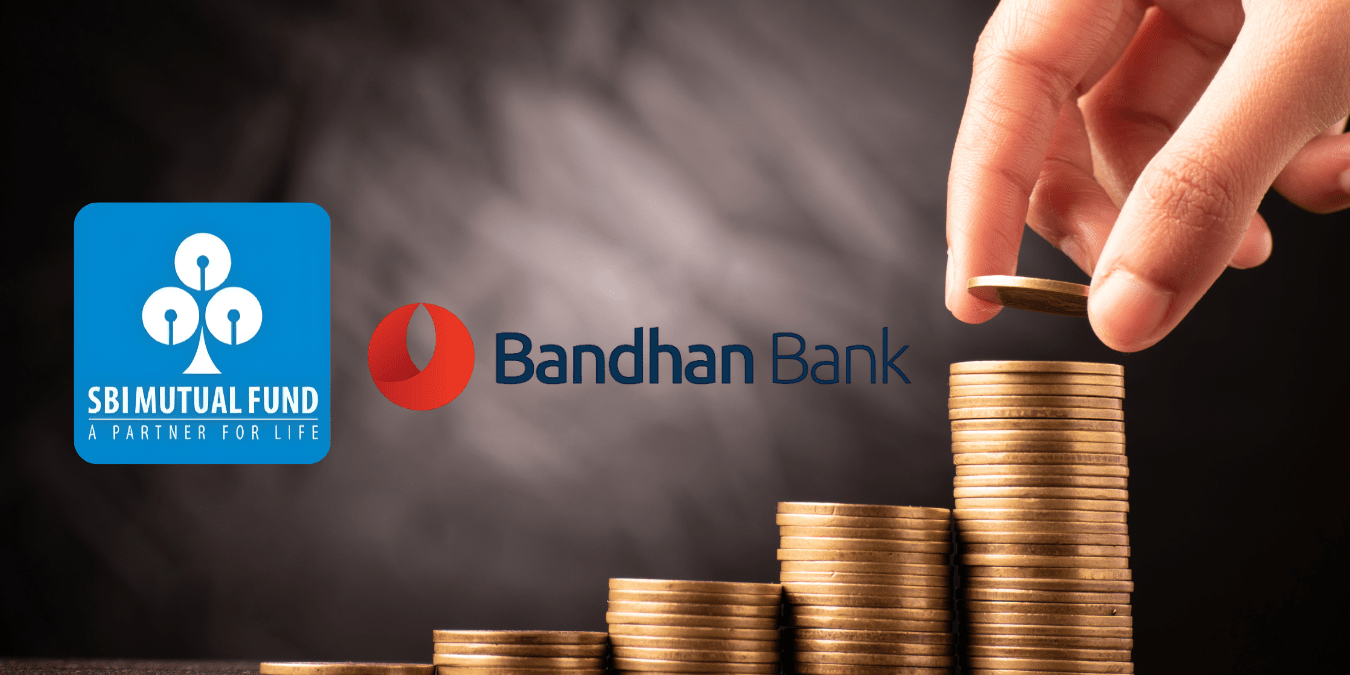
In a development that sent Bandhan Bank’s stock surging on the bourses Thursday morning, the Reserve Bank of India officially gave its stamp of approval to India’s largest mutual fund house — SBI Mutual Fund — to acquire up to 9.99% of the paid-up share capital or voting rights in Bandhan Bank Limited. The RBI’s green light, conveyed through a letter dated February 25, 2026, is one of the most significant institutional moves in the private banking space this year — and as someone who has spent 15 years in banking, I can tell you this kind of regulatory clearance doesn’t happen in a vacuum. There’s a calculated, long-term strategy at play here.
Let’s unpack what this approval actually means, why the RBI’s 9.99% threshold matters, and whether retail investors should sit up and take notice.
What Exactly Did the RBI Approve?
The Reserve Bank of India accorded its approval to SBI Mutual Fund to acquire an aggregate holding of up to 9.99% of the paid-up share capital or voting rights in Bandhan Bank Limited. The approval is subject to compliance with the Banking Regulation Act 1949, the RBI’s Commercial Banks (Acquisition and Holding of Shares or Voting Rights) Directions 2025 dated November 28, 2025, the Foreign Exchange Management Act 1999, and SEBI regulations.
In plain language: SBI Mutual Fund — which manages lakhs of crores in assets across millions of Indian investor folios — can now systematically build a stake of up to 9.99% in Bandhan Bank. This isn’t a small portfolio position. At Bandhan Bank’s current market cap of approximately ₹30,000 crore, a 9.99% stake translates to a potential investment of roughly ₹3,000 crore. That’s a serious, purposeful allocation.
The disclosure was filed by Bandhan Bank under Regulation 30 of SEBI’s Listing Obligations and Disclosure Requirements (LODR) Regulations, 2015 — meaning this is a material event that the bank was obligated to communicate to the public immediately.



Why 9.99%? The Regulatory Significance of That Number
If you’re wondering why the ceiling is precisely 9.99% and not a round 10%, you’re asking exactly the right question. Under RBI’s framework for shareholding in commercial banks, crossing the 10% threshold triggers a significantly more stringent regulatory examination. Acquiring 5% or more already requires prior RBI approval, but 10% or beyond moves into “major shareholding” territory under Indian banking law, carrying deeper scrutiny, fit-and-proper assessments, and potential conditions around governance rights.
By staying at 9.99%, SBI Mutual Fund can build meaningful economic exposure and voting influence in Bandhan Bank without triggering the heavier obligations associated with crossing the double-digit threshold. It’s a regulatory sweet spot — maximum permitted institutional influence, minimum regulatory burden.
The approval is time-bound and capped, requiring SBI Mutual Fund to complete the stake purchase within a year, and the fund house would need a fresh RBI nod if its holding drops below 5%. This dual condition — a one-year deadline to acquire and a floor condition at 5% — is designed to prevent regulatory approvals from becoming open-ended or being used for speculative in-and-out trading. The RBI wants committed, long-term institutional shareholders in Indian banks, not opportunistic traders.
What Does This Say About Bandhan Bank?
Here’s where my banking experience adds a layer of perspective that pure financial analysis often misses. For a regulator as conservative as the RBI to approve a major institutional stake acquisition in any bank, that bank must pass a rigorous internal assessment. The RBI doesn’t grant these approvals casually.
Bandhan Bank has had a turbulent recent history. The bank reported a substantial 51.6% year-on-year decline in net profit to ₹205.6 crore for Q3 FY26, missing market expectations, while net interest income contracted 4.5% year-on-year to ₹2,689 crore. These are genuinely difficult numbers — a bank struggling with elevated credit costs, asset quality pressures, and profitability compression.
And yet, SBI Mutual Fund — backed by India’s largest public sector bank — has chosen this moment to seek and receive approval to build a near-10% stake. This is a contrarian, long-term bet. Institutional investors don’t deploy ₹3,000 crore into a story that’s already fully played out. They deploy when they believe the worst is priced in and recovery lies ahead.
Bandhan Bank has projected a 30-40 basis points increase in Net Interest Margin over the next three quarters and has set a credit cost target of 1.7% by the end of FY27, reflecting its strategic focus on maintaining asset quality while improving financial performance. If these projections materialise, the bank’s earnings trajectory could look dramatically different 12–18 months from now.
The Market’s Immediate Reaction
Markets don’t lie about sentiment. Bandhan Bank shares touched an intraday high of ₹190.23 on February 26, 2026, before settling at ₹185.29, up 1.32% from the previous close of ₹182.88. The stock’s 52-week range stands at ₹134.06 to ₹192.48.
More telling than a single day’s move is the medium-term trajectory. Bandhan Bank’s share has gained 24.82% over the past month and 11.97% over the past six months. Coin paper The stock has essentially been in a quiet but steady recovery mode, and Thursday’s RBI approval news accelerated that narrative.
It’s also worth noting this isn’t the only institutional interest in Bandhan Bank lately. The RBI had previously approved ICICI Prudential’s acquisition of up to 9.95% stake in Bandhan Bank on February 11, 2026. Two of India’s largest asset managers receiving regulatory clearance to hold near-10% stakes in the same bank within weeks of each other? That’s not coincidence. That’s a coordinated institutional conviction about the bank’s recovery story.
What the RBI’s New Directions (November 2025) Mean
The approval references the RBI’s freshly-minted “Commercial Banks – Acquisition and Holding of Shares or Voting Rights Directions, 2025” dated November 28, 2025. This is a relatively new regulatory framework that replaced earlier, more fragmented guidelines. Under this updated framework, the RBI has streamlined the process for institutional investors — particularly mutual funds and insurance companies — to build meaningful stakes in banks, while simultaneously tightening ongoing disclosure requirements.
This framework change is itself a signal that the RBI is trying to deepen institutional participation in Indian banking — bringing in long-term, financially sophisticated investors who can act as an additional layer of governance accountability alongside the regulator itself. SBI Mutual Fund’s approval under this new framework is essentially a proof-of-concept for how the updated rules work in practice.
Should Retail Investors Follow Institutional Money?
This is the question most readers of dailyfinancial.in want answered, so let me be direct — and balanced.
The bull case is compelling. Two major AMCs getting regulatory nods within weeks suggests deep institutional conviction. Bandhan Bank’s management has set ambitious but achievable NIM improvement targets. The bank’s rural and microfinance franchise — its original identity — remains a structural moat in India’s financial inclusion story. If credit costs normalise and asset quality improves through FY27, earnings could recover sharply.
The risks are real and shouldn’t be ignored. Bandhan Bank’s current P/E ratio of approximately 29 signals a rich valuation that is difficult to justify based on current earnings, especially compared to more stable peers. HDFC Bank and ICICI Bank trade at P/E ratios around 18-19. You’re essentially paying a premium for a recovery that hasn’t yet arrived in the numbers. Institutional investors have time horizons of 3–5 years; retail investors often don’t.
Additionally, SBI Mutual Fund’s approval to acquire up to 9.99% doesn’t mean they will acquire that full amount immediately — or even at all. They have one year. They’ll likely accumulate strategically, and if market conditions deteriorate, they may stay well below the ceiling.
The Bigger Picture: Institutional Confidence in Indian Banking
Zoom out, and this story is really about the growing maturity of India’s capital markets. The fact that the RBI is systematically approving major institutional stakes in private sector banks — under a newly codified regulatory framework — reflects a broader push toward deeper, more transparent ownership structures in Indian banking.
For ordinary mutual fund investors, developments like this reinforce why staying invested in diversified equity funds through SIPs makes sense. Fund managers operating with 15-year time horizons and regulatory backing will often see opportunities in beaten-down quality franchises long before the retail crowd catches on.
Key Takeaways
For investors watching Bandhan Bank: The SBI Mutual Fund approval is genuinely positive news, but it’s a long-term catalyst, not a short-term trade trigger. The stock is already up 25% in a month — some of the easy money has been made.
For the broader market: India’s banking regulator is actively facilitating deeper institutional participation in the sector, which is structurally healthy for governance and financial stability.
For mutual fund investors: This is a reminder that your fund managers are doing sophisticated, regulatory-compliance-heavy work behind the scenes — including seeking approvals like this — to position your portfolio for long-term gains.
The RBI’s approval for SBI Mutual Fund to acquire up to 9.99% of Bandhan Bank is more than a corporate announcement. It’s a convergence of regulatory evolution, institutional conviction, and a bank’s quiet but real recovery story — playing out in real time on India’s stock exchanges.
Disclaimer: This article is for informational and educational purposes only. It does not constitute investment advice. Please consult a SEBI-registered financial advisor before making any investment decisions. The author has 15 years of banking experience and runs dailyfinancial.in, a personal finance resource for Indian investors.
Disclaimer: The use of any third-party business logos in this content is for informational purposes only and does not imply endorsement or affiliation. All logos are the property of their respective owners, and their use complies with fair use guidelines. For official information, refer to the respective company’s website.