Nifty Bank Just Crossed 56,000 for the First Time Ever — Days Before RBI's Biggest Decision of the Year
The Nifty Bank index has smashed through the psychologically significant 56,000 mark for the first time in its history, a milestone that arrives just weeks before the Reserve Bank of India’s next Monetary Policy Committee meeting, scheduled for August 3 to 5, 2026. This rally has not been a one-day flash; it built momentum through June and July 2026, with the index touching a fresh record high of 58,045.90 on July 10, 2026, up 1.39 percent for the session. For investors, traders, and everyday savers who track India’s banking sector as a proxy for the broader economy, this surge is more than a number on a screen. It reflects a convergence of falling crude oil prices, easing geopolitical tensions, robust loan growth at major lenders, and mounting optimism that the RBI will continue its accommodative stance in the upcoming policy review.
How the Rally Unfolded
The journey to 56,000 was not sudden. Bank Nifty first breached this level back on June 12, 2026, when banking stocks led a broader market rally driven by softer crude oil prices and easing US-Iran tensions. That single session saw the index climb over 1 percent, powered by heavyweight gains in Bank of Baroda, HDFC Bank, Axis Bank, Kotak Mahindra Bank, and Federal Bank. Just a day earlier, on June 11, 2026, the index had already touched a fresh record of 55,898.50, a 1.30 percent jump attributed to cooling inflation data and positive global market signals. HDFC Bank alone rose nearly 2 percent that day, underscoring how concentrated the rally was in a handful of large-cap lenders.
By the second week of July, the rally had accelerated further. On July 10, 2026, the index closed at 58,045.90, marking a 1.39 percent single-day gain and pushing its 52-week range to between 49,954.85 and 61,764.85. This means Bank Nifty has now moved well beyond the initial 56,000 breakthrough, gaining roughly 2.28 percent over the trailing twelve months when measured against broader historical data, though shorter-term momentum has been considerably stronger. The index’s 3-year returns stand at an impressive 34.99 percent, while its 5-year returns are a staggering 142.85 percent, illustrating the long arc of banking sector wealth creation in India even amid periodic corrections.
Why This Milestone Matters Now
Crossing 56,000 is not simply a round-number curiosity. It represents a confluence of fundamental and technical factors that analysts have been tracking closely. On the fundamental side, easing crude oil prices have reduced input cost pressures across the economy, indirectly benefiting banks through improved corporate credit quality and lower inflationary drag on interest rate expectations. Reduced geopolitical tensions, particularly around the US-Iran situation, have also calmed global risk sentiment, encouraging foreign institutional investors to return to Indian equities, with banking stocks often serving as the first port of call given their liquidity and index weight.
On the technical front, the index had been building a base for months. Back in April 2026, Bank Nifty was hovering near 55,182.25, with analysts flagging the 56,200 to 56,700 range as a key resistance zone tied to the 50-day and 200-day exponential moving averages. SBI Securities’ Head of Technical and Derivatives Research, Sudeep Shah, had noted at the time that a decisive move above 55,400 could open the path toward 56,100, a level the market subsequently cleared with room to spare. This pattern of repeated attempts followed by eventual breakthroughs is common in major indices before a strong directional move, and Bank Nifty’s behavior through 2025 and into 2026 followed this exact script, with the index testing and reclaiming the 56,000 mark on more than one occasion, including a notable recovery session in March 2025 when it rose nearly 400 points on the back of strong loan growth numbers from HDFC Bank and Kotak Mahindra Bank.
The RBI’s August Meeting Looms Large
What makes this rally particularly notable is its timing relative to the Reserve Bank of India’s policy calendar. The RBI has already held two Monetary Policy Committee meetings in the current financial year 2026-27, the first on April 6 to 8, 2026, and the second on June 3 to 5, 2026. The third and next meeting, often viewed by market participants as pivotal, is scheduled for August 3 to 5, 2026. This falls just weeks after Bank Nifty’s record-breaking run, and traders are widely interpreting the rally as a bet that the central bank will maintain or extend its supportive monetary posture.
At the most recent policy review in June 2026, the RBI’s Monetary Policy Committee was widely expected to retain the policy repo rate at 5.25 percent, though a vocal minority of economists had flagged the possibility of a hike given pressure on the rupee and the need to preemptively guard against inflation risks stemming from tensions in West Asia. RBI Governor Sanjay Malhotra has steered the committee through a cautious but broadly accommodative cycle over the past year, and market participants are now watching closely to see whether the August meeting will bring further easing, a pause, or a hawkish surprise.
The government’s inflation mandate remains a critical backdrop to this decision. The RBI operates under a consumer price index target of 4 percent, with an upper tolerance band of 6 percent and a lower band of 2 percent. Every policy decision is calibrated against this framework, and the central bank’s recent commentary has emphasized a cautious approach given lingering geopolitical uncertainty and its potential impact on both inflation and growth trajectories.
Banking Stocks Behind the Surge
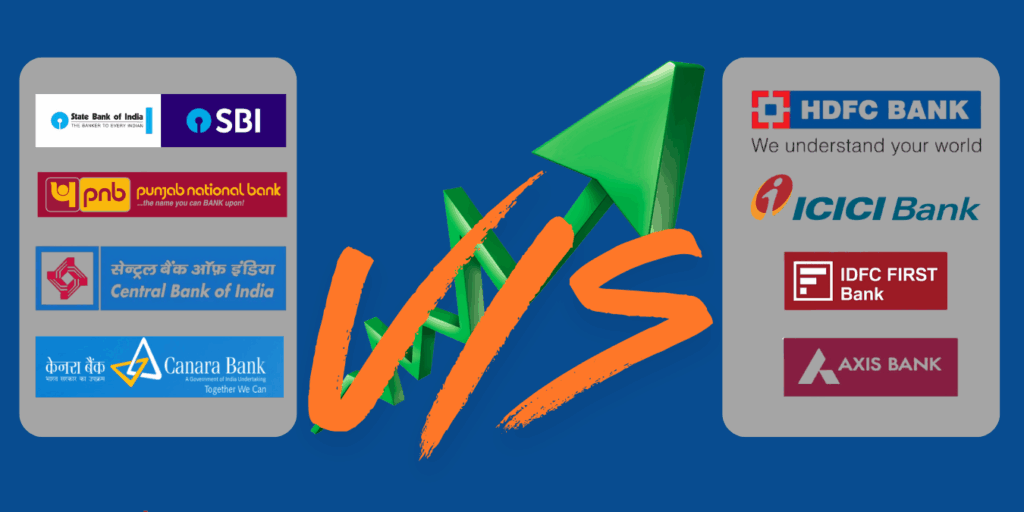
A closer look at the constituents driving this rally reveals a familiar cast of large private and public sector lenders. HDFC Bank has been a consistent outperformer, rising nearly 2 percent in a single June session to touch 759.05 rupees, while also posting loan growth of around 15 percent in earlier reporting periods. ICICI Bank and Kotak Mahindra Bank have similarly maintained steady upward momentum, with Kotak Mahindra Bank at one point rising 1.5 percent, the most among all Bank Nifty constituents in a single session. Kotak Mahindra Bank’s loan growth of approximately 10 percent has also underpinned investor confidence in its earnings trajectory.
Public sector banks have not been left behind either. Bank of Baroda touched a 15-month high during one of the rally’s key sessions, rising over 3 percent, demonstrating that the current banking upcycle is broad-based rather than confined to private lenders alone. State Bank of India, the country’s largest lender by assets, has also featured prominently among the stocks cited as leading the charge toward the 56,000 milestone, alongside ICICI Bank and HDFC Bank.
Historical Context: A Recurring Milestone
Interestingly, this is not the first time Bank Nifty has crossed the 56,000 threshold. The index first touched this level back in early 2025, and various sessions throughout that year and into 2026 saw it test, breach, and occasionally retreat from this zone. In April 2025, the index crossed 56,000 during a seven-session winning streak fueled by strong global cues, including an overnight rally in US markets and gains in the technology sector. That episode marked a 52-week high at the time and reflected how foreign institutional inflows and global risk appetite can quickly translate into domestic banking sector gains.
This recurring pattern of the index approaching, breaching, and consolidating around the 56,000 level over more than a year underscores an important truth about index milestones: round numbers often act as both psychological magnets and resistance zones. Each time Bank Nifty has cleared this level, it has typically been on the back of a specific catalyst, whether rate cut optimism, easing global tensions, or strong quarterly earnings from constituent banks. The current breakout, culminating in the July 2026 record of over 58,000, suggests the index has now decisively moved past this historical ceiling into genuinely uncharted territory.
What Investors Should Watch Next
For retail investors and market watchers in India, the days leading up to the August 3 to 5, 2026 RBI meeting will likely be marked by heightened volatility as traders position themselves ahead of the announcement. Historically, banking stocks have shown outsized reactions to RBI rate decisions given their direct sensitivity to borrowing costs, deposit rates, and net interest margins. A rate cut, if delivered, could further fuel the rally by improving credit demand and reducing funding costs for banks, though it could also compress net interest margins in the near term. Conversely, a hawkish pause or unexpected rate hike, as a minority of economists have speculated given rupee pressure, could trigger profit booking after such a sharp run-up.
The following table summarizes key levels and dates that market participants are tracking as the RBI decision approaches.
| Event | Date | Detail |
|---|---|---|
| Bank Nifty first crosses 56,000 in 2026 cycle | June 12, 2026 | Driven by softer crude and easing US-Iran tensions |
| Bank Nifty record high | July 10, 2026 | Closed at 58,045.90, up 1.39 percent |
| Previous RBI MPC meeting | June 3-5, 2026 | Policy rate widely expected to be held at 5.25 percent |
| Next RBI MPC meeting | August 3-5, 2026 | Seen as pivotal decision of the fiscal year |
| 52-week range | Trailing year | Between 49,954.85 and 61,764.85 |
Technical support levels also remain relevant for traders managing risk into the policy event. Earlier in 2026, analysts had identified the 54,300 to 54,400 zone as crucial support, with resistance clusters near 55,300 to 55,400. Given the index has now moved well above these earlier reference points, updated support and resistance bands will likely be recalibrated by technical analysts in the run-up to the August policy announcement.
The Bigger Picture for India’s Banking Sector
Beyond the immediate excitement of a fresh all-time high, this rally speaks to a deeper structural story about Indian banking. Loan growth figures from major lenders, cooling inflation, and a relatively stable rupee despite global headwinds have combined to create a favorable operating environment for banks. The RBI’s cautious but broadly supportive monetary stance over the past several policy cycles has provided a stable backdrop for credit expansion, even as the central bank keeps a close watch on inflation dynamics tied to its 4 percent target with a 2 to 6 percent tolerance band.
At the same time, market participants would do well to remember that index milestones, while headline-grabbing, are ultimately a reflection of underlying earnings, asset quality, and macroeconomic stability rather than an end in themselves. The banking sector’s ability to sustain this rally beyond the August RBI decision will likely hinge on whether loan growth continues at current paces, whether asset quality remains stable amid any global economic softness, and whether the RBI’s policy trajectory continues to align with market expectations for measured, growth-supportive monetary policy.
As the countdown to the RBI’s August 3 to 5, 2026 meeting begins, all eyes will remain on whether Bank Nifty can hold its gains above 56,000, let alone the more recent highs above 58,000, or whether profit-taking sets in as traders await clarity on the next chapter of India’s monetary policy story.