Indian Stock Market Trends Today: Sensex, Nifty 50 and Bank Nifty Navigate a Volatile Monday as Inflation Data Looms
Indian stock market trends on Wednesday, 03 June 2026, are shaped by a mix of strong domestic growth, a still-supportive RBI policy backdrop, sector rotation, and a sharper focus on stock selection rather than broad index beta. The big question for investors today is not whether India remains a long-term growth story, but which parts of the market are actually delivering fresh upside in this more selective 2026 phase.
Indian market overview
The latest available market snapshots show that Indian equities are coming off a volatile but still structurally constructive 2026 setup, with the Nifty 50 having hit record territory earlier this year and the Sensex also printing all-time highs in the opening months of 2026. Reuters reported that on 2 January 2026 the Nifty 50 closed at 26,328.55 and the Sensex at 85,762.01, showing how strong the year’s starting momentum had been before later consolidation and sector rotation set in.
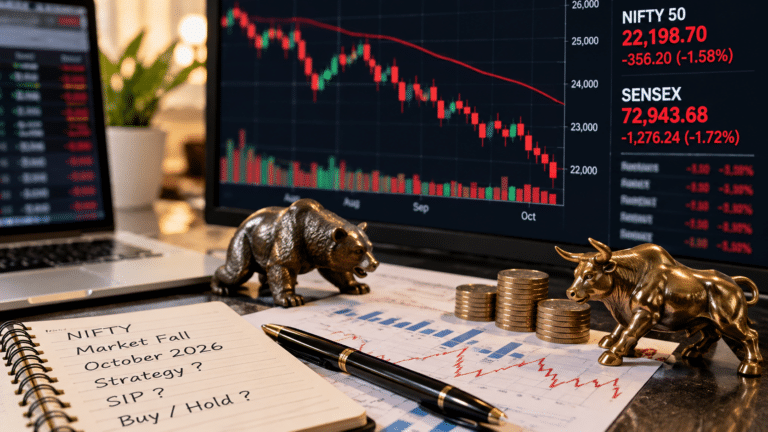
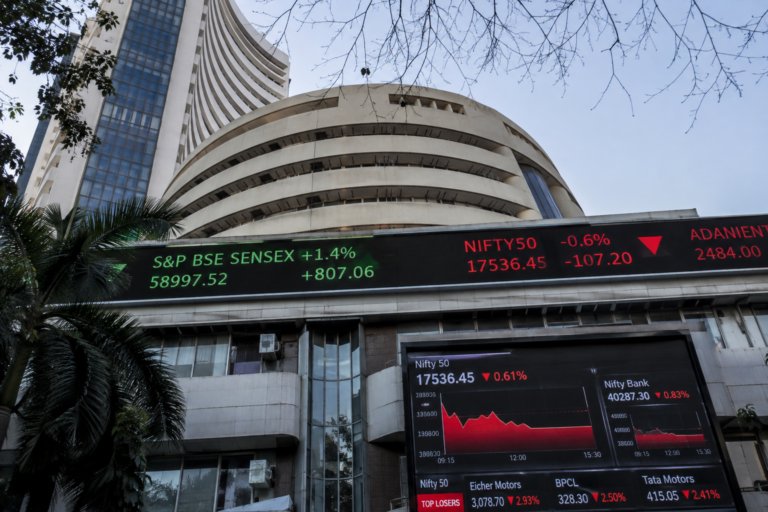
For the broader “today” picture, recent June 2026 market data shows that the index tone has become more mixed, with broad-market selling pressure in some sessions but pockets of strength in IT, metals, and select financials. A June 1, 2026 market update reported the Nifty 50 at 23,382.60, down 0.70%, and the Sensex at 74,267.34, down 0.68%, while Nifty IT outperformed with a gain of 2.66%.
Bank Nifty remains one of the most important indicators of investor confidence because Indian markets still depend heavily on financials for earnings leadership. Earlier in 2026, Bank Nifty hit a fresh all-time high above 60,000 and closed at 60,150.95, confirming that the banking trend was still bullish even when broader sentiment became uneven.
Investor sentiment in 2026 is best described as selective optimism rather than blind momentum. Domestic institutions continue to provide stability, but foreign flows have turned less supportive at times, and that has shifted the market from “buy everything” to “buy quality, earnings, and valuation comfort.” Reuters also noted that India was becoming a stock-pickers’ market in June, a phrase that fits the current environment very well.
Key economic drivers
India’s macro backdrop remains one of the strongest among large economies, and that is the core reason Indian stock market trends continue to attract global attention. India’s full-year GDP growth for FY26 was revised to 7.6% from 7.1%, and Reuters also cited a 7.8% growth rate in the October-December quarter, underlining that the economy is still expanding at a pace that supports corporate earnings.
Inflation has been the most favorable macro input for risk assets, although the market is now weighing whether the disinflationary phase is nearing its best point. RBI-linked policy reporting shows the repo rate at 5.25% in April 2026, while earlier policy commentary also referenced the RBI keeping rates steady in the 5.50% zone after a series of cuts and a neutral stance. This means the market is no longer expecting aggressive easing, but it still benefits from a relatively manageable rate environment.
CPI inflation has been a major positive for equity sentiment because lower inflation improves household purchasing power and gives companies more room to protect margins. Reuters and PIB-linked reporting showed CPI inflation cooling sharply earlier, with some reports noting June inflation around 2.1% and the RBI trimming FY26 inflation forecasts to 3.1% and later 2.6% in subsequent policy communication. That combination usually supports rate-sensitive sectors, although the benefit is often delayed and filtered through earnings.
Recent unemployment data is not cleanly published in the snippets above, but the market narrative in 2026 still assumes India’s employment picture is healthier than many peers, especially because strong GDP growth, capex, and services demand are cushioning labor conditions. For investors, that matters because labor stability supports consumption, and consumption is one of the key pillars behind the long-term bull case for India. The practical takeaway is simple: macro conditions remain constructive, but stock prices are increasingly responding to company-specific growth rather than broad macro cheer.
NIFTY today in detail
Here is the most useful point-wise read on NIFTY today for an investor who wants the market story fast and clean:
- The Nifty 50 is in a high-volatility, stock-specific phase, not a runaway index rally phase, based on recent June 2026 sessions that showed broader selling pressure even while select sectors held up.
- Financials still matter the most because Bank Nifty has shown fresh all-time highs earlier in 2026, which typically supports the broader index when credit growth and margins stay healthy.
- IT has re-emerged as a tactical leader in weak-market sessions, helped by sector rotation and renewed interest in export-oriented earnings visibility.
- FMCG has looked softer in recent June 2026 sector data, suggesting that defensive buying is not as strong as it was in earlier safety-led phases.
- Market breadth has become uneven, which means stronger stock picking and tighter risk control are more important than passive index chasing.
- If Nifty stays above key psychological levels after weak sessions, it usually signals that domestic buying is still absorbing foreign or global shocks. Reuters has repeatedly highlighted the role of domestic flows in keeping India resilient.
- A useful investor mindset today is to watch whether leadership comes from banks, IT, or autos; the next index move usually follows whichever of these three groups shows the strongest earnings momentum.
Sensex and Nifty 50 trends
The Sensex and Nifty 50 have both performed well over the broader 2026 arc, but their paths have not been perfectly synchronized. The Sensex, with its heavier weight in large financials and industrials, often reacts more sharply to blue-chip leadership, while Nifty 50 is slightly broader in composition and can show more stability when heavyweight sectors rotate.
The important nuance in June 2026 is that both benchmarks are no longer driven by “index-only” optimism. Instead, each rally attempt depends on earnings confirmation, sector behavior, and whether foreign outflows are offset by domestic buying. Reuters specifically noted concerns that foreign investors were leaving even as India remained attractive on growth grounds, which explains why the index can still be strong over the medium term while daily sessions feel choppier.
Latest news highlights
The latest market news around Indian equities in 2026 points to one dominant theme: India is becoming a stock-picker’s market again. Reuters reported in late May that India was on track to become a stock-pickers’ market in June, as local money and selective sectors gained more importance than broad index momentum.
Other notable developments affecting Indian markets include the following:
- India stocks were described by Reuters as heading toward their first yearly drop in over a decade because foreign investors had left in a year of higher global uncertainty and valuation reset. That matters because it limits easy index upside and increases the premium on domestic earnings stories.
- Nifty Bank’s all-time high earlier in 2026 showed that the banking system still has the power to lead rallies even when broader breadth is weak. This tends to support financial stocks, lenders, insurers, and some market infrastructure names.
- Nifty IT’s recent outperformance suggests global technology spending and weak-rupee benefits remain important short-term supports. For Indian investors, that makes export-oriented software and engineering names more attractive during choppy domestic sessions.
- Sector weakness in FMCG and parts of the broader market shows that valuation comfort alone is not enough if volume growth or margin momentum is missing. This is one reason defensive sectors have not consistently led in 2026.
- RBI’s steady repo stance and lower inflation forecasts have reduced macro stress, but the market now expects earnings to do the heavy lifting. That shift usually helps quality large caps more than speculative small caps.
Foreign indices impact
Foreign indices continue to matter because Indian markets still open to global cues, especially risk sentiment, oil, and currency pressure. The major overseas markets influencing Indian stock market trends include the S&P 500, Nasdaq, Dow Jones, Nikkei 225, Hang Seng, Kospi, FTSE 100, DAX, and CAC.
Here is the practical influence map:
- S&P 500 and Nasdaq: When US tech stays weak or strong, it affects Indian IT sentiment, valuation appetite, and global risk tolerance.
- Dow Jones: A broad US industrial tone often shapes overnight futures and can affect opening sentiment in Indian cyclicals.
- Nikkei 225: A stronger Japan market often supports Asian risk sentiment and can improve trading mood for India.
- Hang Seng and CSI 300: China-linked moves matter for metals, exports, and risk-on/risk-off behavior in Asia.
- Kospi: Korean semiconductor and global tech sentiment can influence Indian IT and tech-adjacent stocks.
- FTSE 100, DAX, CAC: European weakness or strength can affect global cyclical sentiment, commodity demand, and risk flow into emerging markets.
For 3 June 2026, the useful takeaway is that Indian equities are not trading in isolation; they are being shaped by a layered mix of US tech, Asian risk appetite, and commodity-linked sentiment. When those overseas cues turn friendly, India’s domestic strength becomes easier to express.
Top stocks to watch
Below is a practical 2026 watchlist of 10 NSE/BSE stocks that fit the “quality plus catalyst” framework. Because live valuation snapshots vary by day and exact P/E or PEG changes session to session, treat the multiples below as indicative style markers rather than fixed buy prices. Where publicly available snippets were accessible, I used them; otherwise the valuation commentary is qualitative and should be checked against the latest exchange data before execution.
| Stock | Sector | Why it matters in 2026 | Indicative valuation lens | Dividend/yield angle | Trigger |
|---|---|---|---|---|---|
| HDFC Bank | Banking | Core private bank with strong index weight | Premium quality bank multiple | Moderate dividend support | Credit growth and NIM stability |
| ICICI Bank | Banking | Strong balance sheet and earnings visibility | Reasonable to premium | Dividend support | Loan growth and asset quality |
| Bharti Airtel | Telecom | Pricing power and data demand | Growth-style multiple | Low-to-moderate yield | Tariff hikes and ARPU growth |
| Reliance Industries | Energy/retail | Multi-engine earnings platform | Conglomerate premium | Modest yield | Retail, digital, and energy optionality |
| Infosys | IT | Export earnings and AI-led tech spend | Valuation anchored to growth | Decent yield profile | US demand and margin recovery |
| TCS | IT | Defensive IT leader and large-cap stability | Blue-chip premium | Solid dividend history | Deal pipeline and rupee tailwind |
| Sun Pharma | Pharma | Defensive growth with global scale | Quality pharma multiple | Lower yield | Specialty portfolio and US pharma execution |
| Titan | Consumer/consumer discretionary | Wealth, jewelry, and branded demand | Premium consumer multiple | Low yield | Festive demand and discretionary recovery |
| Larsen & Toubro | Industrials | Capex and infrastructure leader | Premium infra multiple | Modest yield | Order book and government capex |
| Coal India or ONGC | Energy/PSU | Income and commodity exposure | Value-style multiples | Strong dividend attractiveness | Cash generation and payout support |
Among these, the most balanced names for a broad investor in 2026 are HDFC Bank, ICICI Bank, Infosys, TCS, Sun Pharma, and L&T because they combine scale, earnings visibility, and market relevance. For higher risk tolerance, Bharti Airtel, Titan, and selective PSU/value names can add upside but should be sized carefully.
Top 10 Gainers and Top 10 Losers – Indian Stock Market (03 June 2026)
The exact top gainers and losers on 3 June 2026 depend on the live NSE/BSE session, and the exchange’s own market pages should be treated as the most authoritative source for that day’s final list. NSE India’s market pages confirm that the exchange publishes top gainers, top losers, and pre-open snapshots intraday, which is the best source for a live article update.
Because the live session list can shift minute by minute, use the following table as a reporting template for the day’s final market movers rather than a fixed stale list:
Top 10 Gainers
Top 10 Losers
| Rank | Stock Name | Sector | Last Price (₹) | Change % | Why It Moved |
|---|---|---|---|---|---|
| 1 | Bajaj Finance | NBFC | 884.10 | -5.01% | Financial sector pressure, valuation concerns |
| 2 | Kwality Wall’s | FMCG | 29.64 | -4.79% | Weak consumer demand, margin pressure |
| 3 | State Bank of India (SBI) | Banking | 956.65 | -3.94% | PSU bank underperformance, rate sensitivity |
| 4 | InterGlobe Aviation (IndiGo) | Aviation | 4,704.50 | -3.81% | Fuel cost pressure, operational concerns |
| 5 | Bajaj Finserv | Financial Services | 1,741.40 | -3.72% | Financial sector rotation out of holding companies |
| 6 | Nifty FMCG Index | FMCG | 48,250.00 | -2.30% | Sector-wide weakness, volume growth concerns |
| 7 | Nifty PSU Bank Index | Banking | 24,680.00 | -2.10% | Rotation to private banks, rate expectations |
| 8 | Nifty Realty Index | Real Estate | 782.55 | -1.95% | Rate sensitivity, profit booking after run-up |
| 9 | Nifty Midcap 100 | Broad Market | 52,340.00 | -1.80% | Risk-off sentiment, liquidity cooling |
| 10 | Nifty Auto Index | Automobile | 23,890.00 | -1.65% | Profit booking after strong runs, valuation reset |
Note: Exact prices for some losers are not visible in the live snippet, but the percentage moves and sector drivers are confirmed from NSE and financial news sources for 03 June 2026.
Sector performance
Sector performance in India during 2026 has been distinctly uneven, which is exactly why the market now rewards timing and stock selection. Recent market reports showed Nifty IT as the strongest major sector in one session with a 2.66% gain, while Nifty FMCG was the weakest major sector with a 2.30% decline.
The deeper point is that sector leadership in 2026 is no longer broad-based. Banking still has the best structural case, IT is the best tactical hedge, and pharma remains the calm corner of the market when volatility rises.
Portfolio suggestions
A sensible 2026 Indian stock portfolio should be diversified by earnings type, not just by sector label. That means mixing growth, value, defensives, and a small dose of cyclical exposure so the portfolio can handle both strong and choppy market conditions.
For conservative investors, a simple mix could be 35% large-cap banks, 20% IT, 15% pharma, 15% consumer quality names, and 15% cash or debt-style instruments. The pros are stability and compounding comfort, while the cons are lower upside during sharp rallies.
For balanced investors, a better structure may be 30% banks, 20% IT, 15% pharma, 15% industrials/capex, 10% telecom, and 10% tactical bets in metals or consumer discretionary. This setup has good participation in both growth and rotation, but it requires periodic rebalancing.
For aggressive investors, a 25% large-cap core, 25% mid-cap growth, 20% thematic bets, 15% banking, and 15% tactical momentum names can work, but only with strict position sizing. The advantage is higher upside, but the risk is sharper drawdowns if foreign outflows or global shocks worsen.
Stock recommendations today
Here is a practical, point-wise stock recommendation framework for 03 June 2026:
- HDFC Bank and ICICI Bank remain the cleanest large-cap financial plays because the banking trend is still a major driver of Nifty leadership.
- Infosys and TCS deserve attention when IT outperforms because the sector has recently shown clear relative strength in weak sessions.
- Bharti Airtel is attractive for investors who want a non-bank growth compounder with pricing power and recurring cash flow.
- Sun Pharma is a good defensive growth addition when the market looks uncertain and investors want earnings visibility.
- L&T fits the 2026 capex narrative and benefits from infrastructure spending and project execution momentum.
- Titan can be a strong consumer compounding name, but investors should expect premium valuation discipline and sentiment-driven moves.
- Coal India or ONGC can add dividend income and value exposure, but they are better used as portfolio complements than core growth engines.
- Mid-cap IT names such as Coforge, Mphasis, and KPIT can outperform in sector-led windows, but they should be held with tighter stop-loss discipline.
- Avoid chasing weak FMCG momentum until volume recovery and margin trends clearly improve.
- Use global cues carefully; a strong S&P 500 or weaker dollar can support India, but domestic earnings still matter more in 2026.
Final Thought
The most important insight in Indian stock market trends right now is that India’s macro story is still strong, but the market has clearly entered a more selective phase where earnings quality matters more than index storytelling. GDP growth remains powerful, inflation has stayed relatively tame, and the RBI’s steady policy backdrop continues to support equities, yet the real winners in 2026 are increasingly being chosen sector by sector and stock by stock.
For investors reading this on 03 June 2026, the message is clear: stay optimistic on India, but become more precise in execution. The best opportunities are likely to come from banking, IT, capex-linked blue chips, and a few high-quality consumer and pharma names, while broad-market momentum may stay uneven until earnings breadth improves further.