WhatsApp Logo Follow Now
Advertisement

Retirement & Pension

Will Your PF Contribution Still Be Tax-Free? The 2026 Ceiling Rule That Matters More Than You Think

Will Your PF Contribution Still Be Tax-Free? The 2026 Ceiling Rule That Matters More Than You Think

If you earn ₹200,000 or more monthly and contribute to the Employees' Provident Fund, you need to understand two critical ceiling rules that determine whether your PF remains tax-free in 2026: the ₹7.5 lakh employer contribution cap and the ₹2.5 lakh employee contribution limit. Budget 2026 confirms the employer contribution ceiling stays at ₹7.5 lakh annually across PF, NPS, and superannuation, while interest on employee contributions exceeding ₹2.5 lakh becomes taxable each year according to your income tax slab. Understanding the Two PF Tax Ceilings That Define Your Retirement Savings The Provident Fund taxation framework in India operates through two…

Read More
EPF May 2026 Guide What Changed Recently What Stayed the Same and What May Affect You Next

EPF May 2026 Guide What Changed Recently What Stayed the Same and What May Affect You Next

If you are an EPF subscriber in India, May 2026 brings significant changes to how you access, manage, and benefit from your provident fund. The Employees Provident Fund Organisation has approved EPFO 3.0 with ATM and UPI withdrawals expected to launch by late May 2026, while the interest rate remains unchanged at 8.25 per cent for FY 2025-26. Budget 2026 also introduced major tax rule rationalization affecting employer contributions. This comprehensive guide explains exactly what changed, what stayed the same, and what these updates mean for your retirement savings. What Changed Recently in EPF May 2026 EPFO 3.0 Digital Revolution…
Read More
EPFO 3.0 Update Explained: Why May 2026 Could Be a Big Month for PF Members

EPFO 3.0 Update Explained: Why May 2026 Could Be a Big Month for PF Members

The Employees Provident Fund Organisation is entering its most transformative phase in decades, and May 2026 marks a pivotal moment for over 8 crore PF members across India. EPFO 3.0 represents a fundamental shift from traditional, paperwork-heavy processes to a modern, digital-first system that treats PF accounts more like bank accounts with instant access capabilities. Sources close to the Ministry of Labour and Employment confirm that the highly anticipated UPI and ATM withdrawal features are slated for a late-May rollout, potentially changing how employees access their retirement savings forever. Understanding EPFO 3.0: The Foundation of Modern PF Management EPFO 3.0…
Read More
Is Your PF Balance Safe in 2026? What Employees Need to Know About Inactive Accounts and Refunds

Is Your PF Balance Safe in 2026? What Employees Need to Know About Inactive Accounts and Refunds

Your Provident Fund balance is absolutely safe in 2026, even if your account has been inactive for years. The Employees' Provident Fund Organisation (EPFO) continues to credit interest on inactive balances until you turn 58, and your money cannot be claimed by anyone else as long as it remains unclaimed. However, new 2026 rules introduce automatic refunds for small inactive accounts, stricter KYC requirements for withdrawals, and simplified withdrawal categories that every employee must understand to protect their retirement savings. The Reality of PF Safety in 2026 Millions of Indian employees have left old PF accounts behind when changing jobs,…
Read More
EPFO Now Covers Gig Workers, Allows Face Authentication for UAN, and Auto-Transfers PF on Job Change — The Complete 2026 Upgrade

EPFO Now Covers Gig Workers, Allows Face Authentication for UAN, and Auto-Transfers PF on Job Change — The Complete 2026 Upgrade

India's retirement savings infrastructure just went through its most consequential transformation in decades. The Employees' Provident Fund Organisation, a body that has historically served only the organised sector, is now at the center of a sweeping policy overhaul that touches three distinct pillars: the formal inclusion of gig and platform workers under a social security framework, the rollout of Aadhaar-based face authentication for UAN generation and activation, and the full operationalisation of automatic PF transfers when employees switch jobs. For anyone who earns a salary, drives deliveries for an app, or has ever dreaded the paperwork of changing companies, understanding…
Read More
Auto-Settlement Limit Raised to ₹5 Lakh and Claims Processed in 3 Days — EPFO’s Fastest Reforms Yet

Auto-Settlement Limit Raised to ₹5 Lakh and Claims Processed in 3 Days — EPFO’s Fastest Reforms Yet

If you have ever filed a claim with the Employees' Provident Fund Organisation and watched the days stretch into weeks before seeing a single rupee in your account, you already know how frustrating the system could be. India's largest social security body, managing the retirement savings of over 70 million active subscribers, has historically been synonymous with paperwork delays, rejected claims, and a grievance backlog that seemed permanent. That narrative is now changing — faster than most policy watchers expected. EPFO has officially raised the auto-settlement limit for PF claims to ₹5 lakh, up from the earlier threshold of ₹1…
Read More
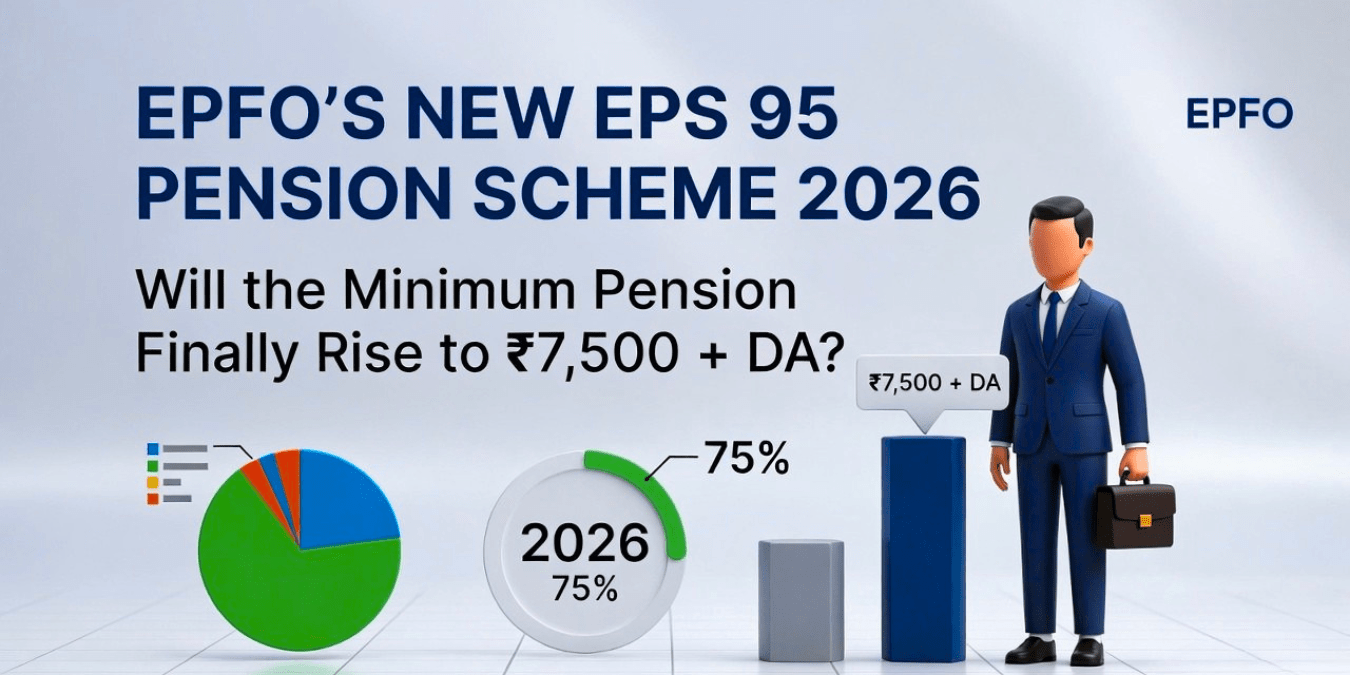
EPFO’s New EPS 95 Pension Scheme 2026: Will the Minimum Pension Finally Rise to ₹7,500 + DA?

EPFO’s New EPS 95 Pension Scheme 2026: Will the Minimum Pension Finally Rise to ₹7,500 + DA?

For over 78 lakh retired employees across India, the monthly journey to the bank has been one of quiet desperation. They receive ₹1,000 — a figure frozen in time since 2014 — and are expected to survive inflation, medical bills, and the ordinary costs of a life already lived in service. In 2026, that reality is finally being challenged at the highest institutional levels, and the question on every pensioner's lips is no longer whether the minimum pension under the Employees' Pension Scheme 1995 (EPS-95) will change, but when — and by how much. What Is EPS-95 and Why Does…
Read More
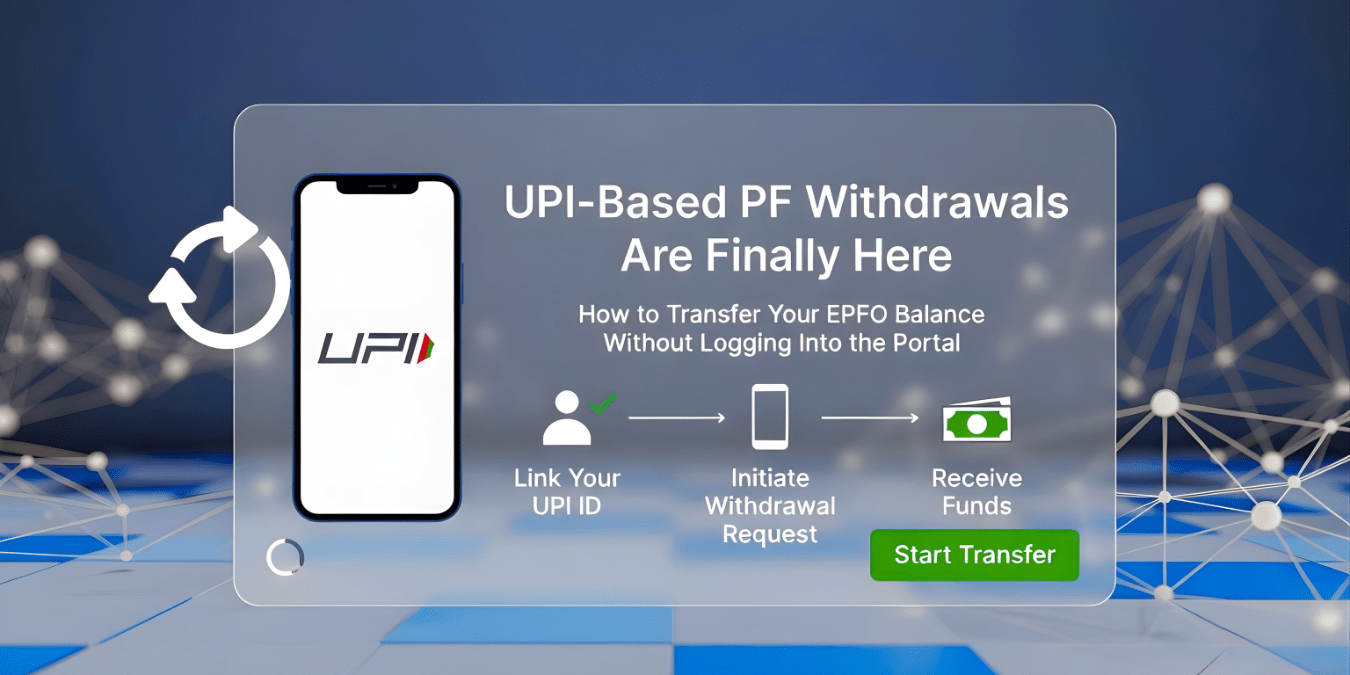
UPI-Based PF Withdrawals Are Finally Here — How to Transfer Your EPFO Balance Without Logging Into the Portal

UPI-Based PF Withdrawals Are Finally Here — How to Transfer Your EPFO Balance Without Logging Into the Portal

For years, withdrawing your Provident Fund balance meant navigating a maze — logging into the EPFO member portal, uploading documents, waiting for employer approvals, and then sitting through processing delays that could stretch from a few days to several weeks. If you have ever tried withdrawing PF during a medical emergency or a financial crunch, you know exactly how frustrating that experience can be. That changes now. With the rollout of EPFO 3.0, India's retirement savings infrastructure is getting its most significant digital upgrade yet — one that puts UPI at the center of how 8 crore salaried employees access…
Read More
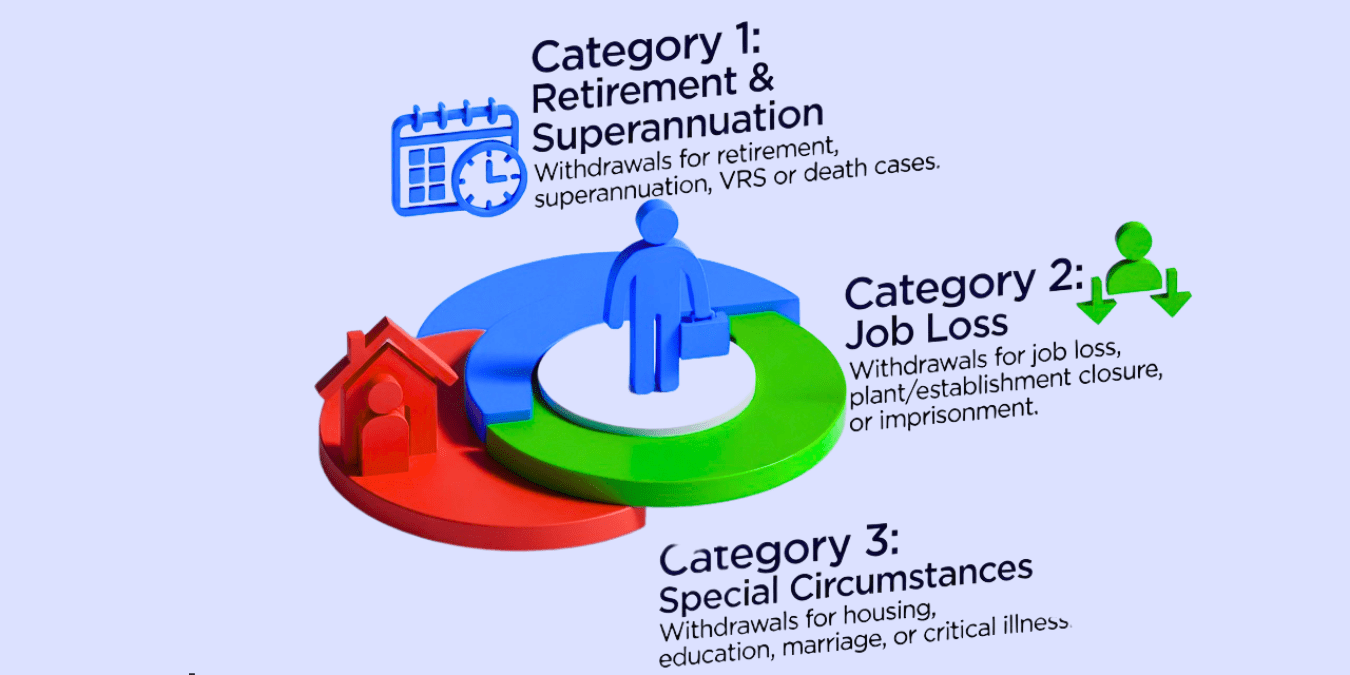
EPFO Slashes 13 Withdrawal Rules Into Just 3 Categories — The Simplest Guide to Claiming Your PF in 2026

EPFO Slashes 13 Withdrawal Rules Into Just 3 Categories — The Simplest Guide to Claiming Your PF in 2026

If you have ever tried to withdraw your Provident Fund and felt like you were navigating a maze blindfolded, you are not alone. For decades, the Employees' Provident Fund Organisation (EPFO) operated under a complex system of 13 separate withdrawal provisions, each with its own eligibility norms, documentation requirements, service period conditions, and withdrawal limits. The result was widespread confusion, claim delays, and frustrated employees who had earned every rupee in their PF accounts but could not access it without a bureaucratic ordeal. That era is now officially over. In a landmark decision approved by the EPFO's Central Board of…
Read More
31.86 Lakh Inactive PF Accounts Holding ₹10,903 Crore — Is Your Money Sitting Unclaimed in EPFO?

31.86 Lakh Inactive PF Accounts Holding ₹10,903 Crore — Is Your Money Sitting Unclaimed in EPFO?

Imagine working hard for years, contributing a portion of every paycheck into a retirement fund, and then simply forgetting about it. Sounds unlikely, right? Yet, that is exactly what has happened with millions of Indian workers. According to data disclosed by the Employees' Provident Fund Organisation (EPFO), a staggering 31.86 lakh inactive Provident Fund accounts are currently holding a combined balance of ₹10,903 crore — money that belongs to real people but remains unclaimed, untouched, and quietly accumulating in EPFO's books. This is not a small administrative oversight. This is a massive financial phenomenon that touches the lives of salaried…
Read More