Is Your PF Balance Safe in 2026? What Employees Need to Know About Inactive Accounts and Refunds
Your Provident Fund balance is absolutely safe in 2026, even if your account has been inactive for years. The Employees’ Provident Fund Organisation (EPFO) continues to credit interest on inactive balances until you turn 58, and your money cannot be claimed by anyone else as long as it remains unclaimed. However, new 2026 rules introduce automatic refunds for small inactive accounts, stricter KYC requirements for withdrawals, and simplified withdrawal categories that every employee must understand to protect their retirement savings.
The Reality of PF Safety in 2026
Millions of Indian employees have left old PF accounts behind when changing jobs, and many worry whether this money is still safe. The short answer is yes. Your PF balance remains legally yours indefinitely, and the EPFO maintains detailed records of every member account linked to your Universal Account Number (UAN). There is no time limit for claiming your PF, and unclaimed balances cannot be forfeited or transferred to the government.
What has changed in 2026 is how EPFO handles inactive accounts and the processes for accessing your money. The Ministry of Labour and Employment approved a pilot project in February 2026 for automatic refunds to inoperative accounts with balances of ₹1,000 or less, directly transferring funds to Aadhaar-linked bank accounts without requiring any application from the member. This affects approximately seven lakh inoperative accounts holding around ₹30.52 crore, with the first phase covering 133,000 accounts worth nearly ₹5.68 crore.
Understanding Inactive versus Inoperative PF Accounts
The confusion around PF safety stems from misunderstanding what makes an account inactive. An active PF account receives monthly contributions from both employer and employee. An inactive PF account is one where no contributions have been made for a prolonged period, typically around 36 consecutive months. However, inactive does not mean dead or non-earning.
Here is the critical fact that contradicts a widespread myth: PF interest does NOT stop after three years of inactivity. This myth originated from an old rule window between 2011 and 2016 when EPFO did stop interest on inoperative accounts to encourage withdrawals or transfers. The rule changed in November 2016, and since then, interest has continued on inactive balances.
As per current EPFO rules confirmed in 2026, interest continues on inactive balances even if you stop working or no contributions are made for years. The EPFO calculates and credits annual interest on the accumulated amount just like active accounts. This continues until you reach 58 years, which is the official retirement age under EPF rules. Once you cross 58, you are expected to withdraw or settle the account, and if funds remain unclaimed beyond this point, the account may stop earning interest.
The 8.25 Percent Interest Rate for 2025-26
Your PF balance continues to grow with competitive returns. The EPFO Central Board of Trustees recommended retaining the annual interest rate at 8.25 percent for FY 2025-26, marking the third consecutive year at this level. This decision was taken in a meeting on March 2, 2026, chaired by Union Labour and Employment Minister Mansukh Mandaviya, and awaits official notification by the Finance Ministry before interest gets credited to subscriber accounts.
With over 70 million active EPF members, this 8.25 percent rate represents one of the safest fixed-return investment options available in India. The interest is tax-free if you complete five years of continuous service, making it particularly attractive for long-term retirement planning. Even on inactive accounts, this interest compounds annually, which means your money keeps growing whether you are actively contributing or not.
For example, if you left your job at age 30 with a PF balance of ₹2 lakh and never contributed again, that balance would still earn 8.25 percent yearly until you turn 58. Over 28 years, without any additional contributions, your ₹2 lakh would grow to approximately ₹20.7 lakh purely through compound interest.
New 2026 EPFO Rules That Affect Your PF
The EPFO has approved major reforms in 2026 to make provident fund operations simpler, faster, and more transparent. These changes, cleared by the Ministry of Labour and Employment, balance financial flexibility with long-term retirement security. Here are the key reforms that directly impact employees.
First, simplified withdrawals now merge the earlier 13 withdrawal provisions into three clear categories. Essential Needs covers expenses like illness, education, and marriage, with education withdrawals allowed up to ten times and marriage up to five times, improving over the earlier combined limit of three. Housing Needs covers buying, building, or repaying loans on a house. Special Circumstances covers cases like natural calamities or unforeseen financial stress without requiring additional explanation.
Second, members must keep at least 25 percent of their PF balance untouched to ensure retirement security. This rule protects your retirement corpus from complete depletion while allowing access to 75 percent during emergencies. Full withdrawal of the entire PF balance including the minimum 25 percent is permitted in cases such as retirement after attaining 55 years of service, permanent disability, incapacity to work, retrenchment, voluntary retirement, or leaving India permanently.
Third, after job loss, members can withdraw up to 75 percent of their PF balance immediately, including employer contributions and interest. The remaining 25 percent becomes accessible after one year of unemployment. This provides crucial financial relief during unemployment without forcing complete depletion of retirement savings.
Fourth, pension withdrawals under the Employees’ Pension Scheme EPS now require a minimum waiting period of 36 months instead of two months, encouraging long-term pension eligibility and continuity. This change strengthens the sustainability of pension benefits for genuine long-term subscribers.
Digital Upgrades Under EPFO 3.0
The EPFO is rolling out EPFO 3.0, a next-generation digital platform built on cloud technology that fundamentally changes how employees access PF services. This upgrade will enable faster service delivery to over 30 crore members across the country and improve transparency for both employees and employers.
EPFO services are now available on DigiLocker, allowing you to securely access essential EPFO documents anytime anywhere. Documents include your UAN card, Pension Payment Order (PPO), and Scheme Certificate. Members can now download Annexure-K directly from the EPFO Member Portal to view PF transfer details, check past service history, and track previous employer contributions.
A major 2026 innovation is UAN verification via face authentication on the UMANG App, eliminating the need for physical verification in many cases. Members can also generate, activate, and authenticate UAN using face authentication, making onboarding faster for new employees.
Claim settlement has accelerated dramatically. EPFO now offers auto-settlement of advance claims within three days, with the auto-settlement limit increased to ₹5 lakh for illness, education, marriage, and housing. You no longer need to upload a cheque leaf or bank passbook copy when submitting claims, reducing documentation and speeding up processing.
For KYC-compliant members with Aadhaar-verified accounts, PF account transfers are now automated when you change jobs, eliminating the manual transfer process that previously took weeks. EPFO has also introduced Passbook Lite, a simplified way to check PF balance, contributions, and transactions through a user-friendly interface.
Automatic Refunds for Small Inoperative Accounts
The most significant 2026 development for inactive account holders is the automatic refund pilot scheme. An EPFO account is classified as inoperative if there has been no contribution or transaction for three consecutive years. Under the new decision, inoperative accounts with balances of ₹1,000 or less will see the amount directly transferred to the subscriber’s linked bank account.
Beneficiaries will not need to file any claim or submit documents to initiate the process. This is currently being rolled out as a pilot project, and if it works smoothly, the same method may be extended to the remaining 25 lakh inoperative accounts beyond the initial seven lakh. Accounts that are already Aadhaar-linked will receive the money immediately, while transfers to remaining eligible accounts will be processed in phases.
At present, there are around 31 lakh inoperative EPFO accounts, out of which nearly six lakh accounts have ₹1,000 or less deposited. This initiative aims to return approximately ₹30.52 crore lying dormant in these small-balance accounts directly to subscribers without any paperwork. If your old PF account falls into this category and your Aadhaar is linked to your bank account, you may see money credited without ever filing a claim.
Tax Implications of Inactive and Withdrawn PF
While your PF balance remains safe and continues earning interest, tax implications become important when you withdraw. PF withdrawals before completing five years of continuous service may be taxable, which is a critical consideration for employees changing jobs frequently. The interest earned on PF is tax-free under Section 10(12) of the Income Tax Act only if you complete five years of continuous service.
Here is where inactive accounts create a specific tax risk. If your PF account remains inactive for more than three years, the interest earned on the PF amount becomes taxable in certain circumstances. This means that while the principal remains safe, the tax treatment of accumulated interest can change based on account status and withdrawal timing.
Delayed withdrawals can also create KYC or verification hurdles that complicate tax filing. Older accounts may require extra documentation during claims, and KYC mismatches can lead to rejected claims that delay access to your money when you need it most. The operational friction of managing multiple old PF accounts with fragmented records often causes more problems than the financial aspects.
Step-by-Step Guide to Securing Your PF in 2026
To ensure your PF balance remains accessible and properly managed in 2026, follow these actionable steps based on current EPFO requirements.
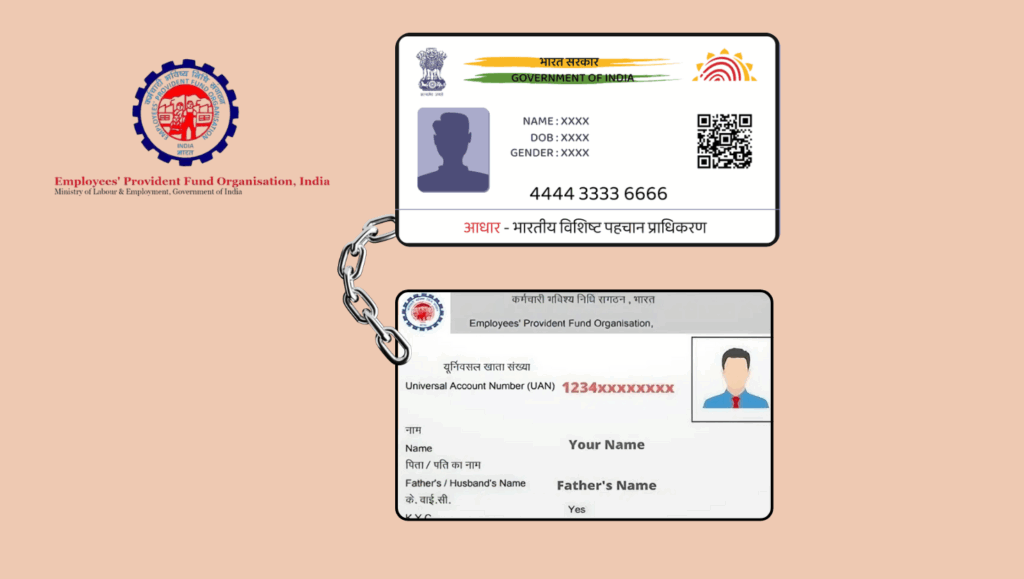
First, activate your UAN and verify KYC information. The first step to claiming any unclaimed EPF amount is activating your Universal Account Number. Then ensure your PAN, Aadhaar, and bank details are correctly linked and verified in the EPFO system. Aadhaar-linked UAN and KYC are mandatory for online EPF services, including digital claims. Your Aadhaar-registered mobile number should be active for OTP authentication, and your bank account should be correctly seeded in EPFO records for claim settlement.
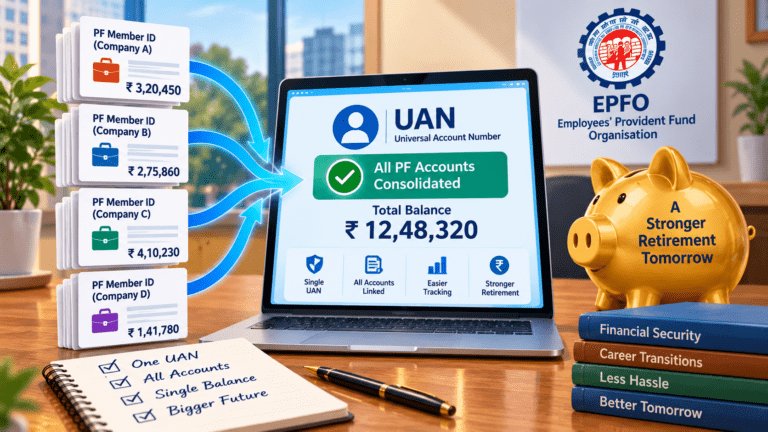
Second, transfer old PF accounts to your current UAN. If you have multiple PF accounts from previous employers, consolidate them into your current UAN to avoid fragmentation. This simplifies tracking, ensures continuous service history for pension eligibility, and prevents accounts from becoming inoperative unnoticed. Automatic PF transfer on job change now works for KYC-compliant members with Aadhaar-verified accounts, making consolidation easier than ever.
Third, check your service history for errors. Log into the EPFO Member Portal and review your service history to ensure all employers are correctly recorded. Discrepancies in service records can affect pension eligibility and withdrawal amounts, especially under the new 36-month EPS waiting period. You can download Annexure-K to verify past service history and previous employer contributions.
Fourth, track eligibility for pension benefits separately from your PF balance. The Employees’ Pension Scheme has different rules than the provident fund, and the new 36-month waiting period for pension withdrawals affects when you can access pension benefits. Understanding this distinction helps you plan retirement withdrawals strategically.
Fifth, update your bank account details if they have changed. Since automatic refunds for small inactive accounts go directly to linked bank accounts, ensuring your current bank account is correctly seeded in EPFO records is critical. For accounts that are not Aadhaar-linked, money will be sent in phases, so updating KYC ensures you receive funds faster.
How to Check Your PF Balance and Account Status
You can check your PF balance and account status through multiple official channels in 2026. The UMANG App provides the most comprehensive mobile access to EPFO services. Go to EPFO services, enter your UAN, and check whether any unclaimed PF balance is lying in inactive accounts. The app shows your current balance, contribution history, and account status in real time.
The EPFO Unified Member Portal at epfindia.gov.in allows you to log in with your UAN credentials to view your passbook, check claim status, and download documents. The Passbook Lite feature introduced in 2026 provides a simplified way to check PF balance, contributions, and transactions through a user-friendly interface. You can also use face authentication on the UMANG App to verify and authenticate your UAN without physical verification.
For checking unclaimed assets across multiple categories including PF, the UDGAM app from RBI covers bank deposits while the UMANG App covers PF, pensions, and insurance. Visit the EPFO Portal specifically to check unclaimed PF balance, and check the IEPF website for lost shares and dividends if you have investments beyond PF.
If you encounter issues, use the EPFO Grievance Portal at epfigms.gov.in to file complaints, or call the EPFO Toll-Free Helpline at 1800-118-005 for assistance. Visit your regional EPFO office for document verification or claim issues that require in-person resolution.
Common Myths About PF Safety Debunked
Several persistent myths about PF safety create unnecessary anxiety among employees. Let’s address the most common misconceptions with factual clarity based on 2026 EPFO rules.
Myth one: PF interest stops after three years of inactivity. Reality: This is completely false. PF interest does NOT stop after three years of inactivity, and the EPFO continues to credit annual interest on inactive balances until age 58. The myth originated from outdated rules between 2011 and 2016 that no longer apply.
Myth two: You lose your PF money if you don’t withdraw it. Reality: Your PF balance remains yours indefinitely, and there is no time limit for withdrawal. An unclaimed PF balance cannot be claimed by anyone else, and as long as your EPF balance is unclaimed, it remains safe.
Myth three: Inactive accounts are automatically closed. Reality: Inactive accounts are marked as inoperative after 36 months without contributions, but they are not closed. The money remains in your account earning interest, and you can withdraw or transfer it whenever you want.
Myth four: You need to visit the EPFO office to claim PF. Reality: Online claims through the UAN portal are now standard, and you don’t need to upload a cheque leaf or bank passbook copy anymore. For small inactive accounts with ₹1,000 or less, automatic refunds happen without any claim filing at all.
Myth five: All PF withdrawals are tax-free. Reality: PF withdrawals before completing five years of continuous service are taxable, and interest on inactive accounts beyond three years can become taxable in certain circumstances.
When You Should Transfer versus Withdraw PF
The decision to transfer or withdraw PF depends on your employment situation and long-term financial goals. Usually, transferring to your current UAN is better for long-term benefits and pension eligibility. Transferring maintains continuous service history, which is crucial for earning full pension benefits under the Employees’ Pension Scheme.
You should withdraw PF when you have retired after age 55, are permanently disabled, incapable of working, being retrenched, voluntarily retiring, or leaving India permanently. After job loss, you can withdraw up to 75 percent immediately and the remaining 25 percent after one year of unemployment if you need immediate financial relief.
If you are unemployed for at least one month, you can withdraw up to 75 percent of your EPF balance. If unemployment continues beyond two months, you can withdraw the entire amount. However, consider that withdrawing breaks the compounding chain, and you lose the tax benefits of continued accumulation.
Multiple old PF accounts create fragmented savings that are difficult to track and manage. KYC mismatches across accounts can lead to rejected claims, and forgotten accounts delay access when you actually need money. The risk is not financial loss but operational friction that makes accessing your money difficult when you need it most.
The Real Risk: Operational Friction, Not Financial Loss
People focus heavily on whether yearly interest is being credited to their PF accounts, but the real risk is operational, not financial. Interest is usually backdated and protected, but access depends on clean records and active management. A growing balance you cannot easily withdraw is still a problem.
Imagine your PF earned interest for years, but when you try to withdraw, you discover KYC mismatches, incomplete service history, or unlinked bank accounts. Now interest becomes secondary because what you really need is access, not just accumulation. This is why proactive account management matters more than worrying about interest stopping.
The growing number of inoperative accounts—around 31 lakh as of 2026—reflects employees who have lost track of their PF or failed to update KYC when changing jobs. These accounts are safe, but accessing the money requires additional documentation and verification that could have been avoided with simple proactive management.
What Employers Need to Know About PF Compliance
Employers also play a critical role in PF safety. Partial withdrawals can now be made after 12 months of service, and employers must ensure timely ECR (Electronic Challan cum Return) filing to avoid contribution delays. Passbook updates for wage months September-October 2025 are under process due to revamped ECR ledger posting, with temporary non-visibility of contributions expected.
Employers must facilitate automatic PF transfers for KYC-compliant members with Aadhaar-verified accounts when employees change jobs. Payroll-linked automation for seamless contributions is part of EPFO 3.0, and employers should ensure their payroll systems are compatible with these digital upgrades.
Final Checklist for PF Safety in 2026
Before closing this guide, here is your complete checklist to ensure PF safety and accessibility in 2026. Verify your UAN is activated and linked with Aadhaar. Confirm PAN is seeded in your EPFO profile. Ensure your bank account is correctly linked and verified. Check your passbook for recent contribution updates. Review service history for accuracy and completeness. Transfer old PF accounts to your current UAN if you have multiple accounts. Update contact information including mobile number and email. File any pending claims before they become stale. Check for small inactive account balances under ₹1,000 that may qualify for automatic refund. Keep records of all PF-related documents in DigiLocker for easy access.
Conclusion: Your PF Is Safe, But Proactive Management Matters
Your PF balance is absolutely safe in 2026 regardless of account activity status. The EPFO continues to credit 8.25 percent interest on inactive balances until age 58, your money cannot be claimed by anyone else, and new automatic refund schemes make accessing small balances easier than ever. However, safety does not mean you can ignore your PF accounts indefinitely.
The real challenge in 2026 is not financial loss but operational friction from fragmented accounts, KYC mismatches, and outdated records. By activating your UAN, verifying KYC, consolidating old accounts, and staying informed about new rules like automatic refunds and simplified withdrawals, you ensure that your hard-earned retirement savings remain accessible when you need them.
EPFO 3.0 digital upgrades, including face authentication, UPI-based withdrawals expected by April 2026, and three-day auto-settlement of advance claims, make managing PF easier than ever before. Take advantage of these tools, stay proactive about account management, and rest assured that your PF balance is secure while working to maximize its accessibility and growth potential.
About the Author
This article is written by a financial security specialist with expertise in EPFO regulations and retirement planning in India. The information provided is based on official EPFO circulars, Ministry of Labour and Employment notifications, and verified 2026 updates. Always verify specific details with your regional EPFO office or the official EPFO portal at epfindia.gov.in for your individual circumstances.
Disclaimer: This article is for informational purposes only and does not constitute legal or financial advice. EPFO rules may vary based on individual records and processing timelines. Always consult official EPFO sources or qualified financial advisors for decisions regarding your specific PF account.