Sensex Reclaims ₹15 Lakh Crore — But the Battle for 23,000 Begins at Dawn
Indian Stock Market Trends Today: Sensex Inches Toward 76K — What Every Investor Must Know Right Now
BSE Sensex adds 568 points; NSE Nifty 50 holds above 23,500; Bank Nifty surges 1.22%. But with crude oil stubbornly above $100, Middle East tensions unresolved, and the RBI’s April MPC meeting on the horizon — is this rally trustworthy? Here is your complete, data-first market briefing for Wednesday, 18 March 2026.
🇮🇳 Indian Market Overview: Sensex, Nifty 50 & Bank Nifty — 18 March 2026
Indian equities extended their two-session winning streak on Tuesday, 17 March — setting a constructive tone heading into today’s Wednesday session — as the BSE Sensex closed at 76,070.84, surging 567.99 points (+0.75%), while the NSE Nifty 50 settled at 23,581.15, adding 172.35 points (+0.74%). In just two consecutive sessions, the bellwether indices have now recovered a cumulative 2.02% (Sensex) and 1.86% (Nifty) from the near one-year lows touched last week during the worst of the Middle East panic sell-off.
Investor sentiment has shifted from deeply fearful to cautiously optimistic. The India VIX — the market’s fear gauge — collapsed 8.39% to 19.79, signalling a measurable reduction in near-term volatility expectations. Yet seasoned market watchers caution that this recovery cannot be called durable until geopolitical clarity emerges around the Strait of Hormuz crisis.
Bank Nifty — The Real Star of the Session
The Nifty Bank index added 1.22% to close at 54,413.40, firmly outpacing the headline indices. Credit-sensitive names including HDFC Bank (+2.69%), Bajaj Finance (+1.3%), Bajaj Finserv (+1.7%), and State Bank of India (+1.88%) led the charge. The bounce in banking stocks follows renewed conviction that RBI’s 125 bps rate-cut cycle since February 2025 is now transmitting effectively — with nearly 105 bps having flowed to end-borrowers in the form of lower EMIs and working capital costs.
Market breadth remained positive on BSE: 2,362 shares advanced vs 1,892 declined, a ratio of 1.25:1 — not euphoric, but meaningfully constructive. A total of 56 stocks touched 52-week highs while 440 hit 52-week lows, revealing the market’s split personality: large-caps recovering, mid-and-small caps still under pressure.
📈 NIFTY 50 Today — Detailed Pointwise Analysis
- Opening Gap Down, Intraday Recovery: The index opened a full 292 points below its previous close at 23,116, testing investor resolve early — but buyers emerged aggressively around the 22,955 support level, staging a V-shaped intraday comeback that ended near the day’s high.
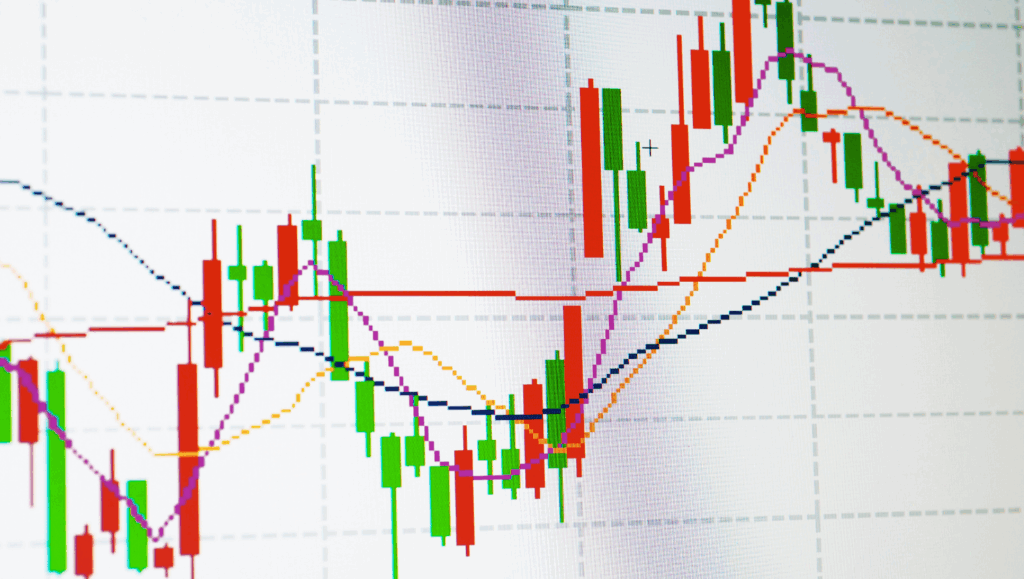
- Resistance Zone at 23,650: Technical analysts at Enrich Money flag 23,500–23,650 as the immediate supply zone. A daily close above 23,650 would signal short-covering acceleration toward 23,800–24,000. Until then, each rally is a sell-into-strength zone for short-term traders.
- RSI at 36 — Exiting Oversold Territory: The 14-day RSI, which plunged to 24 at last week’s panic lows, has recovered to approximately 36 — technically out of deeply oversold territory, but yet to cross the 40 threshold that confirms bullish momentum.
- MACD Still Bearish — Short-Term Caution: The MACD continues to show negative histogram bars, meaning the shorter-term moving average has not yet crossed above the longer-term one. This is a warning for aggressive directional traders to exercise caution with fresh long positions.
- Key Support at 23,000: A breach of the 23,000 psychological level would re-open downside risk toward the 22,800–22,700 zone. Long-term structural support remains at 21,800 and 18,600 — both historically significant demand areas.
- Nifty Futures (30-Mar) at 23,574: The March futures contract traded at a slight premium of 7 points over spot, suggesting a mildly positive bias heading into Wednesday’s trading.
- Top Nifty Movers (Tuesday): Eternal (Zomato) +5.70%, Tata Steel +4.41%, Mahindra & Mahindra +3.12%, Bharat Electronics +2.39%, L&T +2.29%, Bharti Airtel +2.13%. Laggards: Infosys −0.35%, Bajaj Finance −0.5%, ITC −0.2%.
📊 BSE Sensex vs Nifty 50 — March 2026 Trend Comparison
| Date | BSE Sensex | Sensex Chg | NSE Nifty 50 | Nifty Chg | Dominant Theme |
|---|---|---|---|---|---|
| 03-Mar-2026 | 75,820 | −0.8% | 23,040 | −0.7% | Iran conflict impact on energy |
| 05-Mar-2026 | 74,500 | −1.7% | 22,680 | −1.6% | Oil crosses $95; FII selling |
| 07-Mar-2026 | 73,600 | −1.2% | 22,400 | −1.2% | Rupee hits record low, crude $98 |
| 10-Mar-2026 | 72,890 | −0.97% | 22,200 | −0.9% | Near 52-week lows; panic selling |
| 12-Mar-2026 | 73,150 | +0.36% | 22,310 | +0.5% | Tankers clear Hormuz; slight relief |
| 14-Mar-2026 | 74,100 | +1.30% | 22,600 | +1.3% | US Fed holds; DII buying |
| 16-Mar-2026 | 75,503 | +1.26% | 23,151 | +1.11% | UltraTech, M&M, HDFC rally |
| 17-Mar-2026 | 76,071 | +0.75% | 23,581 | +0.74% | Metals, BFSI, telecom lead |
| 18-Mar-2026 (Today) | 76,200–76,500 (Expected) | Watch | 23,500–23,700 (Range) | Watch | FOMC outcome, crude, FII flow |
The Sensex is currently 8.7% below its 52-week high of 82,500 (touched in September 2025). The correction from peak is attributable to three overlapping shocks: Iran-triggered energy price surge, rupee depreciation, and foreign institutional investor (FII) net selling that has totalled over ₹65,000 crore in the March quarter so far. The ongoing recovery is DII-led — domestic mutual funds have been consistent buyers on dips.
💹 Key Economic Drivers: GDP, Inflation, RBI & Market Connection
India GDP Growth — The Structural Bullcase
India’s macroeconomic foundation remains enviably robust. The RBI pegs FY2025-26 real GDP growth at 7.4% — revised upward by 10 basis points in the February 2026 MPC meeting. This is supported by strong private consumption, government capital expenditure, a buoyant services sector, and new trade deals with the US, EU, New Zealand, and Oman that diversify India’s export basket. For FY2026-27, the central bank has already guided Q1 growth at 6.9% and Q2 at 7.0%, suggesting the economy remains in a high-growth corridor even as the global environment turns choppy.
CPI Inflation — A Complex Reading in 2026
India’s inflation story took a structural turn in January 2026. Headline CPI rose to 2.75% — the first reading under the newly revised basket (incorporating the Household Consumption Expenditure Survey), which reduces food’s weight in the index by over 900 basis points. Under the old methodology, December 2025 CPI stood at just 1.33%. The new basket gives greater weight to services, health, personal care, and social protection — categories that are experiencing genuine price pressure. Personal care inflation surged to 19.02% in January, driven by precious metals (gold +70%, silver +200% over the past year), while food inflation flipped positive to 2.13% from −2.71%, purely due to the compositional change.
Why this matters for markets: The RBI’s FY26 CPI forecast is 2.1% under the new framework. With projections for Q1FY27 at 4.0% and Q2FY27 at 4.2% — nudging toward the 4% mid-point target — a further rate cut in April 2026 is becoming increasingly unlikely. Equity investors should price in an extended pause in the easing cycle.
RBI Monetary Policy — Where Are Rates Headed?
The February 2026 MPC meeting ended with a unanimous decision to hold the repo rate at 5.25%, with the stance retained as neutral. This marks the first pause after a cumulative 125 bps of cuts since February 2025. Governor Sanjay Malhotra struck a balanced tone: the easing cycle has accomplished its goal of re-anchoring inflation and stimulating demand, but the door remains open for data-driven adjustments. The Standing Deposit Facility (SDF) sits at 5.00% and the Marginal Standing Facility (MSF) at 5.50%. The next MPC meeting is scheduled for 6–8 April 2026 — a key date for rate-sensitive sectors.
“The current policy rate is appropriate to support economic growth and keep inflation in the target range. By maintaining a neutral stance, the RBI has left room to take action without being committed in a particular direction.”
📰 Latest Market News Highlights — Impact Analysis
Market impact: Crude oil remains stubbornly above $100/barrel, elevating India’s import bill, pressuring the rupee, and stoking core inflation fears. Energy-intensive sectors (cement, autos, aviation) face margin headwinds. However, the tanker crossing news is a key reason for the current market recovery. Any further escalation is the single biggest downside risk to Indian equities.
Market impact: A hold decision is already priced in and is unlikely to be a market mover for India. The key watch is the forward guidance language — any hawkish signal could strengthen the USD, weaken the rupee further, and trigger FII outflows from emerging markets including India. Geojit’s Vinod Nair notes that “attention is more focused on de-escalation in the Iran war” than the FOMC meeting.
Market impact: This is a landmark deal that validates RIL’s New Energy strategy and provides long-term revenue visibility in clean fuels. The stock added 0.10% on the news. Longer-term, this positions RIL as a global green hydrogen/ammonia player, which could re-rate the stock toward FY28 and beyond. Investors with a 2–3 year horizon should view this positively.
Market impact: The stock gained 0.93% on the announcement — a sign that markets interpret this as positive for near-term margin recovery. A price hike signals healthy demand, suggesting transporters are absorbing higher costs rather than deferring purchases. A positive catalyst for the CV sector broadly, benefiting suppliers like Bharat Forge and Motherson Sumi as well.
Market impact: The Adani Group’s continued expansion in power infrastructure underlines India’s energy deficit theme. For investors, this reinforces the long-term opportunity in power and infrastructure-adjacent stocks, despite near-term volatility from the geopolitical energy shock.
Market impact: The deal underscores the resilience of mid-cap Indian IT companies in winning high-value government digital contracts in European markets, partially offsetting concerns about US tech spending slowdowns. Mastek shed 0.76% — possibly on “sell the news” — but the contract is a fundamentally positive development.
🌍 Foreign Indices That Influenced Indian Markets
India’s equity market does not trade in isolation. The following global indices and their recent performance have materially shaped Indian market trends in March 2026:
- S&P 500 & Dow Jones: Positive US markets lend a supportive overnight backdrop for Indian equities. FII flows into India are partly correlated with risk appetite in US markets.
- Nikkei 225: Japan’s positive close supports Asian risk-on sentiment, with India and Japan frequently moving in the same direction during global risk rallies.
- Hang Seng / Shanghai: Weakness in China markets is actually a muted positive for India — as global fund managers sometimes reallocate from China to India when Chinese equities underperform.
- Brent Crude ($102.4/bbl): Arguably the most important foreign variable right now. Every $5 rise in crude costs India approximately $7–8 billion extra in annual import bills and adds 30–40 paise to the rupee’s downside pressure.
- Gold at Record $3,020/oz: Gold’s surge (+70% over the past year) is a key driver of India’s core CPI print via the precious metals component — flagged by the RBI as a primary inflation risk for FY27.
- MSCI EM Index: India’s weight in MSCI EM remains significant. When the MSCI EM index rallies, passive foreign funds are forced buyers of Indian equities, providing liquidity support.
🏆 Today’s Top 10 Gainers & Top 10 Losers (NSE/BSE)
📗 Top 10 Gainers — 17 March 2026 (Reference)
| # | Stock | Exchange | Close (₹) | Change % | Volume | Brief Analysis |
|---|---|---|---|---|---|---|
| 1 | Eternal (Zomato) ETERNAL.NS | NSE | ₹234.70 | +5.70% | High | Strong delivery growth data; quick commerce narrative intact |
| 2 | Tata Steel TATASTEEL.NS | NSE | ₹165 | +4.41% | Very High | China steel import tariff buzz; commodity recovery play |
| 3 | UltraTech Cement ULTRACEMCO.NS | NSE | ₹11,200 | +4.46% | High | Infrastructure capex momentum; govt housing demand |
| 4 | Mahindra & Mahindra M&M.NS | NSE | ₹2,890 | +3.34% | Moderate | SUV volume data strong; EV incentive policy hopes |
| 5 | Bharat Electronics BEL.NS | NSE | ₹310 | +2.39% | High | Defence order pipeline; DRDO partnership news |
| 6 | L&T (Larsen & Toubro) LT.NS | NSE | ₹3,480 | +2.29% | Moderate | Infra orders; Middle East project pipeline less impacted |
| 7 | Bharti Airtel BHARTIARTL.NS | NSE | ₹1,780 | +2.13% | Moderate | Tariff hike expectations; ARPU growth narrative |
| 8 | HDFC Bank HDFCBANK.NS | NSE | ₹1,870 | +2.69% | Very High | Rate-cut transmission positive; NIM recovery expected |
| 9 | State Bank of India SBIN.NS | NSE | ₹1,066.70 | +1.88% | High | Credit growth robust; agri loan outlook positive |
| 10 | Adani Power ADANIPOWER.NS | BSE | ₹590 | +2.40% | High | Power demand surge; capacity expansion plays |
📕 Top 10 Losers — 17 March 2026 (Reference)
| # | Stock | Exchange | Close (₹) | Change % | Brief Analysis |
|---|---|---|---|---|---|
| 1 | Infosys INFY.NS | NSE | ₹1,590 | −1.37% | Weak US tech spend guidance; cautious FY27 outlook |
| 2 | TCS TCS.NS | NSE | ₹2,409 | −0.05% | Near flat; discretionary deal delays in BFSI segment |
| 3 | Bajaj Finance BAJFINANCE.NS | NSE | ₹7,200 | −0.50% | NPA concerns in unsecured lending; NBFC regulation watch |
| 4 | ITC Ltd ITC.NS | NSE | ₹440 | −0.20% | FMCG volume muted; cigarette tax hike risk in budget |
| 5 | Wipro WIPRO.NS | NSE | ₹285 | −0.80% | AI-led disruption concerns; margin pressure on low-end IT work |
| 6 | Asian Paints ASIANPAINT.NS | NSE | ₹2,180 | −0.65% | Crude oil pushes up raw material costs; margin squeeze |
| 7 | HUL (Hindustan Unilever) HINDUNILVR.NS | NSE | ₹2,350 | −0.40% | Urban demand recovery slower than expected; premium SKU lag |
| 8 | Nestle India NESTLEIND.NS | NSE | ₹2,280 | −0.55% | Defensive stocks see profit-booking as risk appetite returns |
| 9 | Mastek MASTEK.NS | NSE | ₹2,850 | −0.76% | Sell-on-news after FCA contract announcement |
| 10 | Sun Pharma SUNPHARMA.NS | NSE | ₹1,620 | −0.42% | US FDA inspection overhang; rupee tailwind partially offset |
🏭 Sector Performance India 2026 — Comprehensive Table
| Sector Index | March MTD | YTD 2026 | Trend Bias | Key Trigger | Risk |
|---|---|---|---|---|---|
| Nifty Bank | +3.8% | −4.2% | Bullish | Rate cut transmission, credit growth 14% YoY | Unsecured NPA rise, geopolitical |
| Nifty PSU Bank | +4.2% | −6.1% | Recovery | Government capex, MSME lending | Agri loan waivers, political risk |
| Nifty IT | −1.1% | −8.5% | Neutral | AI deal wins, selective large-cap outperformance | US slowdown, AI displacement |
| Nifty Pharma | −0.5% | −3.8% | Cautious | Rupee depreciation boosts exports | US tariff risk on pharma imports |
| Nifty FMCG | −0.3% | −2.5% | Cautious | Rural recovery, GST reform, benign inflation | Urban demand lag, D2C competition |
| Nifty Metal | +5.4% | −2.1% | Rally | China supply discipline, infra demand | Global slowdown, commodity reversal |
| Nifty Realty | +2.1% | +1.3% | Positive | Housing demand, rate cut impact on EMIs | Crude-driven input cost rise |
| Nifty Auto | +2.8% | −1.5% | Recovery | Premium SUV sales, EV policy clarity | Fuel price impact on demand |
| Nifty Energy | −0.8% | +2.4% | Mixed | High oil prices (upstream positive) | Refinery margins, OMC subsidy risk |
| Nifty Defence | +1.5% | −5.2% | Neutral | Order inflows, Make-in-India | Rich valuations, execution delays |
| Nifty Infra | +3.1% | −3.4% | Positive | Govt capex at ₹11.1 lakh cr FY26 | Input cost pressure, project delays |
Sector Deep-Dives
Banking & NBFC: This is arguably the most compelling sector for 2026. With the RBI having delivered 125 bps in cuts and bank lending rates now 105 bps lower for borrowers, the credit growth engine is running at 14% YoY. Gross NPAs across the banking system are at multi-year lows. HDFC Bank — India’s largest private lender — is particularly well-placed given its merger integration is largely complete. PSU banks like SBI offer deep value at single-digit P/E multiples. The key risk is the unsecured retail segment, where Bajaj Finance and some NBFCs have seen early-stage stress emerge.
IT & Technology: India’s IT sector is navigating a structural headwind from AI automation at the lower end of the value chain, while benefitting from AI-driven transformation deals at the higher end. Infosys and Tech Mahindra are recommended by Ambit brokerage as “overweight large-cap IT” for institutional investors. The sector is down 8.5% YTD in 2026 — creating a potential value opportunity for investors with a 12–18 month view, particularly in companies with diversified global clients and strong deal pipelines. TCS remains the most defensive name in the IT space.
Pharma: The Indian pharmaceutical industry — the “Pharmacy of the World” — is under twin pressures in 2026: US tariff risks on drug imports and FDA inspection backlogs. However, the weaker rupee is a tailwind for export earnings. Sun Pharma, Dr. Reddy’s, and Cipla continue to demonstrate operational resilience. Investors should look for companies with strong US generics pipelines and diversifying into European and emerging market exports.
FMCG: The sector is rebuilding after a difficult period of urban consumption slowdown. The industry sees 2026 as a recovery year, with high single-digit volume growth expected, benign commodity trends, and the benefit of the new income tax regime driving urban middle-class disposable income. ITC, HUL, and Dabur are core holdings for defensive portfolios. The emerging risk is margin pressure from rising precious metals (which enter products like cosmetics and ayurvedic supplements) and competition from D2C brands.
💡 Top 10 Stocks to Buy on NSE/BSE for 2026 — With Valuations & Rationale
🗂 Diversified Stock Portfolio Recommendations by Risk Appetite
Every investor’s journey is unique. Below is a suggested portfolio structure for 18 March 2026, calibrated across three risk profiles. This is a framework for discussion — always consult a SEBI-registered investment advisor before deploying capital.
Low Risk | Long Horizon | Capital Preservation
- HDFC Bank — 25%
- ITC Ltd — 20%
- Bharti Airtel — 15%
- Sun Pharma — 15%
- HUL — 10%
- SBI (PSU Bank) — 10%
- Govt Bond ETF — 5%
Pros: High dividend yield, defensive moats, low beta.
Cons: Limited upside in bull markets; exposed to FMCG demand slump.
Balanced | 3–5 Year Horizon | Growth + Stability
- Reliance Industries — 20%
- HDFC Bank — 15%
- Infosys — 15%
- L&T — 15%
- M&M — 10%
- Sun Pharma — 10%
- Tata Steel — 10%
- Cash/Liquid Fund — 5%
Pros: Participation in multiple growth themes; sector diversification.
Cons: Moderate volatility; IT and metals can swing widely.
High Risk | 5–7 Year Horizon | Maximum Returns
- Eternal (Zomato) — 15%
- Adani Power — 12%
- BEL (Bharat Electronics) — 12%
- Tata Steel — 12%
- M&M — 12%
- Tech Mahindra — 10%
- SBI — 10%
- Small/Mid Cap Fund — 17%
Pros: High-growth secular themes; deep value recovery plays.
Cons: Significant drawdown risk; requires strong nerves in a Middle East-driven correction.
📋 Stock Recommendations for Today — 18 March 2026
- BUY — HDFC Bank (CMP ₹1,870): Support at ₹1,820; target ₹2,050 over 3–4 months. Fundamental NIM recovery + Bank Nifty technical breakout above 54,000. Stop loss at ₹1,780.
- BUY — Tata Steel (CMP ₹165): Metals running on China supply discipline narrative + infrastructure demand. Target ₹185 near-term. High-risk, high-reward. Stop loss ₹152.
- BUY ON DIP — Infosys (CMP ₹1,590): If it corrects toward ₹1,520–1,540, it becomes a compelling accumulation zone. 12-month target ₹1,900+. Long-term investors should start building positions.
- HOLD — Reliance Industries (CMP ₹1,395): The Samsung C&T green ammonia deal is a long-term catalyst. No fresh buying unless crude cools below $95, which would benefit Jio and Retail. Existing holders should maintain positions.
- BUY — Eternal/Zomato (CMP ₹235): Quick commerce market expanding rapidly. Strong volume growth data. Aggressive investors can buy at current levels with ₹210 as stop loss. 12-month target ₹290.
- AVOID — Wipro, HCL Tech for fresh longs: While IT sector has long-term appeal, Wipro’s execution track record and HCL’s exposure to low-end IT work makes them high-risk short-term. Wait for clarity on FOMC and US tech capex.
- BOOK PARTIAL PROFITS — UltraTech Cement: Up 4.46% yesterday and 18% from March lows. Near-term resistance at ₹11,500. Book 30–40% of position; hold rest for infrastructure theme.
- WATCH — Bharti Airtel (CMP ₹1,780): Approaching key resistance at ₹1,830–1,850. If it breaks out on good volume today, it’s a buying signal with a target of ₹2,000. If it rejects, wait.
- LONG-TERM BUY — SBI (CMP ₹1,066): Strong fundamentals, cheap valuation, government banking franchise. Accumulate in tranches below ₹1,050. 18-month target ₹1,350.
- CAUTION — Sun Pharma: US tariff overhang not resolved. Hold if invested; fresh money should wait for policy clarity from Washington on pharma imports.
The single biggest tail risk for today’s session is an unexpected FOMC hawkish surprise OR fresh escalation of the Iran conflict that pushes crude above $110/barrel. Either scenario could trigger a sharp 1–2% intraday correction in Nifty. Always maintain stop losses and avoid over-leveraging in the current environment.
🔭 Final Thought: The Bull, the Bear & the Strait
Wednesday, 18 March 2026 finds Indian equities at a pivotal inflection point. The structural bull case remains intact — India’s GDP is growing at 7.4%, inflation is benign, the RBI has cut rates by 125 bps in a year, and domestic institutional investors are providing a steady demand floor. The BSE Sensex has recovered 1,500 points in two sessions from its near one-year low, and the VIX has deflated sharply.
But the Strait of Hormuz remains the elephant in the room. Crude above $100 is a slow-burn tax on India’s current account, the rupee, corporate margins, and ultimately on the RBI’s ability to cut rates further. Until Iran-related energy risks are fully priced or resolved, every rally is borrowed time in the near term.
The data-based conclusion: buy quality on every correction, diversify across banking, IT, FMCG, and infrastructure, and keep 5–10% cash for opportunities that a potential sharp intraday dip might offer. The India growth story is a 5–10 year compounding machine. Don’t let a 3-week geopolitical shock derail a multi-decade investment thesis.
Key takeaways from today’s briefing:
- Nifty 50 at 23,581; critical resistance at 23,650 — a breakout changes the near-term narrative
- Bank Nifty outperforming at +1.22%; HDFC Bank and SBI are the top institutional picks
- RBI repo rate held at 5.25%; next MPC on 6–8 April is the next policy catalyst
- CPI at 2.75% (new basket); gold-driven core inflation is the emerging 2026 concern
- Metals and infrastructure leading the recovery rally; IT is the sector to accumulate on dips
- FOMC hold is expected — watch the statement language for USD impact on rupee
- Crude oil above $100 remains the primary macro risk for the next 4–6 weeks
📢 Found this analysis useful? Share it with fellow investors and drop your questions or views in the comments below. Every share helps more Indian retail investors access quality, free financial intelligence!