Stop Paying Minimum Balance Fees: The "Secret" RBI Account Everyone Can Get
Your “premium” bank account might be a scam after April 1. A quiet RBI mandate now forces banks to offer unlimited digital transactions on zero-balance accounts—but there’s a hidden “weekly” credit reporting trap that could tank your CIBIL score instantly. Here is the single declaration you must sign to survive.
A bank account that charges you zero maintenance fees, requires zero minimum balance, and—starting this April—lets you make unlimited UPI and online transactions without paying a single rupee. Now, imagine your bank manager desperately hoping you never find out about it.
For years, the Indian middle class has been sold a myth: that to get “good” banking services, you need to park Rs 10,000, Rs 25,000, or even Rs 1 Lakh in a “Priority” savings account. But a quiet revolution has been brewing in the regulatory corridors of Mumbai. The Reserve Bank of India (RBI) has just dropped a massive regulatory anchor that changes the game entirely from April 1, 2026.
While WhatsApp forwards are buzzing with half-truths about “new rules,” the reality is far more intriguing—and potentially lucrative—for the average Indian. We are looking at the weaponization of the Basic Savings Bank Deposit (BSBD) account and a radical shift in how your creditworthiness is tracked.
Here is the deep dive into what is changing, the hidden traps you need to navigate, and why April 1st is going to be the most important financial date of your year.



The “Digital Unlimited” Loophole: A Death Blow to Minimum Balance?
For over a decade, the BSBD account (often sneered at as the “Jan Dhan” or “poor man’s” account) had a fatal flaw: a strict limit on withdrawals. You were allowed four withdrawals a month. The fifth one? Failed transaction or a hefty fee. This made the account useless for the modern digital Indian who scans a QR code for a Rs 10 chai five times a day.
The Game Changer:
From April 1, the RBI has mandated that digital transactions will no longer count toward this limit.
Let that sink in.
- UPI Transactions: Unlimited & Free.
- NEFT/RTGS/IMPS: Unlimited & Free.
- Debit Card Payments (PoS): Unlimited & Free.
- Minimum Balance Requirement: ZERO.
The “Hidden” Implication:
If you are a student, a freelancer, or a salaried professional who operates primarily through Google Pay, PhonePe, or Net Banking, the “Premium” savings account you hold—where you are forced to keep Rs 10,000 locked in to avoid penalties—has just lost its primary competitive advantage.
Banks have historically used the “transaction limit” to push customers into higher-tier accounts. By removing this barrier for digital transactions, the RBI has effectively created a VIP Zero-Balance Account for the digital generation. The “four withdrawals” limit now effectively applies only to physical cash withdrawals at branches or ATMs. If you visit an ATM less than four times a month (which most urban Indians do), a BSBD account now offers you better utility than a standard savings account, with none of the “minimum balance non-maintenance” anxiety.
The “Income Discrimination” Ban: You Can’t Be Denied
A lesser-known, darker practice in Indian banking has been “profile-based denial.” Walk into a swanky private bank branch in South Mumbai or Indiranagar asking for a BSBD account, and you would often hear excuses: “Server is down,” “We don’t have forms,” or “This is only for BPL (Below Poverty Line) cardholders.”
The New Mandate:
The RBI has explicitly rejected income-based eligibility. The new rules state that banks cannot deny BSBD accounts based on income or profile.
Whether you earn Rs 5,000 or Rs 5 Lakhs a month, you are legally entitled to this zero-balance facility. The central bank has mandated that full banking services must be provided without discrimination.
Why This Matters in 2025:
In an era where “financial shaming” exists—where banks upsell you “Gold” and “Platinum” cards you don’t need—this rule democratizes access. It turns the BSBD account from a welfare product into a right. It allows savvy financial planners to separate their “spending” money from their “investment” money without paying fees on the spending account.
The Trap: The “One Person, One Account” Declaration
Before you rush to open a BSBD account to save on charges, you need to know about the “poison pill” embedded in these rules. This is the aspect most blogs gloss over, but it is the most critical compliance hurdle.
The Strict Condition:
You can hold only one BSBD account across the entire banking system. More importantly, you cannot hold a BSBD account and a regular savings account simultaneously.
The Enforcement Mechanism:
Starting April 1, banks are required to take a strict customer declaration to enforce this.
- Scenario A: You have a Savings Account with HDFC. You walk into SBI to open a BSBD. You must close the HDFC account within 30 days.
- Scenario B: You try to open two BSBD accounts (one in Axis, one in ICICI). The centralized declarations and strict KYC norms will likely flag this violation.
The “Surprising” Risk:
If you are caught holding both (due to a legacy oversight or a system glitch), the bank typically has the right to convert your free BSBD account into a standard savings account—and immediately hit you with backdated charges for non-maintenance of minimum balance.
- Actionable Takeaway: Do not treat this as a “secondary” account. It is an “all-or-nothing” switch. You must be ready to migrate your entire banking relationship to this zero-balance structure.
The “Velocity of Credit”: The Weekly Reporting Bombshell
While the savings account rules are consumer-friendly, the new loan monitoring norms are a double-edged sword that will impact your financial privacy and credit score volatility.
The Old Rule:
Banks reported your loan and credit card behavior to bureaus (like CIBIL, Experian) once a month. This gave you a “buffer.” If you maxed out your credit card on the 5th but paid it off by the 25th, the bureau often never saw that high utilization.
The New April Rule:
Lenders must now submit borrower data to credit bureaus on a weekly basis (specifically on the 7th, 14th, 21st, and the last day of the month).
Why This is a “Surprising” Shock for Borrowers:
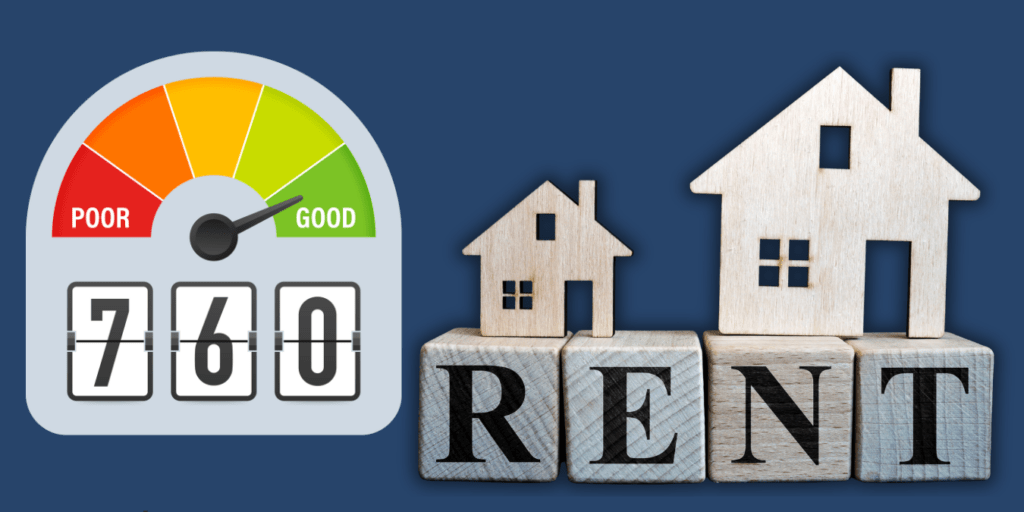
- Utilization Spikes: If you use 90% of your credit card limit for a flight booking on the 6th, and the data is reported on the 7th, your credit score could dip immediately—even if you planned to pay it off next week. Your score will now “breath” and fluctuate much more aggressively.
- Instant Defaults: There is no hiding a missed EMI for a few weeks. If you miss a due date on the 3rd, and the report goes out on the 7th, your credit report reflects the irregularity almost instantly.
- Faster Corrections: On the flip side, this is a “relief” trigger. If you fix a mistake or pay off a loan, your score will recover in days rather than months.
The “Hidden” Corporate Strategy:
This isn’t just about transparency; it’s about pre-emptive risk blocking. With weekly data, if you default on a loan with Bank A on the 7th, Bank B will know by the 14th and can block your credit card or stop a loan disbursal immediately. The window for “kiting” (using one debt to pay another unseen) has closed forever.
Comparison: BSBD vs. Standard Savings (Post-April 2026)
| Feature | Basic Savings (BSBD) | Standard Savings Account |
| Minimum Balance | ZERO (Mandatory) | Rs 10,000 – Rs 25,000 (Avg) |
| Cash Deposits | Unlimited & Free | Often charged after 3-5 transactions |
| Digital Payments (UPI) | Unlimited & Free | Unlimited & Free |
| ATM/Branch Withdrawals | 4 Free / Month (Charged after) | 5 Free (Own ATM) / 3 (Other ATM) |
| Debit Card Fees | Zero Annual Fee | Rs 200 – Rs 750 + GST |
| Cheque Book | Free (Min 25 leaves/year) | Charged after 25 leaves |
| Eligibility | Single Account Only | Multiple Accounts Allowed |
The Verdict: Who Should Switch?
The new rules create a clear divide in the Indian banking demographic.
Switch to BSBD Immediately If:
- You are a Digital Native: You live on UPI. You barely touch cash. Why pay fees or lock up Rs 10,000?
- You are a Senior Citizen with Simple Needs: You need a pension account without the confusing “maintenance charges” eating into your interest.
- You are a Gig Worker: Your income fluctuates. You cannot guarantee a minimum balance every month.
Stick to Regular Savings If:
- You Need Multiple Accounts: You segregate funds (Expenses vs. Savings vs. Emergency) across different banks.
- You are Cash-Heavy: You withdraw cash from ATMs more than once a week. The BSBD’s 4-withdrawal limit (for physical cash) will hurt you.
- You Want “Premium” Perks: You care about lounge access debit cards, relationship managers, or locker discounts (which BSBD accounts generally do not offer).
The Final Thought: What’s Coming Next?
While April 1, 2026, marks the era of the “Weekly Credit Watch” and the “Zero-Balance Freedom,” whispers in the fintech sector suggest this is just Phase 1. The RBI is reportedly testing “Portable Account Numbers”—a system where, much like your mobile number, your bank account number stays the same even if you switch from SBI to HDFC.
Imagine a world where switching banks is as easy as sending a porting SMS, with no change to your SIPs or EMI mandates. The infrastructure for this is being laid right now with these standardized KYC and reporting norms. The banking system is stripping down to its bare utility. The question is: Are you still paying for a “luxury” banking experience that is actually just a legacy tax?
Disclaimer: The use of any third-party business logos in this content is for informational purposes only and does not imply endorsement or affiliation. All logos are the property of their respective owners, and their use complies with fair use guidelines. For official information, refer to the respective company’s website.