No PAN, No Credit Card — The Mandatory Rule India's Banks Are Now Enforcing That Most People Don't Know About
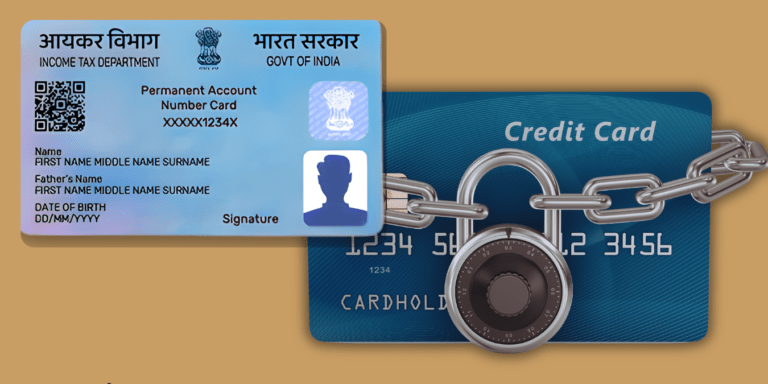
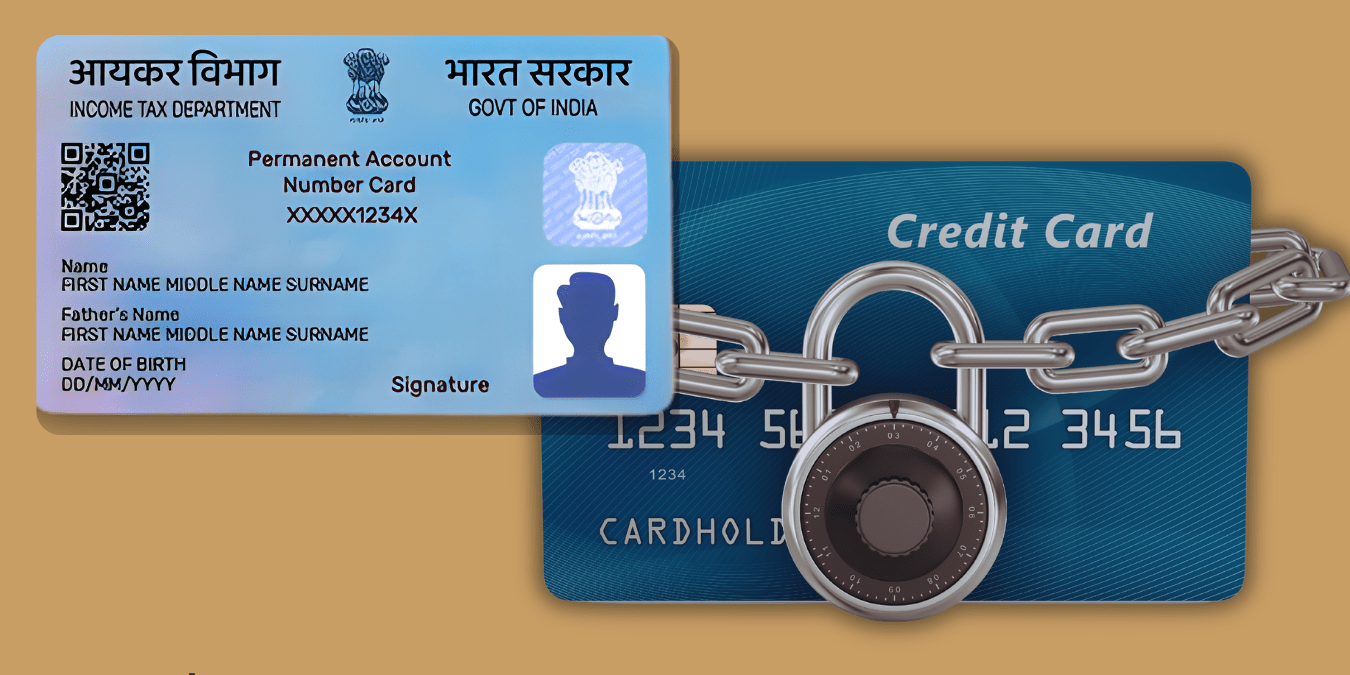
India’s banks are silently cancelling credit cards — and most people won’t know why until it’s too late. A rule hiding inside the new Income Tax Act 2026 has changed everything. No PAN means no card, no exceptions. Are you already non-compliant without even knowing it?
There is a quiet but seismic shift happening inside India’s banking system right now — and most credit card holders have no idea it is already in effect. As of April 1, 2026, banks across India are enforcing a strict, non-negotiable rule: no Permanent Account Number (PAN), no credit card — period. Whether you are applying for your first card or still holding an older one that was issued without a PAN link, this rule now applies to you. And the consequences of ignoring it are far more serious than missing a payment deadline.
This is not a rumour circulating on WhatsApp. It is backed by the new Income Tax Act, 2025 — India’s comprehensive legislative overhaul that replaces the decades-old Income Tax Act of 1961 — and is further enforced through the Draft Income Tax Rules, 2026. If you have a credit card in your wallet right now and have not confirmed your PAN linkage, you need to read this carefully.
What Exactly Is the Rule?
The rule is straightforward but far-reaching. Effective April 1, 2026, no Indian bank or financial institution will issue a credit card to any individual who does not furnish a valid Permanent Account Number. More importantly, existing credit cards that are not already linked to a PAN must now be linked — without exception.
This is not the first time PAN has been required during the credit card application process. The Reserve Bank of India’s (RBI) Know Your Customer (KYC) Master Direction (issued in 2016 and amended through August 2025) has long mandated PAN verification for financial products. Union Bank of India’s own credit card policy for 2024-25 explicitly states: “PAN is mandatory for issuance of Credit Cards.” However, enforcement was historically inconsistent. Banks treated PAN collection as a checkbox exercise — documents were submitted but linkage to the tax infrastructure was loose, tracked poorly, and rarely flagged.
The April 2026 framework changes all of that. Under the new Income Tax Rules, 2026, your credit card is now structurally tethered to your tax identity. The two are no longer separate. As Rajat Mittal, Business Head at POP (a fintech payment platform), explained: “Credit card spending in India has historically operated in a grey zone — significant in volume, but loosely connected to the broader tax infrastructure. Tighter PAN linkage and high-value transaction reporting close that gap in a meaningful way.”
Why Did This Rule Come Into Existence?
To understand why India is enforcing this now, you need to understand the scale of the problem the government was dealing with.
India’s credit card ecosystem has exploded in size over the last decade. Millions of cards were issued every year — many to individuals whose spending patterns were never reconciled with their declared income. High-value purchases, luxury travel, and overseas expenditures were often made on credit cards whose owners were simultaneously showing minimal income on their tax returns. The disconnect was glaring, and the government was losing enormous revenue as a result.
The new framework sharpens the focus on this precisely. Under the rules effective from April 2026:
- Annual credit card spending above Rs 10 lakh may be reported directly to tax authorities
- Overseas spending above specified thresholds can be flagged to income tax departments
- Cash payments above Rs 1 lakh toward credit card bills remain under tighter scrutiny
- Mismatches between reported income and observed credit card spending are expected to attract automated scrutiny
While some of these reporting norms existed in older frameworks, enforcement was inconsistent and technology-limited. With PAN now forming the backbone of credit card identity, every transaction trail leads directly back to a verified taxpayer profile.
The Income Tax Act, 2025, which replaced the 1961 Act, is the legislative engine powering this entire shift. Combined with the RBI’s tightened KYC Master Direction, it creates a two-pillar enforcement mechanism — one from the tax regulator, one from the banking regulator — that leaves very little room for non-compliance.
How Did We Get Here? The Regulatory Journey
This rule did not emerge overnight. It is the culmination of years of incremental regulatory tightening that most people missed because the changes came in fragments.
2016 — RBI KYC Master Direction: The RBI issued its original, comprehensive KYC framework. PAN verification for financial products — including credit cards — was embedded as a requirement. Banks were directed to verify PAN against the issuing authority’s database.
2017 — CBDT Circular No. 497: The Central Board of Direct Taxes formally mandated PAN for the issuance of credit and debit cards. The circular also outlined a broad set of transactions requiring PAN submission, including purchases above Rs 50,000 in a single transaction.
2023-24 — Penalties Begin: The RBI started taking enforcement seriously. Banks began receiving fines for KYC non-compliance, including failures to obtain PAN for credit card issuance. HDB Financial Services was fined Rs 4.2 lakh for failing to obtain PAN or equivalent documentation for certain loan accounts in FY2023-24. The message was clear: regulators were watching.
August 2025 — KYC Master Direction Amended: The RBI updated its KYC Master Direction again in August 2025, tightening Customer Due Diligence (CDD) norms and adding CKYC (Central KYC) upload requirements within three working days of customer onboarding. PAN verification became a hard prerequisite for all transactions above Rs 50,000.
July 2025 — Aadhaar Now Mandatory for PAN: The Central Board of Direct Taxes (CBDT) announced that Aadhaar verification would become compulsory for all new PAN card applications from July 1, 2025. This closed another loophole — applicants could no longer use just a voter ID or birth certificate to obtain a PAN without Aadhaar linkage.
April 1, 2026 — The Full Framework Goes Live: The Income Tax Act, 2025 and Draft Income Tax Rules, 2026 bring everything together — mandatory PAN linkage for all credit cards, tighter transaction reporting, and treating your credit card as an extension of your tax identity.
What This Means for You Right Now
If you are a salaried professional, a business owner, a freelancer, or even a student with your first credit card, this rule affects you in very specific and practical ways.
If you are applying for a new credit card: Your application will be rejected outright if you do not provide a valid, active PAN. This applies to all banks — public sector, private, and NBFCs. The rule also applies to add-on or supplementary cards issued under a primary cardholder’s account.
If you already have a credit card: You must verify that your PAN is linked to it. Banks are required to update their records. If your card was issued years ago without robust PAN linkage, you may receive a notice from your bank asking you to complete the process. Failure to comply could result in your card being frozen or cancelled.
If you use a company-issued corporate credit card: A significant new change under the April 2026 framework is that personal expenses charged to company-issued cards will now be treated as taxable perquisites. Work-related spending on travel or client meetings remains exempt, but you must now maintain documentation. The employer’s PAN is tied to corporate cards, but if you use such a card for personal spending, the income tax department can connect those dots directly to you.
If you spend heavily on your credit card: If your aggregate annual credit card spending crosses Rs 10 lakh, that data may be automatically reported to the income tax authorities. This is not necessarily a problem if your income and spending align — but it will invite scrutiny if there is a significant mismatch.
The PAN-Aadhaar-Credit Card Triangle
One important nuance many people are missing is the interconnected nature of PAN, Aadhaar, and credit cards under the current framework.
Since July 2025, Aadhaar is mandatory to apply for a PAN. Since April 2026, PAN is mandatory to receive a credit card. This effectively means that Aadhaar, PAN, and credit card have now become a sequential chain of financial identity — you cannot have one without the other. For individuals who are not yet part of this chain — perhaps those in rural areas, senior citizens unfamiliar with digital processes, or informal-sector workers — the challenge of accessing formal credit has become considerably steeper.
New PAN card forms under the 2026 rules also require applicants to use category-specific forms: Form 93 for individuals, Form 94 for companies, Form 95 for foreign individuals, and Form 96 for foreign entities. Applicants must submit additional proof of date of birth alongside their Aadhaar-linked application. The old single-document workaround no longer works.
This is important for credit card aspirants to understand — the pathway to getting a credit card now runs through a more rigorous document chain than ever before.
What Happens If You Don’t Comply?
Non-compliance carries real, statutory consequences. Section 272B of the Income Tax Act provides for a penalty of Rs 10,000 for failure to quote PAN in applicable transactions — and credit card issuance now clearly falls in this category.
Beyond the penalty, the practical consequences are severe:
- No new credit card will be issued without PAN under any circumstances.
- Existing cards without PAN linkage face the risk of being frozen, blocked, or cancelled at the bank’s discretion.
- High-value transactions made on credit cards may be flagged for tax scrutiny if the underlying PAN does not support the spending pattern.
- Corporate card misuse — using company cards for personal expenses — will now be treated as taxable income, attracting both income tax and potential penalties.
Banks are also under regulatory pressure here. The RBI has demonstrated its willingness to penalise banks that fail to enforce KYC and PAN norms during credit card issuance. Expect banks to proactively reach out to customers to complete PAN linkage — and to suspend cards if customers do not respond within a given timeline.
The Broader Vision: Formalising India’s Financial Behaviour
The “No PAN, No Credit Card” rule is not just a compliance technicality. It represents India’s deliberate and accelerating shift toward a fully formalised financial ecosystem.
Manish Shara, Co-founder and CEO of ZET (a fintech credit-building platform), articulated this well: “The upcoming income tax framework signals a clear shift towards tighter monitoring of financial behaviour. Credit card usage is no longer seen purely as a spending tool, but as a visible indicator of financial behaviour.”
This has direct implications for how credit products will be designed and marketed. Products like secured, Fixed Deposit-backed credit cards are expected to gain significant traction, because the source of funds is inherently accounted for — reducing the risk of income-spending mismatches that could trigger scrutiny.
For fintech companies, this opens an opportunity to build new credit models that are compliance-first by design. For traditional banks, it requires technology upgrades to ensure real-time PAN verification is embedded in every card issuance workflow, not just at the application stage.
What You Should Do Immediately
Here is a practical, prioritised checklist that every Indian credit card holder or applicant should complete right now:
- Check your PAN status — Log in to your bank’s net banking portal or app and confirm that your PAN is linked to every active credit card you hold.
- Link Aadhaar to your PAN — If not already done, complete the Aadhaar-PAN linking through the Income Tax e-filing portal (incometax.gov.in). As of July 2025, this is mandatory for new PAN applications and is strongly recommended for existing holders.
- Review your annual spending — If your annual credit card spend is likely to cross Rs 10 lakh, ensure your declared income is commensurate. There is no reason to panic, but it is wise to be prepared.
- Separate personal and company card usage — If you have access to a corporate credit card, stop using it for personal expenses immediately. The April 2026 rules make this a taxable event.
- Apply for a PAN if you don’t have one — If you are planning to get a credit card and do not yet have a PAN, initiate the application now through the NSDL or UTIITSL portal. Use the new category-specific forms (Form 93 for individuals) and have your Aadhaar and date-of-birth documents ready.
- Keep records of all business-related card expenses — If you use a credit card for work, maintain invoices, receipts, and purpose documentation. This becomes critical in a PAN-linked, tax-monitored environment.
A Rule That Was Always Coming
In hindsight, “No PAN, No Credit Card” was inevitable. India’s digital financial infrastructure — the UPI ecosystem, Aadhaar-enabled payments, CKYC repositories — was always trending toward a single, unified identity model for all financial transactions. The credit card, which had quietly operated in a relatively opaque corner of personal finance, was always the outlier. That era is now over.
For responsible taxpayers with properly declared incomes and PAN-linked cards, the day-to-day experience will barely change. As Rajat Mittal put it: “If your spending is legitimate and your PAN is linked, very little changes.”
But for those who have been using credit cards as a tool to obscure spending, to route undeclared income, or simply to avoid the paperwork of formal financial identity — the walls are closing in. The April 2026 framework is not a warning. It is the enforcement.
India is building a financial system where every rupee spent on a credit card is traceable, every cardholder is identifiable, and no one can hold the power of credit without first establishing a formal fiscal identity with the state. The message from India’s banks and regulators is clear, simple, and unambiguous: No PAN. No card. No exceptions.
This blog post is based on publicly available regulatory guidelines from the Reserve Bank of India (RBI), the Central Board of Direct Taxes (CBDT), and reporting under the Income Tax Act, 2025, and Income Tax Rules, 2026. It is intended for informational purposes and does not constitute legal or financial advice. Readers should consult a qualified chartered accountant or financial advisor for guidance specific to their situation.