Indian Stock Market Trends: What the July 13, 2026 Session Reveals About the Next Big Move
Fresh market analysis for Monday, July 13, 2026: Why did the NSE Nifty 50 hold 24,200 while IT stocks surged, and what should investors watch next as crude oil, earnings, inflation and RBI policy reshape the market prediction India narrative?
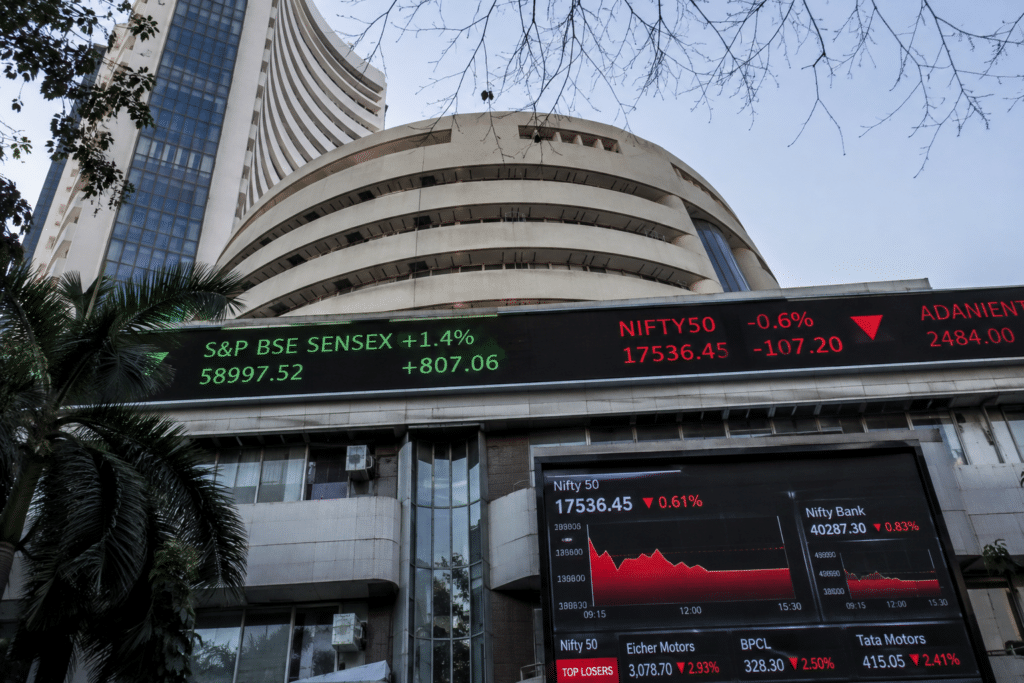
The Indian stock market closed almost flat but meaningfully positive on Monday, July 13, 2026. The BSE Sensex gained 47.01 points to 77,616.40, the NSE Nifty 50 rose 4.10 points to 24,211.00, and Bank Nifty added 85.55 points to 58,131.45, signalling cautious accumulation rather than a broad risk-on rally.
The headline indices may have barely moved, but the internal story was far more revealing: investors aggressively bought large-cap IT stocks, selectively supported financials and autos, and booked profits in FMCG, metals, realty and energy. That split matters because it shows a market searching for earnings visibility and relative safety rather than chasing every sector.
Indian Market Overview
A quiet close with loud sector signals
Monday’s session was defined by resilience at the 24,200 level in Nifty, not by a dramatic index move. Nifty opened sharply lower at 24,039.40, recovered to an intraday high of 24,259, and finished at 24,211.00; that rebound indicated buyers appeared near lower levels even as participation remained mixed.
The Sensex settled at 77,616.40, up 0.06 percent, while the Bank Nifty trend remained mildly constructive with a 0.15 percent increase to 58,131.45. The banking index’s relative strength suggests investors were willing to add select financial exposure, though they were not yet committing to a full cyclical-market breakout.
| Index | July 13, 2026 close | Day change | What it says |
|---|---|---|---|
| BSE Sensex | 77,616.40 | +47.01 points, +0.06% | Large-cap market held steady despite sectoral selling. |
| NSE Nifty 50 | 24,211.00 | +4.10 points, +0.02% | The 24,200 zone held, but breadth remained weak with 21 advances and 29 declines. |
| Bank Nifty | 58,131.45 | +85.55 points, +0.15% | Selective financial buying provided index stability. |
| Nifty 50 P/E | 20.87 | Not a daily change | Valuation still demands earnings delivery, especially after a weak year-to-date return. |
Investor sentiment: cautious, selective, earnings-focused
Sentiment was neither euphoric nor panicked. Nifty 50 had 21 advancing constituents and 29 declining constituents at the close, meaning the benchmark’s small gain masked a slightly negative underlying breadth picture.
The index was down 7.40 percent year to date and 5.91 percent over six months as of July 13, while it gained 2.49 percent over one month. This mix suggests the market had begun repairing after a difficult earlier period, but investors remained unwilling to ignore valuation, global energy risks and upcoming corporate results.
The clearest rotation was into IT. TCS, HCLTech, Infosys and Tech Mahindra all rose more than 3 percent, lifting the IT sector by 3.59 percent.
NIFTY Today: Point-Wise Detail
What moved Nifty 50
- Nifty closed at 24,211.00, a gain of 4.10 points or 0.02 percent, after opening at 24,039.40 and touching 24,259 during the session.
- The opening weakness was bought, showing that the 24,000 to 24,100 region attracted demand during the session.
- Immediate support is near 24,100, while 24,300 is the first major resistance level identified for the near term.
- A sustained close above 24,300 could improve short-term momentum, while a break below 24,100 would raise the probability of a retest of the 24,000 area. This is a technical scenario, not a certainty.
- Nifty’s market valuation was 20.87 times trailing earnings, which makes profit growth and management guidance central to whether a broader rally can extend.
- IT stocks carried the day, while weakness in consumer staples, metals and several defensives restricted benchmark gains.
- Turnover was meaningful: Nifty 50 volume was 3,226.79 lakh shares and traded value was ₹27,998.15 crore.
Nifty Bank trend
Bank Nifty opened weak at 57,616, climbed to 58,219 and closed at 58,131.45. That intraday recovery is constructive, but the index still needs a decisive move above 58,300 to indicate stronger follow-through.
Key technical zones for the Nifty Bank trend are:
- Support: 57,800.
- Resistance: 58,300.
- Positive signal: Sustained strength above 58,300 with broad private-bank participation.
- Risk signal: A fall below 57,800, particularly if accompanied by weak loan-growth or margin commentary.
June 2026 Trend Context
Exact official monthly closing comparisons need a verified historical index-series extraction before publication. However, the July 13 market structure offers a practical continuation framework for analysing June-to-July momentum: Nifty’s one-month return was positive at 2.49 percent, while its year-to-date and six-month returns remained negative.
| Trend lens | BSE Sensex | NSE Nifty 50 | Investor reading |
|---|---|---|---|
| Current level on July 13 | 77,616.40. | 24,211.00. | Benchmarks were stable after recovering from intraday weakness |
| One-month performance | Not confirmed in the retrieved official Sensex series | +2.49%. | Short-term rebound had begun |
| Six-month performance | Not confirmed in the retrieved official Sensex series | -5.91%. | Broader recovery remained incomplete |
| Year-to-date performance | Not confirmed in the retrieved official Sensex series | -7.40%. | Investors should avoid assuming the correction is fully over |
| Leadership on July 13 | IT-heavy Sensex names helped stabilise the index. | IT leadership was decisive. | Technology became the day’s primary earnings-visibility trade |
| Breadth | Mixed. | 21 advances, 29 declines. | Index strength was narrow, not yet universal |
Key Economic Drivers
India GDP growth remains the domestic anchor
India’s real GDP growth accelerated to 7.7 percent in FY2025-26 from 7.1 percent in the prior year, while the January-March quarter expanded 7.8 percent. This is a powerful backdrop for domestic banks, industrials, capital goods, autos and consumption-oriented bluechip stock picks.
Yet markets discount the future, not the past. The RBI reportedly projected GDP growth of 6.6 percent for FY2026-27, reflecting geopolitical uncertainty, oil-price risk and other global pressures.
For investors, the message is balanced: India GDP growth remains strong by global standards, but earnings expectations should be based on a slower growth path than the exceptionally robust FY2025-26 outcome.
CPI inflation and RBI repo rates
CPI inflation trends India will remain one of the market’s most important swing factors. Higher crude prices can feed into fuel, transport, logistics and input costs, while a favourable monsoon can ease food inflation and support rural consumption.
The Reserve Bank of India’s monetary-policy stance and RBI repo rates affect the valuation of long-duration growth stocks, bank net-interest margins, credit demand, home loans and corporate borrowing costs. Investors should verify the latest RBI policy statement directly before making rate-sensitive decisions because the official policy rate can change at each Monetary Policy Committee review.
The current market concern is not merely whether rates move; it is whether inflation remains controlled enough for monetary policy to support growth without triggering renewed pressure on the rupee or imported inflation.
Employment and demand
Recent, comparable official unemployment data should be taken from the Periodic Labour Force Survey release that matches the reporting period. In market terms, employment conditions matter because they shape discretionary spending, housing demand, two-wheeler sales, retail credit quality and consumer-goods volume growth.
For 2026 investors, the most useful question is not simply “Is unemployment up or down?” It is whether income growth is broad enough to sustain premium consumption, rural recovery and loan repayment quality while corporate margins face commodity and energy-cost pressure.
Latest Market News Highlights
IT earnings optimism drove the rally
- TCS rose 5.42 percent, becoming the top Nifty gainer in the NSE snapshot.
- HCLTech gained 4.93 percent, Infosys 3.25 percent and Tech Mahindra 3.15 percent, creating a broad IT-led move rather than a single-stock spike.
- Immediate impact: The IT index climbed 3.59 percent and helped Nifty defend 24,200.
- Investor takeaway: Watch US demand commentary, deal wins, guidance, pricing and margin outlook from technology majors; these factors may determine whether the move becomes a multi-week trend.
Crude oil became an inflation risk again
- Brent crude traded near $78.435 per barrel, up 3.84 percent, amid supply concerns and geopolitical uncertainty.
- Immediate impact: Higher oil raises India’s import bill and can pressure inflation expectations, the rupee and oil-sensitive sectors.
- Stocks to monitor: Oil marketing companies, airlines, paints, chemicals, logistics, tyres and consumer companies with freight-sensitive supply chains.
Earnings season and geopolitical risk shaped caution
- Analysts identified geopolitics, Q1 earnings and crude oil as important market drivers, along with inflation, the monsoon and global developments.
- Immediate impact: Investors preferred earnings-visible mega-cap technology names while booking gains in some FMCG and commodity-linked shares.
- What to watch: Management commentary is likely to matter as much as reported quarterly profit, especially for margin-sensitive sectors.
Foreign Indices That Influence India
Indian equities do not trade in isolation. Foreign indices often influence overnight sentiment, foreign institutional flows, risk appetite, currency direction and the opening tone in the Indian market.
| Global market indicator | Why it influences Indian stock market trends | Likely Indian impact |
|---|---|---|
| S&P 500 | A key barometer of US risk appetite and corporate earnings expectations | Strong US equities can support risk appetite and IT sentiment; sharp falls can trigger FII caution |
| Nasdaq Composite | Highly relevant for Indian technology exports and global growth-stock valuations | Often influences TCS, Infosys, HCLTech, Wipro and Tech Mahindra sentiment |
| Dow Jones Industrial Average | Tracks large US industrial and financial companies | Influences global cyclical risk appetite and banking/industrial mood |
| FTSE 100 | Reflects UK and global commodity, financial and multinational-company trends | Useful for assessing global defensive and commodity sentiment |
| DAX | Europe’s industrial and export-oriented market benchmark | Can affect global manufacturing and trade expectations |
| Nikkei 225 | Major Asian market and a signal before Indian trading begins | Can shape early Asian risk sentiment |
| Hang Seng | Provides a read on China and broader Asian risk appetite | Matters for metals, commodities and emerging-market flows |
| Shanghai Composite | Closely watched for Chinese demand and commodity implications | Important for Indian metals, chemicals and global cyclicals |
| MSCI Emerging Markets Index | A broad measure of risk appetite toward emerging economies | Strong moves can influence FII allocation toward or away from India |
On July 13, global markets were described as mixed and cautious as investors assessed rising crude prices, geopolitics, US market direction, Federal Reserve commentary and corporate earnings.
Sector Performance India 2026
Monday’s sector performance demonstrated how rapidly leadership can rotate. IT surged, consumer durables and auto advanced, financial services stayed almost flat, while FMCG and metals were sold.
| Sector | July 13 move | Latest market signal | 2026 trigger to watch |
|---|---|---|---|
| IT | +3.59% | Clear day leader, powered by large-cap tech. | US demand, deal wins, guidance, AI-led spending and rupee movement |
| Consumer durables | +1.15% | Buying continued in consumption-linked names. | Urban incomes, festive demand, credit availability and raw-material costs |
| Auto | +0.45% | Modestly positive, with Bajaj Auto among leading gainers. | Rural demand, fuel prices, financing costs and EV adoption |
| Financial services | +0.02% | Stable but not broadly explosive. | Credit growth, deposit costs, NIMs, asset quality and RBI repo rates |
| Energy | -0.06% | Mild pressure amid rising crude concerns. | Oil prices, marketing margins and government policy |
| Pharma | -0.12% | Mild profit-taking. | USFDA outcomes, export pricing, domestic formulations and currency |
| Realty | -0.15% | Slight weakness. | Mortgage rates, urban demand, launches and inventory |
| Metals | -0.69% | Broad selling, including Tata Steel weakness. | China demand, global prices, dollar strength and infrastructure spending |
| FMCG | -1.02% | Biggest sectoral decline, led by profit-booking in staples. | Food inflation, rural volume growth, pricing power and monsoon |
Top 10 Gainers Today
The following list reflects the NSE data snapshot available during the July 13 session. These are daily moves, not automatic buy recommendations.
| Rank | Stock | Change | Brief analysis |
|---|---|---|---|
| 1 | TCS | +5.42% | IT leadership and strong buying made it the session’s standout. |
| 2 | HCLTech | +4.93% | Broad technology-sector demand lifted the stock. |
| 3 | Infosys | +3.25% | Participated in the large-cap IT rerating. |
| 4 | Tech Mahindra | +3.15% | Benefited from the same IT momentum. |
| 5 | Bajaj Auto | +2.15% | Auto strength supported the move. |
| 6 | Wipro | +1.64% | Another confirmation that IT buying was broad-based. |
| 7 | NTPC | +1.64% | Power-sector interest supported a defensive-cyclical name. |
| 8 | Kotak Mahindra Bank | +1.58% | Selective private-bank buying aided Bank Nifty. |
| 9 | ONGC | +1.45% | Energy stock gained despite a mixed broader energy sector. |
| 10 | HDFC Life | +0.95% | Insurance participation indicated selective financial strength. |
Top 10 Losers Today
| Rank | Stock | Change | Brief analysis |
|---|---|---|---|
| 1 | Nestlé India | -2.13% | FMCG profit-booking weighed on the stock. |
| 2 | Tata Steel | -2.02% | Metals faced sector-wide selling pressure. |
| 3 | Grasim | -1.85% | The stock was among the key drags on the benchmark. |
| 4 | Tata Consumer Products | -1.39% | Consumer-staples weakness remained visible. |
| 5 | IndiGo | -1.34% | Airline sentiment can be sensitive to higher crude prices. |
| 6 | Maruti Suzuki | -1.21% | Stock-specific selling offset the broader auto index’s small gain. |
| 7 | Bharat Electronics | -1.08% | Closed lower despite continued interest in defence themes. |
| 8 | Eternal | -1.04% | Profit-taking kept the stock under pressure. |
| 9 | UltraTech Cement | -0.95% | Building-materials sentiment was softer during the session. |
| 10 | Dr. Reddy’s Laboratories | -0.95% | Pharma saw mild broad-based profit-booking. |
Top NSE/BSE Stocks for 2026
A responsible list of stocks to buy cannot be based on one trading session or presented as guaranteed returns. The ten companies below are watch-list candidates for long-term research because they offer exposure to major 2026 themes such as private credit growth, IT services, power demand, telecom, consumption, autos and infrastructure. Verify current P/E, PEG, dividend yield, results and valuation from NSE/BSE filings or your broker before investing.
| Stock | Theme | Why it merits research | Valuation and dividend lens | Key risk |
|---|---|---|---|---|
| HDFC Bank | Private-bank compounding | Scale, deposit franchise and retail/corporate credit exposure | Track P/E versus long-term range, NIM trend and dividend policy | Deposit competition and margin compression |
| ICICI Bank | Financialisation | Strong participation in the July session and broad banking exposure. | Compare P/E with earnings growth and credit-cost trend | Asset-quality deterioration |
| State Bank of India | Public-sector banking | Broad domestic-credit and infrastructure-cycle exposure | Monitor P/B, dividend yield and loan-book quality | Higher cyclicality and public-sector concentration |
| TCS | IT services | July’s largest Nifty gainer, reflecting renewed IT interest. | Evaluate P/E against earnings visibility, deal pipeline and cash payout | US demand slowdown and currency volatility |
| Infosys | IT services | Strong participation in the IT rally. | Compare P/E and PEG with guidance and revenue growth | Client spending cuts |
| Reliance Industries | Digital, retail and energy | Diversified exposure across consumer, telecom and energy | Examine consolidated P/E, capex, debt and dividend yield | Commodity volatility and execution complexity |
| Bharti Airtel | Telecom | Structural digital-consumption and pricing theme | Track free cash flow, ARPU, debt and valuation premium | Capex, competition and regulatory shifts |
| NTPC | Power transition | Gained 1.64 percent on July 13 and offers power-demand exposure. | Assess dividend yield, P/E, renewable capex and receivables | Regulation and project execution |
| Mahindra & Mahindra | Auto and rural demand | Beneficiary of auto, farm-equipment and SUV demand themes | Monitor P/E/PEG against volume growth and margins | Rural slowdown and commodity inputs |
| Bajaj Auto | Premium two-wheelers and exports | Rose 2.15 percent during a positive auto session. | Focus on export recovery, margins, dividend policy and valuation | Export-market weakness and currency risk |
How to use valuation metrics properly
- P/E ratio: Compare a company’s price-to-earnings multiple with its own history, peers and sustainable earnings growth.
- PEG ratio: A lower PEG can indicate a more reasonable price relative to expected growth, but forecasts can change quickly.
- Dividend yield: Useful for income-oriented investors, but a high yield can also result from a falling share price; assess free cash flow and payout sustainability.
- Earnings quality: Revenue growth, operating margins, return on equity, debt, cash generation and management guidance usually matter more than a single valuation ratio.
Stock Recommendations for Today
Conservative investors
- Prefer staggered investing through diversified Nifty 50 or large-cap index funds rather than attempting to time every support and resistance level.
- Research high-quality banks, power utilities and established consumption franchises where balance-sheet strength and cash flow are visible.
- Pros: Lower company-specific risk, simpler execution and reduced dependence on one earnings event.
- Cons: Index exposure still falls when markets correct; it may underperform a well-selected focused portfolio in a strong rally.
Moderate-risk investors
- Build a phased portfolio across financials, IT, consumption, power and industrials, rather than concentrating entirely in the day’s winning IT trade.
- Use systematic investment plans or three-to-six purchase tranches if volatility remains elevated around earnings, crude and policy developments.
- Pros: Balances growth and resilience while reducing the risk of investing all capital at a short-term peak.
- Cons: Requires regular review of earnings results, sector weights and valuation discipline.
Aggressive investors
- Use only a limited tactical allocation for momentum trades, with defined stop-loss and position-size rules.
- Watch Nifty 24,100 support and 24,300 resistance; watch Bank Nifty 57,800 support and 58,300 resistance.
- Pros: Can capture sharp sector rotations such as the July 13 IT move.
- Cons: Narrow leadership and mixed market breadth increase the risk of reversals; trading losses can compound rapidly.
A sample diversified allocation
This is an educational framework, not personalised investment advice:
| Risk style | Illustrative allocation | Core logic |
|---|---|---|
| Conservative | 50% diversified large-cap/index funds, 20% quality financials, 15% defensive consumer/pharma, 10% debt or liquid funds, 5% gold | Prioritises capital stability and liquidity |
| Moderate | 35% large-cap/index funds, 20% banks/financials, 15% IT, 10% consumption/auto, 10% power/industrial, 5% pharma, 5% gold or cash | Pursues growth without relying on one sector |
| Aggressive | 25% index funds, 20% banks, 20% IT, 15% industrial/power, 10% auto/consumer, 5% pharma, 5% tactical cash | Higher equity and sector-rotation exposure |
What Could Change the Trend?
The next move in Indian stock market trends may depend less on one day’s Sensex close and more on whether several conditions line up:
- Quarterly earnings: Technology guidance, bank margins, consumption volumes and management outlooks.
- Crude oil: Sustained high prices can worsen inflation trends India and pressure oil-sensitive businesses.
- RBI policy: The trajectory of RBI repo rates affects financial conditions and equity valuations.
- Global risk sentiment: US equities, Asian indices, the dollar, bond yields and geopolitical developments can shift FII appetite.
- Market breadth: Nifty’s 21 advances versus 29 declines indicate that participation needs to widen for a durable rally.
- Technical confirmation: A decisive Nifty move above 24,300 would be more constructive; a break below 24,100 would signal caution.
Final Thought
Monday’s market was not a simple “green day.” It was a selective rotation day: Nifty held above 24,200, Bank Nifty recovered, and IT stocks delivered a powerful earnings-visibility rally, while FMCG, metals and other sectors faced profit-booking.
The unique data insight is the contrast between a positive one-month Nifty return of 2.49 percent and still-negative six-month and year-to-date returns of 5.91 percent and 7.40 percent, respectively. That pattern argues for disciplined, diversified investing rather than assuming the recovery is already complete.
Disclosure: This article is for educational information only and is not a recommendation to buy or sell securities. Equity investing involves market risk; assess your objectives, horizon, diversification needs and risk tolerance, and consider consulting a SEBI-registered investment adviser before acting.