Gold ETFs Are Hitting Record Highs in 2026 — Here's the Surprising Reason It Has Nothing to Do With Fear
Every time gold makes headlines, the story gets told the same way. Markets panic, investors flee to safety, and gold shoots up. The fear trade. The crisis hedge. The doomsday metal. Analysts trot out the same narrative, and for decades, it held up reasonably well. But something fundamentally different is happening in 2026, and if you are still explaining gold’s record run through the lens of panic and fear, you are missing the most important financial story of the year.
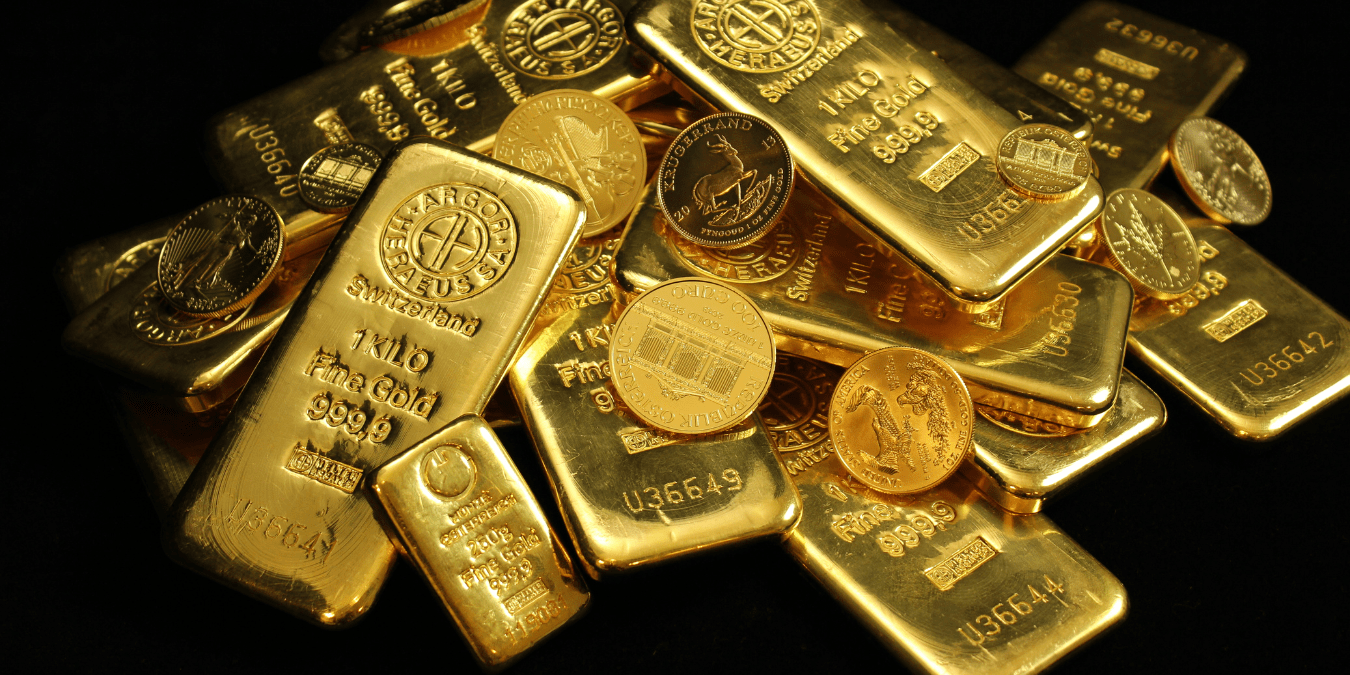
Gold ETFs just had their biggest month in recorded history. In January 2026, global gold ETFs recorded $19 billion in net inflows — the strongest monthly intake ever tracked. Total assets under management surged to a historic $669 billion, a 20% jump in a single month. In India alone, gold ETF inflows hit ₹24,040 crore in January, more than doubling December’s figure and, for the first time in history, surpassing equity mutual fund inflows. Spot gold crossed the $5,000-per-ounce psychological barrier and touched an all-time high near $5,589 in late January. These are not the numbers of a nervous market. These are the numbers of a market undergoing a structural transformation.
The Fear Narrative Is Too Simple
To be fair, fear is not entirely absent from this story. Geopolitical tensions, trade war escalations, and uncertainty around U.S. Federal Reserve leadership have all made headlines. When the U.S. administration imposed a universal 15% flat-rate tariff on all imported goods in early 2026, equity markets reeled and currency traders began pricing in stagflationary risks. Yes, some of that capital moved into gold as a reflex.
But here is the problem with attributing this rally entirely to fear: fear trades are temporary. They spike when a crisis hits and reverse the moment conditions stabilize. What we are seeing in 2026 is the opposite of temporary. Western gold ETFs alone have absorbed approximately 500 tonnes since early 2025, a figure that Goldman Sachs says significantly surpasses what could be explained by interest rate reductions alone. These are “sticky” positions, Goldman argues, because they are tied to enduring macroeconomic risks, not short-lived events. When 500 tonnes of gold enters a market and refuses to leave, that is not fear. That is conviction.
The Real Driver: The Debasement Trade
The term that Goldman Sachs, J.P. Morgan, and other major institutions keep using in 2026 is the “debasement trade.” It refers to a growing belief among sophisticated investors — wealthy individuals, family offices, hedge funds, and institutional asset managers — that Western governments are systematically eroding the long-term value of their own currencies through unchecked fiscal spending, mounting deficits, and political interference with central bank independence.
This is a fundamentally different motivation from fear. A fear trade says: “I am scared right now, so I will hold gold until things calm down.” The debasement trade says: “I believe that over the next decade, paper currency will be worth less in real terms, and I need to own something that governments cannot print.” That is a portfolio construction decision, not a panic response. Wealthy individuals and family offices have been purchasing physical gold bars, while institutions are acquiring call options on gold ETFs as a deliberate, long-term hedge against what Goldman describes as fiscal debasement and central bank autonomy erosion in leading Western economies.
India’s Economic Survey 2025-26, authored by Chief Economic Adviser V. Anantha Nageswaran, identified the record rally in gold as being driven by tariff uncertainty, a weakening U.S. dollar, and the market’s growing assessment of geopolitical and financial tail risks. The phrase “tail risks” is critical here. Investors are not reacting to a crisis that has already happened. They are buying insurance against crises that have not happened yet, because they believe the probability of those crises has fundamentally risen. That is strategic positioning, not fear.
Central Banks Are Rewriting the Rule Book
If any single factor explains why gold is behaving differently in 2026, it is central bank behavior. Goldman Sachs anticipates that central banks will purchase 60 tonnes of gold per month in 2026, with China alone maintaining a buying streak that ran for 15 consecutive months through January. This is not a new trend — over 1,100 tonnes were purchased by central banks in 2024 — but the scale and the stated motivation are new.
The driving force is de-dollarization. Nations across China, India, and the ASEAN bloc are deliberately reducing their reliance on the U.S. dollar as a reserve currency. Goldman Sachs has described this as a structural shift moving from concept into action. When sovereign nations make the decision to hold more gold in their reserves, they are not making a fear trade. They are making a generational geopolitical bet that the dollar’s dominance as the world’s primary reserve currency will decline over the coming decades. That bet, once made, does not get unwound at the first sign of market stability.
What makes this dynamic particularly compelling is the compounding effect. As central banks buy, they reduce the available float of gold, which drives prices higher, which attracts ETF inflows from retail and institutional investors, which drives prices even higher, which reinforces the central bank thesis. This is a self-reinforcing structural cycle, not a panic spike. J.P. Morgan expects gold to push toward $5,000 per ounce by the fourth quarter of 2026, with $6,000 a longer-term possibility. Société Générale and Bank of America have both issued forecasts with $6,000 targets within the year.
The Dollar Is Losing Its Tailwind
One of the most underappreciated drivers of the 2026 gold ETF surge is the simple mechanics of dollar weakness. Because gold is priced globally in U.S. dollars, a weaker dollar directly raises gold prices and enhances purchasing power for foreign buyers, creating demand across every geography simultaneously.
In 2026, several converging forces are pushing the dollar lower. New Federal Reserve leadership is expected to adopt a more dovish stance, meaning lower interest rates. When interest rates fall, the opportunity cost of holding non-yielding gold diminishes, making gold relatively more attractive than bonds or cash savings. Rising term premiums from fiscal stress, combined with balance sheet management changes, all point toward a structurally weaker dollar through 2026. The result is a tailwind for gold that has nothing to do with any specific crisis and everything to do with policy architecture.
This is a nuanced but critical point. The 2022-2023 gold market was suppressed by rising rates, because every interest rate hike increased the opportunity cost of holding gold. The 2026 gold market exists in the mirror-image environment. Every rate cut, every expansion of fiscal deficits, every signal of dollar softness is an incremental endorsement of gold ownership. Investors have internalized this relationship, and that is why ETF inflows are not reversing even during brief gold price pullbacks.
Institutional Investors Are Treating Gold as Infrastructure
Perhaps the most striking sign that this rally is structural rather than reactive is the way institutional investors are talking about gold in 2026. They are not framing it as a crisis hedge. They are framing it as portfolio infrastructure.
Tata Mutual Fund’s 2026 portfolio rebalancing guidance explicitly promotes what it calls the “10% Gold Rule,” recommending that investors maintain at least 10% gold exposure in long-term portfolios as a foundational allocation — not a tactical bet. Conservative investors are being advised to hold up to 15-20% across gold and silver ETFs, particularly those focused on capital safety. This is the language of asset allocation, not the language of fear.
The shift in professional positioning is also visible in the data. A LinkedIn analysis from Tramondo Investment Partners noted that despite gold’s more-than-doubling since the end of 2023, investor positioning in gold remains at approximately 2% of portfolios, compared to 8% during the 1970s commodity supercycle. That massive gap between historical precedent and current allocation suggests that the institutional rotation into gold ETFs is still in its early innings. As more pension funds, sovereign wealth funds, and family offices move toward normalized gold allocations, the structural demand pressure will persist regardless of short-term market sentiment.
India’s Landmark Moment
For Indian investors, the January 2026 data represents something historically significant. It was the first time precious metal ETF flows matched or exceeded equity fund flows. Gold and silver ETFs together drew approximately ₹33,503 crore in January, with gold ETFs alone accounting for ₹24,050 crore. This is not just a number — it marks a cultural and financial inflection point in how Indian investors view gold as a modern asset class.
Indian investors have always had a deep affinity for gold as a store of value and a cultural artifact. What is changing is the vehicle. Rather than accumulating physical gold with its storage costs, purity risks, and liquidity constraints, a new generation of Indian investors is accessing the same economic exposure through exchange-traded funds. SEBI’s updated 2026 mutual fund framework has also introduced more standardized, domestically aligned approaches to valuing gold held by ETFs, improving transparency and building confidence in the product. That regulatory maturation matters. It signals that gold ETFs are not a speculative niche but a mainstream asset class with institutional infrastructure behind it.
Why This Rally Is Different From Every Previous One
Cast your mind back to gold’s previous major rallies. The 2008 rally was textbook fear — financial system collapse, bank failures, systemic panic. The 2011 rally was a combination of post-crisis dollar weakness and European sovereign debt anxiety. The 2020 rally was pandemic fear combined with unprecedented monetary stimulus. Each of those rallies had a clear, identifiable crisis at its center. Each of them also eventually reversed when the crisis passed or markets adapted.
The 2026 rally has no single crisis at its center. There is no moment of financial collapse to point to, no singular geopolitical event that catalyzed the move. Instead, there is a convergence of structural forces — dollar weakness, de-dollarization by sovereign actors, central bank accumulation at record pace, fiscal debasement concerns, declining interest rates, and a generational shift in how institutional investors allocate capital. These forces did not materialize overnight, and they will not disappear overnight. That is precisely what makes this rally different and, for investors who understand it, far more investable.
Goldman Sachs has raised its end-2026 gold forecast to $5,400 per ounce. The London Bullion Market Association’s analyst survey shows targets ranging as high as $7,150. Trading volume in gold averaged 3,998 tonnes per day in January 2026, a 35% increase from the previous month and significantly above the 2025 daily average of 3,247 tonnes. These are not the market statistics of an asset in a panic-driven spike. These are the statistics of an asset being repriced by serious capital with a long-term mandate.
What This Means for Your Portfolio
Understanding the true drivers of gold’s 2026 rally is not just an intellectual exercise — it has direct implications for how you should position your portfolio. If this were a fear-driven rally, the correct strategy would be to ride it, then exit before the fear dissipates. But if this is a structural repricing driven by de-dollarization, fiscal debasement, and institutional reallocation, the correct strategy is to treat gold as a permanent, core holding rather than a tactical trade.
Gold ETFs remain the most efficient vehicle for most investors, offering exposure to gold’s price movements without the challenges of storage, insurance, or liquidity that come with physical holdings. For Indian investors specifically, the range of options has expanded dramatically — from LIC MF Gold ETF and ICICI Prudential Gold ETF to newer offerings from Tata, Zerodha, Edelweiss, and Mirae Asset. The product ecosystem is mature, the regulatory framework is improving, and the macroeconomic backdrop has never been more structurally supportive.
The 10% Gold Rule is a reasonable starting framework for most investors, but the real insight of 2026 is not about percentage allocation — it is about understanding why you own gold in the first place. Owning it because you are scared is a temporary strategy. Owning it because you understand the structural forces reshaping the global monetary order is an investment thesis with a multi-year horizon.
The Bottom Line
Gold ETFs are hitting record highs in 2026 not because the world is falling apart, but because smart, patient, long-term capital has concluded that the structural conditions favoring gold — dollar weakness, de-dollarization, central bank accumulation, fiscal debasement, and declining real yields — are durable rather than temporary. The fear narrative is a convenient shorthand, but it dramatically undersells the sophistication of what is actually driving this market. The investors buying gold ETFs in 2026 are not running away from something. They are running toward something: a structural hedge against a monetary order they believe is quietly, but irreversibly, changing.
That distinction is everything.
The data and institutional forecasts cited in this article are sourced from the World Gold Council, Goldman Sachs, J.P. Morgan, ING Think, State Street Global Advisors, AMFI India, and the Economic Survey of India 2025-26. This article is intended for informational purposes and does not constitute financial advice. Consult a SEBI-registered investment adviser before making investment decisions.