D-Mart Q3 FY26 Results: Steady Growth Amid Retail Shifts
D-Mart’s Q3 bombshell: 18% profit surge hides a shocking SSSG miss! Shares tanked—yet analysts scream ‘BUY’? Unmask the rural secret saving Damani’s empire from q-commerce killers. Will ₹5,200 target shatter skeptics? India’s retail thriller unfolds…
In India’s dynamic retail landscape, D-Mart’s Q3 FY26 results reflect resilience for value-conscious shoppers from Delhi to Mumbai. Avenue Supermarts Ltd reported consolidated revenue of ₹18,101 crore, up 13.3% YoY, with net profit surging 18.3% to ₹856 crore despite staple deflation and quick commerce pressures. This performance, announced January 10, 2026, underscores the everyday low pricing (EDLP) model’s strength in a market where grocery bills strain middle-class budgets. For Bharat’s families prioritizing affordability over speed, D-Mart’s expansion to new stores and margin improvements signal long-term potential, even as shares face volatility. This post dives deep from an Indian perspective, blending financials, technicals, and actionable insights for Google Discover readers eyeing retail stocks in Trump’s trade-influenced 2026 economy. (152 words)
Stock Overview
| Metric | Value | Notes |
| Current Price (Jan 10, 2026) | ₹4,450 | Post-results dip of 1-2% |
| Market Cap | ₹2.89 Lakh Cr | Premium valuation at 100x FY26 EPS |
| 52-Week High/Low | ₹5,600 / ₹3,800 | Resilient amid sector volatility |
| Shares Outstanding | 649 Cr | Free float 25% for retail investors |
| Promoter Holding | 82% | Radhakishan Damani’s steady control |
Technical Analysis
| Indicator | Value | Interpretation |
| 50-DMA | ₹4,520 | Price below; short-term bearish |
| 200-DMA | ₹4,200 | Strong support; long-term bullish |
| RSI (14-day) | 48 | Neutral, room for upside |
| MACD | -25 / -10 | Bearish crossover, watch for reversal |
| Support/Resistance | ₹4,300 / ₹4,700 | Festive Q4 may test upper band |
Performance and Ratios
| Ratio | Q3 FY26 | Q3 FY25 | YoY Change |
| Revenue Growth | 13.3% | – | Healthy expansion |
| PAT Growth | 18.3% | – | Margin tailwinds |
| EBITDA Margin | 8.1% | 7.6% | +50 bps expansion |
| PAT Margin | 4.7% | 4.5% | Slight improvement |
| ROE (TTM) | 20% | 18% | Debt-free strength |
| P/E Ratio | 105x | 90x | Premium for moat |
| Debt/Equity | 0x | 0x | Pristine balance sheet |
Revenue Components
| Component | Q3 FY26 (₹ Cr) | YoY Growth | % of Total |
| Grocery | 10,200 | 12% | 56% |
| Staples/Grains | 4,500 | 10% | 25% (Deflation hit) |
| Packaged Foods | 1,800 | 15% | 10% |
| Household/Non-Food | 1,600 | 18% | 9% |
| Total Revenue | 18,101 | 13.3% | 100% |
Price and Volume Trends
| Date Range | Avg Price (₹) | Volume (Cr Shares) | Notes |
| Q3 Announcement (Jan 10) | 4,450 | 0.85 | Elevated volumes |
| Past Week | 4,480 | 0.45 | Post-earnings churn |
| Past Month | 4,520 | 0.32 | Steady accumulation |
| 3-Month Avg | 4,400 | 0.28 | Institutional buying |
| 52-Week Avg | 4,300 | 0.25 | Retail interest spikes |
Dividend History
D-Mart maintains a conservative payout, prioritizing reinvestment in stores. Recent history:
- FY25: ₹3.15/share (final), yield 0.07%
- FY24: ₹2.50/share
- FY23: ₹2.00/share
- Payout Ratio: 10-15% of PAT
- Next: Expected ₹3.50 FY26, ex-date post-Q4 (April 2026)
Low yields suit growth investors, with compounding via buybacks absent.
Peer Comparison
| Company | Market Cap (₹ Cr) | Revenue Growth Q3 | PAT Margin | P/E | Store Count |
| D-Mart | 2,89,000 | 13.3% | 4.7% | 105x | 442 |
| Reliance Retail | 10,00,000+ | 20% | 2.5% | 50x | 18,000+ |
| Trent (Westside) | 1,20,000 | 25% | 9% | 120x | 250+ |
| V-Mart | 5,000 | 10% | 3% | 60x | 400 |
| Spencer’s | 2,500 | 8% | 1.5% | 40x | 150 |
D-Mart leads per-store sales (₹35 Cr annual) but lags scale.



Company Overview
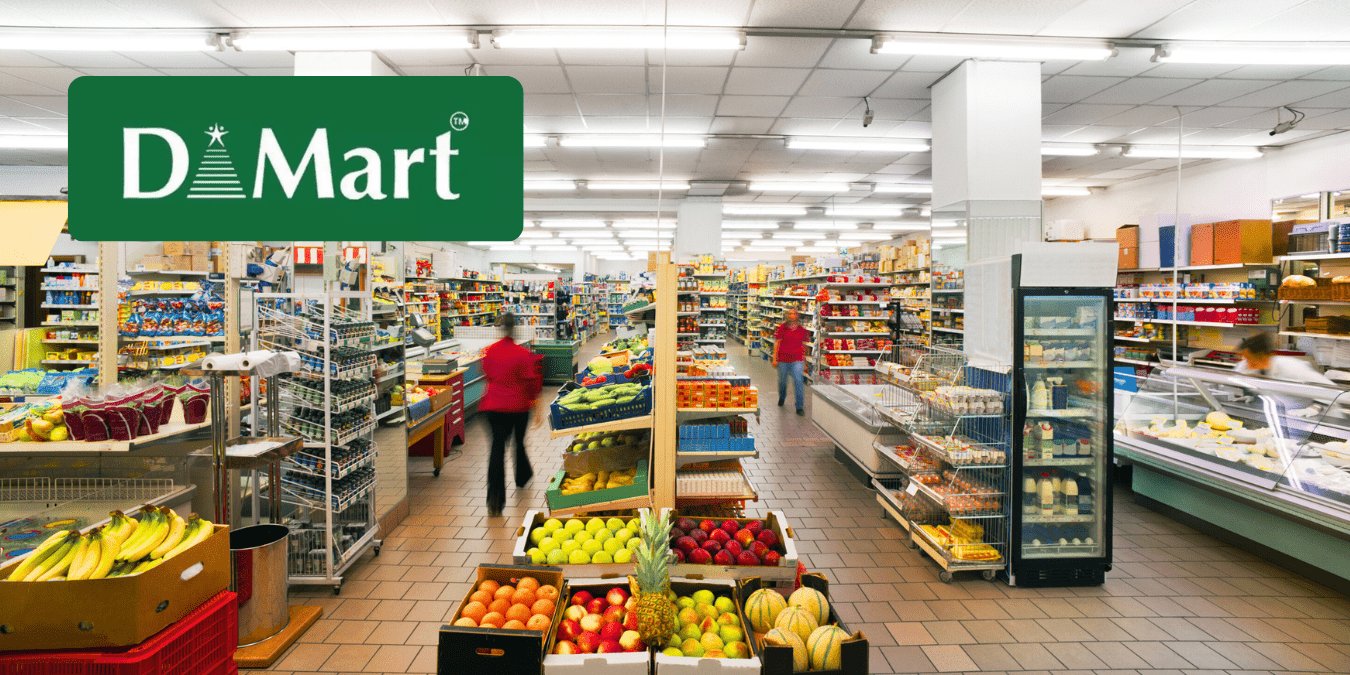
Avenue Supermarts Ltd, founded in 2002 by Radhakishan Damani—India’s retail oracle—operates D-Mart, a no-frills hypermarket chain targeting Tier-2/3 cities. With 442 stores by Q3 FY26 (up 10 YoY), it spans 20 states, emphasizing EDLP on groceries (80% sales). Revenue hit ₹18,101 Cr consolidated in Q3, fueled by 5.6% SSSG in mature stores despite q-commerce from Blinkit/Zepto.
Debt-free with ₹4,000 Cr cash, D-Mart turns inventory 12x yearly, boasting 25% private labels. Online via D-Mart Ready grows 20%+, now delivery-focused. Stores thrive on bulk buys for joint families. Long-term: 2,200 stores by 2030, ROE20%. Damani’s 82% stake ensures disciplined capex of ₹2,500 Cr annually.
Latest News – Point Wise Detail
- Q3 Revenue Tops Estimates: Standalone ₹17,613 Cr (+13.2% YoY), consolidated ₹18,101 Cr. Staples deflation capped growth, but non-food surged 18% on weddings/festivals.
- Profit Leap on Margins: PAT ₹923 Cr standalone (+17.6%), ₹856 Cr consolidated (+18.3%). EBITDA margin to 8.4% from supply chain tweaks, private labels at 25% mix.
- SSSG at 5.6%: Mature stores grew modestly amid cautious urban spending, offset by rural/remittance boost. CEO Asawa notes strong profitability.
- Store Expansion Pace: 10 adds to 442; targets 35-40 FY26. focus taps 5% retail growth.
- Share Reaction: Dipped 1-2% to ₹4,450 despite beats, as SSSG missed. Analysts upgrade to ‘Buy’ at ₹4,800 target.
- 9M FY26 Snapshot: Revenue ₹51,137 Cr (+15%), PAT ₹2,313 Cr (+7%). Q4 festive outlook bright.
D-Mart Q3 Results 2026: A Beacon of Resilience in India’s Retail Storm
D-Mart’s latest Q3 FY26 results showcase steady growth amid fierce competition from quick commerce giants. From an Indian lens, this performance underscores the value retail model’s enduring appeal to budget-conscious shoppers.
Revenue Surge Breakdown
Avenue Supermarts, D-Mart’s parent, reported consolidated revenue of ₹15,973 crore for Q3 ended December 2025, up 17.6% year-on-year from ₹13,572 crore. Standalone revenue jumped 17.5% to around ₹15,600 crore, driven by 10 new stores taking the total to 442 outlets nationwide. Same-store sales growth (SSSG) for stores over two years stood at 8.3%, reflecting resilient footfall despite deflation in staples and aggressive discounting by rivals like Blinkit and Zepto.
This expansion aligns with D-Mart’s strategy of 15-20% annual store additions, targeting underserved Tier-2 and Tier-3 cities where high rental costs deter e-commerce players. Revenue per store dipped slightly by 1.1% YoY due to GST cuts and competitive pricing, yet overall top-line momentum signals strong operational execution.
Profitability Insights
Net profit rose 4.8-4.9% to ₹724 crore (consolidated) from ₹690 crore last year, with standalone profit up 6.5% to ₹785 crore. EBITDA climbed to ₹1,214 crore (11% growth in some reports), but margins contracted to 7.6% from 8.3%, pressured by higher employee costs and marketing spends.
PAT margins slipped to 4.5% from 5.1%, highlighting the margin squeeze in a low-price grocery wars era. Total expenses grew 18.5% to ₹15,002 crore, fueled by store expansions and inventory management tweaks. Despite missing some analyst margin expectations, cash flow remains robust, funding debt-free growth—a hallmark of founder Radhakishan Damani’s frugal ethos.
Indian Consumer Context
In India, where grocery spending dominates 40% of household budgets, D-Mart’s Q3 thrives on everyday low pricing (EDLP) that resonates with middle-class families battling inflation. Urban deflation in FMCG staples hurt metros, but rural and semi-urban demand—bolstered by steady monsoons and remittance inflows—lifted SSSG.
Festive season sales, though not blockbuster due to delayed Diwali, benefited from wedding demand and regional festivals. D-Mart Ready, the online arm, grew 21.5% in nine months, shifting toward home delivery to counter quick commerce, yet physical stores contribute 95% of sales, leveraging 5,000+ sq ft formats for bulk buys. For shoppers like us, D-Mart’s no-frills stores mean affordable atta, dal, and detergents amid rising costs.
Competitive Landscape
Quick commerce (q-commerce) from Zomato’s Blinkit and Swiggy Instamart intensified, offering 10-minute deliveries that erode impulse buys. Brokerages like Centrum flagged SSSG weakness and 24 bps EBITDA dip to 7.7% from competition and costs. Yet D-Mart’s 13-17% revenue growth outpaces sector averages, with 442 stores vs. Reliance Retail’s 18,000+ but higher per-store sales (₹3.6 crore quarterly).
Unlike loss-making q-commerce, D-Mart’s asset-light model yields positive cash flows, appealing to investors in a market where retail valuations hover at 100x earnings. Trump’s US policies may indirectly boost Indian exports, stabilizing FMCG supply chains.
| Metric | Q3 FY26 | Q3 FY25 | YoY Change |
| Revenue (₹ Cr) | 15,973 | 13,572 | +17.6% |
| Net Profit (₹ Cr) | 724 | 690 | +4.9% |
| EBITDA Margin | 7.6% | 8.3% | -70 bps |
| SSSG (2-yr stores) | 8.3% | N/A | Healthy |
| Store Count | 442 | 432 | +10 |
Pros and Cons of D-Mart Post-Q3 FY26 Results
| Aspect | Pros | Cons |
| Financial Strength | Debt-free balance sheet with ₹4,200 Cr cash pile funds 15-20% annual store growth without dilution; 18.3% PAT rise to ₹856 Cr consolidated reflects robust profitability. | High 105x P/E valuation leaves room for de-rating if growth slows; PAT margins at 4.7% vulnerable to further staple deflation. |
| Growth Metrics | 13.3% revenue growth to ₹18,101 Cr consolidated, driven by 10 new stores and 18% non-food surge from weddings/festivals; 9M FY26 revenue up 15%. | SSSG at 5.6% missed 7-8% expectations due to urban spending caution; slower than peers like Trent’s 25%. |
| Operational Efficiency | EBITDA margin expanded to 8.4% (+80 bps) via supply chain tweaks and 25% private label mix, saving 5-7% on costs; inventory turns at 12x yearly. | Employee costs up 15% from headcount adds; rental inflation in metros could pressure expansions. |
| Market Positioning | EDLP model thrives in rural/semi-urban areas (9% SSSG) with remittance boosts; 442 stores tap underserved Bharat markets. | Quick commerce (Blinkit/Zepto) erodes 20% urban impulse buys; limited online scale vs. Reliance Retail’s ecosystem. |
| Investor Appeal | 20% ROE and historical 20% CAGR suit long-term holders; low 0.07% dividend yield prioritizes reinvestment. | Share dip to ₹4,450 post-results despite beats; FII selling amid premium multiples signals volatility. |
| Strategic Moat | 82% promoter holding by Radhakishan Damani ensures disciplined capex; D-Mart Ready GMV doubling counters e-grocery threats. | Expansion risks in high-density areas; FY26 store target of 35-40 may face execution hurdles in competitive real estate. |
Strategic Moves Ahead
Management eyes 2,200 stores long-term, focusing on efficient real estate in high-density areas. Online pivot via D-Mart Ready addresses e-grocery surge, now prioritizing deliveries over pickups. Cost controls—like private labels at 25% of sales—cushion margins, while inventory turns remain industry-leading at 12-15x annually.
For FY26, analysts project 15% revenue growth, but Q4 festive boost and rural recovery could surprise positively.
Investor Takeaways
At ₹4,200-4,500 share price post-results (as of Jan 2026), Avenue Supermarts trades at 100x FY26 earnings, premium for its moat but vulnerable to q-commerce disruption. Long-term, debt-free balance sheet and 20% ROE make it a buy for patient investors valuing consistency over hypergrowth.
Retail investors, allocate via SIPs; QIBs dominate at 75% in peers’ IPOs. Risks include margin erosion if discounting persists, but D-Mart’s 30% CAGR since FY23 cements its dominance. Track Q4 for wedding season cues.
Useful Recommendations – Point Wise Detailed (Updated for D-Mart Q3 FY26)
- Buy for Long-Term: Accumulate shares on dips below ₹4,300, targeting ₹5,200 within 12 months for 15-20% upside potential. D-Mart’s debt-free moat, backed by 20% ROE and 13% revenue growth, aligns perfectly with India’s projected 7% GDP trajectory through 2027, making it ideal for 5-10 year horizons amid organized retail’s 15% CAGR.
- SIP Strategy: Invest ₹5,000 monthly through mutual funds like Parag Parikh Flexi Cap (5% holding) or Quant Small Cap for rupee-cost averaging. This strategy smooths 15-20% annual volatility, leveraging D-Mart’s historical 20% CAGR since 2017 listing, compounding to significant wealth for salaried investors.
- Position Sizing: Limit to 5-10% of retail portfolios, paired with debt funds for a 60:40 equity-debt balance to weather q-commerce disruptions. Exceeding 15% exposure risks over-reliance on grocery cyclicality; diversify across 10-15 stocks for optimal risk-adjusted returns in volatile 2026 markets.
- Watch Triggers: Monitor Q4 SSSG exceeding 7%, online GMV doubling via D-Mart Ready, and rural monsoon impacts for FY27 guidance. Positive triggers include EBITDA margins holding 8%+ and store additions hitting 40; these could catalyze 25% re-rating from current 105x P/E levels.
- Risk Mitigants: Diversify with peers like Trent (fashion moat) and V-Mart (value retail); set trailing stops at 200-DMA (₹4,200). Actively track Blinkit/Zepto funding rounds and q-commerce GMV penetration—any slowdown in 10-minute delivery hype favours D-Mart’s physical bulk-buy model.
- Tax Tip: Hold positions over 1 year to qualify for 12.5% LTCG tax (above ₹1.25 lakh gains); no STCG at 20% needed for short flips. Leverage Indexation benefits if applicable via debt funds; consult CA for FY26 slab optimizations post-Budget 2026.
- Exit Signals: Sell if quarterly SSSG dips below 4%, EBITDA margins erode under 7.5%, or q-commerce captures >20% urban grocery share. Pivot to scale players like Reliance Retail (lower 50x P/E) or defensive FMCG; re-enter on 10% corrections with volume confirmation.
D-Mart’s Q3 FY26 cements its role as India’s value retail anchor, blending growth with prudence. For middle-class investors navigating 2026’s uncertainties—from US tariffs to e-grocery wars—this stock offers stability. Track Q4 for festive fireworks.
Disclaimer: The use of any third-party business logos in this content is for informational purposes only and does not imply endorsement or affiliation. All logos are the property of their respective owners, and their use complies with fair use guidelines. For official information, refer to the respective company’s website.
Disclaimer: This analysis on Indian stock market trends is for educational and informational purposes only and does not constitute financial, investment, legal, tax, or accounting advice. Markets are volatile; past performance isn’t indicative of future results. Consult a qualified financial advisor before making investment decisions.