WhatsApp Logo Follow Now
Advertisement

TAX

Old vs New Tax Regime for House Property— Which Is Costing You More?

Old vs New Tax Regime for House Property— Which Is Costing You More?

Old vs New Tax Regime 2026 — House Property 📅 FY 2025–26 · AY 2026–27 · Union Budget 2026 Old vs New Tax Regimefor House Property— Which Is Costing You More? Every year, millions of Indian taxpayers tick the wrong box. For homeowners with a home loan, that one mistake could drain ₹50,000 to ₹1.5 lakh silently from your wallet — every single year. ₹2L Max Sec 24(b) deduction ₹1.5L 80C principal benefit ₹12.75L Zero-tax threshold (New) 8 yrs Loss carry-forward period The Core Issue Why House Property Changes Everything Most regime comparisons focus on salary, 80C investments, and health…

Read More
Stamp Paper to Salary Slip — How India’s Income Tax Department Will Now Track Every Property Deal You Make From April 2026

Stamp Paper to Salary Slip — How India’s Income Tax Department Will Now Track Every Property Deal You Make From April 2026

If you are planning to buy a home, invest in a plot, or register any property in India, the rules of the game have changed — permanently. Starting April 1, 2026, India's Income Tax Department has set in motion one of the most comprehensive property-transaction surveillance mechanisms the country has ever seen. Through a combination of stamp paper reporting, e-stamping mandates, expanded SFT (Statement of Financial Transactions) thresholds, and AI-powered mismatches in your Annual Information Statement (AIS), every property deal you make will now be cross-checked against what you earn — right down to your monthly salary slip. This is…
Read More
Why Thousands of Indian Property Owners Could Face an Unexpected Income Tax Notice After April 1, 2026

Why Thousands of Indian Property Owners Could Face an Unexpected Income Tax Notice After April 1, 2026

If you own property in India — whether it's a flat you rent out, an ancestral home, or a piece of land you sold last year — there is a very real chance that an income tax notice could land in your inbox after April 1, 2026. This isn't fear-mongering. It's a direct consequence of India's most sweeping tax reform in six decades: the replacement of the Income-tax Act, 1961 with the new Income-tax Act, 2025, which comes into force on April 1, 2026. The government has also officially notified the Income-tax Rules, 2026 on March 20, 2026, through CBDT Notification No. 22/2026,…
Read More
From Indexation Gone to PAN Limits Doubled — The Silent Property Tax Revolution Hitting Your Wallet From April 1, 2026

From Indexation Gone to PAN Limits Doubled — The Silent Property Tax Revolution Hitting Your Wallet From April 1, 2026

April 1 is famous for jokes. But the reforms hitting Indian property owners and buyers from this date are no laughing matter. Quietly, methodically, and without much prime-time drama, the government has reshaped the entire architecture of how residential property is taxed, reported, and transacted in India. What began with a dramatic indexation shake-up in the Union Budget 2024 is now culminating in a comprehensive property tax overhaul — effective April 1, 2026 — under the new Income Tax Act, 2025, which officially replaces the Income Tax Act, 1961 after over six decades. Whether you are a first-time homebuyer eyeing…
Read More
Income Tax Dept Issues Urgent Alert: Ignore Erroneous Advance Tax ‘Significant Transactions’ Emails for AY 2026-27

Income Tax Dept Issues Urgent Alert: Ignore Erroneous Advance Tax ‘Significant Transactions’ Emails for AY 2026-27

⚡ QUICK SUMMARY — What Happened & What To DoThe Income Tax Department today issued an official clarification on X (formerly Twitter), asking taxpayers to IGNORE certain advance tax nudge campaign emails for AY 2026-27.These emails incorrectly listed 'significant transactions' that were either inaccurate, irrelevant, or did not belong to the recipient taxpayer.Root cause: A technical glitch at the department's third-party service provider responsible for sending e-Campaign communications.Action required: Do NOT pay advance tax based on the erroneous email. Verify your actual transactions on the Compliance Portal at incometax.gov.in.The 4th and final advance tax instalment for FY 2025-26 is due…
Read More
NEW INCOME TAX RULES 2026: What Changes from April 1?

NEW INCOME TAX RULES 2026: What Changes from April 1?

📋  QUICK SUMMARY — 7 Things That Change for You from April 1, 2026 April 1, 2026 marks the single biggest overhaul of India's direct tax architecture since Independence. Three headline changes land simultaneously: (1) The Income Tax Act 2025 replaces the 64-year-old Income Tax Act 1961 — same tax rates, but a radically simpler law. (2) The new tax regime (Section 115BAC) slabs introduced in Budget 2025 fully take effect for FY 2026-27, keeping income up to ₹12 lakh effectively tax-free. (3) A wave of TDS rationalisation, revised ITR due dates, an expanded 48-month window to file updated returns,…
Read More
Section 195 TDS on NRI Property: How Budget 2026 Just Made It Simpler for Every Indian Homebuyer

Section 195 TDS on NRI Property: How Budget 2026 Just Made It Simpler for Every Indian Homebuyer

Buying property from an NRI seller once meant becoming a tax authority overnight. Budget 2026 just eliminated the rule that quietly killed thousands of genuine deals. No TAN. Just your PAN. But one compliance mistake still costs you heavily. Here's exactly what changed — and what hasn't. If you have ever tried to buy property from a Non-Resident Indian seller in India, you already know the drill. Paperwork, paperwork, and more paperwork — with the threat of a penalty hanging over your head at every stage. For years, one of the biggest pain points was a deceptively simple requirement: before…
Read More
How Salaried Employees Can Save Up to Rs 1.05 Lakh Tax-Free Every Year Using Employer Meal Cards Under Draft Tax Rules 2026

How Salaried Employees Can Save Up to Rs 1.05 Lakh Tax-Free Every Year Using Employer Meal Cards Under Draft Tax Rules 2026

Write a unique, curiosity-creating, Surprising, attracting, and suspenseful meta summary to rank on Google Discover in a 50-word meta text for the above post If you are a salaried professional in India, the Draft Income-tax Rules, 2026 have just handed you a powerful tool to legally slash your taxable income by up to Rs 1,05,600 per year — simply through meal cards or food vouchers provided by your employer. This is not a loophole. It is a structured, government-backed perquisite benefit that has been dramatically enhanced to match today's economic realities. Released by the Central Board of Direct Taxes (CBDT)…
Read More
Your Bank Will Now Automatically Alert the Income-Tax Department If Your Fixed Deposit Crosses This Amount in 2026

Your Bank Will Now Automatically Alert the Income-Tax Department If Your Fixed Deposit Crosses This Amount in 2026

Your bank is already watching your Fixed Deposit — and under India's Draft Income-Tax Rules 2026, it will report you automatically. The threshold? Lower than most Indians expect. Before you renew that FD, there's one number you absolutely must know. Most savers are getting this dangerously wrong. For decades, the Fixed Deposit has been India's most trusted savings instrument. Retired government employees in Varanasi, teachers in Nagpur, small business owners in Surat — generations of Indians have tucked their hard-earned money into FDs, considering them safe, simple, and relatively private. That era of quiet, unexamined savings may now be coming…
Read More
Draft ITR Rules 2026 India: No PAN Needed for Vehicles Under ₹5 Lakh and Hotels Below ₹1 Lakh Bill

Draft ITR Rules 2026 India: No PAN Needed for Vehicles Under ₹5 Lakh and Hotels Below ₹1 Lakh Bill

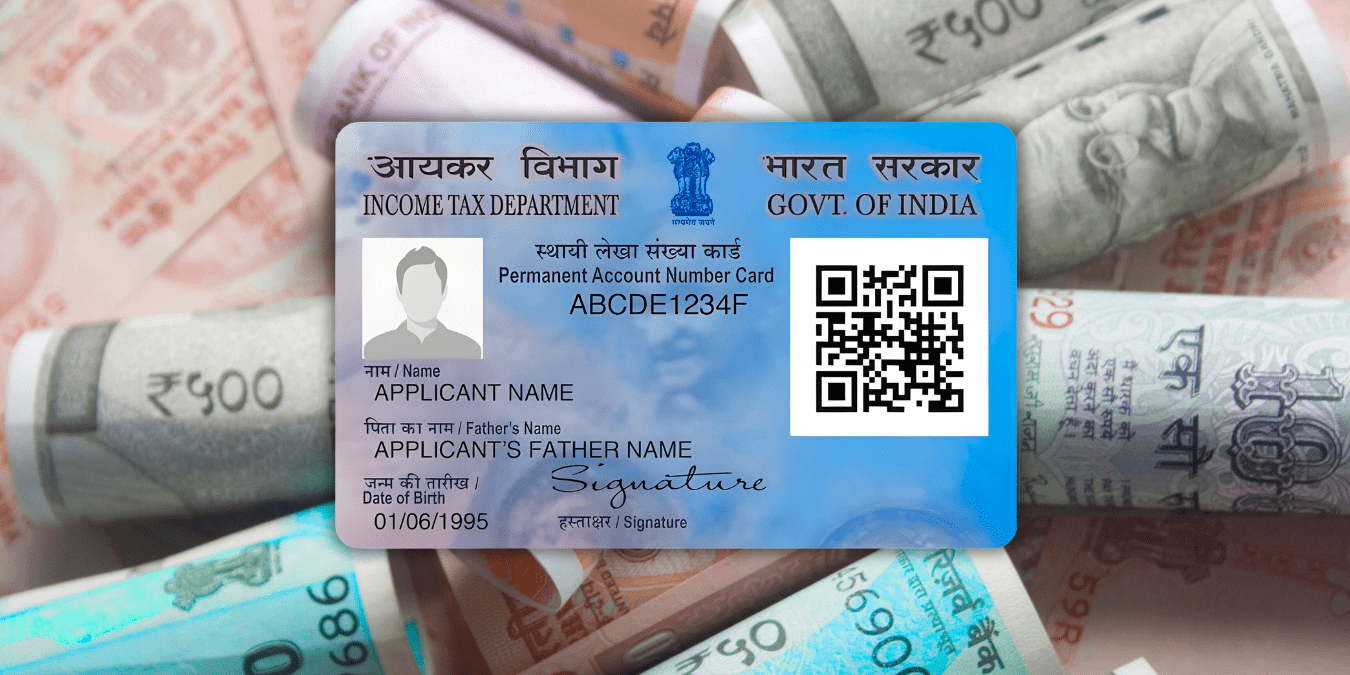
PAN twist in Draft Income Tax Rules 2026: Cash deposits up to ₹10L yearly? Property deals doubled to ₹20L without PAN? Hotels, cars, insurance—all changing from April 1! What secret thresholds will slash your paperwork—or trap you? Indian taxpayers, uncover the surprises before it's law! The Union government’s Draft Income‑tax Rules, 2026 mark a major overhaul of the existing regulatory framework, with the Permanent Account Number (PAN) moving from “identity document” to core financial control anchor. For salaried professionals, small‑business owners, investors, and even homemakers who handle household finances, these proposals will reshape how and when PAN is quoted, linked, and validated in daily transactions.…
Read More