81% of Your Debit Card Swipes Are Still ATM Withdrawals — Here's Why That's Costing You More Than You Think There's a quiet financial habit draining millions of Indian households every single month, and most people don't even realize it's happening. You walk up to an ATM, punch in your PIN, pull out ₹5,000 in crisp notes, and go about your day. It feels normal. It feels safe. It feels like you're in control of your money. But here's what no one tells you at the ATM screen: that single withdrawal might be the most expensive transaction you make all week — not because of the fee you see, but because of the dozens of costs you don't. Reserve Bank of India data and multiple fintech research studies consistently show that a staggering 81% of debit card usage in India still occurs at ATMs in the form of cash withdrawals, rather than as point-of-sale (POS) or digital payments. In a country that launched one of the world's most ambitious digital payment revolutions through UPI and RuPay, that number is both remarkable and deeply revealing. It tells us that despite the infrastructure, despite the convenience, and despite years of financial literacy campaigns, the cash habit hasn't just survived — it's thriving. This isn't a judgment. This is a forensic look at what that habit is actually costing you, your household, and your financial future. The Visible Cost: ATM Fees You're Paying Without Thinking Let's start with the obvious. Every Indian bank allows a limited number of free ATM transactions per month — typically five at your own bank's ATMs and three at other bank ATMs in metro cities. Beyond that, you're charged ₹21 per transaction (as per current RBI-mandated caps), and that's before GST is added on top. If you're someone who visits the ATM eight to ten times a month — which is entirely common for salaried individuals managing household expenses — you could easily rack up ₹100 to ₹200 in direct ATM fees every month. That's ₹1,200 to ₹2,400 per year, just in transaction charges. Compounded over a decade, and adjusted for even modest inflation, that's money that could have funded a short trip, a recurring deposit, or a significant portion of an emergency fund. Now multiply that by India's 300+ million debit card holders who still primarily use ATMs, and you start to understand why this habit, at a macroeconomic level, represents one of the largest preventable financial drains in the country's retail banking ecosystem. The Hidden Cost: The Cash Handling Tax Nobody Talks About Here's where it gets more nuanced — and more expensive. When you withdraw cash, you don't just pay the ATM fee. You pay what economists call the "cash handling tax," a collection of indirect costs that are real, measurable, and almost universally ignored. The first component is time cost. The average ATM trip in a Tier 1 or Tier 2 Indian city takes between 15 and 25 minutes when you factor in travel, queuing, and the transaction itself. If you visit an ATM ten times a month, you're spending roughly 3 to 4 hours per month in transit and queuing. At India's growing average urban wage, that time has a monetary value — one that never appears on your bank statement but absolutely appears in your quality of life. The second component is cash leakage. Behavioral economists have documented this extensively: people spend cash faster and with less deliberation than they spend digitally. When you have ₹3,000 in your wallet, the psychological friction of spending it is dramatically lower than when you have to tap, scan, or enter a PIN for every transaction. Studies from the National Institute of Public Finance and Policy suggest that households managing primarily in cash consistently underestimate their monthly expenditure by 18 to 25%. That gap between what you think you're spending and what you're actually spending is cash leakage — and it compounds mercilessly over time. The third component is lost float and interest. When money sits in your savings account, it earns interest — typically 2.5% to 4% per annum in Indian savings accounts, and up to 6 to 7% in high-yield digital savings products. The moment you convert that money to cash and carry it in your wallet, it stops earning. For someone who keeps an average of ₹8,000 to ₹10,000 in cash at any given time, the annual opportunity cost in lost interest alone ranges from ₹200 to ₹700. Again, it doesn't sound catastrophic in isolation. But layer it on top of every other cash-related cost, and the picture changes. Why Indians Still Choose Cash: An Honest Look To understand why 81% of debit card transactions are still cash withdrawals, you have to start from a place of empathy rather than condescension. The reasons are structural, psychological, and in many cases, entirely rational from the individual's point of view. Merchant acceptance gaps remain a genuine barrier. Despite India having over 95 million UPI QR codes deployed as of 2024 and one of the fastest-growing POS terminal networks in the world, acceptance is still patchy in the informal economy. Your neighborhood vegetable vendor, the roadside dhaba, the auto-rickshaw driver, the domestic help, the plumber — a significant portion of daily transactional life still operates outside the formal digital payment grid. When your daily spending environment demands cash, withdrawing cash isn't irrationality; it's pragmatism. Distrust of failed transactions is another major factor. Anyone who has experienced a UPI transaction fail mid-payment at a grocery checkout knows the anxiety that follows. Even though failed transactions are resolved within 48 to 72 hours under RBI's circular on failed digital transactions, the emotional and social cost of standing at a counter while a payment fails is powerful enough to push people back toward cash as a default. One bad experience can undo six months of digital payment habit formation. Privacy and surveillance concerns are increasingly entering the conversation, particularly among older demographics and those with mixed formal and informal income streams. Cash transactions leave no digital trail, and for a population that is still building trust in institutional data handling, that anonymity has value — even at a financial cost. Financial illiteracy about costs is perhaps the most systemic issue. Most people who withdraw cash from ATMs have no idea what that habit is actually costing them in aggregate. They see the ₹21 charge on an occasional transaction and dismiss it as negligible. They've never sat down and calculated the full lifecycle cost of their cash dependency. Nobody has shown them the math. What the Research Actually Shows About Digital vs. Cash Spending The research on cash versus digital spending behavior is remarkably consistent across geographies and income levels. A landmark study by the Mastercard Center for Inclusive Growth found that households that transition from primarily cash-based to primarily digital payment systems save an average of 8 to 12% of their monthly discretionary expenditure — not because they're earning more, but because digital payments create natural points of friction, reflection, and record-keeping that cash simply doesn't. In India specifically, a 2023 study co-authored by researchers from IIM Ahmedabad found that UPI users who tracked their transaction history through banking apps had a measurably higher savings rate than demographically matched peers who primarily operated in cash. The difference wasn't explained by income, age, or education level alone — it was explained by the simple fact that digital transactions are inherently visible, categorizable, and reviewable in a way that cash is not. When you can see exactly where ₹47,000 went last month — broken down by merchant, category, and time — you make better decisions this month. Cash offers no such mirror. The Compound Effect: Small Leakages, Large Consequences Let's run the actual numbers for a median Indian salaried household with a monthly income of ₹45,000 to ₹60,000. Direct ATM fees annually: approximately ₹1,500. Lost interest on idle cash: approximately ₹500. Cash leakage through undisciplined spending (conservative 10% of cash withdrawn): approximately ₹4,800 to ₹6,000. Time cost, valued at a conservative ₹100 per hour for 36 hours per year: ₹3,600. Total annual cost of the cash habit for an average household: ₹10,400 to ₹11,600. Over ten years, without even accounting for inflation or investment compounding, that's over ₹1 lakh. Invested in a simple SIP returning 12% annually, the amount that a typical household could have saved by transitioning to digital payments grows to approximately ₹1.8 to ₹2 lakh over a decade. That is not a rounding error. That is a life event — a child's education fund, a down payment, a medical emergency buffer. The Merchant Side of the Equation It's also worth understanding this from the merchant's perspective, because the cash economy imposes costs on the people you buy from, and those costs ultimately come back to you in the price of goods and services. Merchants who operate primarily in cash face significant overhead: cash counting and management time, risk of theft, costs of depositing large amounts at banks, the inefficiency of making change, and the inability to access formal credit because they have no documented transaction history. A 2024 NASSCOM report estimated that small Indian merchants lose approximately 2 to 3% of revenue annually to cash-handling inefficiencies. To recover those costs, prices creep upward — subtly, gradually, but consistently. The cash economy is not free. It's just that its costs are distributed and invisible. When you pay digitally, you're not just helping yourself. You're participating in a system that makes credit more accessible for small businesses, reduces crime, lowers the cost of banking infrastructure, and contributes to GDP formalization — all of which have downstream benefits for the broader economy that eventually cycle back to you through better public services, lower inflation, and a more competitive commercial environment. Practical Steps to Break the ATM Dependency Understanding the cost of a habit is step one. Changing it requires intentional, friction-reducing strategies. Audit your cash usage for 30 days. Don't change anything yet — just track every cash transaction you make and categorize it. Most people are shocked to discover how many of their "cash-only" transactions could actually be completed digitally. The audit itself is one of the most powerful behavioral interventions available. Identify your recurring cash vendors and have a conversation. Many small vendors who appear to not accept UPI actually do — they just don't advertise it, or they haven't set it up recently. Simply asking "do you take GPay or PhonePe?" at your regular chai stall, vegetable market, or neighborhood kirana can eliminate several ATM trips per month immediately. Set a deliberate cash ceiling. Instead of withdrawing ₹5,000 to ₹8,000 "just in case," commit to carrying no more than ₹500 to ₹1,000 in cash at any time. This forces you to plan digital payments for known expenses and dramatically reduces impulse cash spending. Use your bank's spending analytics. Every major Indian bank — SBI, HDFC, ICICI, Axis, Kotak — now offers transaction categorization in its mobile app. Spend fifteen minutes each Sunday reviewing the previous week's digital transactions. This single habit, consistently maintained, has been shown to reduce discretionary overspending by 12 to 18% in behavioral finance studies. Automate your savings before they become spendable cash. Set up automatic transfers to a recurring deposit, mutual fund SIP, or high-yield savings account on the day your salary arrives. The money that never enters your spendable balance never gets withdrawn as cash and never leaks. The UPI Opportunity You're Leaving on the Table India's UPI system processed over 13 billion transactions in a single month in late 2024, making it one of the most extraordinary financial infrastructure achievements in modern history. The system is fast, largely reliable, zero-cost for consumers, and accepted at an ever-expanding range of merchants. And yet, millions of Indians are still using their debit cards primarily to pull cash from ATMs rather than to make direct digital payments. The irony is that the debit card in your wallet is a gateway to one of the world's most sophisticated payment ecosystems — and most of us are using it only to feed a cash habit that costs us money, time, and financial visibility every single month. RuPay debit cards, which are issued to over 60% of India's debit card holders, offer direct UPI-linked functionality, insurance benefits, and in some cases, cashback on POS transactions that ATM withdrawals simply don't provide. If you're holding a RuPay card and primarily using it at ATMs, you are leaving tangible benefits unclaimed. A Note on Financial Vulnerability and Cash Dependency It would be incomplete to discuss this topic without acknowledging that cash dependency is not uniformly a matter of choice. For India's 250 million-plus unbanked or underbanked citizens, for the elderly population navigating unfamiliar digital interfaces, for workers in predominantly cash economies where digital infrastructure simply hasn't reached, the ATM is not a bad habit — it's a lifeline. Financial inclusion must precede financial optimization. The solution to India's cash dependency problem isn't to shame people into using UPI; it's to expand digital infrastructure, improve transaction reliability, build multi-language financial literacy programs, and create regulatory environments where the cost of going digital is always lower than the cost of using cash. We are moving in that direction, but the work is incomplete. For those who do have access, choice, and awareness — which includes the overwhelming majority of working urban and semi-urban Indians reading this — the case for reducing ATM dependency is clear, quantified, and actionable starting today. The Bigger Picture Money is not just a resource. It's a system of habits, beliefs, and behaviors that compound over time. The 81% statistic isn't just a data point about payment preferences — it's a window into how deeply our financial instincts were shaped by decades of cash-first infrastructure, and how slowly those instincts update even when the world around them changes. The ATM is not your enemy. But treating it as your primary financial tool in 2026, when your phone can pay, track, invest, and protect your money simultaneously, is a choice that has a price. That price is measurable, and it's paid in small, invisible installments that rarely trigger alarm — until you sit down, run the numbers, and realize what a decade of cash dependency has quietly taken from you. The good news is that the cost of changing this habit is essentially zero. The infrastructure exists. The technology is in your pocket. The math is in your favor. The only thing required is the decision to use what you already have, differently.
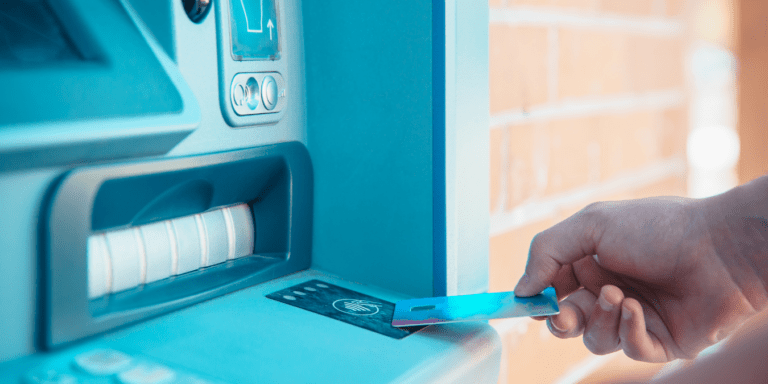
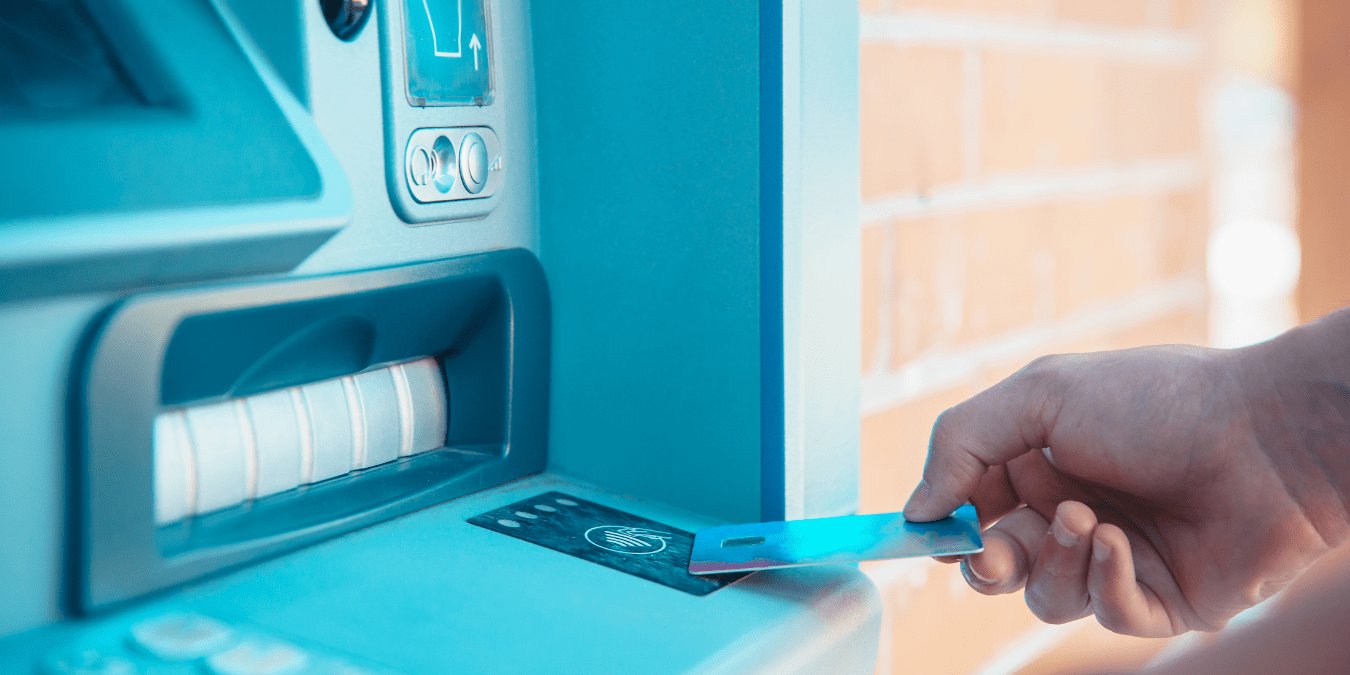
There’s a quiet financial habit draining millions of Indian households every single month, and most people don’t even realize it’s happening. You walk up to an ATM, punch in your PIN, pull out ₹5,000 in crisp notes, and go about your day. It feels normal. It feels safe. It feels like you’re in control of your money. But here’s what no one tells you at the ATM screen: that single withdrawal might be the most expensive transaction you make all week — not because of the fee you see, but because of the dozens of costs you don’t.
Reserve Bank of India data and multiple fintech research studies consistently show that a staggering 81% of debit card usage in India still occurs at ATMs in the form of cash withdrawals, rather than as point-of-sale (POS) or digital payments. In a country that launched one of the world’s most ambitious digital payment revolutions through UPI and RuPay, that number is both remarkable and deeply revealing. It tells us that despite the infrastructure, despite the convenience, and despite years of financial literacy campaigns, the cash habit hasn’t just survived — it’s thriving.
This isn’t a judgment. This is a forensic look at what that habit is actually costing you, your household, and your financial future.
The Visible Cost: ATM Fees You’re Paying Without Thinking
Let’s start with the obvious. Every Indian bank allows a limited number of free ATM transactions per month — typically five at your own bank’s ATMs and three at other bank ATMs in metro cities. Beyond that, you’re charged ₹21 per transaction (as per current RBI-mandated caps), and that’s before GST is added on top.
If you’re someone who visits the ATM eight to ten times a month — which is entirely common for salaried individuals managing household expenses — you could easily rack up ₹100 to ₹200 in direct ATM fees every month. That’s ₹1,200 to ₹2,400 per year, just in transaction charges. Compounded over a decade, and adjusted for even modest inflation, that’s money that could have funded a short trip, a recurring deposit, or a significant portion of an emergency fund.
Now multiply that by India’s 300+ million debit card holders who still primarily use ATMs, and you start to understand why this habit, at a macroeconomic level, represents one of the largest preventable financial drains in the country’s retail banking ecosystem.
The Hidden Cost: The Cash Handling Tax Nobody Talks About
Here’s where it gets more nuanced — and more expensive. When you withdraw cash, you don’t just pay the ATM fee. You pay what economists call the “cash handling tax,” a collection of indirect costs that are real, measurable, and almost universally ignored.
The first component is time cost. The average ATM trip in a Tier 1 or Tier 2 Indian city takes between 15 and 25 minutes when you factor in travel, queuing, and the transaction itself. If you visit an ATM ten times a month, you’re spending roughly 3 to 4 hours per month in transit and queuing. At India’s growing average urban wage, that time has a monetary value — one that never appears on your bank statement but absolutely appears in your quality of life.
The second component is cash leakage. Behavioral economists have documented this extensively: people spend cash faster and with less deliberation than they spend digitally. When you have ₹3,000 in your wallet, the psychological friction of spending it is dramatically lower than when you have to tap, scan, or enter a PIN for every transaction. Studies from the National Institute of Public Finance and Policy suggest that households managing primarily in cash consistently underestimate their monthly expenditure by 18 to 25%. That gap between what you think you’re spending and what you’re actually spending is cash leakage — and it compounds mercilessly over time.
The third component is lost float and interest. When money sits in your savings account, it earns interest — typically 2.5% to 4% per annum in Indian savings accounts, and up to 6 to 7% in high-yield digital savings products. The moment you convert that money to cash and carry it in your wallet, it stops earning. For someone who keeps an average of ₹8,000 to ₹10,000 in cash at any given time, the annual opportunity cost in lost interest alone ranges from ₹200 to ₹700. Again, it doesn’t sound catastrophic in isolation. But layer it on top of every other cash-related cost, and the picture changes.
Why Indians Still Choose Cash: An Honest Look
To understand why 81% of debit card transactions are still cash withdrawals, you have to start from a place of empathy rather than condescension. The reasons are structural, psychological, and in many cases, entirely rational from the individual’s point of view.
Merchant acceptance gaps remain a genuine barrier. Despite India having over 95 million UPI QR codes deployed as of 2024 and one of the fastest-growing POS terminal networks in the world, acceptance is still patchy in the informal economy. Your neighborhood vegetable vendor, the roadside dhaba, the auto-rickshaw driver, the domestic help, the plumber — a significant portion of daily transactional life still operates outside the formal digital payment grid. When your daily spending environment demands cash, withdrawing cash isn’t irrationality; it’s pragmatism.
Distrust of failed transactions is another major factor. Anyone who has experienced a UPI transaction fail mid-payment at a grocery checkout knows the anxiety that follows. Even though failed transactions are resolved within 48 to 72 hours under RBI’s circular on failed digital transactions, the emotional and social cost of standing at a counter while a payment fails is powerful enough to push people back toward cash as a default. One bad experience can undo six months of digital payment habit formation.
Privacy and surveillance concerns are increasingly entering the conversation, particularly among older demographics and those with mixed formal and informal income streams. Cash transactions leave no digital trail, and for a population that is still building trust in institutional data handling, that anonymity has value — even at a financial cost.
Financial illiteracy about costs is perhaps the most systemic issue. Most people who withdraw cash from ATMs have no idea what that habit is actually costing them in aggregate. They see the ₹21 charge on an occasional transaction and dismiss it as negligible. They’ve never sat down and calculated the full lifecycle cost of their cash dependency. Nobody has shown them the math.
What the Research Actually Shows About Digital vs. Cash Spending
The research on cash versus digital spending behavior is remarkably consistent across geographies and income levels. A landmark study by the Mastercard Center for Inclusive Growth found that households that transition from primarily cash-based to primarily digital payment systems save an average of 8 to 12% of their monthly discretionary expenditure — not because they’re earning more, but because digital payments create natural points of friction, reflection, and record-keeping that cash simply doesn’t.
In India specifically, a 2023 study co-authored by researchers from IIM Ahmedabad found that UPI users who tracked their transaction history through banking apps had a measurably higher savings rate than demographically matched peers who primarily operated in cash. The difference wasn’t explained by income, age, or education level alone — it was explained by the simple fact that digital transactions are inherently visible, categorizable, and reviewable in a way that cash is not.
When you can see exactly where ₹47,000 went last month — broken down by merchant, category, and time — you make better decisions this month. Cash offers no such mirror.
The Compound Effect: Small Leakages, Large Consequences
Let’s run the actual numbers for a median Indian salaried household with a monthly income of ₹45,000 to ₹60,000.
Direct ATM fees annually: approximately ₹1,500. Lost interest on idle cash: approximately ₹500. Cash leakage through undisciplined spending (conservative 10% of cash withdrawn): approximately ₹4,800 to ₹6,000. Time cost, valued at a conservative ₹100 per hour for 36 hours per year: ₹3,600.
Total annual cost of the cash habit for an average household: ₹10,400 to ₹11,600.
Over ten years, without even accounting for inflation or investment compounding, that’s over ₹1 lakh. Invested in a simple SIP returning 12% annually, the amount that a typical household could have saved by transitioning to digital payments grows to approximately ₹1.8 to ₹2 lakh over a decade. That is not a rounding error. That is a life event — a child’s education fund, a down payment, a medical emergency buffer.
The Merchant Side of the Equation
It’s also worth understanding this from the merchant’s perspective, because the cash economy imposes costs on the people you buy from, and those costs ultimately come back to you in the price of goods and services.
Merchants who operate primarily in cash face significant overhead: cash counting and management time, risk of theft, costs of depositing large amounts at banks, the inefficiency of making change, and the inability to access formal credit because they have no documented transaction history. A 2024 NASSCOM report estimated that small Indian merchants lose approximately 2 to 3% of revenue annually to cash-handling inefficiencies. To recover those costs, prices creep upward — subtly, gradually, but consistently. The cash economy is not free. It’s just that its costs are distributed and invisible.
When you pay digitally, you’re not just helping yourself. You’re participating in a system that makes credit more accessible for small businesses, reduces crime, lowers the cost of banking infrastructure, and contributes to GDP formalization — all of which have downstream benefits for the broader economy that eventually cycle back to you through better public services, lower inflation, and a more competitive commercial environment.
Practical Steps to Break the ATM Dependency
Understanding the cost of a habit is step one. Changing it requires intentional, friction-reducing strategies.
Audit your cash usage for 30 days. Don’t change anything yet — just track every cash transaction you make and categorize it. Most people are shocked to discover how many of their “cash-only” transactions could actually be completed digitally. The audit itself is one of the most powerful behavioral interventions available.
Identify your recurring cash vendors and have a conversation. Many small vendors who appear to not accept UPI actually do — they just don’t advertise it, or they haven’t set it up recently. Simply asking “do you take GPay or PhonePe?” at your regular chai stall, vegetable market, or neighborhood kirana can eliminate several ATM trips per month immediately.
Set a deliberate cash ceiling. Instead of withdrawing ₹5,000 to ₹8,000 “just in case,” commit to carrying no more than ₹500 to ₹1,000 in cash at any time. This forces you to plan digital payments for known expenses and dramatically reduces impulse cash spending.
Use your bank’s spending analytics. Every major Indian bank — SBI, HDFC, ICICI, Axis, Kotak — now offers transaction categorization in its mobile app. Spend fifteen minutes each Sunday reviewing the previous week’s digital transactions. This single habit, consistently maintained, has been shown to reduce discretionary overspending by 12 to 18% in behavioral finance studies.
Automate your savings before they become spendable cash. Set up automatic transfers to a recurring deposit, mutual fund SIP, or high-yield savings account on the day your salary arrives. The money that never enters your spendable balance never gets withdrawn as cash and never leaks.
The UPI Opportunity You’re Leaving on the Table
India’s UPI system processed over 13 billion transactions in a single month in late 2024, making it one of the most extraordinary financial infrastructure achievements in modern history. The system is fast, largely reliable, zero-cost for consumers, and accepted at an ever-expanding range of merchants. And yet, millions of Indians are still using their debit cards primarily to pull cash from ATMs rather than to make direct digital payments.
The irony is that the debit card in your wallet is a gateway to one of the world’s most sophisticated payment ecosystems — and most of us are using it only to feed a cash habit that costs us money, time, and financial visibility every single month.
RuPay debit cards, which are issued to over 60% of India’s debit card holders, offer direct UPI-linked functionality, insurance benefits, and in some cases, cashback on POS transactions that ATM withdrawals simply don’t provide. If you’re holding a RuPay card and primarily using it at ATMs, you are leaving tangible benefits unclaimed.
A Note on Financial Vulnerability and Cash Dependency
It would be incomplete to discuss this topic without acknowledging that cash dependency is not uniformly a matter of choice. For India’s 250 million-plus unbanked or underbanked citizens, for the elderly population navigating unfamiliar digital interfaces, for workers in predominantly cash economies where digital infrastructure simply hasn’t reached, the ATM is not a bad habit — it’s a lifeline.
Financial inclusion must precede financial optimization. The solution to India’s cash dependency problem isn’t to shame people into using UPI; it’s to expand digital infrastructure, improve transaction reliability, build multi-language financial literacy programs, and create regulatory environments where the cost of going digital is always lower than the cost of using cash. We are moving in that direction, but the work is incomplete.
For those who do have access, choice, and awareness — which includes the overwhelming majority of working urban and semi-urban Indians reading this — the case for reducing ATM dependency is clear, quantified, and actionable starting today.
The Bigger Picture
Money is not just a resource. It’s a system of habits, beliefs, and behaviors that compound over time. The 81% statistic isn’t just a data point about payment preferences — it’s a window into how deeply our financial instincts were shaped by decades of cash-first infrastructure, and how slowly those instincts update even when the world around them changes.
The ATM is not your enemy. But treating it as your primary financial tool in 2026, when your phone can pay, track, invest, and protect your money simultaneously, is a choice that has a price. That price is measurable, and it’s paid in small, invisible installments that rarely trigger alarm — until you sit down, run the numbers, and realize what a decade of cash dependency has quietly taken from you.
The good news is that the cost of changing this habit is essentially zero. The infrastructure exists. The technology is in your pocket. The math is in your favor. The only thing required is the decision to use what you already have, differently.