Why the Indian Rupee Cannot Recover Until the Iran War Ends — The Oil‑Deficit‑Currency Triangle Trapping the RBI
Why the Indian Rupee Cannot Recover Until the Iran War Ends — The Oil‑Deficit‑Currency Triangle Trapping the RBI
With the rupee crashing to an unprecedented 93.27 per dollar and Brent crude briefly touching $120 a barrel, India is caught inside a vicious geopolitical feedback loop. Here is why the RBI cannot fix it alone.
The Indian rupee has just shattered a record that no Indian policymaker or central banker ever wanted to see: 93.27 per US dollar. In a single week, the Reserve Bank of India burned through $11.68 billion in foreign exchange reserves just to slow the slide — not stop it. The cause is no mystery. The Iran war has ignited a global oil shock, and India, which imports over 85% of its crude requirements, is now caught inside a self-reinforcing economic triangle from which there is no escape until the guns go silent.
The Rupee at 93: Understanding the Scale of the Crisis
To appreciate the gravity of March 2026, one must understand what the rupee’s exchange rate actually represents. It is not just a number on a screen. Every paisa the rupee loses against the dollar makes India’s $233 billion oil import bill more expensive in rupee terms, pushes inflation higher, widens the current account deficit, and pressures corporate balance sheets carrying foreign-currency debt.
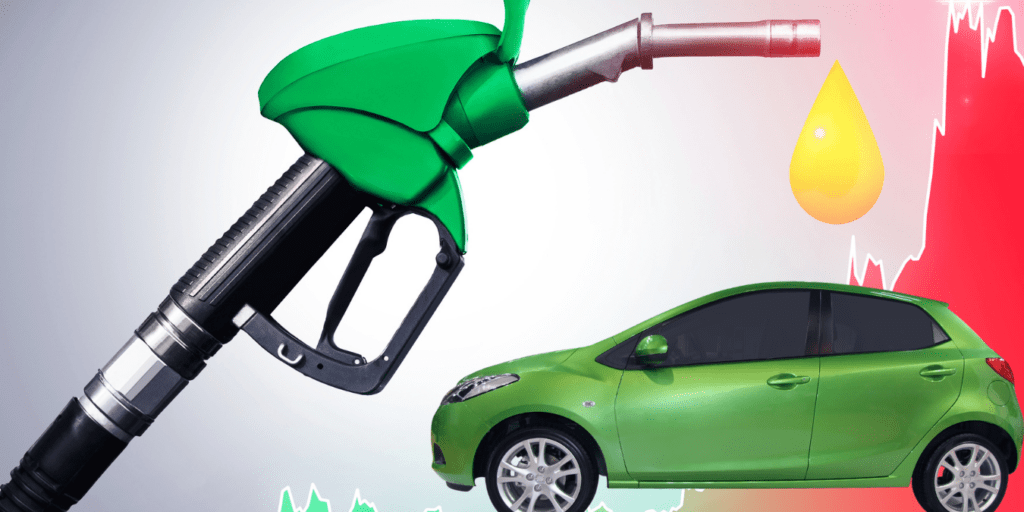
The rupee has now weakened more than 8.7% since the beginning of 2025. The currency traded at a relatively stable 84–85 range in early 2025. Then came the US-Israel strikes on Iranian energy infrastructure, the partial closure of the Strait of Hormuz — through which roughly 21 million barrels of oil pass every single day — and Brent crude briefly soared past $120 per barrel, up over 70% from around $65 before the conflict escalated.
Every $10 increase in oil prices widens India’s current account deficit by 0.4% to 0.5% of GDP, according to historical data. With oil rising nearly $55 per barrel since the crisis began, the cumulative pressure on the CAD is potentially catastrophic unless prices retreat swiftly.
On March 20, 2026, the rupee breached 93 for the very first time, printing 93.27 in early trade — a fall of 19 paise in a single session. The RBI stepped in, as it has repeatedly in recent months, but the central bank’s ability to defend the currency is increasingly constrained by the arithmetic of the oil-deficit-currency triangle.
Iran war + Strait of Hormuz
TRAPPED
FPI outflows drain forex
Makes oil costlier in INR → loop repeats
Why Oil Is Not Just a Commodity for India — It Is a Macroeconomic Destiny
India’s oil dependence is structural, not cyclical. The country produces only about 15% of its own crude requirements. The rest — nearly 5 million barrels per day — must be imported from the Middle East, Russia, and West Africa, almost entirely priced in US dollars. This single fact makes every oil price spike simultaneously a currency crisis, an inflation crisis, and a fiscal crisis.
When Brent crude rises from $65 to $120, here is what actually happens to the Indian economy. Fuel prices rise at petrol pumps, increasing household spending. Logistics costs surge, pushing up the price of every good transported across the country. Fertiliser imports become more expensive, threatening farm incomes ahead of the kharif sowing season. Aviation fuel costs spike, stressing Indian airlines. And the government faces impossible choices on whether to pass these costs to consumers or absorb them through subsidies that blow a hole in the fiscal deficit.
Fertiliser Costs Surge
Higher crude drives up urea and di-ammonium phosphate prices, hitting farm input costs ahead of kharif season in June.
Aviation Fuel Crisis
ATF prices track crude closely. IndiGo, Air India, and SpiceJet face margin compression, with potential airfare hikes for passengers.
Freight and Logistics
Diesel-dependent trucking makes every supply chain in India costlier, embedding oil inflation into the CPI through secondary effects.
LPG Cylinder Subsidy Pressure
Government under-recoveries on domestic LPG cylinders balloon. Either the fiscal deficit widens or kitchen prices rise for 320 million households.
GDP Growth Downgrade
Every $10 rise in oil prices shaves 0.2–0.3 percentage points off India’s GDP growth, per former NITI Aayog vice chairman Rajiv Kumar.
Gulf Remittances at Risk
India’s $120 billion annual remittance inflow is partly sourced from Gulf workers. Economic stress in GCC countries could reduce these inflows.
How the Strait of Hormuz Became India’s Single Biggest Financial Risk
The Strait of Hormuz is a narrow waterway between Iran and the Arabian Peninsula. At its narrowest point it is barely 33 kilometres wide, yet approximately 21 million barrels of oil pass through it every single day — nearly one-third of all seaborne oil trade globally. Iran, which sits on the northern edge of the strait, has repeatedly threatened to close or mine this chokepoint as a retaliatory weapon.
The partial naval blockade and threats to shipping routes through the Strait in March 2026 were enough to send Brent crude to $120. A full, sustained closure — the nightmare scenario — would be categorically different. It would remove tens of millions of barrels from global daily supply almost instantly, with no short-term replacement available. Saudi Arabia’s east-to-west pipeline offers a partial bypass for Saudi crude, but it cannot handle the volume passing through the Strait from Iraq, Kuwait, Qatar, the UAE, and Bahrain combined.
India sources roughly 64% of its oil imports from Middle Eastern countries whose export routes pass through or near the Strait of Hormuz. A sustained disruption would force India to seek alternative, costlier supplies from West Africa and the Americas — at inflated spot prices, paid in dollars, through a weakening rupee. The cascading effect on India’s trade deficit would be severe.
For the RBI, this is not a normal external shock that monetary policy can address. Interest rate hikes cannot produce a drop in global oil prices. Rate cuts to support growth would accelerate rupee weakness and imported inflation. The central bank is fundamentally constrained by the geopolitical reality.
The RBI’s Trilemma: Defend the Rupee, Fight Inflation, or Support Growth?
The Reserve Bank of India is one of the more capable and well-resourced central banks in the developing world. Going into this crisis, India’s forex reserves stood above $628 billion — comfortably among the top five globally — built up deliberately during years of capital inflows precisely to defend against exactly this kind of shock. The RBI has deployed those reserves aggressively: market participants estimate the central bank sold over $50 billion in the forex market between April and December 2025, and in just the single week ending March 6, 2026, reserves fell by $11.68 billion — the largest one-week drop since November 2024.
| Parameter | Pre-Crisis (Jan 2025) | Current (Mar 2026) | Change |
|---|---|---|---|
| USD/INR Rate | 84.10 | 93.27 | +10.9% |
| Brent Crude ($/bbl) | 65 | 112 | +72% |
| RBI Forex Reserves | $628B | $616B | -$12B+ |
| FPI Equity Outflows (Mar) | Moderate | $8B+ | Largest since Jan 2025 |
| Estimated CAD (FY27) | 1% of GDP | 2.5–3%+ of GDP | Significantly wider |
| RBI Rate Stance | Easing bias | Neutral/Watchful | On hold |
The problem is that currency intervention, while effective at managing volatility and preventing disorderly depreciation, cannot reverse the underlying fundamental pressure. The RBI is not defending a specific exchange rate level; its stated policy is calibrated intervention to ensure orderly market conditions. Former RBI Deputy Governor Michael Patra has argued publicly that a 4–5% annual depreciation of the rupee is consistent with India’s economic fundamentals — but 2026 is delivering that entire annual depreciation in a matter of weeks, not a year.
“The RBI has never resisted orderly movement in the rupee; it has effectively enabled a glide path rather than jerky plunges. The goal is a $1 trillion forex buffer to absorb precisely these kinds of structural external shocks.”
— Michael Patra, Former Deputy Governor, Reserve Bank of IndiaIf the RBI raises interest rates to attract foreign capital and stem rupee outflows, it will choke a slowing economy and increase borrowing costs for every Indian taking a home loan, business loan, or personal loan. If it cuts rates to stimulate growth, it risks rupee freefall. If it does nothing, both inflation and currency depreciation compound simultaneously. This is the trilemma, and there is no clean exit while oil prices remain elevated by an ongoing war.
FPI Exodus and the Dollar Demand Spiral
Oil is not the only transmission channel. The Iran war has also triggered a massive flight-to-safety flow globally, pulling capital from emerging markets and parking it in US dollar assets and gold. Foreign Portfolio Investors have pulled over $8 billion from Indian equities in March 2026 alone — the largest monthly outflow since January 2025. Every rupee of equity that FPIs sell gets converted back into dollars, creating additional demand for the greenback and further pressure on the rupee.
Simultaneously, Indian importers — particularly oil marketing companies like BPCL, HPCL, and IOC, which must buy dollars to pay for crude — are creating enormous structural dollar demand. HDFC Bank’s research division has warned that even without a physical supply disruption, the near-term oil price spike is sufficient to pressure the rupee and widen the current account deficit. The bank projected the CAD at around 1% of GDP for FY26-27 before the conflict. That figure is now likely to be revised sharply upward.
1. Iran war raises oil prices → 2. India pays more dollars for crude → 3. Trade deficit widens → 4. Rupee falls → 5. Same barrel of oil costs more rupees → 6. Inflation rises → 7. FPIs sell Indian assets → 8. More dollars demanded → back to step 1. This is the trap.
Two Scenarios: What Rupee Recovery Actually Requires
Let us be clear about what would genuinely allow the rupee to stabilise and recover. It is not a rate hike by the RBI. It is not a new forex swap line. It is not capital controls. The rupee’s fate is now almost entirely contingent on one external variable: the trajectory of the Iran war and global oil prices.
Ceasefire & Oil Below $85
A credible ceasefire or de-escalation in the Middle East, Strait of Hormuz reopening, Brent crude falling back toward $80–$85. In this scenario, the rupee could stabilise around 87–89 within two to three months, FPIs return to Indian equities, and the RBI resumes its rate-cutting cycle. GDP growth returns to 6.5%+ trajectory.
Prolonged Conflict & Oil Above $110
If the conflict extends into Q3 2026 with oil sustained above $110 per barrel, the rupee could test 95–96 against the dollar. India’s CAD balloons to 3% of GDP, the fiscal deficit widens on subsidy pressures, credit rating agencies flag risks, and the RBI’s forex reserves face further depletion. GDP growth slows to 5.5% or below.
The sobering reality is that Indian monetary policy cannot manufacture either of these outcomes. The RBI can prevent a disorderly, panic-driven rupee crash. It cannot prevent a fundamentally driven depreciation rooted in oil economics. No central bank in a petroleum-importing economy can.
What Salaried Indians, Business Owners, and Investors Should Do Now
For ordinary Indians, understanding this dynamic has immediate practical importance. A weak rupee is inflationary. Petrol and diesel prices, though currently partially shielded by the government, will come under mounting pressure. Premium petrol has already been hiked by Rs 2.35 per litre in March. CNG prices are likely to follow. LPG cylinder rates may rise again.
For business owners with dollar-denominated import costs — machinery, electronics components, chemicals — hedging forex exposure is no longer optional. The rupee has moved 10% in 14 months. An unhedged payable or receivable at this volatility can devastate margins. At a minimum, businesses should consult their bankers about forward contracts and options.
For investors, the weak rupee environment creates both risks and opportunities. Exporters — particularly IT services companies and pharmaceutical exporters earning in dollars — benefit from a weaker rupee on their revenue line. Nifty IT and Nifty Pharma could see earnings upgrades if the rupee stays weak. Conversely, companies with high import content and dollar-denominated debt face margin compression.
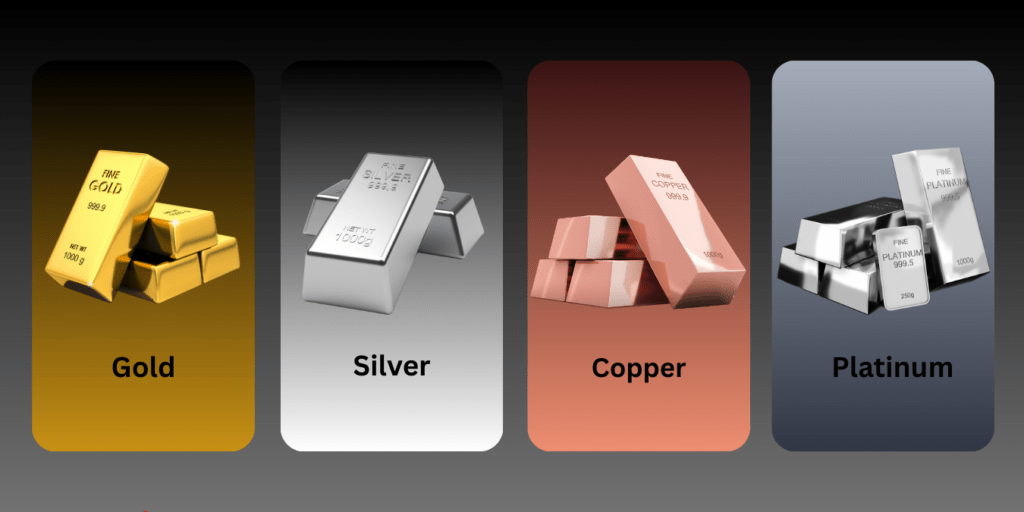
Gold has surged to Rs 92,450 per 10 grams on the MCX, driven by both geopolitical safe-haven demand and the rupee’s weakness. Domestic gold prices in India are impacted by both the international gold price and the USD/INR rate. If both remain elevated, gold will continue to be a strong store of value for Indian investors.
The RBI can slow and manage the pace of depreciation through forex market intervention, but it cannot reverse the underlying fundamental pressure caused by high oil prices and the resulting current account deficit. The central bank has already deployed $11.68 billion in a single week and an estimated $50+ billion since mid-2025. It has significant reserves, but using them to fight a structural trend caused by geopolitical factors is not a sustainable long-term strategy. The RBI’s goal is orderly markets, not a specific exchange rate level.
India prices its petrol and diesel using a formula linked to international crude oil prices and the USD/INR exchange rate. When crude rises from $65 to $112 AND the rupee weakens from 84 to 93 per dollar, the rupee cost of every barrel of crude rises dramatically. The government can partially shield consumers through reduced excise duties, but sustained high oil prices will eventually translate into higher pump prices. Premium petrol has already been hiked by Rs 2.35 per litre as of March 2026.
No — and this distinction is important. In 1991, India’s foreign exchange reserves covered barely three weeks of imports. Today, India holds over $616 billion in reserves — enough to cover 11+ months of imports. The macroeconomic buffers are categorically stronger. However, the structural vulnerability — heavy oil import dependence, persistent trade deficits, sensitivity to FPI flows — is similar in nature. The crisis today is a stress test, not an existential threat, provided the Iran conflict is resolved within a reasonable timeframe.
This is a personal financial decision that depends on your risk profile, time horizon, and existing asset allocation. Historically, gold has performed well during geopolitical uncertainty and currency weakness, and MCX gold is currently at Rs 92,450 per 10 grams. Retail investors can access gold through Sovereign Gold Bonds (SGBs), gold ETFs, or digital gold. For dollar hedging, RBI-regulated instruments like FCNR deposits are available for eligible individuals. Please consult a SEBI-registered investment adviser before making any significant portfolio changes.
Export-oriented sectors earn revenues in foreign currencies and benefit when those dollars convert into more rupees. Key beneficiaries include: IT services and software exports (Infosys, TCS, Wipro), generic pharmaceutical exporters, specialty chemicals exporters, and textile exporters. Conversely, sectors that are hurt include airlines (ATF costs), capital goods companies importing machinery, auto companies with imported components, and any firm carrying unhedged dollar-denominated debt.