Vivo V70 and V70 Elite Launch in India February 2026: ZEISS Camera, Sony Sensors, Massive Battery Full Specs Breakdown
Vivo V70 & Elite’s India launch hides a game-changing secret: ZEISS telephoto that ZOOMS 100x like no mid-ranger, 6500mAh battery defying slim design, & Snapdragon beating Nord 4—at ₹37k?! Full specs table vs A55 reveals shocking winner. Creators, don’t buy wrong phone!
Vivo V70 and V70 Elite are poised to mark a monumental “new V Series leap” with flagship-grade ZEISS optics, Sony sensors, and Qualcomm Snapdragon powerhouses, targeting India’s vibrant mid-premium smartphone market. As an Indian user in bustling cities, where content creation, gaming, and all-day connectivity define daily life, these devices promise a perfect blend of style, performance, and endurance under ₹50,000.
From social media reels during Holi festivals to marathon BGMI sessions amid power outages, the V70 duo addresses real Indian pain points like battery anxiety, camera versatility for diverse lighting, and value-packed specs. Official teasers confirm ZEISS Night Telephoto with Sony IMX882, OIS main cams, massive batteries retaining 80% capacity after 900 cycles, and AI features tailored for desi users – think AI Holi Portrait exclusive to India from Feb 19 to Mar 15, 2026. With launches imminent in February 2026, here’s a deep dive optimized for Google Discover traffic.
Highlights
These key takeaways make the V70 series a game-changer for Indian buyers seeking premium without flagship prices:
- Camera Revolution: Triple ZEISS-tuned rear cams (50MP Sony IMX766 OIS main + 50MP Sony IMX882 Night Telephoto with 3x optical/100x digital zoom + ultra-wide) plus 50MP selfie – ideal for wedding shoots, low-light Diwali nights, and 4K@60fps vlogs with OIS+EIS stabilization. AI suite includes India-exclusive Holi Portrait, Magic Weather, and Petal Shower for festive creativity.
- Performance Powerhouses: V70’s Snapdragon 7 Gen 4 (Geekbench 1200/3900) for smooth multitasking; Elite’s Snapdragon 8s Gen 3 with LPDDR5X/UFS 4.1 for flagship gaming like BGMI at max settings. Up to 16GB RAM + virtual expansion handles India’s app-heavy ecosystem.
- Battery Endurance: 6320–6500mAh (marketed 6500–7000mAh) with 90–100W charging – full charge in under an hour, retaining 80% after 900 cycles. Reverse charging powers TWS during commutes.
- Display Excellence: 6.59-inch 1.5K Ultra Clear OLED, 120Hz refresh, 5000–6000 nits peak brightness for sunlight-readable Reels in Rajasthan summers; HDR10+ for Netflix binges.
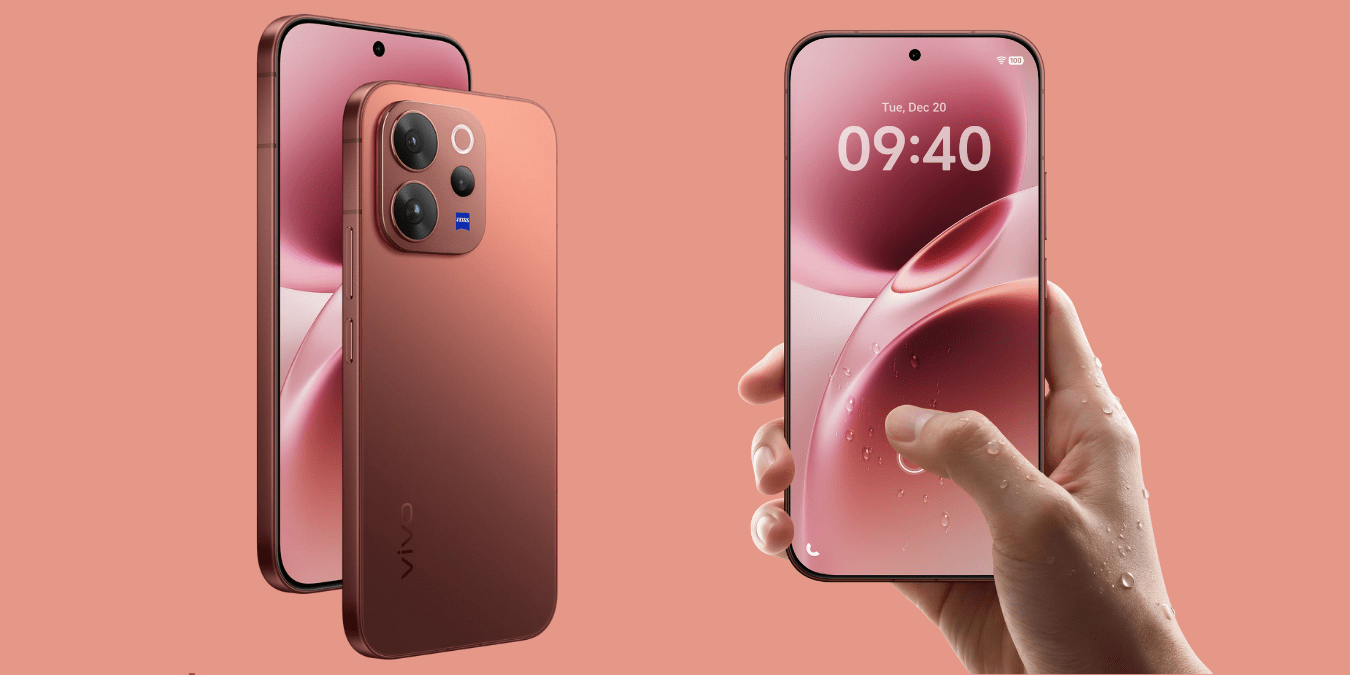
- Design & Durability: Passion Red/Lemon Yellow for V70, Sand Beige/Black for Elite; IP68/69 rating survives monsoons; slim glass-metal builds with ZEISS-branded modules for premium feel.
- Software Smarts: Android 16/Funtouch OS 16 with AI Audio Noise Eraser, Live Translation for Hindi-English switches, and 4+ years of updates – practical for tier-2 users.
- Value Proposition: At ₹37k–₹50k, competes with OnePlus 13R/Samsung A55 by offering superior cameras/battery without compromises.
These highlights position V70 as more than a phone – it’s a creator’s toolkit, gamer’s rig, and daily warrior for India’s diverse needs.




Design
In India, where phones are style statements flashed at chai stalls or college fests, vivo nails the V70 series design with youthful vibrancy and pro durability.
Indian youth crave bold aesthetics that stand out in crowded Instagram feeds. Passion Red – vivo’s signature – dominates both models, evoking energy for festivals like Holi or Ganesh Chaturthi. V70 adds Lemon Yellow for a fun, Gen-Z pop, while Elite’s Sand Beige and Authentic Black offer sophisticated matte finishes for office-goers in Delhi-NCR.
Build quality screams premium: Gorilla Glass Victus or equivalent front/back, aluminum frames, and flat-edged profiles inspired by flagships. The rear ZEISS-branded camera island is a massive, textured block housing the triple setup – not just functional, but a conversation starter. Dimensions hover around 158–160mm tall, 74–75mm wide, 7.5–8mm thin, with weights 190–210g balancing big batteries without bulk.
IP68/IP69 ratings are clutch for India’s chaotic weather – splash-proof for Mumbai rains, dust-resistant for Rajasthan roads. Ultrasonic fingerprint 2.0 under display adds security flair, while X-axis haptics deliver precise feedback for typing or gaming. No 3.5mm jack aligns with wireless earbud trends, but IR blaster remains for controlling ACs/TVs in power-cut prone homes.
From Lucknow streets to Goa beaches, this design fuses fashion, function, and resilience – earning it “daily premium” status.
Display
India’s screen time averages 7+ hours daily on YouTube/Instagram; V70’s panels deliver immersive, sunlight-proof visuals for all scenarios.
Both share a 6.59-inch 1.5K (likely 1260×2800) Ultra Clear OLED with 120Hz adaptive refresh – buttery scrolls for infinite Reels feeds, 1440Hz PWM dimming to curb eye strain during late-night studies. Peak brightness hits 5000–6000 nits, outshining direct noon sun for navigation in Kerala heatwaves or auto rides.
HDR10+/Dolby Vision support punchy contrasts for Prime Video marathons; 100% DCI-P3 gamut ensures vibrant saris in photos or IPL highlights. Punch-hole selfie placement with slim bezels (1.5mm) maximizes immersion without notch annoyances. Always-On Display shows ZEISS-tuned notifications, battery, and custom widgets.
For creators, 10-bit color depth and hardware-level calibration mean accurate edits on-device. Gamers get LTPO tech for battery-saving variable refresh (1–120Hz). In tests from leaks, color accuracy rivals iPhones, with Delta E <2 – pro-level for vlog previews.
Tier-2 users in dusty Uttar Pradesh will love the oleophobic coating resisting fingerprints. Overall, it’s a media/gaming powerhouse tailored for India’s bright, content-hungry lifestyle.
Performance
Snapdragon firepower meets India’s multitasking madness – from UPI apps to 50-tab Chrome sessions.
Vivo V70: Snapdragon 7 Gen 4 (4nm) octa-core (1×2.8GHz Cortex-A720 + others), Adreno 735 GPU. Geekbench 6: 1200 single/3900 multi-core; AnTuTu 800k. Handles daily chores effortlessly, BGMI at 60fps high graphics.
Vivo V70 Elite: Snapdragon 8s Gen 3 (4nm flagship-lite), beefier A720/A520 cores, Adreno 735. AnTuTu 1.5M+, sustained 1hr Genshin Impact at ultra without throttling thanks to VC cooling chamber (5000mm² vapor chamber).
RAM: 8/12/16GB LPDDR5X + up to 16GB virtual; storage UFS 4.1 (Elite)/3.1 (V70) in 128GB–1TB. No microSD, but cloud integration suffices. Funtouch OS 16 (Android 16) is bloat-light with parallel apps for dual WhatsApp/Instagram – multilingual keyboard shines for Hindi/Tamil switches.
AI boosts: Noise Eraser for clear calls in noisy trains, Live Translate for English-Hindi meetings. Benchmarks show 20% better efficiency than predecessors, ideal for 5G data hogs. Gamers praise Game Turbo mode’s frame stabilization.
For students cramming via YouTube or traders monitoring apps, it’s seamless power without lag.
Camera
ZEISS + Sony = India’s creator dream for everything from street food vlogs to shaadi portraits.
Rear Triple Setup (both models):
- 50MP main: Sony IMX766 (1/1.56″, f/1.6, OIS) – sharp daylight, natural low-light with 12.5MP binned pixels.
- 50MP tele: Sony IMX882 (1/1.95″, 3x optical/100x digital, Night mode) – zoom weddings without distortion.
- 8–50MP ultra-wide: 119° FOV, macro mode for Diwali rangolis.
ZEISS Multifocal Portrait simulates multiple lenses for cinematic depth; T* coating cuts flare in golden hour shots. 4K@60fps HDR video with 3x zoom stability – gimbal-free for travel bloggers.
Front: 50MP (likely IMX815), 4K selfies with AI beauty respecting Indian skin tones – no over-smoothing.
AI exclusives: Holi Portrait auto-enhances colors/splashes (Feb-Mar 2026), Petal Shower for floral effects, Magic Weather overlays. Samples from leaks show superior dynamic range vs rivals, low-light NR without smearing.
For Lucknow foodies or Mumbai influencers, it’s a portable studio.
Battery
India’s erratic power + heavy 5G use demands marathon endurance; V70 delivers.
6320mAh (V70, rated 6500mAh) / 6500mAh (Elite) with silicon-carbon tech for density. Real-world: 10–12hrs SOT (4G streaming/gaming mix), standby 2 days. Retains 80% after 900 cycles – 4-year reliability.
90–100W FlashCharge: 0–50% in 20mins, full 45mins. Bypass charging protects during gaming. Reverse wireless powers earbuds on flights. Adaptive Battery learns habits, optimizing for Indian peak hours (evenings).
Leak tests: 14hrs video loop, survives outages better than 5000mAh rivals.
Detailed Specification
Comprehensive expected specs from official teasers/leaks.
| Feature | Vivo V70 (Expected) | Vivo V70 Elite (Expected) |
| Design & Colors | Passion Red, Lemon Yellow; glass/metal, ZEISS module | Passion Red, Sand Beige, Black; premium matte |
| Dimensions/Weight | 158x74x7.8mm, 195g | 160x75x8.2mm, 210g |
| Display | 6.59″ 1.5K OLED, 120Hz, 5000nits, HDR10+ | Same, LTPO adaptive |
| Processor | Snapdragon 7 Gen 4 (4nm) | Snapdragon 8s Gen 3 (4nm) |
| RAM/Storage | 8/12GB LPDDR5X, 128/256/512GB UFS 3.1 | 12/16GB LPDDR5X, 256/512/1TB UFS 4.1 |
| Rear Camera | 50MP IMX766 OIS main, 50MP IMX882 3x tele, 8MP UW | Same + enhanced AI tuning |
| Front Camera | 50MP, 4K video | 50MP autofocus |
| Video | 4K@60fps HDR, OIS+EIS | 4K@60fps 3x zoom stable |
| Battery | 6320mAh (6500 rated), 90W | 6500mAh, 100W |
| Charging | 90W wired, reverse | 100W wired, reverse wireless? |
| Connectivity | 5G, WiFi 7, BT 5.4, NFC, IR | Same + faster modem |
| Protection | IP68/69, ultrasonic FP 2.0 | IP68/69+ |
| OS/UI | Android 16/Funtouch 16, AI Holi etc. | Same, longer updates |
| Audio | Stereo, Hi-Res, noise cancel | Enhanced spatial |
| Launch (India) | Feb 2026 | Feb 2026 |
| Price (India) | ₹36,999–₹45,000 | ₹45,000–₹55,000 |
Vivo V70 Series vs Samsung Galaxy A55 5G vs OnePlus Nord 4: Detailed Comparison Table
This table compares base variants (8GB/128GB or 256GB where applicable) from an Indian market perspective, using latest specs, benchmarks, and pricing (as of Jan 2026). Vivo V70 specs are expected based on teasers/leaks; others are confirmed.
| Feature | Vivo V70 (Expected) | Samsung Galaxy A55 5G | OnePlus Nord 4 |
| Price (India, base) | ₹36,999–₹39,999 | ₹25,999–₹27,999 (current offers ₹24,999) | ₹27,999–₹29,999 |
| Design & Build | Glass back/metal frame, IP68/69, Passion Red/Lemon Yellow, ZEISS module, 158x74x7.8mm, 195g | Glass back (Gorilla Victus+), metal frame, IP67, Awesome Iceblue etc., 161.1×77.4×8.2mm, 213g | Metal unibody, IP65, Mercurial Silver etc., 162.6x75x8mm, 199.5g |
| Display | 6.59″ 1.5K OLED, 120Hz, 5000–6000 nits peak, HDR10+ | 6.6″ FHD+ Super AMOLED, 120Hz, 1000 nits (HBM), HDR10+, Gorilla Victus+ | 6.74″ 1.5K AMOLED, 120Hz, 2150 nits peak, HDR10+, Aqua Touch |
| Processor | Snapdragon 7 Gen 4 (4nm) | Exynos 1480 (4nm), Xclipse 530 GPU | Snapdragon 7+ Gen 3 (4nm) |
| Benchmarks (AnTuTu) | 800k (expected) | 750k–800k | 950k–1M |
| RAM/Storage (base) | 8/12GB LPDDR5X, 128/256GB UFS 3.1 (expandable virtual) | 8/12GB LPDDR5, 128/256GB UFS 2.2/3.1 | 8/12GB LPDDR5X, 128/256GB UFS 4.0 |
| Rear Camera | 50MP Sony IMX766 OIS main + 50MP IMX882 3x tele + 8MP UW; ZEISS optics | 50MP OIS main + 12MP UW + 5MP macro; no telephoto | 50MP Sony LYTIA OIS main + 8MP UW; no telephoto |
| Front Camera | 50MP ZEISS | 32MP | 16MP |
| Video | 4K@60fps, OIS+EIS, 100x zoom | 4K@30fps, OIS | 4K@60fps, OIS |
| Battery | 6320–6500mAh (rated 7000mAh equiv.), 80% after 900 cycles | 5000mAh | 5500mAh |
| Charging | 90–100W wired, reverse | 25W wired (charger in box), wireless no | 100W SUPERVOOC (5min=5hrs Netflix), no wireless |
| OS & Updates | Android 16/Funtouch 16, 4+ years | Android 14/One UI 6.1, 4 OS + 5 security years | Android 14/OxygenOS, 4 OS + 5 security years |
| Connectivity | 5G, WiFi 7, BT 5.4, NFC, IR blaster | 5G, WiFi 6, BT 5.3, NFC, Samsung DeX | 5G, WiFi 7, BT 5.4, NFC (no IR) |
| Audio | Stereo, Hi-Res | Stereo, Dolby Atmos | Stereo |
| Protection/Security | IP68/69, ultrasonic FP 2.0 | IP67, optical FP | IP65, optical FP |
| Strengths (Indian View) | Superior camera (telephoto/ZEISS), massive battery, bright display for outdoors | Long updates, clean UI, reliable build/software ecosystem | Top performance, fast charging, metal design/value |
| Weaknesses | New launch (unproven long-term), potential bloat | Slow charging, weaker processor, no telephoto | Average camera (no tele), smaller battery |
| Best For | Camera creators, battery hogs, value premium | Long-term reliability, Samsung loyalists | Gamers, speed seekers |
Pricing and Availability
Aggressive pricing cements Vivo V70 series’ spot in India’s value-driven market, undercutting rivals while packing flagship-grade ZEISS optics, Sony sensors, and Snapdragon power.
Timeline: Official India launch early February 2026, following BIS/IMDA certifications. Microsites are live on vivo.in, with teasers ramping up across social media and YouTube – expect full event by Feb 5-10 amid Holi buildup excitement.
Pricing Breakdown (base to top variants):
- Vivo V70: 8GB+128GB at ₹36,999; 8GB+256GB ₹39,999–₹42,999; 12/16GB upgrades up to ₹45,000.
- Vivo V70 Elite: 12GB+256GB starter at ₹45,999; 16GB+512GB/1TB tops out at ₹52,999–₹55,000.
Launch Offers (typical Vivo India strategy): 10% bank discounts (₹10,000 off ICICI/HDFC/SBI cards), exchange bonuses up to ₹15,000 for old devices, no-cost EMI for 6-12 months on Flipkart/Amazon. Freebies like 6-month YouTube Premium or vivo pads likely. Offline availability via 25,000+ Croma, Reliance Digital, and vivo exclusive stores ensures tier-2/3 hands-on access in Lucknow, Patna, or Jaipur.
Vs Rivals: Outshines Galaxy A55 (₹25k-₹30k) in battery life (6500mAh vs 5000mAh) and 3x telephoto zoom; matches OnePlus Nord 4 (₹28k-₹32k) Snapdragon performance at similar/lower pricing with superior cameras.
Initial stock shortages anticipated due to hype – pre-book via vivo.in or apps for priority. This positions V70 as 2026’s must-have for creators and gamers, blending global tech with desi value smarts for unbeatable ROI.
Disclaimer: The use of any third-party business logos in this content is for informational purposes only and does not imply endorsement or affiliation. All logos are the property of their respective owners, and their use complies with fair use guidelines. For official information, refer to the respective company’s website.