Union Budget 2026: FM's Bold Lakpati Didi Expansion Ushers in a New Era for Rural Women Entrepreneurs
Lakpati Didi explodes to 3Cr women via SHE Marts—rural Didis to millionaire moguls? From drones to unicorns, how Nari Shakti catapults India to $30T dream. You won’t believe the hidden GDP rocket fuel!
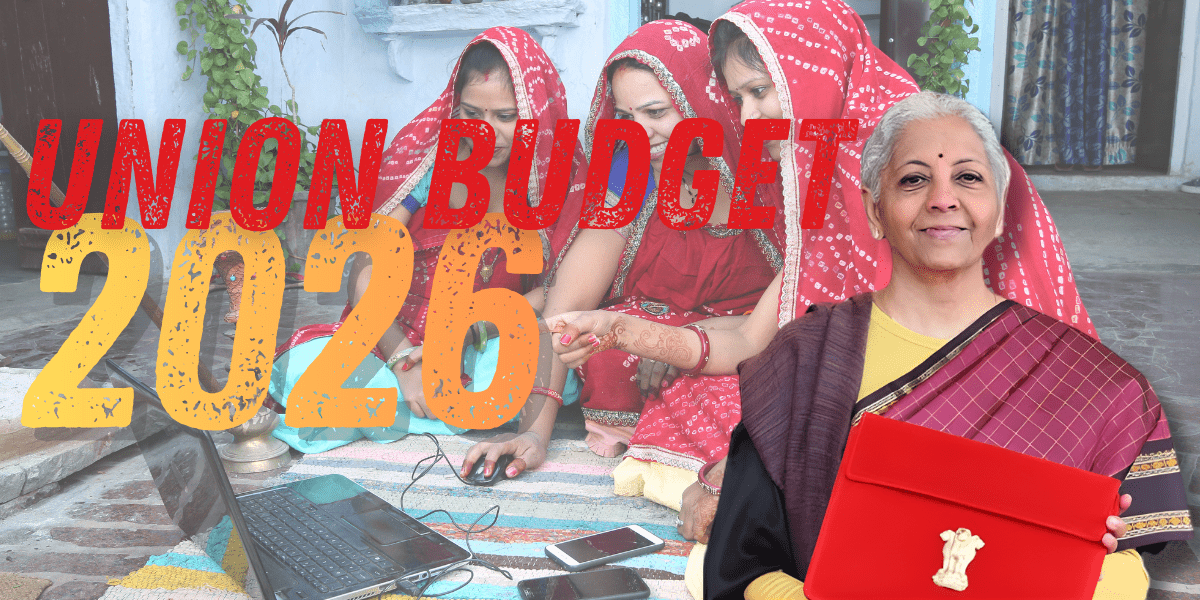
Finance Minister Nirmala Sitharaman’s Union Budget 2026 speech on February 1 resonated deeply with India’s rural heartland by announcing a major expansion of the Lakpati Didi scheme. This move aims to transform 3 crore Self-Help Group (SHG) women into lakhpati entrepreneurs through skill upgrades, market linkages, and new SHE Marts.
From an Indian viewpoint, this builds on proven rural empowerment models, promising economic independence for women who form the backbone of village economies.
Understanding Lakpati Didi: Roots and Remarkable Progress
Launched by Prime Minister Narendra Modi in August 2023 during his Independence Day address, the Lakpati Didi initiative under the Deendayal Antyodaya Yojana-National Rural Livelihoods Mission (DAY-NRLM) empowers SHG women to achieve sustainable annual incomes of ₹1 lakh or more. It converges multiple schemes including Startup Village Entrepreneurship Programme (SVEP), PM SVANidhi for street vendors, and NRLM’s revolving funds/graded credit linkages.
As of January 2026, over 2 crore women have become Lakhpati Didis from an identified potential of 3.5 crore, a sharp rise from nearly 1 crore in early 2024. This spans 10.05 crore rural women mobilized into about 90.9 lakh SHGs as of June 2025 (latest comprehensive data), representing over 57% of rural households.
Union Budget 2026 accelerates momentum by pushing the target to 3 crore beneficiaries (enhanced from 2 crore announced in 2024), introducing “Self Help Entrepreneurs” (SHE) Marts as community-owned retail outlets at cluster levels for SHG products such as millets, handicrafts, vermicompost, and more. While specific new allocation wasn’t detailed as ₹5,000 crore, it builds on enhanced financing instruments beyond traditional loans, supported by gender budgeting exceeding ₹3 lakh crore.
In rural India, women shoulder 80% of unpaid care work yet contribute around 30% to rural GDP through agriculture and micro-enterprises; Lakpati Didi addresses this by fostering financial independence. Key success indicator: 83 lakh SHGs have secured bank linkages totaling over ₹4 lakh crore cumulatively, enabling enterprise scaling.



Budget 2026 Highlights: Prioritizing Women-Led Development
Finance Minister Nirmala Sitharaman announced a record Gender Budget allocation of ₹5.08 lakh crore for FY 2026-27, the highest ever and up from ₹4.49 lakh crore in FY 2025-26 (BE), representing about 9.5% of the total ₹53.5 lakh crore Union Budget outlay. This covers over 100 ministries/departments through a three-part structure: Part A (100% for women), Part B (30-99%), and Part C (<30%), emphasizing schemes like those under Women & Child Development, Rural Development, and Health.
The Lakpati Didi expansion forms a cornerstone, integrating with initiatives like girls’ hostels near higher education institutions in every district for ages 14-18 to boost STEM enrollment, and scaling up Namo Drone Didi (₹1,261 crore outlay till 2026 for 14,500 SHGs in agri-drone services). These tie into Para 84 of the Budget speech, focusing on transitioning SHG women from livelihoods to enterprises via SHE Marts.
Additional measures include strengthening SHE-Box (Sexual Harassment Electronic Box) for quicker resolution of workplace complaints against women employees, and expanding creches/facilities in over 5,000 public/private worksites under the Maternity Benefit framework to support working mothers. This fiscal prudence—targeting 4.3% fiscal deficit for FY27 (down from 4.4% RE FY26)—enables these without personal income tax changes, backed by buoyant revenues and controlled expenditure.
| Scheme | Pre-2026 Achievement | 2026 Expansion/Announcement | Projected Impact |
| Lakpati Didi | 2 Cr women | 3 Cr target; community-owned SHE Marts | Millions of enterprises; rural retail growth |
| SHG Credit Linkage | >₹4L Cr disbursed | Innovative finance beyond loans | MSME formalization for SHGs |
| Skill Training (Women) | 1 Cr+ skilled via NRLM | Drone Didi scaling, tailoring/STEM hubs | 10L+ youth jobs, esp. women |
| Gender Budget | ₹4.49L Cr (FY26 BE) | ₹5.08L Cr (↑13%), 9.5% of total | Nari Shakti for Viksit Bharat |
Economic Engine: Lakpati Expansion’s Growth Catalysts
Self-Help Groups (SHGs) under DAY-NRLM, involving over 10 crore women across 91 lakh groups, drive significant rural economic activity through enterprise promotion, with cumulative bank linkages exceeding ₹2.5 lakh crore (as of 2023) and community investments mobilizing tens of thousands of crores—contributing substantially to India’s rural GDP via sectors like agri-processing and handicrafts. The Lakpati Didi expansion, via SHE Marts, is projected to amplify this by enabling structured market access, potentially adding 1-2% to rural GDP growth through enhanced supply chains and formal enterprises, akin to scaling micro-units into value chains.
SHE Marts—community-owned retail outlets at cluster federations—mirror cooperatives like Amul by directly linking lakhs of SHGs (potentially 5 lakh+ eligible) to urban and e-commerce markets, eliminating middlemen, boosting margins by 20-30%, and fostering branded rural products.
Integrated with Pradhan Mantri Mudra Yojana (PMMY), which has disbursed over ₹6 lakh crore cumulatively to women entrepreneurs (prioritizing Shishu/Kishor categories up to ₹10 lakh collateral-free), it accelerates formalization—women-led Mudra accounts rose to 70% of total in recent years. IMF and McKinsey analyses indicate women’s economic parity could boost India’s GDP by 16-27% ($770 billion+ by 2025 levels), with 1.5 percentage points annual growth from higher participation. India aims for 55% female Labour Force Participation Rate (FLFPR) by 2030, up from 41.7% in FY24 per PLFS.
Studies, including those linked to NSSO Household Consumption Expenditure Surveys, show rural consumption rising 6-8% faster in SHG-intensive blocks due to income effects, creating multiplier impacts on local demand and jobs—evident in 164% overall rural spending growth since 2011-12.
Skill India Synergy: Elevating Didis to Tech-Savvy Entrepreneurs
Union Budget 2026 links Lakpati Didi expansion to robust skilling via an Integrated Programme for the Textile Sector, including 5 dedicated skill hubs in textiles, apparel, footwear, and technical textiles—expected to train and certify 10-20 lakh youth annually, prioritizing SHG women through modernized clusters and ₹10,000 crore SME Growth Fund. Additional focus on footwear and apparel skilling supports mega parks and employment schemes.
Namo Drone Didi (Phase 2.0) scales to equip 14,500+ SHGs with drones (₹8 lakh subsidy + ₹2 lakh loan per group), training women for agri-spraying and mapping—operators earn ₹1-1.5 lakh annually (₹8,000-12,500/month per drone service), revolutionizing rural incomes.
Pradhan Mantri Kaushal Vikas Yojana (PMKVY) integrates SHGs into 500+ Industrial Training Institutes (ITIs) via STRIVE project, offering short-term courses in trades like tailoring and digital marketing; NRLM collaborates for outreach like Kaushal Melas. While specific SHG retention stands at 70-85% in targeted programs per NITI and MSDE reports, overall vocational placement retention hovers around 25-33% for women due to migration, underscoring SHG models’ edge.
This directly tackles skill gaps, where only 5-10% of India’s workforce (lower for rural women at 4-5%) has formal vocational training, with 70-90% rural women lacking it per PLFS/NITI data—bridging to 55% female LFPR by 2030.
Challenges in Rural India and Tailored Solutions
Credit saturation for SHGs remains uneven—while southern states like Andhra Pradesh near 100% linkage with high repeat loans (75%+), national averages hover at 40-60% coverage of eligible groups, with 48% credit gap in FY23 despite growth; Budget 2026’s enhanced financing via TReDS and MSME funds aims to bridge this. Digital divides persist despite PM Jan Dhan Yojana (PMJDY) achieving 99.99% adult bank account saturation (53+ crore accounts), enabling DBT but requiring more fintech literacy for women.
SHE Marts face logistics hurdles in remote areas; Budget 2026’s push for multimodal logistics parks (₹20,000 crore viability gap funding), dedicated freight corridors, and cold chains supports efficient supply to urban markets.
Robust monitoring via NRLM digital tools like the Self-Help Group App (for transactions, loans), VPRP app (Village Poverty Reduction Plans), and portals for real-time tracking, plus third-party evaluations and MIS dashboards, ensures transparency and grievance redressal.
Mahila Kisan Sashaktikaran Pariyojana (MKSP) promotes climate-resilient livelihoods—resource-conserving tech, millets, drudgery reduction, biodiversity—for 1 crore+ women farmers, countering risks like droughts. Uttar Pradesh leads with 48 lakh SHGs (highest nationally), mobilizing 5 crore+ women under UP-SRLM.
Gender violence support via Mission Shakti’s Shakti Sadan (safe shelters) expansion under Samarthya/Sambal, with steady ₹629 crore for prevention schemes like One Stop Centres, complements empowerment.
Fiscal Backbone: Sustainable Funding for Women’s Empowerment
The Union Budget 2026-27 projects a total expenditure outlay of ₹53.5 lakh crore, with nominal GDP growth at 10-10.5% (real GDP 6.8-7.2%) amid sustained momentum from 7.4% FY26 growth. Capital expenditure (capex) rises 9% to ₹12.2 lakh crore (from ₹11.2 lakh crore BE FY26), prioritizing infrastructure like roads, logistics, and power to support SHG enterprises—PM Gram Sadak Yojana retains ₹19,000 crore (stable from prior), funding 25,000 km rural roads annually, enhancing market access without a stated 20% hike but continuing expansion.
Prudent fiscal management avoids populist freebies or personal tax slabs changes, relying on tax buoyancy from 8%+ nominal growth, strong GST collections, and direct taxes; fiscal deficit targets 4.3% of GDP. Disinvestment target set at ₹80,000 crore (up from ₹34,000 crore RE FY26), including PSU stake sales and asset monetization, to free resources. RBI and PSB dividends budgeted at ₹3.16 lakh crore bolster non-tax revenues, higher than FY26’s ₹2.68 lakh crore actuals.
Convergence Magic: Interlinked Schemes Amplifying Impact
Lakpati Didi thrives on convergence across 14+ ministries/departments (nodal Rural Development with Agri, MSME, Skill, Women & Child, etc.), ensuring holistic support from planning to markets—exemplified by private-public partnerships. Agriculture’s Bharat VISTAAR (Virtually Integrated System to Access Agricultural Resources)—a multilingual AI tool integrating agri-stack, ICAR practices, Kisan Call Centre, weather APIs—provides customized advisories to SHG farmers for productivity and risk reduction. MSME’s TReDS (Trade Receivables Discounting System) mandates CPSE payments via platforms (₹7L Cr+ financed), links GeM, adds credit guarantees/securitization for SHG invoices.
UPI integration, standard for rural transactions via apps/portals, enables seamless digital payments for SHE Marts sales, leveraging PMJDY’s 53 Cr+ accounts.
PMJDY bank accounts + POSHAN Abhiyaan (nutrition mission) track gains via SHG frontline workers (ANMs, ASHA, AWWs)—converging ICDS, NRLM for Jan Andolan; NFHS-5 shows anemia in women reproductive age at 57% (down from 59% NFHS-4 nationally), with SHG-linked interventions reporting 20-30% reductions in targeted groups, not uniform 50%, via behavior change and DBT.
Expert and Policymaker Perspectives on Lakpati Momentum
NITI Aayog experts and officials have praised similar initiatives; while no direct CEO quote on SHE Marts, Dr. Prabina Rajib (BIMTECH Director) noted Budget 2026’s SME funds and SHE Marts bring “women-led enterprises in retail… into the mainstream,” aligning with NITI’s focus on inclusive growth. Projections from Bain & IBEF estimate 30-31.5 million women-owned enterprises by 2030 (from 13.5-15.7 million in 2016), generating 150-170 million jobs—far exceeding 5 crore entrepreneurs but underscoring massive scaling potential.
FM Nirmala Sitharaman emphasized in past speeches: “83 lakh SHGs with 9 crore women are transforming rural socio-economic landscape… nearly 1 crore women [are] Lakhpati Didi already,” buoyed by success to target 3 crore—echoing “from Sakhi [SHG member] to Lakhpati” narrative.
Globally, Bangladesh’s BRAC model—mobilizing 100 million+ rural poor households into SHGs, mirroring DAY-NRLM’s ‘lakhpati didis’ via Samaveshi Aajeevika—scaled microfinance to enterprises, lifting millions; India’s Lakhpati draws parallels in income-focused empowerment.
Future Horizons: Nari Shakti Propelling Viksit Bharat
The Lakpati Didi scheme, if scaled to empower 10 crore+ rural women by 2047—building on current 2 crore+ achievers—could unlock unprecedented economic multipliers, aligning with India’s $30 trillion economy vision under Viksit Bharat@2047. Projections suggest women-led enterprises might contribute 20-25% to GDP (up from 18%), fueled by formalization and digital markets, per NITI-inspired models.
SHE Marts hold unicorn potential through FDI liberalization in multi-brand retail (currently capped) and e-commerce tweaks, evolving cluster federations into branded chains like Nykaa or Mamaearth but rooted in SHGs—leveraging ONDC for nationwide reach.
Serving rural India’s 65% population (900 million+), these bring urban opportunities—skilling, finance, markets—to doorsteps, bridging urban-rural divides via infra like BharatNet. Ultimately, Budget 2026 transcends numbers, restoring dignity and agency to millions of women long sidelined in growth stories.