: How India and Russia Are Rewriting Trade Rules Right Under the West's Nose
Russia is bypassing the dollar using your currency—but the real shocker is a hidden logistics route slashing shipping times by 20 days. Why is Moscow suddenly hoarding Indian debt? We expose the $100 billion secret blueprint rewriting global trade. Discover the six unexpected sectors about to explode before 2030.
“ Why Is Russia Suddenly Willing to Import Indian Shrimp, Rice, and Generic Pills Worth Billions—And What Does It Mean for Your Future? “
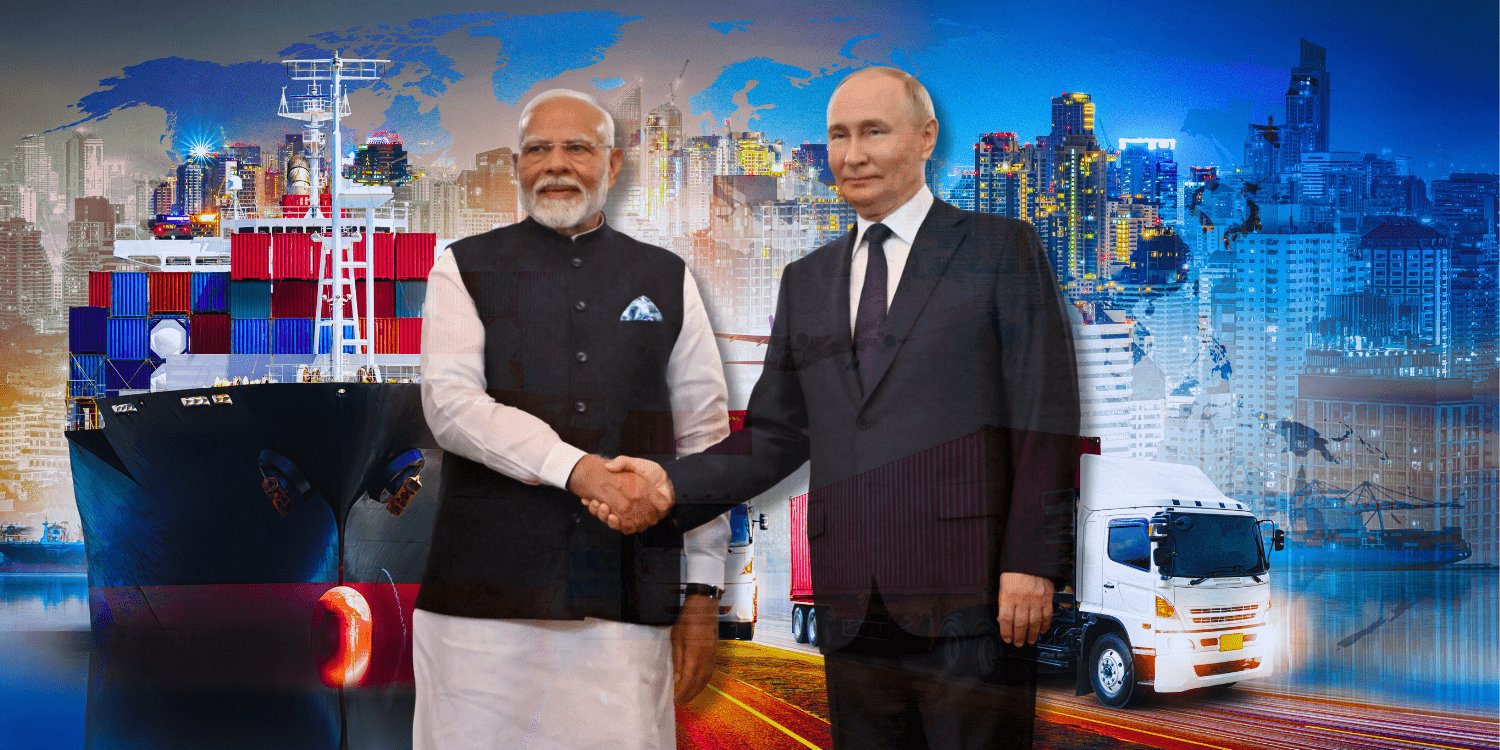
While Western nations tighten sanctions on Moscow, India and Russia are quietly constructing a parallel economic universe—one where rupees replace dollars, Iranian ports bypass the Suez Canal, and pharmaceutical exports could surge tenfold within five years. The New India-Russia Economic Cooperation Plan until 2030 isn’t just another diplomatic handshake—it’s a audacious blueprint to triple bilateral trade to $100 billion by 2030, despite facing the most punitive Western sanctions in modern history.
But here’s what almost nobody is talking about: This isn’t merely about oil and defence anymore. Russia has identified six strategic export sectors where India can flood Russian markets—from marine products to medical devices—while Moscow promises to dismantle the very non-tariff barriers that have kept Indian goods locked out for decades. The stakes? A staggering $59 billion trade deficit that threatens to undermine India’s economic sovereignty, and a geopolitical chess move that could reshape Asia’s economic architecture for generations.
The Hidden Architecture: Three Game-Changing Mechanisms You’ve Never Heard Of
The Rupee Vostro Revolution: Banking Without the Dollar
India’s most brilliant—and least understood—innovation lies in the Special Rupee Vostro Accounts (SRVAs) system. As of 2025, the Reserve Bank of India has authorized 123 correspondent banks from 30 countries to establish 156 SRVAs with 26 Indian banks. Here’s the kicker: When Russia sells India $63.8 billion worth of crude oil but can only buy $4.8 billion of Indian goods, massive rupee surpluses pile up in these accounts.
The breakthrough came in August 2025, when the RBI eliminated restrictions, allowing Russia to invest 100% of surplus rupee balances into Indian government securities, Treasury Bills, corporate bonds, and even equity markets. This isn’t just creative accounting—it’s financial jujitsu. Russia effectively becomes a long-term investor in India’s growth story while circumventing SWIFT and dollar-denominated transactions entirely.
For the average Indian, this means your government bonds now have a mega buyer willing to absorb billions in rupees, potentially keeping interest rates lower and infrastructure funding robust—all while Putin’s central bank can’t access its $300 billion frozen in Western banks.
The INSTC Shortcut: Cutting 20 Days and 30% Costs Off Every Shipment
Forget the Suez Canal. The International North-South Transport Corridor (INSTC) is the logistical marvel that nobody outside trade circles discusses. This multi-modal network of ships, railways, and roads connects Mumbai to Moscow via Iran, slashing transit times by 20 days and freight costs by 30% compared to traditional routes.
The numbers tell a stunning story: INSTC transit volumes between India and Russia nearly doubled in 2024, with costs along the eastern route plummeting by 56%. Russian Railways official Dmitry Kryukov confirmed that the corridor now handles specialized pharmaceutical shipments requiring temperature-controlled transportation—crucial since India became Russia’s largest pharma supplier in 2023.
Here’s why this matters to you: Whether you’re an exporter in Bengaluru, a pharmaceutical manufacturer in Hyderabad, or a rice farmer in Punjab, the INSTC dramatically improves your profit margins and competitive positioning in a market starved for Indian goods. Russian Agriculture Minister Oksana Lut has explicitly stated Russia will increase imports of Indian shrimp, rice, and tropical fruits—sectors where India already has world-class production capacity.
The EAEU Free Trade Masterstroke: Five Countries, One Massive Market
While headlines focus on bilateral India-Russia ties, the real game-changer is the India-Eurasian Economic Union (EAEU) Free Trade Agreement, with formal negotiations launched in November 2025 after signing the Terms of Reference in August. The EAEU—comprising Russia, Kazakhstan, Belarus, Armenia, and Kyrgyzstan—represents a combined market where Russia accounts for over 92% of trade.
The 18-month negotiation timeline aims to eliminate tariffs and slash non-tariff barriers across sectors where India has proven strengths: generic medicines, textiles, agricultural products, IT services, and engineering goods. Commerce Minister Piyush Goyal emphasized this FTA will open unprecedented access for Indian MSMEs, farmers, and fishermen, especially critical as India faces high tariff barriers in the United States.
The $59 Billion Deficit: India’s Most Pressing Economic Challenge
Let’s confront the uncomfortable truth: India’s trade relationship with Russia is grotesquely imbalanced. In FY2025, India imported $63.8 billion worth of goods (primarily crude oil accounting for $56.8 billion) while exporting merely $4.8 billion—a yawning deficit of $59 billion. This twelve-fold surge in imports since FY2021 has created a structural dependency that threatens India’s external account stability.
But here’s the surprising pivot: Russia is actively seeking to correct this imbalance—not out of altruism, but strategic necessity. Deputy Kremlin Chief of Staff Maxim Oreshkin declared that balancing trade with India is “a strategic choice in developing relations”. Why? Because Moscow desperately needs consumer goods, pharmaceuticals, food products, and technology that Western sanctions have cut off.
Six Golden Sectors Where India Can Win Big
Russia has identified six priority import sectors where India holds commanding advantages:
- Pharmaceuticals and Healthcare: India supplies $546 million against Russia’s $9.7 billion pharma import bill—leaving massive headroom. Experts project exports could hit $10 billion within five years if regulatory approvals are streamlined.
- Marine Products: Indian seafood exports reached $17.3 million in June 2025 alone, with Russia eager to expand imports of shrimp and fish.
- Agriculture and Food: Russia’s Agriculture Minister confirmed readiness to import Indian rice, tropical fruits, and food processing equipment. India currently supplies $135 million in chemicals and plastics against Russia’s $4 billion demand.
- Textiles and Apparel: With European suppliers sanctioned, Indian garment manufacturers have a golden window to capture market share.
- Engineering Goods and Machinery: Computer hardware and peripherals already account for $16 million monthly, with infrastructure equipment showing strong demand.
- IT Services and Skilled Labor: External Affairs Minister S. Jaishankar highlighted that Indian IT professionals, construction workers, and engineers can address critical labor shortages in Russia.
The Sanctions Paradox: Why Western Pressure Accelerates India-Russia Ties
Here’s the geopolitical irony that Washington didn’t anticipate: Western sanctions haven’t isolated Russia from India—they’ve made India indispensable to Russia’s economic survival. When Europe closed its doors, Russia redirected energy exports to India, making New Delhi the second-largest buyer of Russian crude. When SWIFT expelled Russian banks, India innovated the rupee-ruble settlement mechanism.
The U.S. announced an additional 25% tariff on Indian imports starting August 2025, citing India’s energy purchases from Russia. Yet this punitive measure has only reinforced India’s resolve to diversify trade relationships and reduce dollar dependency—exactly the opposite of Washington’s intended outcome.
For Indian policymakers, the calculation is brutally pragmatic: cheap Russian oil reduces India’s import bill by billions annually, stabilizes domestic fuel prices, curbs inflation, and frees up capital for infrastructure investment. Russia’s promise to supply over 90% of India’s mixed fertilizer imports—including long-term DAP and Urea contracts—directly stabilizes agricultural input costs and farmer incomes.
The 2030 Roadmap: What Success Actually Looks Like
The Leaders’ Joint Statement signed during the 22nd India-Russia Annual Summit in July 2024 outlines concrete targets:
- Achieve $100+ billion bilateral trade by 2030 (from current $68.7 billion)
- Eliminate non-tariff barriers hampering Indian exports, particularly in marine products and agriculture
- Establish India-EAEU Free Trade Area to expand market access across five countries
- Balance bilateral trade by increasing Indian exports to Russia significantly
- Reinvigorate investment activities within special investment regimes
- Develop transport corridors including Chennai-Vladivostok Eastern Maritime Corridor and INSTC
- Negotiate Bilateral Investment Treaty to boost investor confidence
- Expand rupee-ruble settlements and alternative payment architectures
External Affairs Minister Jaishankar emphasized that reaching $100 billion by 2030 is “more than realistic” given current momentum, but requires “urgent redressal” of the trade imbalance and “speedy” resolution of regulatory impediments.
The Hidden Obstacles: What Could Derail the $100 Billion Dream
Despite ambitious targets, formidable challenges threaten to undermine the entire framework:
Banking and Payment Frictions: Western sanctions complicate rupee-ruble settlements, slow transactions, and create uncertainty for large defense and energy payments. Russian entities face difficulties repatriating even the rupees they’ve invested in Indian assets.
Regulatory and Certification Barriers: Indian pharmaceutical and food exporters face Byzantine approval processes in Russia, delaying market entry by years. Marine product certifications remain a contentious negotiation point.
Logistics Infrastructure Gaps: While INSTC shows promise, current transit times from Moscow to Iran’s Bandar Abbas port still exceed two weeks, with railway delivery speeds requiring significant improvement.
Concentrated Export Base: India’s exports remain dangerously narrow—dominated by pharmaceuticals, steel, and marine products—leaving them vulnerable to demand shocks or regulatory changes.
Geopolitical Tightrope: India must balance deepening Russia ties against maintaining strategic partnerships with the U.S., European Union, and Quad allies—a delicate act that grows harder as Washington increases pressure.
Why This Matters to You: Real-World Impact on Indian Lives
For exporters and entrepreneurs, the India-Russia corridor represents untapped billion-dollar opportunities in sectors where you already have competitive advantages—if you can navigate the regulatory landscape and logistics challenges.
For consumers, stable cheap energy imports keep your fuel and cooking gas prices lower than they would otherwise be, while fertilizer imports prevent agricultural input cost explosions that would directly hit food prices.
For investors, the rupee internationalization effort—driven by Russia’s forced adoption of INR settlements—could gradually elevate the rupee’s status in Asian trade, reducing India’s vulnerability to dollar volatility.
For young professionals, Russia’s labor shortages in IT, construction, and engineering could open lucrative employment opportunities as both governments work to facilitate skilled worker mobility.
The Verdict: Ambition Meets Arithmetic
India and Russia have constructed an impressive architectural framework to hit $100 billion by 2030—complete with alternative payment systems, new transport corridors, and an FTA negotiation roadmap. The political will exists on both sides, driven by complementary needs: India wants affordable energy and fertilizers; Russia needs consumer goods, pharmaceuticals, and technology that sanctions have cut off.
Yet arithmetic tells a sobering story. To reach $100 billion with balanced trade, India must grow exports from $4.8 billion to approximately $50 billion by 2030—a 10x increase in five years. Even assuming imports remain flat at $50 billion (unlikely given India’s growing energy appetite), this requires export growth rates unprecedented in bilateral trade history.
Success demands three things India hasn’t yet demonstrated: systematic dismantling of non-tariff barriers (not just promises), massive logistics infrastructure investments in INSTC and Chennai-Vladivostok corridor, and export diversification beyond narrow pharmaceutical and steel sectors.
What Happens Next: The 2026 Inflection Point
Watch for these critical milestones that will determine whether the 2030 roadmap succeeds or becomes another forgotten bilateral aspiration:
Q1 2026: First assessment of EAEU-India FTA negotiations—do they show genuine progress on tariff elimination and market access?
Mid-2026: Implementation of specific measures to address marine product and agricultural certification barriers that External Affairs Minister Jaishankar flagged as urgent.
Late 2026: Expansion of INSTC capacity—can transit volumes double again and costs fall another 30%? This will determine whether the logistics revolution is real or rhetorical.
The New India-Russia economic cooperation plan until 2030 represents either the birth of a truly multipolar trade architecture that reduces Western economic dominance—or an overambitious blueprint that stumbles on the hard realities of structural trade imbalances and geopolitical constraints.
The next 12 months will reveal which future we’re heading toward. Will India’s exporters seize the Russian opportunity before the window closes? Will Moscow actually dismantle the bureaucratic barriers it’s maintained for decades? And most intriguingly: if this parallel economic universe succeeds, how many other countries will rush to replicate the rupee-ruble model, fundamentally reshaping global trade?
The answers will determine not just India-Russia relations, but the entire architecture of 21st-century economic power. One thing is certain: nobody can afford to ignore what’s happening along the Chennai-Vladivostok corridor anymore.