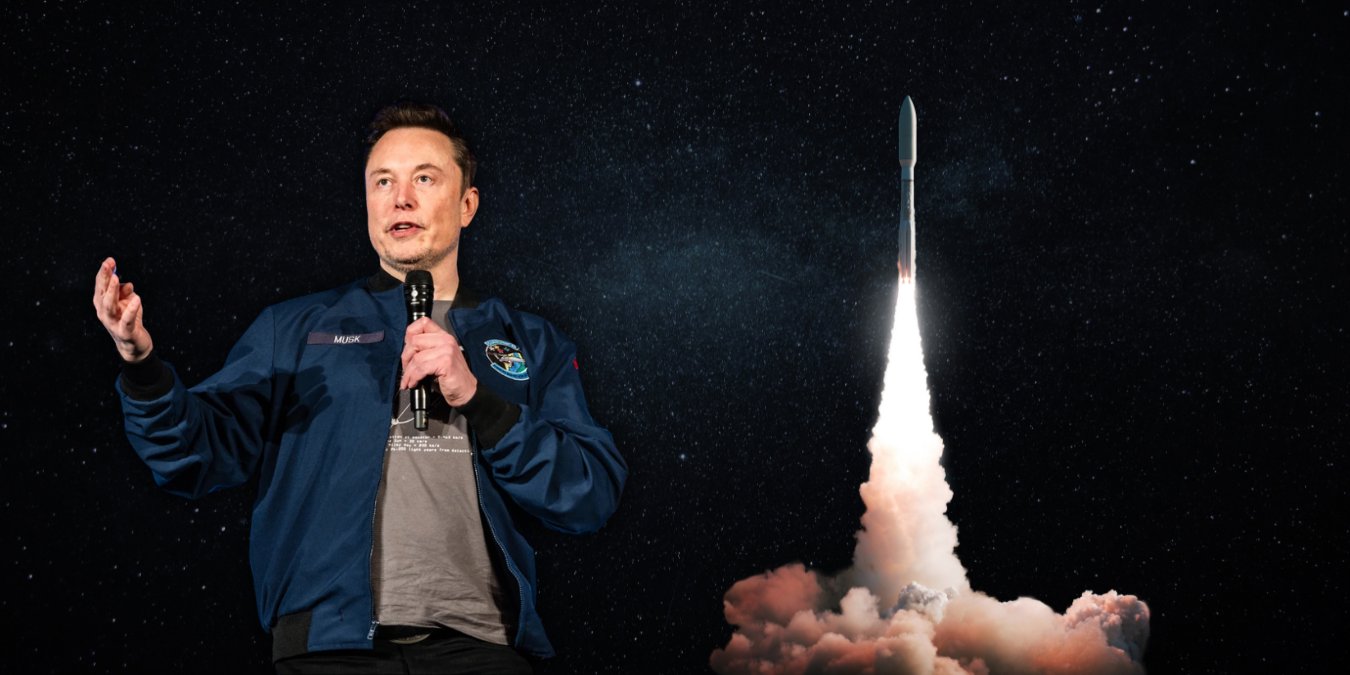
SpaceX IPO Roadshow Confirmed for June 2026, Intel Joins Elon Musk's Terafab AI Chip Mega-Project — What April 7 Market News Means for Your Portfolio
Two seismic developments broke on April 7, 2026, that every serious investor needs to understand: SpaceX has formally laid out its IPO roadshow timeline, targeting the week of June 8, while Intel officially joined Elon Musk’s Terafab semiconductor mega-project as a key fabrication partner. Together, these stories are not isolated headlines — they represent a structural shift in how AI computing, space infrastructure, and public equity markets intersect. If you manage a portfolio with any exposure to tech, semiconductors, or space, ignoring these signals would be a costly mistake.
The SpaceX IPO: Bigger Than Anything Before It
To understand the magnitude of the SpaceX IPO, you need to retire every benchmark you have in memory. Saudi Aramco’s 2019 public debut, long considered the gold standard of record-breaking IPOs, raised $29.4 billion. SpaceX is targeting $75 billion — more than double that figure — while seeking a valuation of up to $1.75 trillion. At that price, only five currently listed U.S. companies would be worth more. This is not incremental. This is a recalibration of what a public company can be.
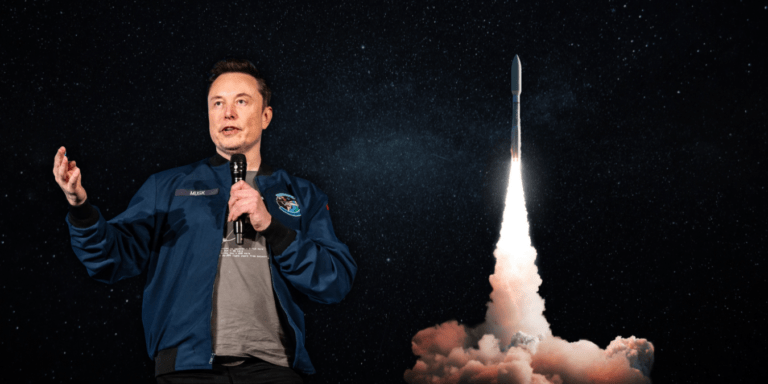
The roadshow mechanics are now on the table. SpaceX outlined its full IPO plan in a Monday-night meeting with its complete syndicate of 21 banks — an unusually large underwriting team that includes senior roles for Bank of America, Citigroup, Goldman Sachs, JPMorgan Chase, and Morgan Stanley. The roadshow itself is confirmed to launch during the week of June 8, preceded on the day before by an online briefing with 125 financial analysts from the full underwriting syndicate. Following the roadshow kickoff, SpaceX plans to host 1,500 retail investors at a dedicated event in June. The IPO is internally codenamed “Project Apex,” a name that feels deliberately chosen.
What sets this offering apart structurally is its explicit retail-first design philosophy. SpaceX is allocating what insiders describe as a “very large” portion of shares to individual investors — potentially as much as 30% of the total offering. That decision reflects Musk’s well-documented comfort with retail-driven markets and signals a deliberate departure from the institutional-heavy allocations that have defined large IPOs for decades. The company also filed its registration statement confidentially with the U.S. Securities and Exchange Commission on April 1, 2026, and plans to publicly release its prospectus by the end of May.
What SpaceX Actually Is — And Why Valuation Debate Misses the Point
Retail investors entering this IPO need a clear-eyed view of what they are actually buying. SpaceX is not simply a rocket company. It is a vertically integrated infrastructure conglomerate with four distinct revenue engines: launch services through the Falcon 9 and Starship programs, global broadband connectivity through Starlink’s 10,000-satellite network, artificial intelligence through the xAI acquisition, and advanced computing through the Terafab semiconductor initiative. Revenue is approaching $20 billion in 2026, with the launch and Starlink segments carrying the majority of that load.
The xAI acquisition — which valued the combined Musk AI entity at $1.25 trillion — is an important piece of context for understanding why the $1.75 trillion IPO target has credibility in certain analysts’ models. The market is not pricing SpaceX as a rocket company. It is pricing SpaceX as the physical infrastructure layer of an AI-driven civilization, from Earth-based autonomous vehicles to orbital data centers in space. Whether that premium is justified at launch depends heavily on Starlink subscriber growth, Starship commercialization timelines, and the execution trajectory of Terafab.
One structural concern worth monitoring is the potential dual-class share structure SpaceX is considering, which would give insiders like Musk amplified voting power. Investors who have followed Musk’s governance style at Tesla and X will have a clear sense of what that means in practice: extraordinary upside potential linked to a single visionary’s decision-making, with limited institutional checks. That is not inherently a disqualifier — Tesla shareholders who accepted similar arrangements a decade ago were rewarded handsomely — but it requires deliberate assessment as part of your risk framework.
Intel Joins Terafab: A Comeback Story With Strategic Stakes
Intel’s announcement on April 7 that it is joining Elon Musk’s Terafab project as a fabrication partner is the kind of development that looks small in a newsfeed but could prove transformative over a multi-year horizon. Intel CEO Lip-Bu Tan hosted Musk at Intel’s facilities the weekend before the announcement, underscoring that this partnership was built through direct executive engagement, not intermediaries. Intel’s stock rose on the news, and for good reason.
Terafab is a $20–25 billion joint venture between Tesla, SpaceX, and xAI, co-located at Giga Texas in Austin. Its ambition is staggering: to produce one terawatt per year of computing capacity — first on Earth, eventually in orbit. The facility will manufacture two primary chip families: the AI5, an energy-efficient inference processor designed for Tesla’s Full Self-Driving systems, the Cybercab, Robotaxi, and Optimus humanoid robots; and the D3, a radiation-hardened chip purpose-built for SpaceX’s satellite constellation and xAI’s planned orbital data centers. Both are designed at 2-nanometer process nodes, representing cutting-edge semiconductor geometry.
Intel’s specific contribution to Terafab involves what the company describes as “refactoring” the chip factory technology — a technical process that optimizes fabrication workflows to make chips more powerful, more reliable, and more manufacturable at scale. For Intel, this is not charity work. The partnership directly strengthens Intel Foundry Services’ relevance at a time when TSMC and Samsung dominate advanced-node manufacturing. Being the domestic fabrication backbone of Musk’s AI ecosystem is a powerful positioning move, especially given ongoing U.S. government interest in onshoring semiconductor production. Intel’s ability to design, fabricate, and package chips at scale is precisely what Terafab requires to hit its 1-terawatt-per-year compute target.
Portfolio Implications: How to Think About Exposure
The convergence of these two stories on a single trading day is not coincidental — it reflects the accelerating maturation of Elon Musk’s interconnected technology empire. For investors, the implications break down across several asset categories.
Direct SpaceX Exposure Pre-IPO: Currently, retail investors cannot buy SpaceX shares directly. However, several vehicles offer indirect exposure. ARK Space Exploration & Innovation ETF (ARKX) holds space-adjacent positions. Alphabet’s investment history and any SpaceX supplier relationships in the aerospace supply chain offer derivative plays. The cleaner path is simply preparing your brokerage account now, ensuring you are on a platform that will participate in the retail allocation — the 30% retail tranche means individual investors may have a genuine opportunity to receive shares at the IPO price.
Intel (INTC): The stock rose on April 7 following the Terafab announcement. For investors who have watched Intel struggle to regain its manufacturing credibility against TSMC and Samsung, this partnership represents the clearest strategic narrative the company has articulated in years. Lip-Bu Tan’s leadership has brought renewed operational focus, and anchoring Intel Foundry Services to Musk’s trillion-dollar ecosystem gives it a long-duration demand signal that is difficult for competitors to replicate. The risk, as always with Intel, is execution — but the directional signal from this partnership is positive.
Tesla (TSLA): Tesla is a direct beneficiary of Terafab. The AI5 chip designed for Full Self-Driving, Optimus robots, and the Cybercab program is Terafab’s first commercial deliverable. In-house chip production reduces Tesla’s dependence on external suppliers, compresses per-unit chip costs over time, and accelerates the FSD development cycle. The SpaceX IPO also clarifies the relationship between Musk’s entities — as SpaceX becomes a publicly listed company with its own shareholder base, the governance interconnections with Tesla become more formally structured, which may reduce the discount some institutional investors apply to Tesla for Musk’s divided attention.
Semiconductor Supply Chain: The broader semiconductor complex deserves a second look in this context. ASML, which produces the extreme ultraviolet lithography machines needed for 2-nanometer production, stands to benefit from any large-scale greenfield fab investment in the United States. Applied Materials, Lam Research, and KLA — the core process equipment providers — would all see meaningful revenue from outfitting a facility of Terafab’s ambition. These are not speculative bets; they are industrial plays on confirmed capital expenditure.
The Macro Backdrop: Why Timing Matters
April 7, 2026, is not a routine trading day. Global markets are navigating geopolitical uncertainty around U.S.-Iran tensions and shifting oil dynamics. The Indian equity market is showing mixed signals, with IT and oil and gas sectors leading gains while broader sentiment remains cautious. In this environment, the SpaceX and Terafab headlines serve as a constructive counterweight — they represent private capital formation and technological ambition at a scale that reaffirms long-term structural investment theses even when near-term macro sentiment is nervous.
The IPO calendar for the second half of 2026 is shaping up to be historically significant. SpaceX is expected to be the first of what Bloomberg has described as a potential trio of mega-IPOs, ahead of OpenAI and Anthropic. If SpaceX executes cleanly and the retail allocation performs well, it could unlock risk appetite for the subsequent listings in ways that benefit the broader innovation equity complex. Conversely, any stumble in the roadshow — valuation pushback from institutional investors, governance concerns around the dual-class structure, or macro deterioration — could create a chilling effect on the pipeline behind it.
Preparing Your Portfolio: A Practical Framework
The smart move right now is not to chase headlines impulsively — it is to build a framework before the prospectus drops. Here is how to structure your thinking:
- Time horizon alignment: SpaceX at $1.75 trillion is priced for a 10-to-20-year build-out of humanity’s space and AI infrastructure. If your investment horizon is shorter than five years, the entry valuation risk is real and should be sized accordingly.
- Position sizing discipline: The size of this IPO means demand will be intense and post-listing volatility is nearly certain. A standard IPO discipline — initiating a smaller position at listing and adding on confirmed execution milestones — is more robust than a full-conviction entry on day one.
- Supplier and infrastructure plays now: While SpaceX shares are not yet publicly available, Intel, ASML, and Tesla are tradeable today, with clearly articulated exposure to the Terafab and SpaceX ecosystem. These positions offer a way to build exposure ahead of the June listing.
- Watch the prospectus closely: The public filing at the end of May will reveal revenue breakdown, customer concentration for Starlink, Starship commercialization costs, and the xAI integration accounting. These details will be decisive for whether the $1.75 trillion valuation is defensible or aspirational.
The week of June 8 will arrive fast. The investors who are best positioned will be those who did their analysis now, before the roadshow hype reaches its peak intensity. SpaceX is not just an IPO — it is the public debut of the infrastructure layer that Elon Musk has been building for two decades. Intel’s entry into Terafab on April 7 confirms that the smartest industrial players in the world agree with that thesis. The question is not whether this ecosystem will be consequential. The question is how much of it you want in your portfolio — and at what price.