Sony's Latest PS5 Price Hike Explained: Which Countries Are Paying More and Why
Sony’s Latest PS5 Price Hike Explained: Which Countries Are Paying More and Why
What Just Happened
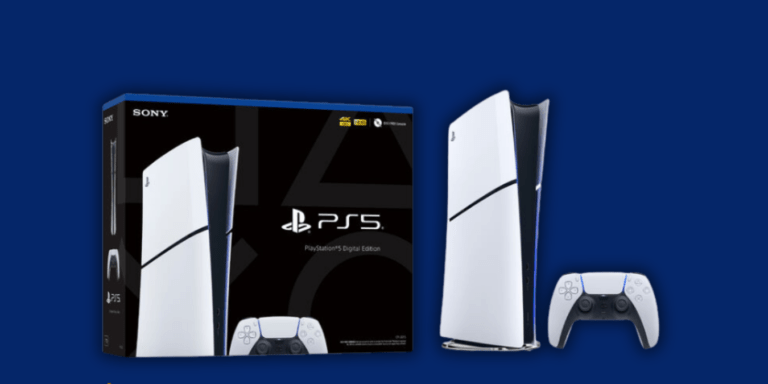
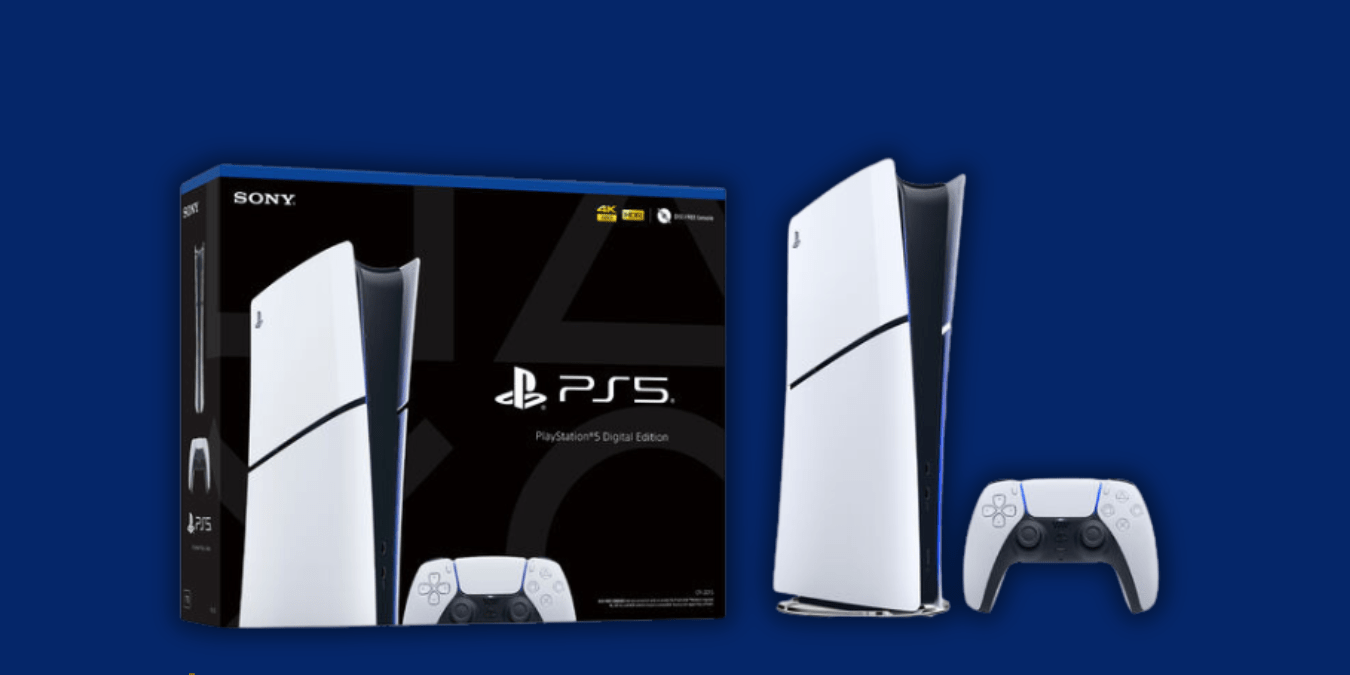
Sony Interactive Entertainment has delivered a gut-punch to the gaming world, announcing sweeping global price increases across its entire PlayStation 5 console lineup, including the PS5, PS5 Digital Edition, PS5 Pro, and PlayStation Portal remote player. Effective April 2, 2026, prices are rising across the United States, United Kingdom, Europe, Japan, and all other global territories. This is Sony’s second price hike in less than a year, following an earlier $50 increase in August 2025. The announcement, made by Isabelle Tomatis, Vice President of Global Marketing at Sony Interactive Entertainment, cited “continued pressures in the global economic landscape” as the driving force behind what the company called “a necessary step.”
How Much Are Prices Going Up?
The scale of this hike is jarring, especially for a console that launched in November 2020. When the new pricing takes effect on April 2, the base PS5 Digital Edition in the United States will have risen by a total of $200 from its original launch price across all combined increases. The premium PS5 Pro, which already debuted at an eyebrow-raising $699, now carries an extraordinary sticker price of $899 in the US market.
The PlayStation Portal remote player also received a price adjustment. In the United States it now costs $249.99, while UK buyers pay £219.99, European consumers face €249.99, and Japanese gamers pay ¥39,980. Importantly, Sony clarified that accessories and peripherals beyond the Portal are not affected by this round of changes.
Who Pays What: The Full Global Price List
Sony has published confirmed prices for its four key markets. All other territories are directed to check with local retailers or the PlayStation direct store. Here is the complete official picture for the US, UK, Europe, and Japan as confirmed on the PlayStation Blog dated March 27, 2026.
| Region | Model | New Price | Increase | Severity |
|---|---|---|---|---|
| 🇺🇸USA | PS5 (Disc) | $649.99 | +$100 | High |
| 🇺🇸USA | PS5 Digital | $599.99 | +$100 | High |
| 🇺🇸USA | PS5 Pro | $899.99 | +$150 | Very High |
| 🇬🇧UK | PS5 (Disc) | £569.99 | +£70 approx. | High |
| 🇬🇧UK | PS5 Digital | £519.99 | +£50 approx. | Moderate |
| 🇬🇧UK | PS5 Pro | £789.99 | +£90 approx. | High |
| 🇪🇺Europe | PS5 (Disc) | €649.99 | +€100 | High |
| 🇪🇺Europe | PS5 Pro | €899.99 | +€100 | High |
| 🇯🇵Japan | PS5 (Disc) | ¥97,980 | Significant | High |
| 🇯🇵Japan | PS5 Pro | ¥137,980 | Significant | High |
| 🇨🇦Canada | All Models | TBC | Confirmed rising | Confirmed |
Canada is also confirmed to be affected by price increases from April 2, 2026, with specific figures being communicated through local retailers and the Canadian PlayStation direct store. Sony’s blog post notes that for all territories not explicitly listed, consumers should check with their local retailer for the exact new pricing structure that will apply in their market.
Why Is Sony Raising PS5 Prices Now?
Sony’s language in the official announcement was deliberately vague: “continued pressures in the global economic landscape.” But behind that corporate phrasing lies a confluence of very specific, very real forces that have been quietly building for months. Here is a detailed breakdown of every factor driving this decision.
The RAMageddon Crisis
Surging demand for DRAM and NAND flash memory from AI data centre build-outs has caused memory chip prices to skyrocket. Sony, like all console makers, relies heavily on these components. Analysts refer to this ongoing situation as “RAMageddon,” and it shows no sign of easing before 2027 at the earliest.
Middle East War and Supply Chain Shock
The ongoing US-Israel conflict with Iran, which escalated in February 2026, has disrupted global shipping routes and commodity flows. Piers Harding-Rolls of Ampere Analysis noted this geopolitical conflict is compounding component price increases, adding freight and insurance costs to every unit manufactured.
Trump Tariff Uncertainty
Unpredictability around US trade tariffs under the Trump administration has severely complicated Sony’s cost forecasting. With tariffs potentially applying to electronics manufactured in Asia, Sony faces an unquantifiable future cost exposure that the company is attempting to hedge through retail price increases now.
Paper-Thin Hardware Margins
Consoles are historically sold near or below cost at launch, with companies recouping profits through software, subscriptions, and accessories. With component costs rising sharply, Sony’s already thin hardware margins have been squeezed to an unsustainable level, making a price increase the only viable path to maintaining profitability.
AI Infrastructure Demand for Chips
The insatiable appetite of artificial intelligence data centres for advanced semiconductors has created a structural global chip shortage that extends well beyond GPUs. With AI companies and cloud providers commanding premium prices for chips, consumer electronics manufacturers like Sony are effectively competing at a disadvantage for the same components.
Currency Weakness and Inflation
Sony, as a Japanese company selling in US dollars, pounds, euros, and yen, is exposed to currency fluctuation risk. A weaker yen reduces the value of overseas earnings when repatriated, while persistent inflation in Western markets increases operational costs. Together, these currency dynamics create additional margin pressure that feeds into the pricing decision.
What Analysts and Experts Are Saying
With no sign of prices easing largely due to demand for AI infrastructure, Sony will have made the move to protect its slim hardware margins. It would not be a surprise if Microsoft and Nintendo followed suit in the not-too-distant future.
We may have some time before we see things getting completely worked out. Component pricing and availability issues impacting Sony, as well as Microsoft and Nintendo, are expected to last through to somewhere between 2027 and 2030. We cannot see these huge price increases in hardware while everyday spending categories like grocery, gas, and housing also continue to get more expensive and not see it having an impact on the gaming audience.
The supply chain shock and the increases to memory and storage prices led to an inevitable situation for Sony. Simply put, something had to give. The ongoing war in the Middle East is likely to compound the effect of the component price increases further.
With continued pressures in the global economic landscape, we’ve made the decision to increase the prices of PS5, PS5 Pro, and PlayStation Portal remote player globally. We know that price changes impact our community, and after careful evaluation, we found this was a necessary step to ensure we can continue delivering innovative, high-quality gaming experiences to players worldwide.
How We Got Here: A Timeline of PS5 Pricing
To truly understand the scale of what Sony has done, it helps to trace the full pricing journey of the PS5 from its launch to today. What was once a $499 flagship console has undergone a remarkable and historically unusual upward pricing journey.
PS5 Launches at $499
The PS5 debuts globally at $499 for the disc version and $399 for the Digital Edition. Like most consoles, it is initially sold near cost, with Sony banking on software and PlayStation Plus subscriptions for long-term profitability.
Regional Price Hikes Begin in Europe and Japan
Sony starts raising prices in select markets outside the US, citing currency headwinds and supply chain issues. European and Japanese consumers are among the first to absorb higher prices while US pricing remains temporarily stable.
PS5 Pro Launches at $699
Sony launches the premium PS5 Pro at a controversial $699, far higher than typical mid-generation console refreshes. The price is widely criticised but Sony defends it as reflecting the advanced hardware inside the machine.
First Universal US Price Hike: +$50
Sony raises US PS5 prices by $50 for the first time, the initial signal that the era of stable console pricing is ending. The move is attributed to rising component costs and macroeconomic pressure.
Second Global Hike: +$100 to +$150
Sony announces the largest single price increase in PS5 history. The base PS5 rises by $100 in the US, and the PS5 Pro jumps by $150 to $899.99. All global markets are affected simultaneously. The total cumulative increase in the US since launch now reaches $200 for the Digital Edition.
What This Means for Gamers Worldwide
The downstream consequences of Sony’s pricing decision extend well beyond a higher number on a product page. Gaming industry analysts are warning of a structural shift in who can afford to participate in the premium console gaming market, with particularly concerning implications for younger, lower-income, and first-time buyers.
- ► Lower-income and younger gamers face being priced out of the PlayStation ecosystem entirely, with analysts warning they may migrate permanently toward mobile, free-to-play PC gaming, or game streaming services that offer lower barriers to entry
- ► The PS5 Digital Edition now costs $599.99 in the US, meaning it is more expensive than the original PS5 disc version launched at $499 in 2020, an unprecedented situation where a disc-less, theoretically lower-cost variant costs more than the premium version did at launch
- ► The used game market and GameStop-style resellers may see a surge in demand as consumers look for cost-effective ways to enter or remain in the PlayStation ecosystem without paying new console prices
- ► PlayStation Plus subscription revenue becomes even more critical to Sony’s business model as hardware profitability remains under pressure, likely accelerating Sony’s push toward subscription-based gaming and cloud services
- ► The PS5 Pro at $899.99 now occupies a price tier that historically belonged to enthusiast PC gaming components, blurring the traditional value proposition of consoles as the affordable alternative to expensive gaming PCs
Will Microsoft and Nintendo Follow Sony’s Lead?
Sony’s move has sent shockwaves through the gaming industry, with analysts and consumers alike turning their attention to whether Microsoft and Nintendo will follow with their own price increases. The answer, according to most experts, appears to be not if but when.
Microsoft Xbox: Already Moving
Microsoft has already raised Xbox console prices, setting the Xbox Series X at $649.99 following its own price adjustment in October 2025. This positions the Xbox Series X at the same price as the newly hiked standard PS5. Microsoft faces identical component cost pressures to Sony, making further adjustments plausible if the chip cost environment does not improve.
Nintendo Switch 2: Under Watch
Nintendo has been notably vocal about the possibility of a Switch 2 price increase. Nintendo’s own president has stated publicly that a price hike “could happen if the situation surrounding chips is not addressed somewhat soon.” The original Switch and some Switch 2 accessories were already raised in price during 2025. Nintendo faces particular pressure from its president’s statement that the company’s “basic policy is to recognise tariffs as cost and pass them on to prices,” a phrase that has alarmed Switch 2 owners and prospective buyers globally.
All options are currently on the table for everyone. We cannot see these huge price increases in things like hardware and content while everyday spending categories like grocery, gas, and housing also continue to get more expensive and not see it having an impact on the gaming audience.
The broader gaming industry is approaching an inflection point. The era in which console prices reliably fell after launch is, by all expert accounts, over. AI-driven chip demand is structural, not cyclical. Unless there is a dramatic geopolitical de-escalation, a collapse in AI infrastructure spending, or a major manufacturing breakthrough in memory chip production, component costs are expected to remain elevated through at least 2027 to 2030 according to industry estimates.
Should You Buy Before April 2 or Wait?
With the price increase taking effect on April 2, 2026, consumers are facing a genuine time-sensitive decision. The advice depends on your situation, your timeline, and your budget.
Will PS5 Prices Ever Come Down Again?
This is the question every gamer is asking, and the answer from industry observers is not encouraging in the short term. Historically, the console industry has operated on a simple model: launch at a modest price, cut costs as manufacturing scales and components get cheaper, then reduce the retail price to broaden the audience. The PS5’s trajectory has inverted this model entirely.
Mat Piscatella, a widely followed gaming industry analyst, has noted that we are unlikely to see a meaningful price reduction until we are approaching the release of Sony’s next-generation console, the PS6, which is not expected for several years. In the interim, the PS5 will continue to be sold at elevated prices, potentially seeing further hikes if component costs do not stabilise.
The structural driver of this problem, AI infrastructure demand for memory chips, is not going away. Every major technology company on Earth is racing to build AI data centres, each of which consumes enormous quantities of the same DRAM and NAND flash memory that goes into the PS5. Until AI chip demand moderates or new manufacturing capacity comes online at scale, the competitive pressure on Sony’s component procurement will persist.
- ► Component pricing and availability issues are expected to last through to somewhere between 2027 and 2030 according to industry estimates, meaning there is no near-term path to lower PS5 prices
- ► A geopolitical resolution to the Middle East conflict and a reopening of key trade routes could ease freight and insurance costs, providing some marginal relief on overall manufacturing expenses
- ► The PS6 remains the most likely catalyst for a reset of PlayStation pricing to a more accessible entry point, though analysts warn even that launch price could be higher than PS5’s original $499
- ► Sony’s PlayStation Plus subscriber base and digital software revenue provide a buffer that allows the company to sustain higher hardware prices without catastrophic volume losses in the short term
- ► Regulatory scrutiny of Sony’s pricing practices is possible in some jurisdictions, particularly in Europe, though this is considered a longer-term risk rather than an immediate constraint
Sony’s Price Hike Is Real, Painful, and Probably Not the Last
Sony’s decision to raise PS5 prices globally for the second time in under a year is not a cynical cash grab but a symptom of a deeply disrupted global technology supply chain. The confluence of AI-driven chip demand, Middle East geopolitical conflict, tariff uncertainty, and a decade of historically low console margins has created a perfect storm that has finally broken the convention of falling consumer electronics prices. For gamers, the message is clear: the window to buy at lower prices is closing on April 2, 2026. For the industry, this marks a genuine structural turning point. The PS5 that launched at $499 now costs $649.99 in its standard form and $899.99 in its Pro configuration. Whether Sony’s bet that brand loyalty and gaming demand are inelastic enough to absorb these increases will prove correct is the defining question for PlayStation’s market position in 2026 and beyond. Microsoft and Nintendo are watching closely. So should you.