9. SBI Card Finance Charges Jump to 46.2% Per Annum — The Hidden April 2026 Credit Card Cost Hike That Will Burn Your Wallet
SBI Card just hiked finance charges to 46.2% per annum — and most cardholders have no idea. From cash advance traps to surprise May 2026 late fees, this silent cost explosion is already draining wallets. Are you paying thousands more than you should? The answer will shock you.
If you carry an SBI Credit Card and have been rolling over your monthly dues without paying the full outstanding balance, 2026 just got significantly more expensive for you. SBI Cards & Payment Services Limited (SBICPSL) has quietly rolled out a series of charge revisions that culminate in a finance charge rate of up to 3.85% per month — equivalent to a jaw-dropping 46.2% per annum — making it one of the steepest credit card interest rates applied by any major issuer in India. This is not a headline announcement. It is buried in fine print, updated in the Most Important Terms & Conditions (MITC) document, and it is already silently draining the wallets of millions of cardholders across the country.
This blog post breaks down exactly what changed, why it matters, how much it will actually cost you in real money, and — most importantly — what you can do right now to protect yourself.
A Timeline of Escalating Charges
To truly understand the gravity of this April 2026 situation, you need to trace the trajectory of SBI Card’s finance charges over the past two years.
In 2024, the finance charge on unsecured SBI Credit Cards stood at 3.50% per month (42% per annum). Then, effective November 1, 2024, SBI Card raised that figure significantly — a move that was widely reported at the time but barely understood by most cardholders. The rate climbed to 3.65% per month (43.8% per annum). This was not a marginal tweak; it was a deliberate upward shift in the cost of revolving credit.
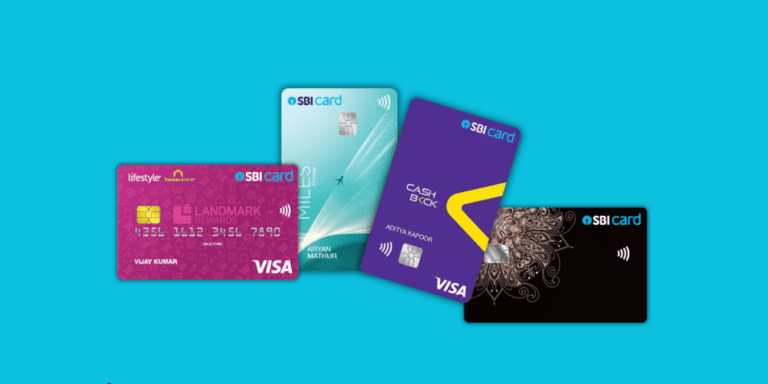
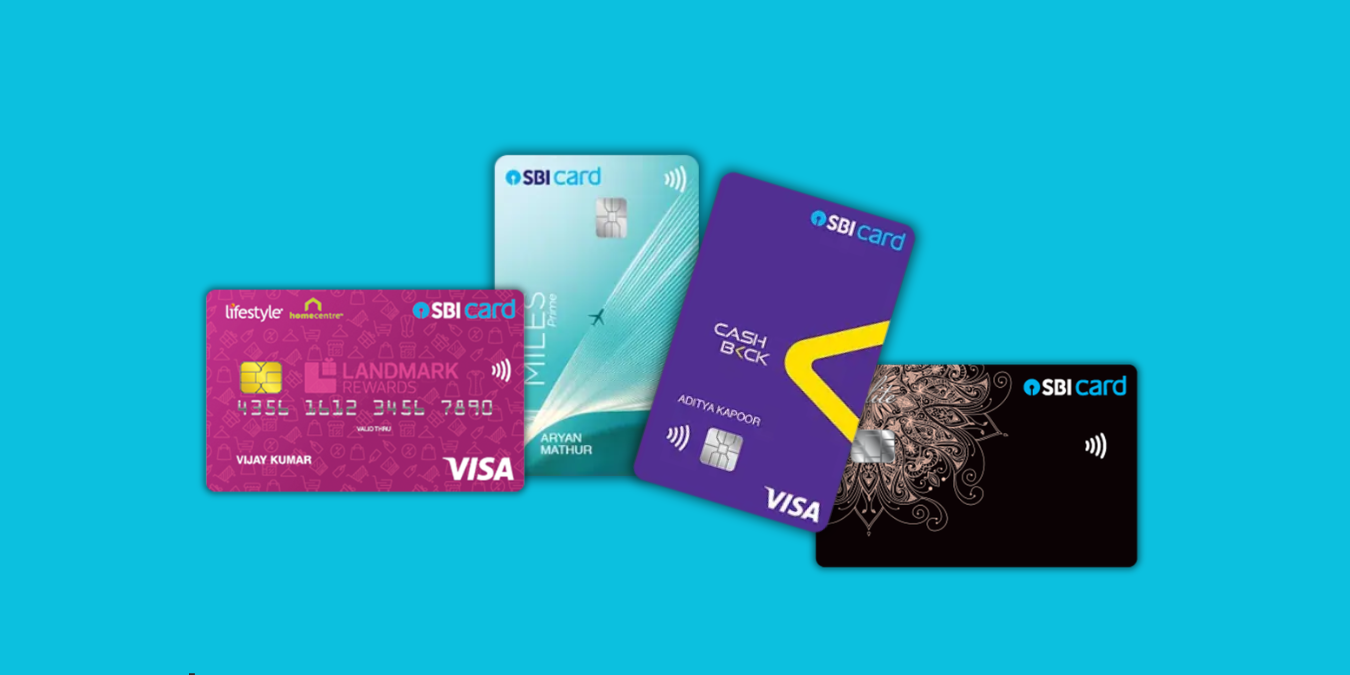
Then came February 1, 2026 — the next inflection point. SBI Card revised its MITC once again, pushing the finance charge on all unsecured credit cards to up to 3.85% per month, or 46.2% per annum. For context, this rate applies to virtually the entire SBI Card portfolio — from the popular SimplyCLICK and Cashback cards, to the PRIME, ELITE, Miles, Pulse, and Flipkart SBI Cards — every unsecured variant that millions of salaried Indians, students, and freelancers carry in their wallets.
The only exceptions are the Shaurya and Defence cards — secured cards designed for armed forces personnel — which continue to attract a comparatively lower rate of 2.75% per month (33% per annum).
| Period | Finance Charge (Monthly) | Finance Charge (Annual) |
|---|---|---|
| Pre-November 2024 | Up to 3.50% | 42% p.a. |
| November 2024 – January 2026 | Up to 3.65% | 43.8% p.a. |
| February 2026 onwards | Up to 3.85% | 46.2% p.a. |
| Shaurya / Defence Cards | 2.75% | 33% p.a. |
This is a 10% rise in annualised finance charges in under 18 months — a compounding burden that most cardholders have not been informed about in plain language.
What Exactly Are Finance Charges?
Before going further, it is important to understand what “finance charges” actually means — because SBI Card’s terminology can be confusing.
A finance charge is the interest levied on your outstanding credit card balance when you do not pay your full statement amount by the due date. Many cardholders mistakenly believe that paying the Minimum Amount Due (MAD) — typically 5% of the outstanding balance or a fixed minimum, whichever is higher — protects them from interest. It does not. The moment you choose not to pay in full, the entire outstanding balance attracts finance charges from the transaction date, not the due date. This means interest begins accruing from the day you swipe your card, not from when the bill arrives.
Finance charges apply to:
- Unpaid retail purchases (shopping, dining, travel, etc.)
- EMI transactions where the full amount is not cleared
- Cash advances and ATM withdrawals — where there is no interest-free grace period at all
- Any balance carried forward from the previous billing cycle
The 46.2% per annum rate is not a penalty rate for missed payments — it is the standard revolving credit rate that kicks in the moment you carry a balance.
The Real Cost: A Rupee-by-Rupee Breakdown
Numbers become real when you see them in your context. Let us walk through three realistic scenarios of how this 46.2% rate will affect you in 2026.
Scenario 1: The Moderate Spender
You have an outstanding balance of Rs 20,000 on your SBI Credit Card. You pay only the minimum due this month. At 3.85% per month, the interest alone for that billing cycle is:
Rs 20,000 x 3.85% = Rs 770 in a single month. Annualised, if the balance stays unpaid, you will owe Rs 9,240 in interest alone — nearly half the principal amount again.
Scenario 2: The Big Ticket Purchase
You used your SBI Card for a Rs 60,000 laptop or appliance purchase and converted it to a credit card revolving balance (not an EMI plan). At 3.85% per month, you incur Rs 2,310 in interest in the first month alone. Over 12 months of revolving, the interest accumulates to over Rs 27,720 — meaning the laptop has effectively cost you Rs 87,720 instead of Rs 60,000.
Scenario 3: The Cash Advance Trap
You withdrew Rs 15,000 from an ATM using your SBI Card. The cash advance fee is now 2.5% of the amount or Rs 500, whichever is higher — so you pay Rs 500 upfront. Then, from day one of the transaction, finance charges at 3.85% per month apply with no grace period. In 30 days, you owe an additional Rs 577.50 in interest. In 60 days, that interest compounds further. What started as a “quick cash need” quietly becomes a debt spiral.
The Other April 2026 Charges You Are Missing
The finance charge hike is only part of the story. SBI Card has simultaneously revised several other fees that compound the financial burden on everyday cardholders.
1. Utility Payment Processing Fee
From early 2026, SBI Card introduced a 1% processing fee on utility bill payments exceeding Rs 50,000 in a single billing cycle. This affects customers who pay large electricity bills, insurance premiums, or telephone bills through their credit card. A Rs 60,000 electricity bill now attracts a Rs 600 fee on top of GST.
2. Cash Advance Fee Increase
The minimum cash advance fee has been revised upward from Rs 400 to Rs 500 (or 2.5% of the transaction, whichever is higher). For small cash withdrawals, this minimum floor makes the effective cost of credit card cash access extremely high.
3. Late Payment Charges — Revised from May 1, 2026
As if the above were not enough, SBI Card has also revised its late payment charge structure effective May 1, 2026. The new structure hits smaller outstanding amounts harder:
| Outstanding Amount | Late Payment Fee (Before May 1) | Late Payment Fee (From May 1, 2026) |
|---|---|---|
| Up to Rs 500 | Nil | Rs 100 |
| Rs 501 to Rs 1,000 | Rs 400 | Rs 500 |
| Rs 1,001 to Rs 10,000 | Rs 750 | Rs 750 (unchanged) |
| Rs 10,001 to Rs 25,000 | Rs 950 | Rs 950 (unchanged) |
| Rs 25,001 to Rs 50,000 | Rs 1,100 | Rs 1,100 (unchanged) |
| Above Rs 50,000 | Rs 1,300 | Rs 1,300 (unchanged) |
The most notable change is that previously there were no late payment charges on dues up to Rs 500 — now there is a flat Rs 100 fee. This appears small but disproportionately impacts low-balance or first-time cardholders who might forget a minor outstanding amount.
4. MAD Calculation Revised
SBI Card has also tightened its Minimum Amount Due (MAD) calculation methodology in 2026. The MAD now prioritises GST dues, EMI obligations, and pending fees before applying to the principal. This means a larger portion of your minimum payment goes toward fees rather than reducing your principal balance — extending the time it takes to get out of debt and maximising the interest income for the issuer.
Why Is SBI Card Doing This?
SBI Cards & Payment Services Limited is a publicly listed company — and its financials tell a story. The credit card industry in India has seen a surge in revolving credit users over the last three years, driven by BNPL fatigue, e-commerce spending, and the normalisation of credit card payments in Tier-2 and Tier-3 cities. When more customers carry balances without paying in full, the interest income for issuers rises sharply.
At the same time, rising operational costs, RBI compliance requirements, and the cost of customer acquisition have pushed card issuers to monetise the revolving credit segment more aggressively. The progressive hike — from 42% in 2024 to 46.2% today — reflects a deliberate commercial strategy rather than a response to RBI policy rate changes. For comparison, India’s repo rate hovers around 6.25% in early 2026, meaning SBI Card’s finance charge is more than seven times the central bank’s benchmark lending rate.
It is also worth noting that India currently has no regulatory cap on credit card interest rates — unlike countries like the United States, United Kingdom, and many EU nations. This regulatory gap allows card issuers to set rates at their own discretion, with the only check being market competition and customer awareness — both of which are insufficient when charges are buried in MITC documents.
How SBI Card Compares to Other Issuers in 2026
SBI Card is not alone in having high finance charges, but the 46.2% rate pushes it toward the upper end of the spectrum among India’s top credit card issuers.
| Issuer | Monthly Rate | Annual Rate (APR) |
|---|---|---|
| SBI Card (Unsecured) | Up to 3.85% | Up to 46.2% |
| ICICI Bank | Up to 3.75% | Up to 45% |
| HDFC Bank | 1.99% to 3.75% | 23.88% to 45% |
| Axis Bank | 1% to 3.75% | 12.68% to 55.55% |
| IndusInd Bank | 1.79% to 3.95% | 21.48% to 47.40% |
HDFC Bank and Axis Bank both offer tiered rate structures — meaning premium cardholders or those with excellent repayment histories can access significantly lower rates. SBI Card’s structure is comparatively flat and less personalised, which means even disciplined spenders who occasionally miss a full payment face the maximum rate.
Who Gets Hurt the Most?
Not all SBI Card users face equal exposure. The 46.2% finance charge falls hardest on specific groups:
- Minimum due payers: Cardholders who habitually pay only the MAD believe they are managing their debt. In reality, they are in a revolving debt trap where interest grows faster than they can repay.
- Salaried individuals with mid-month cash crunches: Many salaried professionals receive salaries after the credit card due date in certain billing cycles, forcing them to partially pay and inadvertently incur finance charges.
- New credit card users: First-time cardholders who are unfamiliar with how grace periods and full payment requirements work are disproportionately exposed.
- Tier-2 and Tier-3 city users: The rapid expansion of SBI Card into smaller cities has brought in cardholders with lower financial literacy and less access to credit management advice.
- Small business owners using personal cards: Many micro-entrepreneurs use personal SBI Cards for business expenses and frequently carry balances, making the 46.2% rate a direct operational cost.
Practical Steps to Protect Yourself Right Now
The good news is that this charge is entirely avoidable — if you act strategically. Here is what you need to do:
- Pay your full outstanding balance every month. This is non-negotiable. Finance charges apply only when you carry a balance. If you pay 100% of your statement by the due date, your effective interest rate is 0%.
- Never use your credit card for ATM cash withdrawals. Cash advances attract finance charges from Day 1 with no grace period, plus the cash advance fee of 2.5% or Rs 500. This is an expensive habit to break.
- Convert large purchases to EMIs at the point of sale. SBI Card offers EMI options at much lower rates (often 12%-18% per annum) for eligible transactions. Locking in a purchase as an EMI before billing prevents it from entering the revolving credit cycle.
- Set up auto-pay for the full outstanding amount. Many cardholders forget their due dates. Automating full payment eliminates human error and removes the risk of late fees and finance charges simultaneously.
- Monitor your MITC document regularly. SBI Card has the contractual right to revise finance charges “at its discretion”. This means further hikes are possible. Check the SBI Card website’s MITC section at least once every six months.
- Consider whether SBI Card is the right card for your profile. If you are a frequent revolving credit user, a card from HDFC Bank or Axis Bank with tiered rate structures may offer a lower finance charge based on your credit behaviour.
- Use the 50-day interest-free window strategically. SBI Credit Cards offer an interest-free grace period of 20 to 50 days depending on when in the billing cycle the transaction occurs. Making large purchases immediately after your statement generation date gives you the maximum interest-free window.
The Broader Warning: Transparency Deficit in Indian Credit Cards
The 46.2% finance charge is not illegal. It is disclosed in the MITC document that every cardholder technically agrees to when they activate their card. But disclosure is not the same as transparency. When a rate this high is communicated in fine print, changed through a website update rather than a direct communication campaign, and described in percentage-per-month rather than annualised terms on monthly statements, it creates an information asymmetry that systematically disadvantages cardholders.
True financial literacy demands that SBI Card — and the broader industry — present APR (Annual Percentage Rate) figures prominently on every billing statement, not just in MITC documents. The RBI has been increasingly focused on consumer protection in the lending space, but credit card interest rate disclosure norms remain an area requiring stronger regulatory intervention.
Until that intervention comes, the responsibility falls on you — the cardholder — to understand the full cost of the credit you carry.
The Bottom Line
The SBI Card finance charge hike to 46.2% per annum is not a dramatic one-time event. It is the latest step in a steady, deliberate escalation that has raised the cost of revolving credit on SBI Cards by over 10 percentage points in roughly 18 months. Combined with the new utility payment fee, higher cash advance minimums, and the revised late payment structure effective May 2026, the total cost of mismanaging an SBI Credit Card has never been higher.
The cardholders who survive this environment financially unscathed will be those who treat their credit card as a short-term, interest-free payment convenience — not as a source of revolving credit. Pay in full, pay on time, and read every MITC update that SBI Card publishes. Your wallet depends on it.
This article is based on publicly available information from SBI Card’s official MITC document, RBI-registered financial platforms, and verified news sources. It is intended for informational purposes only and does not constitute financial advice. Readers are advised to consult a certified financial advisor for personalised guidance.