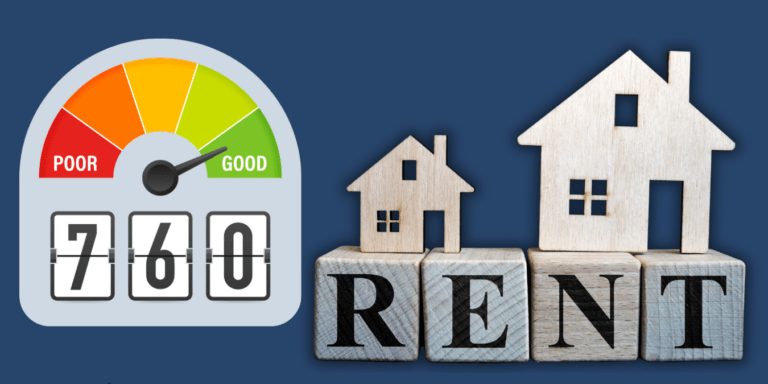
Rent Payments Finally Count Toward Your Credit Score in 2026 — Here's How to Make Sure You're Getting the Credit
Renters have been quietly building credit history for years — and never got a single point for it. That’s finally changing in 2026. But here’s the catch: it won’t happen automatically. Discover the exact steps you need to take before your next rent payment disappears from your credit history forever.
For decades, millions of renters have been trapped in a financial paradox. They pay hundreds — sometimes thousands — of dollars every single month, never miss a due date, and manage their housing costs responsibly for years. Yet when a lender pulls their credit report, that entire history simply doesn’t exist. Homeowners build credit just by paying their mortgage. Renters got nothing. In 2026, that long-standing inequity is finally changing in a meaningful way, and if you’re a renter, understanding how this shift works could be one of the most important financial moves you make this year.
Why Rent Was Invisible to Credit Bureaus for So Long
To understand why this change matters, it helps to understand why rent was excluded from credit reporting in the first place. The three major credit bureaus — Equifax, Experian, and TransUnion — built their data infrastructure around lenders: banks, credit card companies, auto financiers, and mortgage servicers. These institutions had formal, standardized systems for reporting payment data. Landlords, especially independent property owners, had no such infrastructure. There was no universal pipeline connecting a landlord’s rent ledger to a credit bureau’s database.
The result was a system that systematically disadvantaged renters, who skew younger, lower-income, and more likely to come from communities of color. A 25-year-old who has paid $1,200 a month in rent for three years on time — that’s $43,200 in documented financial responsibility — could still show up as a “thin file” borrower with a credit score too low to qualify for a car loan at a reasonable interest rate. The system wasn’t just unfair. It was economically counterproductive, locking responsible people out of the credit access they had already earned.
What Has Actually Changed in 2026
The shift didn’t happen overnight. It’s the product of years of legislative pressure, consumer advocacy, and — crucially — market competition among credit bureaus and fintech companies eager to tap into the renter population. Several developments have converged to make 2026 a genuine turning point.
Experian RentBureau and TransUnion’s ResidentCredit programs have both expanded their landlord partnerships significantly, meaning more property management companies are now automatically reporting rent payment data to credit bureaus as a standard part of their lease agreements. Fannie Mae’s Desktop Underwriter system, which most conventional mortgage lenders use to assess loan eligibility, updated its algorithms to actively consider positive rent payment history when it exists in an applicant’s file. FICO and VantageScore, the two dominant credit scoring models, have both refined their methodologies to give meaningful weight to consistent rent payment data. And at the legislative level, several states have passed renter credit-reporting mandates that require large property management companies to report on-time rent payments to at least one major bureau — or offer tenants the option to opt in at no cost.
The combined effect is that, for the first time, a renter’s consistent payment history has a real, calculable path to improving their credit score. But — and this is the critical detail most articles gloss over — none of this happens automatically for everyone. You need to know whether your payments are being reported, and if they’re not, you need to take action yourself.
How to Find Out If Your Rent Is Already Being Reported
The first step is simple: check your credit reports. You can access all three of your credit reports for free at AnnualCreditReport.com. Pull all three — Equifax, Experian, and TransUnion — because a landlord may report to one bureau but not the others. Once you have your reports, look for a section labeled “Accounts” or “Rental Accounts.” If your landlord is already enrolled in a reporting program, you’ll see your rental tradeline listed there, showing your payment history month by month.
If you see nothing related to rent, don’t assume your landlord is simply negligent. Many smaller, independent landlords have never been approached by a bureau or a reporting service. They’re not withholding your credit history out of malice — they just haven’t been set up with the tools to report it. This is where you need to take the initiative.
Option One: Ask Your Landlord to Enroll
If you rent from a property management company, your first move should be to contact your property manager and ask whether they participate in any rent reporting program. Many larger companies are already enrolled or in the process of enrolling due to the 2026 state mandates. If they are enrolled, confirm that your unit is included and ask for written confirmation. If they’re not yet enrolled, you can introduce them to programs like Experian RentBureau or TransUnion’s SmartMove platform, which are specifically designed for landlords and property managers. The reporting infrastructure is free or low-cost for landlords, and many are willing to enroll once they understand the process.
For renters with individual landlords — the kind who own one or two properties and manage them personally — the conversation is a bit different. These landlords may be unfamiliar with credit reporting entirely, and your ask shouldn’t be framed as a demand. Instead, explain that reporting your payments costs them nothing, creates a useful paper trail of your rental history, and may even improve their ability to attract quality tenants in the future. Many independent landlords, once they understand the mutual benefit, are open to exploring it.
Option Two: Use a Rent Reporting Service
If your landlord is unwilling or unable to report your payments, you have an excellent backup option: third-party rent reporting services. These platforms act as an intermediary between you and the credit bureaus. You connect your bank account or payment method, verify your lease, and the service reports your monthly payments on your behalf. Some of the most established services in this space include Rental Kharma, Credit Boost by Experian (which includes its Experian Boost feature that now covers rent), RentTrack, and PayYourRent.
Costs vary. Some services charge a monthly fee in the range of $6 to $10, while others offer a free tier with limited bureau reporting. Experian Boost is free and reports directly to Experian. If you want all three bureaus covered, you may need to use a paid service or combine multiple platforms. Given that even a modest improvement in your credit score can save you thousands of dollars in interest over the life of a car loan or mortgage, the math on paying $8 a month for a reporting service almost always works in your favor.
When evaluating a rent reporting service, look for three things: which bureaus they report to, whether they offer backdated reporting (the ability to add months or years of past payment history), and whether they’re recognized by FICO and VantageScore. Backdated reporting, in particular, can provide an immediate and substantial credit score boost rather than requiring you to wait months for results to accumulate.
Understanding the Credit Score Impact
One of the most common questions renters ask is: how much will this actually move my score? The honest answer is that it depends on your current credit profile. If you’re a thin-file borrower — someone with fewer than five credit accounts or less than two years of credit history — adding a positive rental tradeline can have a dramatic effect, sometimes moving your score by 20 to 40 points or more relatively quickly. This is because the scoring models have less data to work with, so each new piece of positive information carries significant weight.
If you already have a robust credit profile with several open accounts, a long history, and low utilization, the impact will be more modest — perhaps 5 to 15 points. That’s still meaningful, particularly if you’re sitting just below a threshold that would qualify you for a better interest rate. A difference of 20 points can move you from a “good” to a “very good” credit tier on many lenders’ scales, which translates directly into lower rates on everything from auto loans to credit cards.
It’s also worth understanding that late or missed rent payments can now hurt your score too, if your payments are being reported. This cuts both ways. The same infrastructure that rewards your on-time payments will document any lapses. This isn’t a reason to avoid rent reporting — it’s a reason to treat your rent payment with the same urgency you give your credit card bill. If you’re going through a difficult month, communicate with your landlord early. Many landlords would rather work out a brief payment arrangement than deal with a formal delinquency report.
The Mortgage Connection: A Game Changer for First-Time Buyers
Perhaps the most consequential downstream effect of rent reporting in 2026 involves mortgage lending. Fannie Mae’s updated underwriting guidelines now allow lenders to use verified positive rental payment history as a compensating factor when a borrower falls slightly short of standard credit score requirements. In practical terms, this means a first-time homebuyer with a 640 credit score but three years of documented on-time rent payments may now qualify for a conventional loan that previously required a 660 or higher.
This is a structural change, not a workaround or a special program. It’s baked into the primary underwriting system that most conventional mortgage lenders use daily. For the roughly 44 million renter households in the United States, many of whom are saving toward homeownership, this represents a genuinely new pathway. If you’re planning to buy a home in the next two to four years, starting your rent reporting today means you’ll have that history ready and on file when your lender runs your application through the underwriting system.
Practical Steps to Take This Week
Getting started with rent reporting doesn’t require a financial advisor or a complicated plan. Here’s exactly what to do:
- Pull all three of your credit reports at AnnualCreditReport.com and check whether rent is already being reported under your accounts section
- If it’s not there, contact your property manager or landlord and ask directly whether they participate in any bureau reporting program
- If your landlord can’t or won’t report, sign up for Experian Boost immediately — it’s free, takes about ten minutes to set up, and starts reporting to Experian right away
- If you want all three bureaus covered, research paid services like Rental Kharma or RentTrack and compare their bureau coverage and backdating options
- Set a calendar reminder to check your credit reports again in 60 to 90 days to confirm the new tradeline has appeared and to see your updated score
One additional tip: document your rent payments regardless of whether you’re currently enrolled in a reporting service. Keep digital or physical copies of receipts, bank transfers, or payment confirmations. If you ever need to backdate your history through a reporting service, or if you need to dispute an error, having your own records is invaluable.
What Renters in India and Emerging Markets Should Know
While the credit reporting changes described above are primarily driven by U.S. regulatory and market shifts, the underlying trend is global. India’s credit infrastructure, managed primarily through CIBIL (TransUnion CIBIL), has historically faced the same challenge — vast numbers of people with responsible financial behavior but no formal credit trail. In 2025 and early 2026, the Reserve Bank of India began discussions around alternative data inclusion for credit scoring, with rental payment history among the data types being evaluated. For renters in cities like Lucknow, Mumbai, or Bengaluru, the practical situation is still evolving, and formal rent reporting services comparable to the U.S. market don’t yet exist at scale. However, the direction is clear. Keeping meticulous records of your rent payments now, through formal bank transfers rather than cash, positions you to benefit when these systems do mature. Paying rent digitally also creates a transaction record that NBFC lenders and newer fintech credit scorers are increasingly willing to consider, even before formal bureau inclusion.
The Bigger Picture: Credit Equity and Why This Matters
The expansion of rent reporting into mainstream credit scoring is part of a broader reckoning with how credit systems have historically worked against people who didn’t inherit wealth or have access to traditional financial products. Credit scores were never just neutral mathematical tools. They encoded existing inequalities by only measuring financial behaviors — like carrying a mortgage or a credit card — that were disproportionately available to higher-income, historically advantaged populations.
Including rent reporting doesn’t solve every problem in consumer credit. There are still valid debates about medical debt, utility payments, and the weight given to credit utilization versus payment consistency. But it represents a meaningful step toward a credit system that measures what it claims to measure: financial responsibility. If you pay your obligations on time, that history should follow you and work in your favor — regardless of whether you own or rent.
For millions of people, this change means that the disciplined financial behavior they’ve practiced for years now has a direct, quantifiable payoff. The credit you’ve been earning with every rent payment, for all this time, can finally show up on the scoreboard.