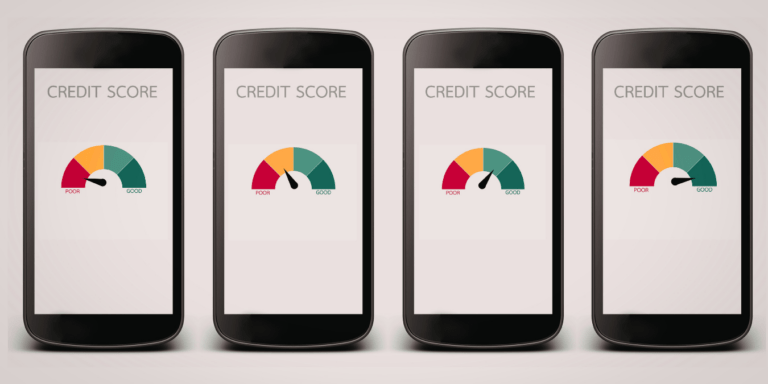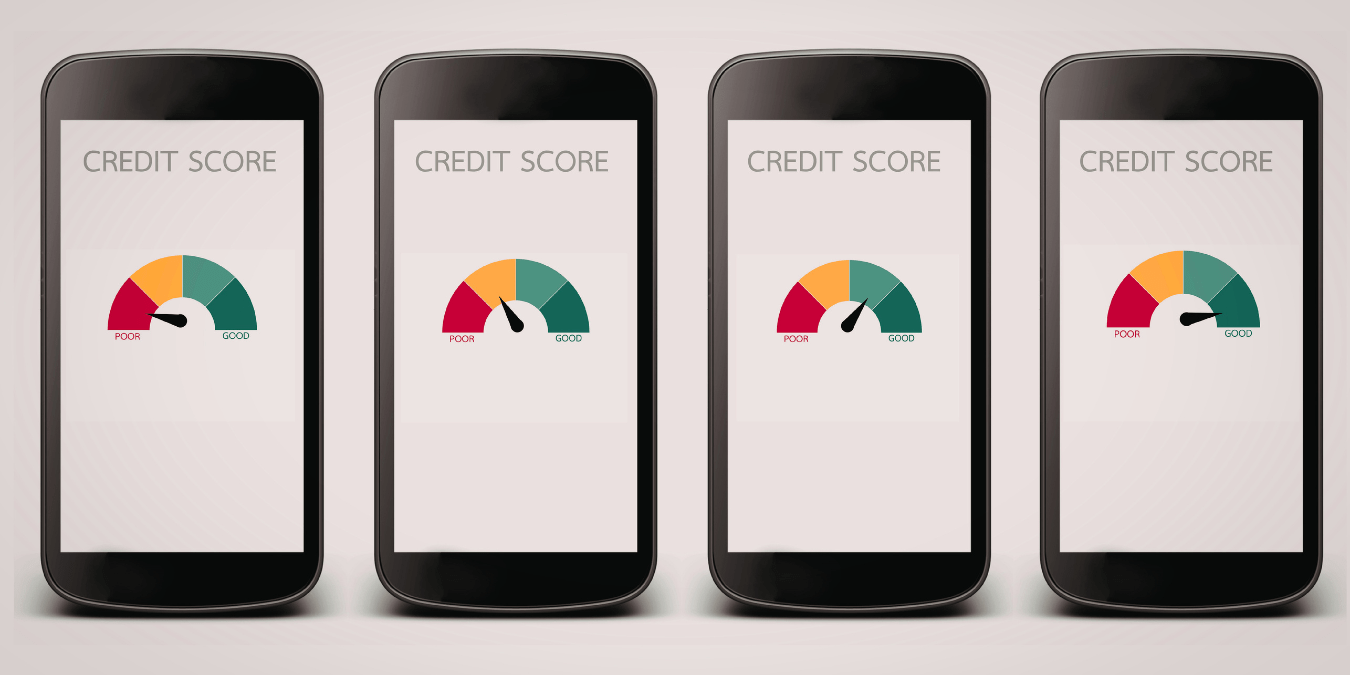
RBI's Secret Weapon: How Weekly CIBIL Score Updates from April 2026 Can Destroy Your Credit Score in Just 7 Days
RBI just activated a game-changing rule in April 2026 — and your CIBIL score can now collapse in 7 days without a single loan default. Millions of Indians don’t know it yet. One salary delay, one auto-debit mismatch, and it’s already too late. Are you protected?
Most Indians check their CIBIL score once a year, treat it like a report card, and move on. That habit just became dangerous. The Reserve Bank of India’s landmark directive, which came into full effect in April 2026, has fundamentally changed how credit bureaus like CIBIL, Experian, Equifax, and CRIF High Mark operate. Starting this month, lenders are now required to report your credit data to bureaus every 15 days — and bureaus are updating scores on a near-weekly cycle. What once took three months to damage your credit profile can now happen in seven days flat.
This is not a minor administrative update. This is the most significant structural change to India’s credit ecosystem in over a decade, and millions of borrowers are completely unaware of its implications. If you have an active loan, a credit card, or even a recently closed account, your CIBIL score is now a living, breathing number that can shift dramatically within a single week based on your financial behavior. Understanding how this system works is no longer optional — it is essential financial literacy in 2026.
What the RBI Actually Changed
To understand the stakes, you need to understand what the old system looked like. Before this directive, most lenders submitted credit data to bureaus on a monthly basis, typically at the end of a billing cycle. Bureaus would then process that data and update individual credit reports at intervals that could stretch anywhere from 30 to 45 days. In practice, this meant that even if you maxed out a credit card or missed an EMI, the damage to your credit score might not reflect for six to eight weeks.
The RBI’s new framework compresses that entire timeline. Under the revised Credit Information Companies (Amendment) Directions, regulated entities — which includes all scheduled commercial banks, NBFCs, housing finance companies, and cooperative banks — must submit credit data fortnightly. Credit bureaus are then mandated to process and reflect this data within a defined turnaround window, effectively creating near-real-time credit scoring. The RBI framed this change as a consumer protection measure, designed to ensure that positive credit behavior — like paying off a debt or reducing utilization — reflects faster on your score. That framing is accurate, but it is only half the story.
The Double-Edged Sword No One Is Talking About
Yes, good behavior now rewards you faster. If you clear an outstanding dues or dramatically reduce your credit card balance, you might see a score improvement within 10 to 14 days instead of waiting two months. That is genuinely beneficial for borrowers trying to clean up their credit before applying for a home loan or car finance.
But the same acceleration applies in reverse, and this is where the danger lies. Under the old monthly system, a single missed payment would not hit your score until the lender’s next monthly data submission. You had a buffer — not an official grace period, but a practical one born of system latency. That buffer is gone. A payment missed today can be flagged in the next fortnightly data dump to the bureau, and your score can drop before your next salary even hits your account.
Consider a realistic scenario that financial counselors are already seeing play out in April 2026: a salaried professional in Lucknow has an auto-debit EMI set for the 1st of every month. His salary gets credited on the 5th due to a bank processing delay — something that happened routinely without consequence before. Under the new framework, the lender can flag that missed auto-debit as a default or late payment in its very next fortnightly submission. The bureau updates the score. The individual’s CIBIL drops by 40 to 80 points — potentially pushing him from a “good” credit tier to an “average” one — all within seven days, before he even realizes what happened.
Why Seven Days Is the Critical Window
The phrase “destroy your credit score in seven days” is not hyperbole — it is a mathematical reality under the new update cadence. Here is how the timeline can unfold with brutal efficiency:
- Day 1: You miss a credit card minimum payment due to an oversight, travel, or a bank app glitch
- Day 2-3: The lender’s system flags the account as overdue and queues it for the next fortnightly data submission
- Day 5: The lender submits the updated data to CIBIL and other bureaus
- Day 6: The bureau processes the delinquency entry and recalculates your score
- Day 7: Your credit score reflects the missed payment, your score drops, and any lender pulling your report now sees you as a higher-risk borrower
A single missed payment of even Rs. 500 minimum due can cause a score drop of 50 to 100 points depending on your credit history length and overall profile. If you were sitting at 740 — considered “good” by most lenders — you could drop to 660, which crosses into the territory where banks either reject applications or offer loans at significantly higher interest rates.
The Five Behaviors That Will Now Hurt You Faster
Financial advisors working with retail borrowers have identified specific patterns that are especially risky under the new weekly update cycle. Each of these was manageable under the old monthly system; each is now a potential credit emergency.
Revolving high credit utilization: If you routinely charge your credit card to 80 or 90 percent of its limit and pay it off at the end of the month, your score used to only reflect that elevated utilization for a brief window. Now, if a fortnightly data snapshot catches your card at peak utilization, that high utilization ratio gets baked into your score update — even if you pay it off days later.
Salary timing mismatches with EMI due dates: As described above, any borrower whose EMI auto-debit is scheduled before their salary credit date is now structurally exposed. This is an extremely common situation in India, where salary credit dates vary by employer and sometimes slip by a day or two.
Multiple loan applications in a short window: Hard inquiries from lenders have always been a score dampener, but previously they clustered in monthly reports. With fortnightly submissions, multiple inquiries from different lenders can now populate your bureau report in rapid succession, making you look “credit hungry” to any lender checking your score within that window.
Partial payments on credit cards: Paying less than the full outstanding balance but more than the minimum due was a common strategy to manage cash flow. Under tighter reporting, your outstanding balance is captured more precisely and more frequently, meaning consistently high outstanding amounts will weigh on your score with greater persistence.
Post-loan-closure lag errors: When you close a loan, there is a data lag between the lender marking the account as closed in their internal system and submitting that update to the bureau. Under the old system, this lag was annoying but inconsequential because everything moved slowly. Now, if a lender takes 20 days to submit your loan closure data, you might apply for a new loan in that window and face rejection because the bureau still shows your old loan as active — inflating your debt-to-income ratio artificially.
What RBI’s Intent Was — And Why It Still Matters
It would be intellectually dishonest to present this change as purely negative. The RBI and the credit bureaus have a legitimate, consumer-friendly rationale for moving toward real-time credit reporting, and borrowers should understand it fully.
India’s credit market has long suffered from information asymmetry. Lenders were extending credit based on stale data, sometimes two to three months old, which meant they were making risk decisions based on a financial snapshot that no longer represented the borrower’s reality. This led to over-lending in some cases and blanket rejections in others. For borrowers who had recently improved their financial health — cleared debts, reduced liabilities, built savings — the old system punished them by making them wait months for their improved score to reflect.
The RBI’s directive is also part of a broader push toward India’s vision of a real-time, data-driven financial services ecosystem aligned with the Account Aggregator framework and the Open Credit Enablement Network (OCEN). The long-term goal is a credit market where a small business owner or a gig economy worker can demonstrate their creditworthiness through live financial behavior rather than a static, backward-looking report. That is a genuinely progressive goal.
But good intent and dangerous outcomes can coexist in the same policy, especially during the transition period. Right now, in April 2026, millions of borrowers are operating on mental models built around the old system. They are making financial decisions — timing their payments, planning their applications, managing their credit card spend — based on rules that no longer apply. That knowledge gap is where the damage will happen.
How to Protect Your Credit Score Under the New System
The good news is that protecting yourself is entirely possible once you understand the new rules of the game. The strategies below are not generic advice — they are specifically calibrated to the fortnightly reporting cycle now in effect.
Audit your EMI due dates against your salary credit date immediately. Log into every active loan account you have and note the exact EMI debit date. Then check when your salary typically credits to your account. If there is any chance your salary might arrive after your EMI debit, contact your bank or lender today and request a due date change. Most lenders allow one free change per year.
Set up SMS and email alerts for every credit account. Do not rely on memory. With scores updating weekly, the only reliable protection is real-time awareness. Every credit card and loan account should have payment due date reminders set at least five days in advance.
Reduce your credit card utilization below 30 percent before each fortnightly snapshot. The two fortnightly reporting windows in any given month are roughly around the 1st and the 15th, though this varies by lender. As a conservative strategy, aim to keep your credit card balance below 30 percent of your limit on both these dates, not just at billing cycle end.
Space out loan applications by at least 45 days. If you are shopping for credit, whether a personal loan, a car loan, or a new credit card, do not apply to multiple lenders within the same fortnight. The cluster of hard inquiries will now appear on your report faster and more visibly than before.
Monitor your CIBIL report at least monthly. The RBI directive that mandated fortnightly lender reporting also reinforced the provision allowing consumers to access one free credit report annually from each bureau. But given the new update cadence, one annual check is wholly insufficient. Use CIBIL’s freemium subscription or one of the fintech platforms like BankBazaar, Paytm, or OneScore that offer free monthly score tracking.
Act on errors within 48 hours. If you see an incorrect delinquency entry or a loan that should be marked closed but is not, raise a dispute immediately. Under the new framework, every day that an incorrect negative entry sits on your report, it is potentially being refreshed and re-scored against you.
What Lenders Are Not Telling You
Here is the uncomfortable commercial reality that sits beneath this regulatory change. Lenders benefit from a world where credit scores are volatile and borrowers are uncertain about their standing. When your score drops unexpectedly, you become more likely to accept higher interest rates, more likely to pay for “credit repair” products, and more likely to borrow from higher-cost lenders who are less discriminating about credit profiles.
Several fintech lenders in India have already begun redesigning their loan pricing algorithms to account for score volatility under the new system. Instead of a fixed rate based on a static score, some are now offering what they internally call “dynamic pricing” — interest rates that can shift at loan disbursement or even at the time of renewal based on your most current score at that moment. This is legal, it is technologically elegant, and it is financially punishing for anyone whose score fluctuates between application and disbursement.
This is not a conspiracy — it is market dynamics. But it does mean that the borrower who understood the old, slow-moving credit system and could plan around it is now operating in a faster, more demanding environment where financial habits matter every week, not just at year-end.
The Broader Implications for India’s Credit Market
India currently has approximately 220 million credit-active individuals, according to data available through early 2026. Of these, a substantial portion falls in the “near prime” credit band — scores between 650 and 749 — where the difference between a good loan offer and a rejection or penalty rate is often just 20 to 30 points. The introduction of weekly effective score updates means that this near-prime population is now walking a narrower tightrope.
Financial inclusion advocates have raised legitimate concerns with the RBI about the transition period. The argument is that low-income borrowers, first-generation credit users, and those in semi-urban and rural areas are least likely to understand the new reporting mechanics and most likely to be harmed by them. A daily wage earner whose mobile banking app glitches on payment due day is not making a reckless financial decision — they are a victim of infrastructure. Under the old system, they had weeks to correct it. Under the new one, the bureau may know about it before they do.
The RBI has indicated it is monitoring the transition period for systemic disruptions, and credit bureaus have been asked to improve their dispute resolution turnaround times in parallel. Whether these safeguards will be sufficient is something only the data from Q2 and Q3 2026 will reveal.
Final Perspective: Knowledge Is Your Only Real Protection
The RBI’s shift to fortnightly credit reporting is not inherently good or bad — it is a structural change that rewards the financially aware and penalizes the financially passive. In a system that moves this fast, ignorance is no longer a soft risk. It is a hard cost, measured in rejected loan applications, inflated interest rates, and damaged financial reputations that now take shape in days rather than months.
The borrowers who will navigate this new landscape successfully are those who treat their credit score not as a number they check occasionally but as a live financial vital sign — something to be monitored, managed, and protected with the same attention they give to their bank balance. With weekly CIBIL updates now a reality in April 2026, that level of engagement is not perfectionism. It is simply what responsible credit management looks like from this point forward.
This article is authored based on RBI policy directives, credit bureau operational guidelines, and financial advisory experience in the Indian retail lending market. Readers are encouraged to verify their individual credit data directly through authorized bureau channels and consult a certified financial advisor for personalized credit strategy.