WhatsApp Logo Follow Now
Advertisement
Indian Stock Market Trends Today (April 15, 2026): BSE Sensex, Nifty 50, Bank Nifty, GDP & Top Stock Picks — Your Complete Wednesday Briefing

Indian Stock Market Trends Today (April 15, 2026): BSE Sensex, Nifty 50, Bank Nifty, GDP & Top Stock Picks — Your Complete Wednesday Briefing

Is Dalal Street flashing a danger signal — or is this the contrarian opportunity of the decade? With crude oil blazing past $100, the rupee under siege near ₹93.37/USD, and geopolitical shockwaves rattling global indices, Wednesday's market session on April 15, 2026 is anything but ordinary. Buckle up — here's everything you need to know before the opening bell today. 🔴 Indian Market Overview: Sensex, Nifty 50, Bank Nifty & Investor Sentiment India's benchmark equity indices are navigating treacherous waters this week. The BSE Sensex closed Monday's session (April 13) at 76,847.57, tumbling 703 points (-0.91%) from its prior close, while the NSE Nifty 50 shed 208 points…
Read More
RBI’s Half-Yearly Monitoring Mandate for Current Accounts: What Banks Are Now Allowed to Scrutinize About Your Business Finances

RBI’s Half-Yearly Monitoring Mandate for Current Accounts: What Banks Are Now Allowed to Scrutinize About Your Business Finances

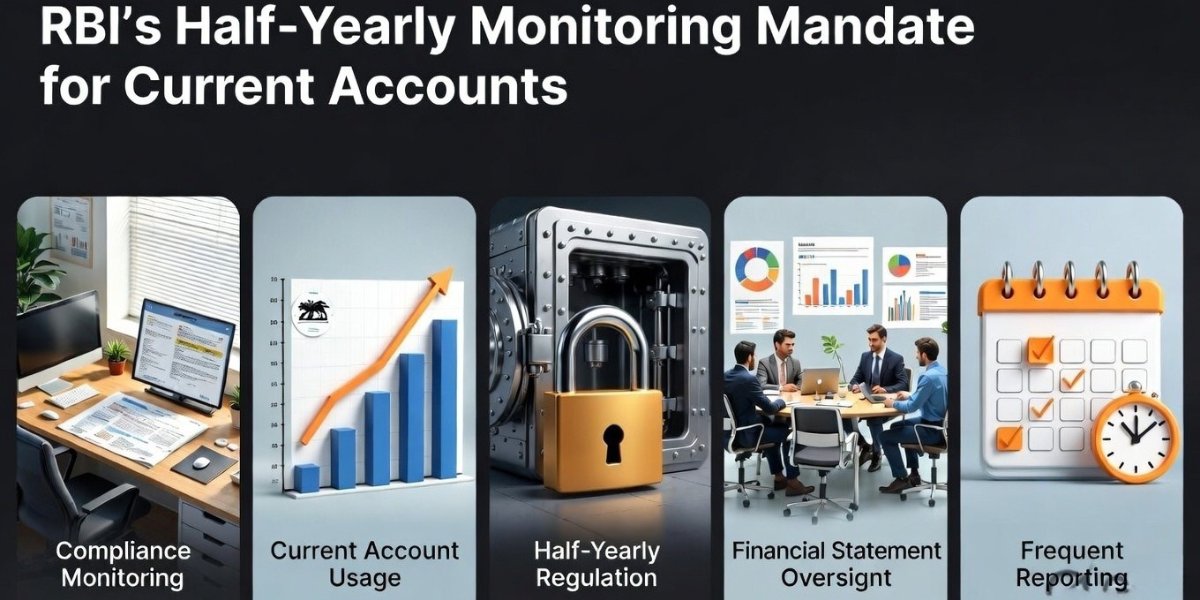
India's banking landscape changed permanently on April 1, 2026. The Reserve Bank of India's sweeping Credit Risk Management (Amendment) Directions, 2025, introduced a new Chapter XIA to the commercial banking framework, overhauling the rules governing how current accounts, cash credit (CC) facilities, and overdraft (OD) accounts are opened, operated, and monitored. At the heart of this reform sits a single, non-negotiable requirement: every bank in India must now scrutinize every eligible current account at least once every half-year. For business owners, entrepreneurs, and corporate finance teams, this is not a procedural footnote — it is a structural shift in the…
Read More
Indian Stock Market Trends 2026: Why Sensex, Nifty 50, and Bank Nifty Could Be at a Turning Point on 13-04-2026

Indian Stock Market Trends 2026: Why Sensex, Nifty 50, and Bank Nifty Could Be at a Turning Point on 13-04-2026

Indian stock market trends are shifting fast again on Monday, 13 April 2026, with the BSE Sensex and NSE Nifty 50 recovering sharply after a volatile start to the month, while Nifty Bank trend remains the clearest signal of whether the rally can extend beyond large-cap leadership. The key question for investors is no longer just “Are markets up?” but “Is this recovery durable, earnings-backed, and broad enough to last?” Indian market overview The latest market setup shows Indian equities ending the previous week on a strong note, with Sensex closing at 77,550.25 and Nifty 50 at 24,050.60 after a powerful rebound that snapped a six-week losing streak. That weekly…
Read More
The Hidden Overdraft Trap in Current Accounts That RBI’s April 2026 Directions Are Finally Fixing — And What It Means for SMEs

The Hidden Overdraft Trap in Current Accounts That RBI’s April 2026 Directions Are Finally Fixing — And What It Means for SMEs

For decades, India's small and medium enterprises operated inside a banking maze they never designed and could rarely escape. The overdraft trap embedded in current account regulations was not a scam — it was a structural flaw that forced businesses to route their cash flows through banks that held their loans, whether those banks offered better services or not, whether they charged fair rates or not, whether they monitored funds responsibly or not. That flaw is now being dismantled. The Reserve Bank of India's Amendment Directions, issued on December 11, 2025 under RBI/2025-26/141, and effective from April 1, 2026, represent…
Read More
Mandatory 2FA for All Current Account Digital Transactions from April 2026 — How This One RBI Move Changes Business Payments Forever

Mandatory 2FA for All Current Account Digital Transactions from April 2026 — How This One RBI Move Changes Business Payments Forever

India's payment infrastructure has always evolved in bold leaps, and April 1, 2026 marks one of its most consequential milestones yet. The Reserve Bank of India has enforced mandatory two-factor authentication (2FA) for all domestic digital payment transactions, a decision that fundamentally rewires how businesses, banks, and fintech platforms process money. If you operate a current account, run a business that sends or receives digital payments, or manage corporate treasury operations, this is not a regulatory footnote. It is a structural transformation that will reshape every rupee that moves digitally across India's financial system. What the RBI Actually Directed The…
Read More
Collection Accounts, Exposure Limits, and Lender Banks: The New Current Account Vocabulary Every CFO Must Master After April 1, 2026

Collection Accounts, Exposure Limits, and Lender Banks: The New Current Account Vocabulary Every CFO Must Master After April 1, 2026

The Reserve Bank of India's sweeping revision of current account rules, introduced via its December 11, 2025 circular and fully operative from April 1, 2026, has rewritten the playbook for how Indian companies manage their banking relationships. For CFOs, treasury heads, and finance controllers overseeing businesses with significant credit exposures, this is not a regulatory footnote to delegate — it is a structural shift in how cash flows, working capital accounts, and banking partnerships must be organized. Understanding the new vocabulary — collection accounts, exposure limits, lender bank eligibility, the 10% share rule — is now a non-negotiable professional competency.…
Read More
From ₹50,000 to ₹10 Lakh: How the New PAN Transaction Threshold for Current Accounts Just Changed the Compliance Game for Indian Businesses

From ₹50,000 to ₹10 Lakh: How the New PAN Transaction Threshold for Current Accounts Just Changed the Compliance Game for Indian Businesses

For decades, Indian businesses operating through current accounts lived with a deceptively simple but operationally burdensome rule: quote your PAN every single time you deposited more than ₹50,000 in cash in a single day. A trader in Lucknow's Hazratganj market, a wholesaler in Mumbai's Dharavi, or a small distributor in Coimbatore who handled routine cash flows would trigger this requirement multiple times a week, sometimes multiple times a day. The paperwork was relentless, the compliance pressure was constant, and the rule had not meaningfully evolved since India's economy was a fraction of what it is today. That changed on April…
Read More
Cash Withdrawal TDS at 2% Above ₹1 Crore — How Current Account Holders Are Restructuring Transactions to Stay Tax-Smart in FY 2026–27

Cash Withdrawal TDS at 2% Above ₹1 Crore — How Current Account Holders Are Restructuring Transactions to Stay Tax-Smart in FY 2026–27

Every April, Indian business owners and finance teams recalibrate their cash management strategies. In FY 2026–27, one provision sitting quietly in the Income Tax Act demands sharper attention than most: the 2% TDS on cash withdrawals exceeding ₹1 crore under what was previously Section 194N and is now codified under the Income Tax Act, 2025 (applicable from April 1, 2026). This is not a penalty. It is not a fine. It is a tax deducted at source — but for businesses that operate on thin margins or need working capital fluidity, even a temporary blockage of 2% on multi-crore withdrawals…
Read More
Zero Balance, Full Power: The New-Age Digital Current Accounts in 2026 That Are Making Traditional Bank Accounts Obsolete

Zero Balance, Full Power: The New-Age Digital Current Accounts in 2026 That Are Making Traditional Bank Accounts Obsolete

The way Indian businesses bank has changed permanently. What once required a stack of physical documents, branch visits, a hefty minimum balance, and weeks of waiting can now be accomplished in under 24 hours — entirely from a smartphone. New-age digital current accounts in 2026 are not just a convenience upgrade; they represent a fundamental restructuring of business finance in India, and the numbers back this up unambiguously. The Minimum Balance Myth Is Finally Dead For decades, the minimum balance requirement was the most painful friction point between a business and its bank. Small business owners, freelancers, early-stage founders, and…
Read More
Your Business Current Account Just Got a ₹50 Lakh SFT Reporting Trigger — Here’s What the Income Tax Department Now Knows About You

Your Business Current Account Just Got a ₹50 Lakh SFT Reporting Trigger — Here’s What the Income Tax Department Now Knows About You

If you run a business in India and operate a current account, there is a number etched into the Income Tax Department's surveillance architecture that you absolutely must know: ₹50 lakh. The moment your aggregate cash deposits or withdrawals in your current account cross this threshold in a single financial year, your bank is legally obligated to report every detail of that activity to the Income Tax Department through a mechanism called the Statement of Financial Transactions, or SFT. This is not a new provision that snuck in under the radar — it has been operational since April 1, 2016, under Section…
Read More