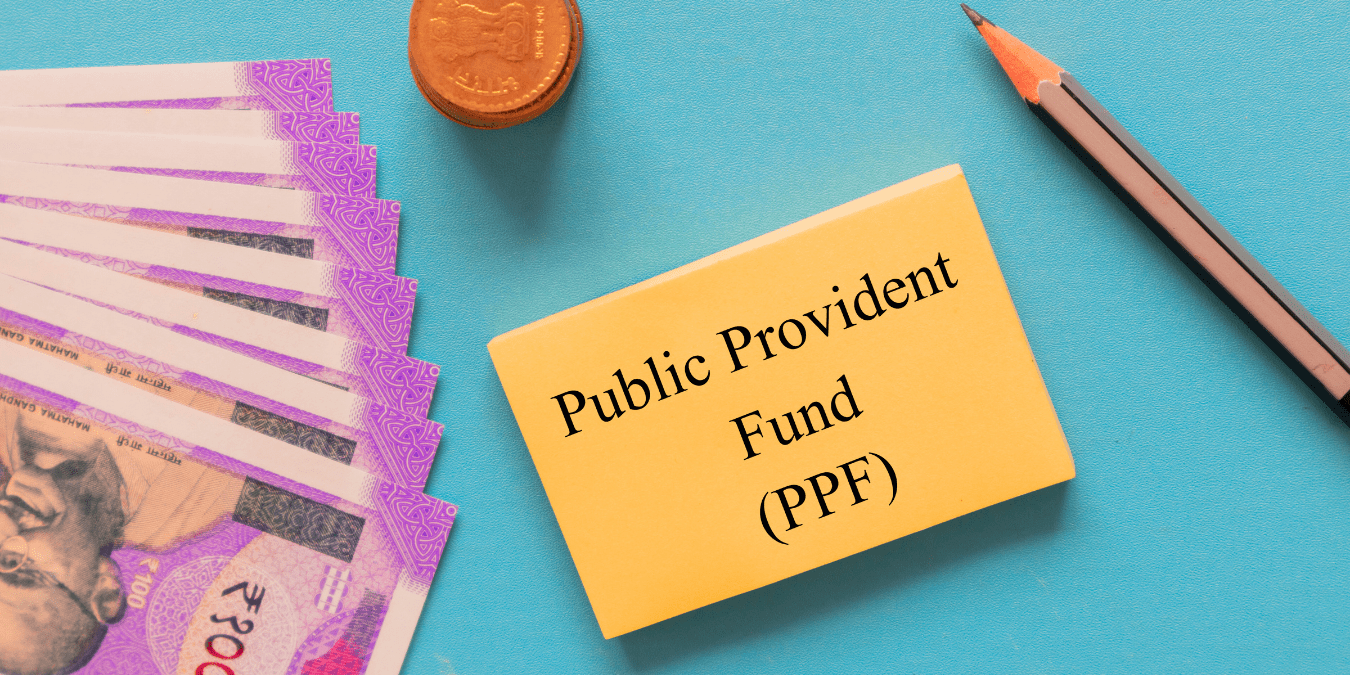
New EPFO Rule 2026: You Can Now Withdraw 100% of Your PF Balance Without Resigning — Here's How
EPFO just changed the rules — and most employees have no idea they can now access their full PF balance without quitting their job. One simple category decides everything. Are you using yours correctly?
If you have a Provident Fund (PF) account, you’ve probably wondered at some point: “Can I withdraw my money, and how much?” The rules around PF withdrawals have always felt complicated — but that’s about to change. The Employees’ Provident Fund Organisation (EPFO) has simplified the withdrawal framework into three clear categories, making it easier than ever for employees to understand their rights and plan their finances.
In this guide, I’ll break down every detail of the new PF withdrawal rules in plain language — no jargon, no confusion. Whether you’re facing a medical emergency, planning a home purchase, or simply need funds for personal reasons, this article covers exactly what you’re entitled to.
What’s New in the PF Withdrawal Rules?
The restructured PF withdrawal policy organises all withdrawal purposes into three distinct categories. Each category has its own rules for the maximum amount you can withdraw, how many times you can make withdrawals, and any conditions attached. The big headline change: employees can now withdraw up to 100% of their eligible PF balance — but the specifics depend on the category under which you’re applying.
The revised framework is designed to reduce confusion, speed up settlement times, and give employees greater financial flexibility at crucial life moments.
The Three Categories of PF Withdrawal — Explained
Category I: Essential Needs (Medical & Marriage)
This category covers two of the most urgent life situations: illness and marriage.
Illness (Self and Family)
When medical emergencies strike, the last thing you want is a complicated withdrawal process. Under the new rules, if you or a dependent family member — including your spouse, children, or parents — requires hospitalisation or significant medical treatment, you can withdraw up to 100% of your eligible PF balance.
This withdrawal is permitted a maximum of one time per year. So if you’ve already made a medical withdrawal in the current financial year, you’ll need to wait until the next year to make another one under this sub-category.
Key point: Always keep your medical documents ready. EPFO typically requires hospitalisation certificates, doctor prescriptions, or medical bills to process illness-related claims quickly.
Marriage (Self and Family)
Marriage is one of the biggest financial events in an Indian family’s life, and EPFO recognises this. Under Category I, you can withdraw up to 100% of your eligible PF balance to cover marriage expenses — whether it’s your own wedding, a sibling’s, your child’s, or another dependent family member’s.
The updated rules allow this withdrawal up to 3 times individually, with a combined lifetime limit of 5 times across the marriage sub-category. This gives families reasonable flexibility to use PF funds for major matrimonial events over the course of their working lives.
Pro Tip: Plan ahead. If you know a family wedding is a year away, it’s worth calculating your PF corpus in advance so you’re not surprised by the eligible amount at the time of withdrawal.
Category II: Housing Needs
Owning a home is the dream of nearly every salaried Indian. The new PF withdrawal rules under Category II are specifically designed to support that dream across three housing-related situations.
(a) Purchase or Construction of a House, Flat, or Plot
Planning to buy your first home or construct one on a plot you own? You can withdraw up to 100% of your eligible PF balance for this purpose.
(b) Repayment of a Home Loan
If you’re already servicing a home loan and want to reduce your outstanding principal, your PF corpus can help. The rules allow withdrawal of up to 100% of your eligible balance for home loan repayment — a significant financial relief for employees paying EMIs.
(c) Renovation or Alteration of an Existing House
Need to expand your home, repair the roof, or renovate the kitchen? Even home improvement qualifies under this category, allowing withdrawal of up to 100% of your eligible PF balance.
Important Rule for Category II: Each of these three sub-categories — purchase/construction, loan repayment, and renovation — counts independently. This means your withdrawal count “resets” or “counts afresh” for each purpose. Overall, you are allowed a combined maximum of 5 times across all Category II withdrawals. This gives homeowners substantial flexibility over the years to use their PF for different housing needs at different life stages.
What documents will you need? For property purchase or construction: sale deed, allotment letter, or construction agreement. For loan repayment: loan account statement and bank certificate. For renovation: municipality-approved plan or contractor estimate.
Category III: Special Circumstances (General Purpose)
This is perhaps the most important category for everyday employees because it doesn’t require you to state a specific reason for the withdrawal.
Under Category III, you can withdraw up to 100% of your eligible PF balance even if your need doesn’t fall under illness, marriage, or housing. This could be for education, travel, debt repayment, business investment, or any other personal financial need.
The rules allow a maximum of 2 withdrawals per year under this category. So you have one to two opportunities annually to access your PF funds for general purposes — a remarkable degree of financial flexibility that didn’t exist under the older, more restrictive framework.
This category essentially functions as a safety net: if your need is legitimate but doesn’t fit neatly into Category I or II, Category III has you covered.


The One Rule That Applies Across All Categories
Regardless of which category you withdraw from, there is one fundamental eligibility requirement that applies universally:
You must have completed at least 1 year of continuous service with your current employer.
Once you’ve crossed the 1-year mark, you become eligible to make withdrawals from your PF account across all three categories, subject to the specific limits described above. This ensures that the PF system is used as a genuine long-term savings instrument while still providing accessibility when life demands it.
How to Calculate Your Eligible PF Balance
Your “eligible PF balance” refers to the total amount in your PF account at the time of the withdrawal request, which includes:
- Your contribution (12% of basic salary per month)
- Your employer’s contribution (12% of basic salary per month)
- Accumulated interest
You can check your current PF balance at any time through the EPFO Member Portal (member.epfindia.gov.in), the Umang app, or by giving a missed call to 011-22901406 from your registered mobile number.
Note: For some specific purposes like housing, EPFO may cap the eligible amount based on the property value or loan outstanding. Always verify before applying.
How to Apply for PF Withdrawal Online
The easiest way to withdraw PF today is through the EPFO Member Portal:
- Log in with your UAN (Universal Account Number) and password
- Go to Online Services → Claim (Form-31, 19, 10C & 10D)
- Verify your KYC (bank account, Aadhaar, PAN must be linked)
- Select the appropriate withdrawal purpose (which maps to the category above)
- Upload required documents
- Submit and track your claim
EPFO typically processes online claims within 3 to 7 working days for straightforward cases.
Common Mistakes to Avoid
1. Not linking KYC before applying: Unlinked Aadhaar or bank accounts are the single biggest reason for claim rejection. Do this well before you need to withdraw.
2. Withdrawing unnecessarily: PF grows at a government-declared interest rate (currently 8.25% per annum for FY 2023-24), compounding annually. Every rupee you withdraw loses years of tax-free compounding. Use withdrawals only when genuinely needed.
3. Forgetting the tax implications: PF withdrawals made before 5 years of continuous service are taxable. If you’re withdrawing after 5 years, the amount is tax-exempt under Section 10(12) of the Income Tax Act.
4. Not keeping records: Always save the withdrawal acknowledgement number and any physical receipts or documents. These are important for future claims and for your income tax records.
Quick Reference Summary
| Category | Purpose | Max Withdrawal | Frequency Limit |
| Category I – Illness | Self or family medical emergency | Up to 100% of eligible balance | 1 time per year |
| Category I – Marriage | Self or family marriage | Up to 100% of eligible balance | Max 3 times (total 5 times) |
| Category II – Housing | Purchase, construction, home loan repayment, renovation | Up to 100% of eligible balance | Max 5 times (counts afresh per sub-purpose) |
| Category III – Special Circumstances | Any purpose (no reason required) | Up to 100% of eligible balance | Max 2 times per year |
Minimum service requirement for all categories: 1 year
Final Thoughts
The new three-category PF withdrawal framework is a genuinely employee-friendly update. It acknowledges that life doesn’t always follow a straight line — medical emergencies happen, families need support, and homes need to be bought, built, and maintained. By simplifying the rules and increasing the eligible withdrawal amount to 100% across categories, EPFO has made it far easier for employees to use their own hard-earned savings when it matters most.
That said, the best financial strategy is always to treat your PF as a retirement fund first. Use withdrawals thoughtfully and only when alternatives — like personal loans or emergency funds — are not sufficient or not cost-effective.
If you have specific questions about your withdrawal eligibility or the application process, the EPFO helpline is available at 1800-118-005 (toll-free).
Disclaimer: This article is for informational purposes only and is based on the updated EPFO guidelines available at the time of publication. Rules may be updated by EPFO from time to time. Please verify the latest rules at the official EPFO website (epfindia.gov.in) or consult a qualified financial advisor before making withdrawal decisions.