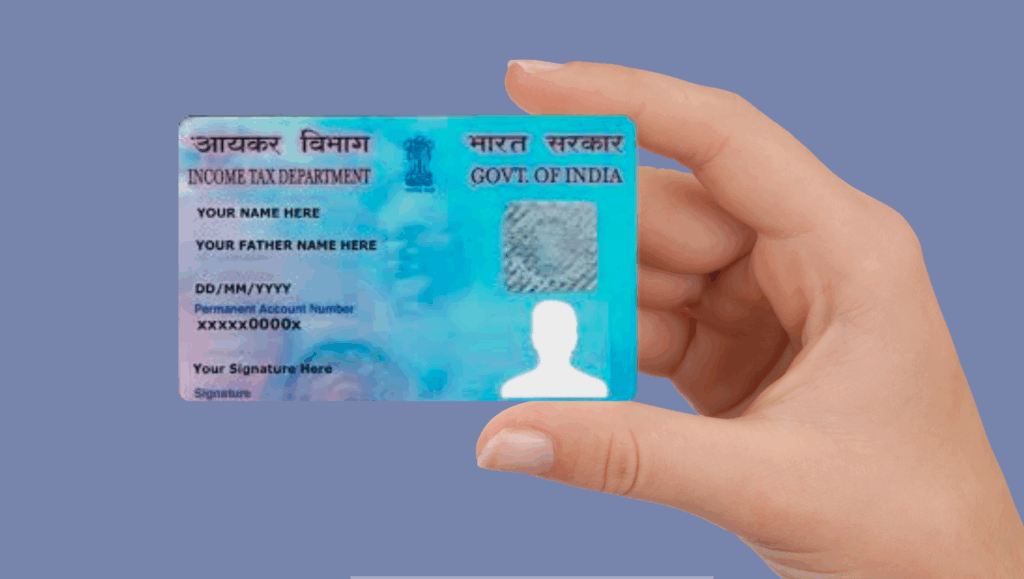
Income Tax Compliance Checklist for July 2026: 15 Tasks to Finish Before You File ITR Under New Rules
Income tax compliance in July 2026 is not just about filing your ITR on time; it is about completing a structured checklist that aligns with the new staggered due dates and updated rules for Assessment Year (AY) 2026-27. If you start now and work through the 15 tasks below, you can file confidently under the new regime or the old regime, avoid penalties, and make the most of available tax benefits.
Understanding July 2026 tax timelines
For FY 2025-26 (AY 2026-27), the income tax department has introduced a staggered ITR calendar instead of the earlier single 31 July deadline for all individual taxpayers. Salaried taxpayers and most investors filing ITR-1 or ITR-2 must still file their returns by 31 July 2026, while non-audit business and professional cases filing ITR-3 or ITR-4 now have time until 31 August 2026.
More complex cases remain on later timelines, including audit cases due by 31 October 2026 and transfer pricing cases due by 30 November 2026. Even if you miss the original deadline, you can still file a belated return up to 31 December 2026 or a revised return up to 31 March 2027, but these come with specific conditions and possible penalties.
July-specific compliance dates
July continues to be a critical month in the tax calendar because multiple obligations converge around 31 July. Besides the ITR filing deadline for ITR-1 and ITR-2, this date also covers key quarterly TDS and TCS statements for the April–June quarter as well as several prescribed forms that support specific deductions and reliefs. Missing any of these deadlines can trigger penalties, late fees, and in some cases delayed refunds or processing issues with your tax return.
There are also mid-month obligations, such as TDS deposits for certain taxpayers who operate on the quarterly payment approval mechanism, making it essential to track your TDS calendar alongside your ITR checklist. Keeping a consolidated July compliance list helps ensure that you do not focus only on the return itself while forgetting the supporting statements and forms that the department expects.
Task 1: Identify your correct ITR form and due date
The first step in any July 2026 compliance plan is to identify which ITR form you must use and confirm the corresponding statutory due date under the staggered calendar. If your income consists mainly of salary, pension, interest, capital gains, and up to two house properties, you will typically file ITR-1 or ITR-2, both due by 31 July 2026.
Taxpayers with business or professional income who are not subject to tax audit will normally file ITR-3 or ITR-4, gaining an extended due date up to 31 August 2026 for AY 2026-27. Audit cases and transfer pricing cases must adhere to later deadlines in October and November, but July remains the month to start preparing those returns to avoid last-minute pressure.
ITR forms and due dates AY 2026-27
| ITR Form | Typical taxpayers | Statutory due date AY 2026-27 |
|---|---|---|
| ITR-1 & ITR-2 | Salary, pension, capital gains, interest, up to two house properties | 31 July 2026 |
| ITR-3 & ITR-4 (non-audit) | Business or professional income without audit requirement | 31 August 2026 |
| ITR-3 & ITR-4 (audit) | Business or professional income requiring audit | 31 October 2026 |
| Transfer pricing cases | International or specified domestic transactions | 30 November 2026 |
| Belated return | Any late filer within assessment year | 31 December 2026 |
| Revised return | Correction of earlier filed ITR | 31 March 2027 |
Task 2: Gather Form 16 and salary statements
For salaried individuals, Form 16 issued by employers is the primary document for reporting salary income and TDS, and employers generally issue it after completing quarterly TDS filings. By July 2026, you should have received Form 16 for FY 2025-26; if not, follow up with your HR or payroll team immediately because the details in this form feed directly into your ITR-1 or ITR-2.
Ensure that all components of your salary are correctly reflected, including basic pay, allowances, perquisites, and exemptions such as HRA or leave travel benefits, based on the regime you intend to choose. Confirm that the TDS deducted and reported in Form 16 matches the figures that appear in the income tax system through Form 26AS and the AIS/TIS statements to avoid mismatches during processing.
Task 3: Download and reconcile Form 26AS and AIS
Next, log in to the income tax e-filing portal and download your Form 26AS, which consolidates tax credits including TDS, TCS, and advance tax payments. Alongside this, access the Annual Information Statement (AIS) and Taxpayer Information Summary (TIS), which capture a broader set of financial transactions such as interest, dividends, securities trades, and high-value purchases reported by various entities.incometaxindia.
Reconcile Form 26AS and AIS with your own records and bank statements, ensuring that all deducted taxes appear correctly and that incomes reported by banks, brokers, and other deductors match your disclosures. If you notice discrepancies, raise feedback on AIS and coordinate with the deductor to correct erroneous or missing entries before filing your return, as unresolved mismatches can trigger notices or adjustments.
Task 4: Decide between new and old tax regime
For FY 2025-26, you can still choose between the new concessional tax regime and the traditional regime with deductions, but the framework continues to evolve, and many taxpayers now default to the new regime unless they opt out. Before you finalize your ITR, compare your tax liability under both regimes using your actual numbers for salary, investments, home loan interest, and eligible deductions like 80C, 80D, and 80G.
The new regime offers lower rates at several slabs but restricts most exemptions and deductions, while the old regime allows you to claim the full stack of deductions at the cost of slightly higher slab rates. Working through a regime comparison in July gives you time to adjust investments or declarations for the remaining months of the current year and to ensure that your ITR matches the choice communicated to your employer, if applicable.
Task 5: Verify interest income and TDS from banks
Interest from savings accounts, fixed deposits, and recurring deposits is often fragmented across multiple bank accounts, making it easy to overlook some amounts. Use AIS and bank statements to compile a complete list of interest incomes for FY 2025-26 and cross-check TDS entries reported by banks against Form 26AS so that you neither under-report income nor miss out on credit for tax already deducted.
If some banks have deducted TDS at source but the entries do not appear in Form 26AS or AIS, contact the branch to verify that they have filed the correct TDS returns with your PAN. Similarly, if AIS shows interest that you dispute, submit feedback through the portal and keep documentation handy to substantiate your position in case of later scrutiny.
Task 6: Consolidate capital gains on securities and property
Capital gains reporting has grown more detailed in recent years, with specific schedules in ITR-2 and ITR-3 that require transaction-wise or category-wise information. In July, use your broker statements and AIS to compile trades in shares, mutual funds, ETFs, and debt instruments, separating short-term and long-term gains and noting applicable exemptions such as grandfathered cost or indexation.
If you sold property during FY 2025-26, gather your sale deed, purchase deed, stamp duty details, and evidence of improvements to compute accurate capital gains or losses. Properly reporting capital gains not only ensures compliance but also affects whether the department flags your return for review, especially when large transactions are visible in AIS or reported by sub-registrars but omitted from your ITR.
Task 7: Confirm house property income, HRA, and home loan benefits
For taxpayers with one or more house properties, consolidate rent receipts, municipal tax payments, and home loan interest certificates to report income or loss from house property correctly. If you claim HRA exemption under the old regime, ensure that your rent receipts and landlord details align with your employer declarations and that Forms like 10BA are submitted where required to support deductions on rent paid without HRA.
For self-occupied properties financed through home loans, correctly computing interest deduction under section 24 and principal component under section 80C can materially change your tax liability under the old regime. Under the new regime many such benefits are restricted or unavailable, so confirm that your chosen regime matches the deductions you intend to claim before finalizing this part of the return.
Task 8: Collate Section 80C, 80D, and other deduction proofs
July is the right time to gather documentation for deductions under sections such as 80C (investments and principal repayments), 80D (medical insurance), 80E (education loans), and 80G (donations). Even if your employer has already considered some deductions while computing TDS, your actual ITR is your final opportunity to claim additional eligible amounts that were missed or incurred outside payroll.
Review life insurance premiums, ELSS investments, EPF and PPF contributions, tuition fees, mediclaim policies, and donation receipts to ensure each claim meets the conditions prescribed in the Income Tax Act. Cross-check these claims against your regime choice, keeping in mind that the new regime allows only limited deductions, and avoid claiming ineligible amounts that could delay processing or attract queries.
Task 9: Review TDS and TCS obligations as a deductor
If you are responsible for deducting or collecting tax at source, such as an employer, business owner, or landlord under certain sections, July 2026 presents important statements and payment deadlines. Ensure that you have deposited TDS or TCS on time and that quarterly statements for salary payments and payments to non-residents for the April–June quarter are filed by 31 July 2026.
Accurate deductor compliance not only avoids penalties and interest under TDS provisions but also ensures that your deductees see correct credits in their Form 26AS and AIS, which in turn reduces disputes and correction requests. If you manage both your own ITR and TDS responsibilities, build a combined calendar where July tasks for your return and your deductor obligations are clearly separated but tracked together to avoid oversight.
Task 10: File prescribed forms due on 31 July
Several tax benefits require filing specific forms that also carry a 31 July deadline, such as Form 10BA for claiming deduction under section 80GG on rent paid without HRA and Form 10E for relief on arrears or advance salary. Other forms like 10H, 10CCE, and 10CCD support reliefs or deductions on certain foreign income or royalty; failing to file these on time can mean losing the intended benefit even if you disclose the income.
As part of your July 2026 checklist, list all deductions or reliefs you intend to claim that depend on such forms and verify that each is submitted through the portal before the deadline. Aligning ITR filing with form submissions ensures that the department has both the income disclosure and the supporting declarations, improving the chances that your relief claims are accepted without additional queries.
Task 11: Compute advance tax and self-assessment tax accurately
Before finalizing your ITR, recompute your total tax liability based on full-year income and deductions and compare it with the tax already paid through TDS, TCS, and advance tax. If there is a shortfall, pay self-assessment tax, including applicable interest under sections dealing with default or deferment of advance tax, and ensure that the payment is correctly referenced by challan in your return.
Medical professionals, freelancers, and business owners often have fluctuating incomes, making advance tax estimates imperfect; by July, you have a complete picture for FY 2025-26 and can settle dues before filing. Properly paid and reported self-assessment tax helps prevent the system from raising residual demands after processing and reduces the likelihood of notices for unpaid or underpaid tax.
Task 12: Validate personal details and bank information in the portal
Compliance is not only about numbers; accurate profile information on the e-filing portal affects refund credits and communication from the department. In July 2026, verify that your PAN is correctly linked with Aadhaar as required, that your contact details such as email and mobile number are updated, and that your bank account details are validated for direct refund reception.
If you have changed jobs, addresses, or primary bank accounts during FY 2025-26, update these details on the portal before filing your ITR so that any notices or refunds reach you without delay or failure. Many refund delays arise not from computation errors but from unvalidated or closed bank accounts, making this step an integral part of a professional compliance checklist.
Task 13: Understand penalties and the scope for belated or revised returns
While the law allows belated returns up to 31 December 2026 and revised returns up to 31 March 2027, relying on these options should be a backup plan rather than your primary approach. Belated returns can attract penalties under section 234F, which for FY 2025-26 may be up to ₹5,000 for taxpayers with total income above ₹5 lakh and ₹1,000 for those below that threshold.
Moreover, filing after the due date can restrict certain benefits, such as loss carry-forward in some cases, and may expose you to more intensive scrutiny or slower processing. Revised returns are invaluable when you discover mistakes or omissions after filing, but they must be used judiciously with proper documentation and should not replace basic diligence in July.
Task 14: Plan for updated returns (ITR-U) where needed
The law now provides for updated returns (ITR-U) that can be filed within four years from the end of the relevant assessment year, subject to payment of additional tax and specific conditions. For AY 2026-27, that window extends up to 31 March 2031, allowing taxpayers to disclose previously omitted income or correct under-reporting, albeit at a financial cost.
While ITR-U is not a July 2026 deadline item, understanding its availability should influence how you handle discovered errors or undisclosed income from earlier years while you are compiling your data for the current return. A robust July checklist includes assessing whether any prior-year issues exist and, if needed, consulting a professional to decide if an updated return is appropriate.
Task 15: E-verify your ITR and retain documentation
Once you have filed your ITR for AY 2026-27, remember that the process is not complete until the return is verified electronically or via physical ITR-V within the prescribed time, which is typically 30 days from submission. E-verification options include Aadhaar OTP, net banking, bank account validation, or demat-based verification, and choosing a reliable method in advance prevents missed timelines.
Parallel to e-verification, maintain a well-organized digital or physical file containing all major supporting documents such as Form 16, 26AS and AIS downloads, deduction proofs, capital gains working papers, and TDS certificates. This documentation not only supports your position if the department seeks clarification later but also embodies E-E-A-T principles by showing that your filing is based on verifiable records and disciplined compliance practices.
Bringing E-E-A-T into your tax compliance process
Experience in handling your own taxes over multiple years teaches you the value of starting early in July instead of leaving everything to the last week. Each of the 15 tasks above reflects practical lessons from how the department processes returns, raises queries, and grants or holds refunds, and aligning with these patterns shows that you treat compliance as more than a legal formality.
Expertise comes from understanding not just the forms but the interplay between regimes, deductions, and the new staggered calendar, allowing you to choose the right ITR form, regime, and strategy for your specific mix of salaried, business, and investment income. Authoritativeness and trustworthiness are strengthened when the numbers in your ITR align with third-party reports in AIS and Form 26AS, supporting forms are filed on time, and you respond promptly and accurately to any communication from the department.
For July 2026, treat this checklist as an actionable roadmap: identify your ITR form and due date, reconcile salary and TDS data, compile income from all sources, choose the right regime, verify deductions, meet TDS and prescribed form deadlines, calculate and pay any balance tax, and file and e-verify your return with full supporting documentation. Doing so not only helps you avoid penalties and notices but also builds a consistent pattern of compliant behaviour that can support smoother assessments and quicker refunds year after year.