FM Sitharaman's Clear Message: How Union Budget 2026 Reforms Position India as Global Finance Hub
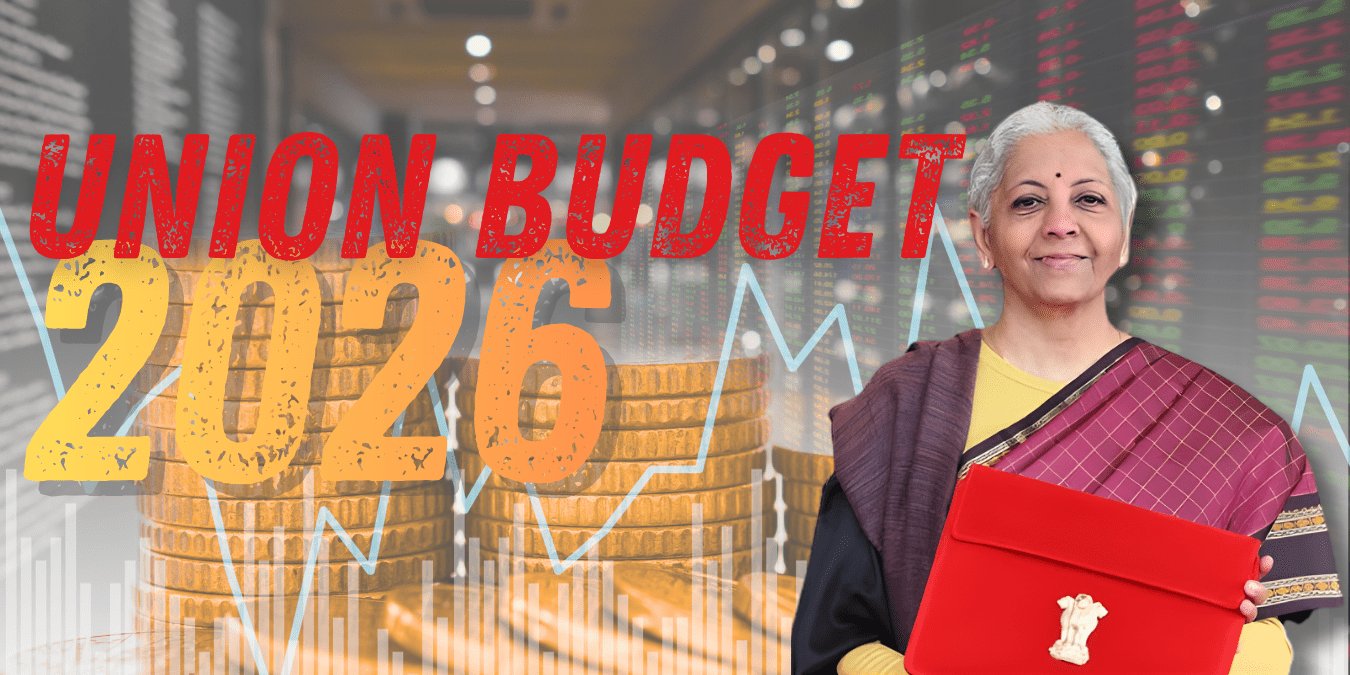
FM Sitharaman’s Budget 2026 bombshell: A secret High-Level Committee to revolutionize India’s banks for 2047. From PFC-REC mergers to AI underwriting, is this the untold trigger for 7% GDP explosion? Discover the shocking rural credit twist and Viksit Bharat blueprint that could redefine your savings forever.
Finance Minister Nirmala Sitharaman delivered a pivotal message in the Union Budget 2026-27, signalling a strategic pivot for India’s banking sector toward Viksit Bharat. From an Indian lens, this vision builds on hard-won stability to fuel inclusive growth.
Banking Sector’s Remarkable Turnaround
India’s banking sector has transformed dramatically over the past decade, emerging from NPA crises to record profitability. Gross NPAs fell from 11.46% in 2018 to 2.31% by March 2025, with net NPAs dropping to 0.5%, reflecting proactive provisioning and recoveries doubling to 26.2%.
Public sector banks (PSBs) led this revival, with NPAs declining 60% and profits surging 477% in five years, thanks to recapitalization and governance reforms. Coverage now exceeds 98% of villages, driven by digital initiatives like UPI, enabling financial inclusion for millions.
Profitability hit historic highs in 2026, with strong balance sheets supporting credit growth amid robust economic expansion.
Key Budget 2026 Announcements
FM Sitharaman highlighted the sector’s strength before announcing a High-Level Committee on Banking for Viksit Bharat. This committee will review structures across commercial and co-operative banks, aligning them with growth while prioritizing stability, inclusion, and consumer protection.
For NBFCs, a clear Viksit Bharat vision sets targets for credit disbursement and tech adoption; restructuring Power Finance Corporation (PFC) and Rural Electrification Corporation (REC) aims for scale and efficiency.
Additional measures include FEMA (Non-debt Instruments) review for user-friendly foreign investments, market-making on corporate bonds, and ₹100 crore incentives for large municipal bonds.
| Announcement | Objective | Impact on Banking |
| High-Level Committee | Comprehensive review for growth alignment | Enhances governance, risk management |
| NBFC Restructuring (PFC, REC) | Scale, efficiency in public NBFCs | Boosts power/rural financing capacity |
| FEMA Review | Modern foreign investment framework | Eases FDI inflows |
| Bond Market Reforms | Market-making, total return swaps | Improves liquidity |
The High-Level Committee’s Strategic Role
The High-Level Committee on Banking for Viksit Bharat, proposed in Budget 2026-27, represents a forward-thinking initiative to ensure India’s banking sector aligns with the nation’s ambitious growth trajectory toward 2047. Finance Minister Nirmala Sitharaman emphasized its role in comprehensively reviewing structures across public sector banks (PSBs), private banks, regional rural banks (RRBs), and co-operatives, while prioritizing financial stability, inclusion, and consumer protection amid global economic headwinds like geopolitical tensions and supply chain disruptions.
Expectations center on addressing key metrics such as credit-to-GDP ratio (targeting 100%+), deposit mobilization, network expansion, governance enhancements, and emerging risks including cyber threats and climate vulnerabilities. Building on the legacy of Narasimham Committees (1991 and 1998), which introduced prudential norms and consolidation, the panel may revisit contentious issues like allowing corporate entry into banking, easing the 26% voting rights cap for shareholders, streamlining FDI approvals, and enabling large NBFCs to convert into banks with safeguards.
From an Indian perspective, it targets persistent rural credit gaps—despite 98% village coverage—and elevated NPAs in MSME and agriculture portfolios (around 4-5% gross NPAs), proposing tools like Grameen Credit Scores for SHGs and customized ₹5 lakh credit cards for Udyam-registered MSMEs.
Stakeholders, including rating agencies and experts like Abizer Diwanji of NeoStrat Advisors, view it as “credit-positive,” sustaining post-IBC (Insolvency and Bankruptcy Code) reforms that resolved over ₹3 lakh crore and RRBs’ strengthening via amalgamation. The Department of Financial Services secretary noted its broad scope for 2047 planning, fostering larger, competitive institutions to support capex-led growth.
| Potential Focus Areas | Expected Outcomes | Link to Reforms |
| Corporate entry & FDI norms | Streamlined approvals, higher voting rights | Narasimham II legacy |
| Consolidation (small banks, RRBs) | Fewer but stronger entities | PSB mergers (27 to 12) |
| Risk management (cyber, climate) | Enhanced buffers, tech adoption | Digital UPI resilience |
| Rural/MSME credit | Grameen Scores, cards up to ₹5 lakh | PSL enhancements |
| Credit-to-GDP ratio | Boost to 100%+ via efficiency | Viksit Bharat alignment |
This committee positions banking as the engine for inclusive prosperity, blending caution with innovation.




NBFCs: Scaling for Viksit Bharat
Non-Banking Financial Companies (NBFCs) play a vital complementary role to banks, dominating retail lending (housing, auto, personal loans) and infrastructure financing where banks face asset-liability mismatches. In Budget 2026-27, Finance Minister Nirmala Sitharaman outlined a clear “vision for NBFCs for Viksit Bharat,” setting specific targets for credit disbursement growth and technology adoption, including AI-driven underwriting, blockchain for compliance, and data analytics for risk assessment.
A flagship measure proposes restructuring Power Finance Corporation (PFC) and Rural Electrification Corporation (REC)—key public sector NBFCs—as a “first step” to achieve greater scale and operational efficiency. PFC (Govt stake: 56%) and REC (52.6%) fund power generation, transmission, renewables, and rural electrification; the move aims at synergies like shared platforms or partial consolidation without a full merger, boosting lending capacity for India’s 500 GW renewable target by 2030.
This restructuring enhances energy security, critical for India’s manufacturing push under Atmanirbhar Bharat and PLI schemes, where power demand is projected to double to 2,000 TWh by 2040. Public NBFCs will serve as a model for private peers, promoting consolidation amid rising credit demand (NBFC AUM nearing ₹50 lakh crore, 18-19% market share).
Market reaction was positive: PFC shares rose 4.1%, REC 4.3% post-announcement, signaling investor confidence in fortified balance sheets.
Historical Reforms Paving the Way
India’s banking sector reforms trace back to post-1991 liberalization, triggered by a balance-of-payments crisis that necessitated opening up the financial system. The Narasimham Committee I (1991) kickstarted this by recommending phased reductions in Statutory Liquidity Ratio (SLR) from 38.5% to 25% and Cash Reserve Ratio (CRR) from 15% to 3%, alongside introducing prudential norms for income recognition, asset classification, provisioning, and an 8% Capital to Risk-Weighted Assets Ratio (CRAR).
Narasimham Committee II (1998) deepened these, advocating bank consolidation into fewer strong entities, CRAR hike to 9%, NPAs tackling via SARFAESI Act (2002), government stake cut to 33%, and professional boards—laying groundwork for competition with new private banks like ICICI and HDFC.
The 2010s grappled with NPAs peaking at 11.2% in 2018, largely from stalled infra loans under PPPs (infrastructure lending surged 2007-14). Government infused ~₹4 lakh crore via recapitalization (Indradhanush 2015: ₹1.8 lakh crore; 2017: ₹2.11 lakh crore bonds), alongside 4R strategy: Recognize (AQR 2015), Resolve (IBC 2016), Recapitalize, Reform (EASE framework).
IBC resolved over ₹3.4 lakh crore by 2025, slashing GNPA from 11.18% (2018) to 2.79% (March 2025). PSB mergers (2017: SBI +5; 2019-20: 10 into 4) reduced PSBs from 27 to 12, enhancing efficiency and scale.
Digital inclusion exploded via Pradhan Mantri Jan Dhan Yojana (PMJDY, 2014): Over 50 crore zero-balance accounts opened, with average balances rising; UPI (2016) hit 21+ billion transactions in Dec 2025, capturing ~50% global real-time volume, powering 80% retail digital payments.
| Reform Phase | Key Actions | Outcomes |
| 1991-98 (Narasimham I/II) | SLR/CRR cuts, prudential norms, SARFAESI | Entry of 10 private banks, CRAR to 9% |
| 2010s Crisis (NPAs) | 4R: AQR, IBC, ₹4L cr recap | GNPA down 11% to 2.8% |
| Consolidation | PSBs 27→12 mergers | Assets doubled, profits up 400% |
| Digital (PMJDY/UPI) | 50cr accounts, 21B txns/month | 98% village coverage, inclusion leap |
These reforms fortified resilience, directly enabling Budget 2026’s proactive vision for Viksit Bharat.
Implications for Financial Inclusion
India’s banking network now achieves over 99% village coverage (99.91% within 5 km via branches, BCs, IPPB), shifting emphasis from access to quality, affordable credit for underserved groups like small farmers, SHGs, and micro-entrepreneurs.
The High-Level Committee may refine Priority Sector Lending (PSL) norms—recently aligned with 2025 capital adequacy rules by RBI—integrating Grameen Credit Score (GCS, announced Budget 2025-26) for SHGs. GCS uses non-traditional data (savings, micro-loan repayments) to score rural borrowers, enabling PSBs to offer tailored loans and boost formal credit access for women-led SHGs (12+ crore members).
PM SVANidhi, revamped in Budget 2025-26 and extended to 2030 with ₹7,332 crore, introduces UPI-linked RuPay credit cards (₹30,000 limit) for timely repayers, alongside interest subsidies (7%) and digital cashbacks (₹100/month). MSME credit cards (up to ₹5 lakh via Udyam portal) further extend collateral-free working capital.
Rural India, absorbing ~42-45% of workforce (agri/self-employment dominant at 57.7%/55.8% in Q2 FY26), gains from tech like UPI QR (80% payments) and JDD app for tracking.
Technology and Digital Transformation
Budget 2026-27 reinforces technology as a core pillar, urging banks and NBFCs to accelerate AI for predictive analytics, blockchain for secure settlements, and RegTech for compliance, aligning with Viksit Bharat’s digital economy goals.
The High-Level Committee is expected to scrutinize cyber defenses amid rising threats (global cyber spend hitting $240B in 2026) and promote open banking APIs for innovation, enabling seamless fintech integrations like account aggregation and instant loans via India Stack.
UPI exemplifies success, clocking a record 21.7 billion transactions worth ₹28.33 lakh crore in January 2026 (up 28% YoY volumes), averaging 700 million daily—over 50% of global instant payments, powering 80% retail digital transactions.
NBFCs must prioritize tech adoption to meet credit targets, leveraging AI underwriting for faster MSME approvals and blockchain for supply chain finance, as per FM’s vision.
From an Indian perspective, these advances democratize finance, bridging urban-rural divides: UPI QR scans enable last-mile merchants, while API ecosystems boost credit access for 6 crore+ MSMEs.
Challenges Ahead and Safeguards
India’s banking sector, despite robust recovery, faces lingering priority sector NPAs around 4-5% in agriculture and MSMEs, exacerbated by climate shocks like erratic monsoons and floods impacting crop loans. Global headwinds—including sustained high interest rates from the US Fed and ECB, geopolitical tensions, and potential trade disruptions—necessitate heightened vigilance to protect margins and liquidity.
FM Sitharaman’s Budget 2026 message prioritizes stability, tasking the High-Level Committee with recommending buffers like dynamic provisioning, stress-testing for volatility, and enhanced macroprudential tools.
Consumer protections gain focus through data privacy frameworks aligned with the Digital Personal Data Protection Act 2023, mandating consent-based sharing and grievance redressal via integrated ombudsman portals.
Restructuring efforts, such as PFC/REC synergies, sidestep moral hazard by emphasizing governance over bailouts, channeling reforms toward sustainable scale without distorting market discipline.
Opportunities for Growth and Competitiveness
Robust banks are poised to propel India’s 6.8-7.2% GDP growth projection for FY26 (extending to 7%+), fueled by record public capex of ₹12.2 lakh crore (3.1% GDP), with effective capex including grants hitting ₹17.14 lakh crore (4.4% GDP)—up 22% YoY.
Mega infra corridors (energy, logistics) and green energy (500 GW renewables, CCUS ₹20,000 cr, BCD exemptions) demand massive credit, where banks’ strong balance sheets (GNPA 2.8%) enable ₹1.5-2 lakh crore annual lending.
Bond market reforms—corporate bond market-making, total return index providers, municipal bonds incentives—deepen domestic debt markets to ₹100 lakh crore+ AUM, reducing forex risks.
Private participation surges via Portfolio Investment Scheme hikes: Individual PROIs’ equity limit to 10% (from 5%), aggregate to 24% (from 10%), channeling NRI/FPI inflows for liquidity and growth.
Expert Perspectives from India
Indian analysts and rating agencies have hailed the High-Level Committee as “credit-positive” and a strategic move for long-term growth, with Moody’s describing the Budget as “tactical” yet supportive of financial stability.
Vivek Iyer, Partner and Financial Services Risk Leader at Grant Thornton Bharat, views PFC/REC restructuring as a template for other public NBFCs, emphasizing operational efficiencies like shared platforms and capex boosts over outright mergers.
Abizer Diwanji, Founder of NeoStrat Advisors LLP, sees the committee as an opportunity to revisit corporate entry into banking, streamline FDI approvals, relax the 26% voting cap, and enable large NBFCs’ conversion to banks with safeguards.
Industry bodies like CII advocate enhanced bank capital bases and reforms; FIDC (NBFC lobby) pushes refinancing via SIDBI/NABARD, TDS relief on interest, and scale-up measures—echoed in Budget’s NBFC vision and bond reforms.
Roadmap to Viksit Bharat 2047
Budget 2026-27 pivots banking from post-crisis repair to expansion, targeting fiscal deficit at 4.3% FY27 and debt-GDP below 50% by 2030 through sustained 10% nominal GDP growth (6.5-7% real + 3.5% inflation).
Banks must mobilize household savings (34% GDP, highest globally) and allocate efficiently to capex, aiming for credit-GDP ratio >100% (from 57%) to fuel a $30 trillion economy by 2047—requiring 8-9% annual growth.
FM Sitharaman’s vision casts banking as the backbone of Viksit Bharat: Robust PSBs/private players funding infra/green energy, inclusive via digital PSL, powering Yuva Shakti (youth employment via MSME/startups).
Key milestones include committee recommendations by 2027, PFC/REC synergies operationalized, and UPI/open banking scaling globally.
Final Thought: A Confident Future
Finance Minister Nirmala Sitharaman’s Budget 2026 announcements delineate a precise trajectory: comprehensive review via the High-Level Committee, strategic restructuring of NBFCs like PFC and REC, and forward-looking reforms to embed technology and inclusion.
India’s banking sector, fortified by NPAs at historic lows (GNPA 2.8%), record profits, and digital ubiquity (UPI 21.7B txns/month), stands primed to propel Viksit Bharat 2047.
This blueprint promises sustainable growth, financial security, and prosperity for every citizen—from rural SHGs to urban MSMEs.