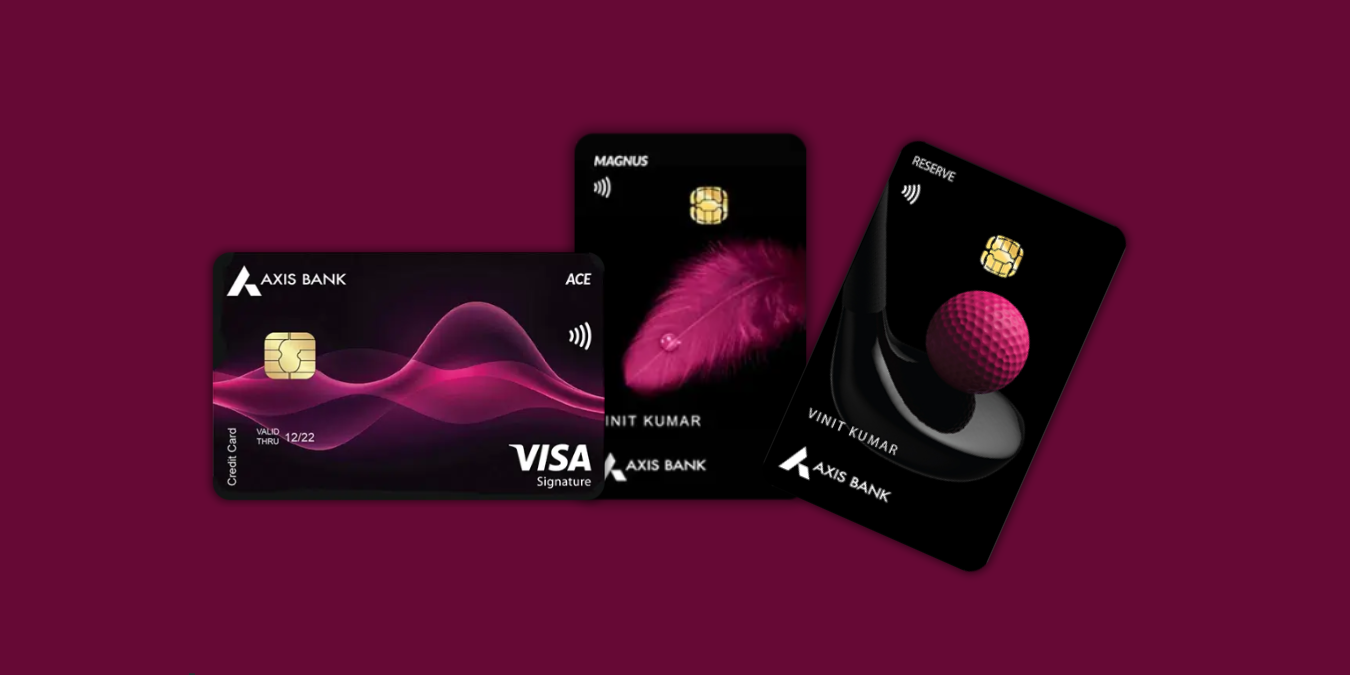
Axis Bank Kills Free Airport Lounge Access & Zomato Cashback — The Brutal Credit Card Cuts You Didn't See Coming This April
Axis Bank just silently killed free airport lounge access and Zomato cashback — and most cardholders have no idea it already happened. This isn’t a minor tweak. It’s a calculated strip of benefits affecting millions. Find out exactly what vanished, why banks planned this, and what you must do today.
If you are an Airtel Axis Bank Credit Card holder who loves breezing into airport lounges before a flight or earning cashback on your Zomato order, April 2026 just delivered a brutal wake-up call. Axis Bank has officially pulled the plug on two of the card’s most beloved perks — complimentary domestic airport lounge access and the popular 10% direct cashback on Zomato — effective April 12, 2026. And Axis is not alone. Across India’s banking ecosystem, this April marks what industry analysts are already calling the most aggressive wave of credit card devaluations the country has ever witnessed.
This is not a routine terms-and-conditions update buried in fine print. This is a systematic stripping of benefits that millions of cardholders were actively relying on. If you have not reviewed your card’s revised benefits, you are almost certainly losing value right now without even realizing it.
Let us break down exactly what changed, why it happened, who it impacts, and — most importantly — what you should do about it.
The Airtel Axis Card: What Was Taken Away
The Airtel Axis Bank Credit Card was positioned as a powerful everyday card for the digitally active Indian consumer. Its three-pillar value proposition rested on: deep cashback on telecom payments, strong returns on food delivery and grocery apps, and hassle-free lounge access for occasional travellers. As of April 12, 2026, two of those three pillars have been dismantled.
1. Airport Lounge Access: Gone
Cardholders previously enjoyed 4 complimentary domestic airport lounge visits per year — a perk that, even on a modest card like the Airtel Axis, gave users a taste of premium travel. From April 12, 2026, this benefit stands discontinued with zero replacement. No spend-linked quota, no paid-access option through the card — just a clean removal.
For someone who travels domestically 3-4 times a year and relied on these complimentary passes, the out-of-pocket cost to access even a basic lounge now stands between Rs. 500 and Rs. 1,000 per visit. Over a year, that is a real-money loss of Rs. 2,000 to Rs. 4,000, simply erased from your card’s benefit sheet.
2. Zomato Direct Cashback: Replaced, Not Enhanced
This one requires careful reading, because Axis Bank has tried to present it as a lateral move rather than a cut. Here is the reality.
Previously, the card offered 10% direct cashback on Zomato, Swiggy, and BigBasket. The cashback hit your statement directly — real rupees, usable anywhere. Starting April 12, the structure changes to 10% “value-back” on Zomato, Blinkit, and District Movies. Notice what disappeared: Swiggy and BigBasket are entirely removed from the accelerated category.
And “value-back” is not the same as “cashback.” Instead of money credited to your Axis Bank statement, the benefit is now credited directly into the partner brand’s wallet — Zomato credits, Blinkit credits, District credits. You can only use that value on future purchases within the same platform.
Additionally, a minimum order requirement of Rs. 499 applies on Zomato and Blinkit for the value-back to activate, and the benefit is capped at Rs. 200 per partner brand per month per primary card. No minimum transaction requirement existed under the old system.
3. Cashback Capping Now Linked to Your Base Spend
The third blow is more structural and arguably the most impactful for moderate spenders — the way maximum cashback on Airtel telecom and utility payments is calculated has fundamentally changed.
Previously, you earned 25% cashback on Airtel services (mobile, broadband, DTH) up to a fixed cap, regardless of how much you spent on other categories. Now, the maximum cashback you can earn on Airtel services is limited to 2 times the “base cashback” you earned that billing cycle — where base cashback is the standard 1% earned on all general transactions.
For utility payments at 10% cashback, the cap is now equal to 1 times the base cashback earned.
Here is what this means in practice: if you spent Rs. 5,000 on general purchases in a month, your base cashback is Rs. 50. That caps your Airtel 25% cashback reward at just Rs. 100, and your utility cashback at Rs. 50. Under the old structure, someone paying a Rs. 2,000 monthly Airtel broadband bill would earn Rs. 500 in cashback. Under the new structure, unless they spend Rs. 25,000 or more in the base 1% category, they will never unlock that Rs. 500 ceiling.
The practical effect is obvious: high-value, low-frequency spenders — the very users who picked this card for its Airtel benefits — are disproportionately penalized.
This Is Not Just an Axis Bank Problem
If the Axis devaluation feels personal, zoom out — and the picture becomes far more alarming. April 2026 is the single most consequential month for Indian credit card benefits in recent memory, and Axis is just one headline in a much longer story.
NPCI Kills RuPay Platinum Debit Card Lounge Access — Effective April 1, 2026
Separate from the Axis credit card changes, the National Payments Corporation of India (NPCI) issued a circular directing all member banks to discontinue complimentary lounge access on RuPay Platinum Debit Cards starting April 1, 2026. This is not a one-bank call — it is a system-wide instruction affecting every public and private sector bank that issued RuPay Platinum debit cards.
Punjab National Bank (PNB), ESAF Small Finance Bank, HDFC Bank, and dozens of other lenders have confirmed the rollout. RuPay Platinum cardholders will no longer access domestic airports, international airports, or railway lounges on a complimentary basis. For RuPay Select cardholders, lounge access has moved to a spend-based model under NPCI’s Benefit Management System (BMS).
The Broader Devaluation Wave of 2025-2026
Axis and NPCI are part of a coordinated — though not formally coordinated — industry-wide reset. Over the last 12 months, here is what Indian cardholders have quietly absorbed:
- HDFC Bank capped Infinia SmartBuy redemptions and introduced an Rs. 18 lakh annual spend mandate for sustained premium benefits
- SBI Cashback Card slashed its online cashback cap by 60%, gutting the card’s primary value proposition
- American Express Platinum Travel restructured milestone rewards, requiring Rs. 7 lakh in spending for benefits that previously triggered at Rs. 4 lakh
- Scapia by Federal Bank doubled the monthly spending requirement for free lounge access from Rs. 10,000–15,000 to Rs. 20,000
- AU Small Finance Bank’s Zenith Card saw significant earn rate reductions
- Axis Bank previously made all reward points expire 30 days after card closure, eliminating the buffer that many users relied on
As one industry analyst summarized it bluntly: “2026 has been the worst year for credit card devaluations in India. Amex Platinum Travel, HDFC Infinia, SBI Cashback, Scapia — every major bank moved in the same 10-week window. This is not one card getting worse. It is the entire ecosystem repricing at once.”
Why Is This Happening? The Real Reasons Behind the Cuts
Banks do not remove popular benefits without reason — and the reasons in this case are multi-layered, interconnected, and rooted in fundamental shifts in India’s financial regulatory environment.
Reason 1: RBI’s Risk Weight Crackdown
India’s credit card market grew at a staggering pace — from 55 million active cards in FY20 to over 111 million by FY25, a 20% CAGR. That growth came at a cost. The average outstanding balance per card climbed from Rs. 28,919 to Rs. 32,233, and Gross Non-Performing Assets (GNPA) in unsecured retail rose to 107 basis points by late 2025.
The RBI responded by forcing banks to hold significantly more capital against their credit card portfolios through higher risk weights. This compressed the economics of every card in every bank’s product lineup. Less interchange revenue plus more capital required equals fewer benefits available to fund.
Reason 2: Interchange Fee Pressure
Banks earn money from credit cards in two primary ways: interest charges from revolvers, and interchange fees — the cut banks receive every time you swipe your card at a merchant. Lounge access programs, cashback rewards, and partner brand benefits are essentially funded from this interchange revenue.
With regulatory scrutiny tightening on MDR (Merchant Discount Rate) and interchange structures, the revenue pool available to fund those benefits is shrinking. Banks are protecting their margins by cutting the benefits side of the equation.
Reason 3: The Acquisition Era Is Over
India’s credit card base has crossed the 100 million milestone. The hyper-competitive “land grab” phase — where banks outbid each other with lavish benefits to acquire new customers — is effectively over. Banks no longer need to throw generous perks at cardholders to get them to sign up. The focus has shifted from customer acquisition to profitability per card. Benefits get cut; annual fees quietly creep up.
Reason 4: Reward Arbitrage Abuse
India’s growing community of credit card optimizers — users who systematically exploit loopholes involving wallet loads, gift card stacking, rental payments, and merchant code manipulation — cost banks real money. The removal of direct cashback in favor of partner-wallet credits on the Airtel Axis Card is a direct counter to this. You simply cannot convert Zomato credits into generalized spending power.
Reason 5: Incoming ECL Mandate
By April 2027, all Indian banks must comply with the RBI’s Expected Credit Loss (ECL) framework — a forward-looking provisioning model that forces banks to account for potential future loan losses at the point of card issuance, not just when defaults occur. Banks are front-loading cost reduction now, in anticipation of tighter balance sheet constraints ahead.
What This Means for You: A Cardholder’s Reality Check
If you hold the Airtel Axis Bank Credit Card and your primary usage pattern involves paying your Airtel broadband or mobile bill and earning premium cashback, ordering food on Zomato and expecting that cashback to hit your bank statement, or using your card’s lounge access 2-4 times a year for domestic travel — then this card’s value proposition has materially changed as of April 12, 2026. The honest calculation: the card may no longer justify its role as a primary card for most users.
The shift from direct cashback to partner wallet credits is the most psychologically underplayed change. Cashback is liquid. Zomato credits are not. If you earn Rs. 200 in Zomato credits, you must spend it on Zomato. If you stop using Zomato, that “value” is effectively stranded. The bank gets the optics of maintaining a “10% value-back” headline while significantly reducing the real-world usability of the benefit.
Your Action Plan: What Smart Cardholders Should Do Now
Step 1: Audit Your Card Benefits Today
Pull up the updated Terms and Conditions on the Axis Bank website for your specific card variant. Do not rely on what the benefits were six months ago — many have quietly changed.
Step 2: Calculate Your Actual Annual Benefit
Add up the concrete value you receive — lounge visits saved, cashback earned in statement credits, reward points redeemed. If your annual benefit is less than or close to your annual fee, it is time to reassess.
Step 3: Rethink Your Zomato/Food Delivery Card
If food delivery cashback was a key reason you held this card, explore alternatives. The SBI SimplyCLICK Card, Amazon Pay ICICI Card, and Flipkart Axis Bank Credit Card continue to offer meaningful returns on online spending categories — though terms should be verified before applying.
Step 4: Consider a Dedicated Lounge Access Card
If domestic lounge access matters to you and you travel even 4-5 times a year, evaluate cards specifically built around travel perks — the HDFC Regalia, Axis Atlas, or IDFC FIRST Wealth Card. Many still offer lounge access under spend-based criteria. Just be aware that those criteria are also tightening industry-wide.
Step 5: Monitor, Don’t Panic
Credit card devaluations are frustrating but rarely catastrophic if you stay informed. Subscribe to notifications from your bank and set a calendar reminder to review your card portfolio every six months. The landscape is shifting fast enough that annual reviews are no longer sufficient.
The Bigger Picture: Trust Is the Real Casualty
There is something deeply corrosive about the way these changes are communicated. Axis Bank announced the Airtel Axis Card changes via a regulatory update notification — the kind of email that most users filter into a promotions folder without reading. The “10% value-back” language is technically accurate but practically misleading to anyone who does not read the fine print distinguishing it from the “10% cashback” it replaces.
When banks strip benefits without honest, plain-language communication, they do not just reduce a card’s value — they erode cardholder trust. In an environment where 111 million-plus credit cards are active in India, and where more informed consumers are watching every change closely, that erosion of trust has long-term consequences for customer loyalty, card utilization rates, and ultimately, the very profitability banks are now scrambling to protect.
April 2026 is a turning point. The era of generous, freely available credit card benefits — funded by explosive growth and aggressive acquisition budgets — is ending. What replaces it is a leaner, more transactional relationship between Indian cardholders and their banks. The consumers who will come out ahead are the ones who understand this shift clearly, adapt quickly, and stop assuming that the benefits printed on their welcome kit still apply today.
Your credit card is only as good as its current terms. Go check yours — right now.
Disclaimer: This article is intended for informational and educational purposes only. Benefit terms, cashback structures, and lounge access policies are subject to change by respective banks. Always verify current terms directly with Axis Bank or your card-issuing institution before making any financial decisions.