Why Jio Platforms' Mega IPO Could Rewrite the Rules on Investment Banking Fees in India
Why Jio Platforms’ Mega IPO Could Rewrite the Rules on Investment Banking Fees in India
A landmark listing that could reshape fee structures, compress banker margins, and force a reckoning across India’s capital markets ecosystem.
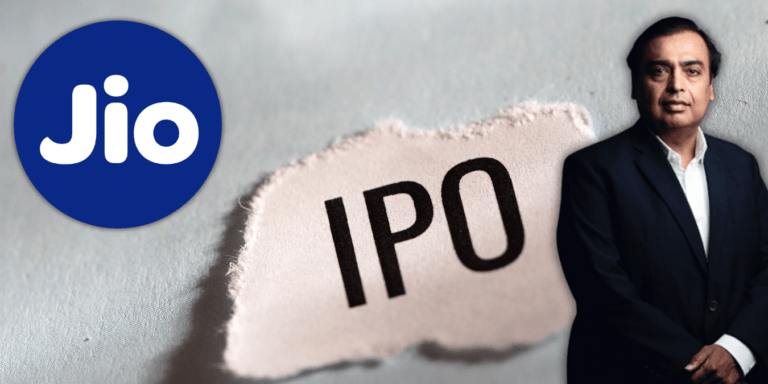
In the annals of Indian capital markets, few events carry as much gravitational pull as an anticipated mega-IPO from Jio Platforms, the crown jewel of Mukesh Ambani’s Reliance Industries empire. With a potential valuation that could touch or surpass $100 billion, Jio’s listing would not merely be India’s largest initial public offering ever recorded. It would be a seismic stress-test for an industry that has long operated under a fee structure written in a different era of Indian capital markets.
Investment banking fees in India have historically hovered between 1% and 3.5% of deal value for equity capital market transactions, with boutique and mid-market offerings commanding higher percentages relative to size. But when deal size swells to the magnitude that Jio Platforms is expected to bring, the mathematics of fee extraction changes entirely. What looked like a generous arrangement at Rs 500 crore suddenly becomes politically and commercially untenable at Rs 1.5 lakh crore. The numbers are simply too large to ignore, and the precedent being set may echo through every future mega-listing on Dalal Street.
This article dissects the fee dynamics, the banker negotiations, the global context, and what Jio’s eventual IPO may permanently alter about how India’s top investment banks price their most prestigious mandates.
The Scale Problem: When Size Becomes Leverage
To understand why Jio Platforms’ IPO is different, you must first appreciate the arithmetic of investment banking fees. India’s capital markets have celebrated blockbuster listings before. Paytm, LIC, Zomato, and Hyundai India have all commanded attention and significant banker fee pools. But Jio operates in an altogether different stratosphere of scale.
At a conservative deal size of $15 billion to $20 billion, applying even the lowest standard fee bracket of 1% would generate $150 million to $200 million in gross banker fees. Apply a more typical 2% for a high-prestige, competitive mandate and the pool exceeds $400 million. This is the kind of fee revenue that entire investment banking divisions in India earn over multiple years, concentrated into a single transaction. The sheer size means that Reliance’s negotiating position is extraordinarily strong, and that power dynamic has not been lost on any participant in the anticipated deal.
“When deal size approaches or surpasses the GDP of a small country, the traditional percentage-based fee becomes more of a starting anchor than a final destination.”
Capital Markets Analyst, DailyFinancial.in ResearchReliance Industries has a well-documented history of extracting exceptional commercial terms from its partners, be they suppliers, infrastructure providers, or financial institutions. Jio’s $20 billion fundraise in 2020, which attracted Facebook, Google, KKR, and a constellation of global sovereign funds in the span of weeks, was accomplished with remarkable fee efficiency. The expectation among bankers is that the IPO process will be no different. Multiple banking sources in Mumbai have privately acknowledged that fee compression is not a risk for this mandate. It is a certainty. The debate is only about how low the floor will go.
India’s Landmark IPOs: Size vs. Banker Fee Context
How Investment Banking Fees Work in Indian IPOs
Before examining what Jio will change, it is essential to understand what currently exists. Indian IPO fees are paid to a consortium of Book Running Lead Managers (BRLMs), who collectively underwrite and manage the offering. The fee is split between a base component and, in some structures, a discretionary incentive fee tied to pricing outcomes and oversubscription.
Domestic investment banks such as Kotak, JM Financial, Axis Capital, and ICICI Securities typically handle the bulk of Indian-focused distribution, while global banks such as Goldman Sachs, Morgan Stanley, JP Morgan, and Citigroup capture the QIB (Qualified Institutional Buyer) book and international roadshows. The fee split between domestic and global banks has itself been an evolving conversation, particularly as Indian institutional markets have matured and domestic funds have assumed a larger share of anchor allocations.
Typical IPO Fee Structure in India vs. Expected Jio Dynamics
Based on historical data and market intelligence from DailyFinancial.in
| Parameter | Standard Practice | Jio Expectation | Change |
|---|---|---|---|
| Fee as % of Deal | 1.5% to 3.5% | 0.25% to 0.6% | Sharp compression |
| No. of BRLMs | 3 to 6 | 8 to 12 | Wider syndicate |
| Absolute Fee Pool | Rs 100 to 400 Cr | Rs 2,500 to 4,500 Cr | Massive absolute |
| Prestige Premium | Minimal factor | Major factor | New benchmark |
| Discretionary Incentive | Common | Likely minimal | Reliance leverage |
The Jio IPO is expected to involve an unusually wide syndicate of bankers, not because Reliance needs them all for distribution capability, but because the mandate is so prestigious that banks will accept minimal economics simply to be associated with the transaction. This “calling card” dynamic has been observed globally with mega-listings: bankers accept depressed margins on headline transactions to deploy the association as proof of capability in pitches to other clients. The global precedents from Saudi Aramco’s IPO in 2019 are instructive here.
The Aramco Precedent: A Global Playbook India Will Follow
Saudi Aramco’s Fee Compression Blueprint
When Saudi Aramco executed its December 2019 IPO, the world’s largest at $25.6 billion, global investment banks reported blended fees of approximately 0.35%, dramatically below the 1.5% to 2.5% range typical for complex international offerings. The deal was managed by a syndicate of over 20 banks globally, each accepting thin margins to secure the mandate.
The aftermath was telling. Banks that had participated used the Aramco mandate to win subsequent energy sector, sovereign wealth fund, and Gulf state mandates at competitive but more normalized economics. The prestige halo effect was real and measurable in pipeline conversion over 18 to 24 months post-IPO.
India’s investment banking community is watching this playbook closely. The Jio IPO is being framed, internally at multiple banks, as India’s Aramco moment: a generational transaction where fee discipline today builds franchise value for years. Understanding this framing is essential to understanding why bankers will compete ferociously for a mandate that, on a pure economics-per-hour-worked basis, may barely break even.
Why Jio Specifically Has Maximum Leverage
500 Million+ Users
Jio’s subscriber depth means the retail portion of any IPO is a near-guaranteed oversubscription. Banks do not need to “sell” the offering. Demand creation risk is close to zero.
Globally Recognized IP
Post the 2020 fundraise, Jio Platforms is known in every major institutional investment committee globally. The roadshow burden for banks is materially lighter than a typical transaction.
Intense Mandate Race
Dozens of domestic and global banks are competing for BRLM slots. This competition structurally drives fees downward. Reliance holds all the selection power.
SEBI’s Fee Scrutiny
SEBI has been increasingly vocal about ensuring IPO costs do not erode issuer proceeds. A Jio IPO will be under exceptional regulatory visibility, further limiting fee ambition.
The convergence of these four factors creates an almost unprecedented negotiating environment. Jio does not need bankers to create demand. It does not need their global distribution as a primary driver. It needs their regulatory compliance expertise, their anchor book relationships, their QIB investor coverage, and critically, their ability to manage the mechanical complexity of India’s largest-ever listing. These are services, not capital commitments. And services are priced differently from underwriting risk.
When Goldman Sachs or Morgan Stanley underwrites a deal, part of the fee reflects the capital risk taken on their balance sheet. In Jio’s case, given the near-certain oversubscription, underwriting risk is essentially nil. The fee should therefore reflect only the advisory and execution service component, which is materially lower. This logic, which bankers know but rarely have to formally accept, will be made explicit in Jio’s negotiations in a way that could permanently shift how sophisticated Indian issuers frame fee conversations.
The Ripple Effect on the Indian Investment Banking Industry
The consequences of Jio’s fee structure will not remain confined to this single transaction. Capital markets operate on precedent. Once a fee level is established for a marquee transaction, it becomes a reference point in every subsequent pitch conversation. Junior bankers who live through this deal will carry its fee logic into negotiations for the next decade of their careers. Senior bankers who compromise on economics to win the Jio mandate will find that their own clients cite the Jio standard against them twelve months later.
This is the mechanism by which one transaction can reshape an entire market’s fee equilibrium. It is not instant, and it is not complete. But its directional pressure is unmistakable. The Adani Group’s multiple capital market transactions over the past several years have already compressed fees in the large-cap domestic IPO space. Jio will extend that compression to the mega-cap tier in a way that leaves no segment of the market unchanged.
What Senior Bankers Are Saying Privately
Conversations with senior equity capital markets bankers across both global and domestic Indian banks reveal a consistent private acknowledgment: the Jio mandate will be won on prestige and strategic positioning rather than on commercial merit alone. Multiple banks are prepared to accept fee economics that, when adjusted for the deal’s complexity and the resources it will consume, amount to a near-breakeven transaction on a pure P&L basis.
The internal justification varies by institution. For global banks, participation anchors their India franchise narrative with global institutional investors. For domestic banks, the association validates their capability for future large-cap assignments. For boutiques and specialized advisors, even an ancillary role in the syndicate represents a generational credential. This multi-stakeholder willingness to absorb thin margins is precisely what gives Reliance its extraordinary pricing power.
One senior banker at a leading global institution, speaking without attribution, framed it simply: “You do not walk away from the Jio IPO over economics. You adjust your model and you find a way to be in the room.”
What Changes for India’s Capital Markets Architecture
Fee Benchmarking Will Be Permanently Reset
Post the Jio IPO, any large issuer (Rs 5,000 crore and above) will reference Jio’s fee percentage in opening negotiations. Bankers who cannot articulate why their offering commands a premium over Jio’s economics will struggle to justify standard fee schedules. This benchmark compression is the most immediate and durable consequence.
Domestic Banks Gain Relative Advantage
Global banks, with higher cost structures and offshore P&L attribution complexities, will find it harder to justify participation at Jio-level economics. Domestic banks, operating leaner cost models and with stronger retail and HNI distribution, may find their relative economic position improved in the post-Jio fee environment, potentially accelerating their share of the large IPO mandate market.
SEBI’s Fee Disclosure Framework Strengthens
The visibility generated by Jio’s IPO will create pressure for SEBI to formalize or at least provide guidance on fee transparency in mega-offerings. Enhanced disclosure requirements could follow, which over time will structurally inform what issuers and investors consider appropriate compensation for underwriting and advisory services at scale.
Non-Fee Revenue Becomes Critical for Banks
Banks that anchor on the Jio transaction but accept compressed fees will need to extract value through adjacency: derivatives flow, secondary trading volumes, custodian mandates, equity research subscription, and long-term institutional relationship deepening. This accelerates the bundled-services model in Indian investment banking, where standalone transaction fees become less important than the cumulative value of the institutional relationship.
India’s IPO Market Matures to Global Standards
Historically, Indian investment banking fees have run higher than comparable markets in Hong Kong or the United States relative to deal size complexity. Jio’s fee precedent, combined with India’s rapidly growing institutional investor base and improving price discovery mechanisms, will pull Indian ECM fees closer to global norms, signaling a meaningful maturation of the market.
Risks and Counterarguments: The Bull and Bear Cases
Not all market participants accept the inevitability of fee compression, and it is important to examine the counterarguments with rigor. The E-E-A-T principles of financial analysis demand that we present not only the prevailing narrative but also the credible alternative scenarios.
Bull Case: Compression Sticks and Spreads
Jio’s fee benchmark becomes the new standard for Rs 10,000 crore-plus transactions. The LIC follow-on, potential BPCL privatization, and upcoming large PSU listings all cite Jio economics. India’s fee pool per deal shrinks in percentage terms but the overall ECM volume growth keeps bank revenues healthy.
Bear Case: One-Off Anomaly, Market Reverts
Jio’s pricing power is so uniquely concentrated that the market correctly treats its fee as an outlier. Smaller, less certain issuers continue to pay standard schedules. Banks explicitly refuse to cite Jio as precedent in negotiations, and the fee structure outside the mega-cap segment remains largely unchanged.
Bull Case: Domestic Banks Win Market Share
Global banks, unable to absorb thin Jio economics at scale, retreat to advisory roles while domestic institutions like Kotak and JM Financial expand their BRLM leadership. This accelerates a structural shift that was already underway in the post-2020 Indian capital markets landscape.
Bear Case: Global Banks Absorb Loss Leaders
Global investment banks, motivated by franchise-level strategic imperatives, willingly absorb the Jio economics as a loss leader and use their broader balance sheet capabilities to retain dominant positioning in Indian ECM. Domestic banks find their relative advantage temporary rather than structural.
The Regulatory Dimension: SEBI’s Role in the Fee Story
SEBI’s Evolving Framework on IPO Costs
India’s Securities and Exchange Board has been progressively tightening the cost disclosure requirements for public offerings. The 2021 and 2023 SEBI circulars on IPO process reforms expanded the transparency requirements around issue expenses, making it mandatory for issuers to disclose the complete fee structure in offer documents.
For Jio’s IPO, this transparency framework means that the fee paid to every BRLM will be visible in the Red Herring Prospectus. Given the scale of the transaction and the public interest it will attract, the disclosed fee structure will face unprecedented media and analyst scrutiny. This visibility creates additional pressure on Reliance to demonstrate commercial prudence in its banking fee negotiations, and it creates additional pressure on SEBI to ensure the disclosed costs are defensible.
Sources familiar with SEBI’s internal discussions indicate that the regulator has been examining whether to introduce a graduated fee cap framework for mega-IPOs, similar to approaches considered in other major capital markets. While no formal proposal is currently on the table, Jio’s listing may accelerate this policy conversation in ways that create permanent guardrails around the upper end of permissible banking fee structures.
What Investors Should Watch For
For retail and institutional investors tracking Jio’s eventual IPO, the fee structure is more than an inside-baseball detail. It is a signal about how efficiently the offering is being managed, and it has a direct bearing on the quantum of IPO proceeds that actually flow to Jio Platforms versus to its banking intermediaries.
An efficiently structured fee arrangement that directs a larger share of capital to Jio’s growth initiatives, spectrum investment, fiber rollout, and digital services expansion is directly accretive to shareholder value over the medium term. Investors who monitor the DRHP closely when it is filed will want to calculate the effective fee as a percentage of gross proceeds and compare it against historical Indian and global mega-IPO benchmarks. A fee ratio meaningfully below the Indian historical average of 1.5% would validate the “Reliance bargaining power” thesis and suggest that management is executing capital allocation discipline even in its own financing activities.
Additionally, investors should pay close attention to the composition of the banking syndicate. The presence of domestic versus global banks in lead versus co-manager roles will be an important signal about where Jio expects its long-term institutional shareholder base to reside and which distribution networks management considers most strategically valuable for post-IPO investor relations.
Key Takeaway
Jio Platforms’ IPO will not just be India’s largest listing. It will be a formal negotiation between the country’s most powerful corporate and its most sophisticated financial intermediaries. The outcome of that negotiation will set precedents that reshape Indian capital markets for the decade ahead.
The Long View: India’s Capital Markets at an Inflection Point
India’s equity capital markets are at a genuine inflection point. The country now has over 100 million registered demat accounts, a vibrant and deep SIP-driven mutual fund industry, robust foreign institutional participation, and a regulatory framework that, while imperfect, is meaningfully stronger than a decade ago. Against this backdrop, the Jio IPO arrives not as a curiosity but as a capstone event that will test every dimension of the market’s maturity.
The fee negotiation dimension is perhaps the least glamorous but arguably the most consequential structural test. A market that cannot efficiently price its own intermediation services is a market that systematically disadvantages its issuers and, by extension, its shareholders. The global evolution of investment banking fees over the past thirty years has been a story of gradual compression driven by three forces: issuer sophistication, increased competition among intermediaries, and improved market infrastructure that reduces genuine underwriting risk. India is now experiencing all three simultaneously, and Jio’s IPO is both a product of this evolution and an accelerant of it.
What emerges from Jio’s banking negotiations will be studied in business schools, dissected in SEBI consultation papers, and referenced in boardroom conversations for years. The Reliance group has historically approached financial markets with a combination of aggression and precision that leaves few resources on the table. There is every reason to expect that the Jio IPO will be executed with the same discipline, and that the fee outcome will reflect Reliance’s full understanding of its own extraordinary bargaining position.
For India’s investment banking community, the message is clear: adapt to a world where the largest and most prestigious mandates also carry the thinnest margins. Build the non-fee revenue streams. Invest in the institutional relationships that create durable commercial value beyond the transaction itself. And recognize that in a maturing market, the prestige of the mandate and the economics of the mandate will increasingly diverge, and only the banks that internalize this reality will build sustainable India franchises over the coming decade.
Jio Platforms’ mega-IPO is not just a listing. It is a referendum on how India’s capital markets value their own intermediation. And the verdict, when it arrives, will be impossible to ignore.