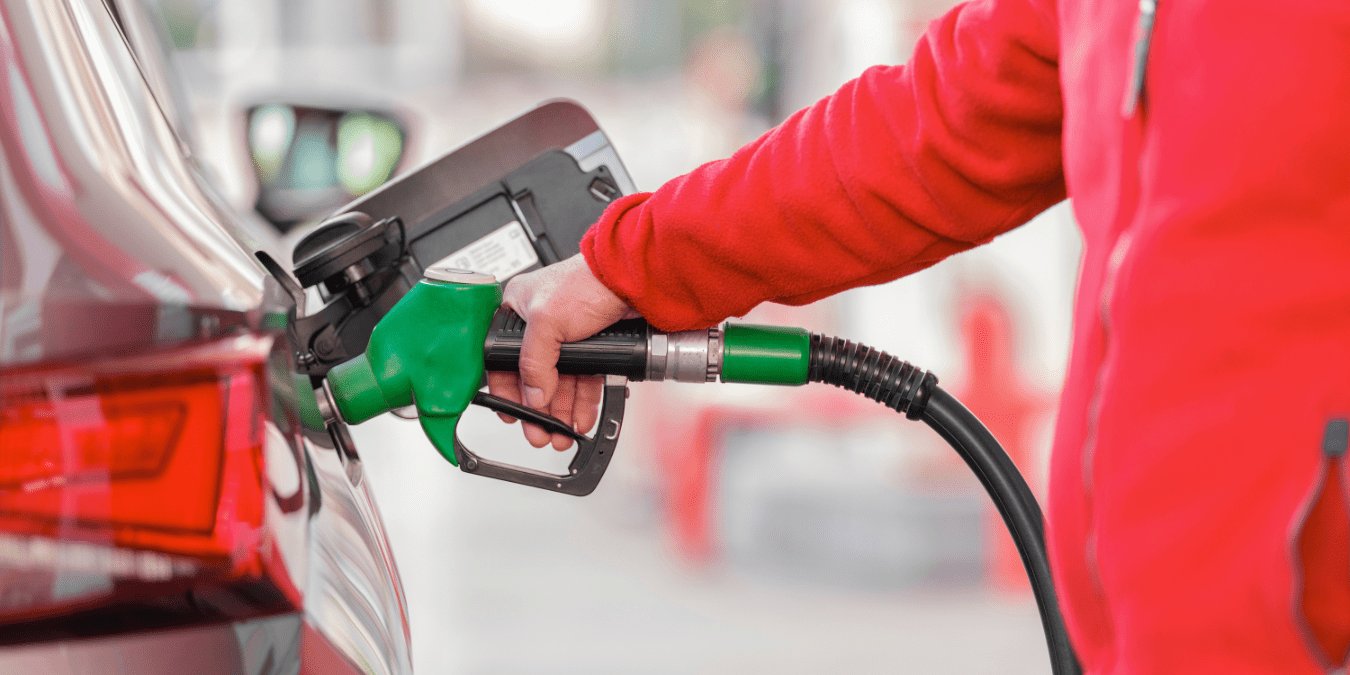
Petrol Price Today in Major Cities: Full Breakdown for March 12, 2026 – Stable Amid Global Oil Tensions?
Brent crude has crossed $102 — yet your petrol price hasn’t moved a rupee. That’s not luck. It’s a calculated gamble by the government, and OMCs are silently bleeding billions. But this freeze has a breaking point. Here’s exactly when it snaps — and what it’ll cost you.
On the morning of March 9, 2026, Indian motorists paid the same price for petrol and diesel they have been paying since March 2024 — no change, no revision. In Delhi, petrol costs Rs 94.77 per litre and diesel Rs 87.67 per litre. Meanwhile, Brent crude was trading at $102.50 per barrel on the international market, its highest level in over three years, driven by military strikes by the United States and Israel on Iran and the looming spectre of Strait of Hormuz disruptions.
This disconnect — between a furiously rising global crude benchmark and India’s frozen domestic fuel prices — raises a question that every salaried employee, logistics operator, and stock market investor should be asking: why is the government holding prices flat, and how much longer can it realistically do so?
This article breaks down the political economy, financial mechanics, and tipping-point scenarios behind India’s fuel price freeze — backed by data from PPAC, analyst reports from UBS, Nomura, JM Financial, and Emkay Global, and real-time crude market indicators.
The Current Situation: A $30+ Gap Between Crude Reality and Pump Prices
To understand the scale of the current mismatch, consider this: when India last revised fuel prices in March 2024, the Indian crude oil basket — a weighted average of Oman, Dubai, and Brent benchmarks — was trading near $82–85 per barrel. As of March 9, 2026, Brent crude has touched $102.50 per barrel intraday, with futures briefly touching $119 per barrel at peak volatility before settling lower.
Current Retail Fuel Prices — Major Indian Cities (March 9, 2026)
| City | Petrol (₹/litre) | Diesel (₹/litre) | State |
| Delhi | 94.77 | 87.67 | Delhi |
| Mumbai | 103.50 | 90.03 | Maharashtra |
| Bengaluru | 102.86 | 88.94 | Karnataka |
| Kolkata | 104.95 | 91.76 | West Bengal |
| Hyderabad | 107.50 | 95.65 | Telangana |
| Chennai | 100.75 | 92.34 | Tamil Nadu |
| Jaipur | 107.50 | 90.36 | Rajasthan |
Source: PPAC / IOCL retail outlets, March 9, 2026
Notice that these prices have not moved materially in over a year, even as the crude oil cost that underpins them has surged by 20–25%. That gap is what analysts call the ‘under-recovery’ — the loss that Oil Marketing Companies (OMCs) absorb on every litre sold.


Why Is the Government Not Raising Prices? The Political Economy Explained
India’s fuel pricing is theoretically dynamic — prices are revised every morning at 6 AM by state-owned OMCs like Indian Oil Corporation (IOCL), Bharat Petroleum (BPCL), and Hindustan Petroleum (HPCL). In practice, however, retail prices have been frozen since March 2024 for political and economic stability reasons.
1. Political Sensitivity in an Election-Adjacent Environment
Petrol and diesel prices directly affect headline inflation, which in turn shapes voter sentiment. Any hike in fuel prices ripples into transport costs, food prices, and urban household budgets within days. The government has consistently shown a preference for absorbing shocks at the OMC level rather than passing them to consumers, particularly in the months surrounding state and national elections.
2. Inflation Management
Analysts at Emkay Global have flagged a critical macro relationship: every $10 per barrel increase in crude oil prices widens India’s Current Account Deficit by approximately 0.5% of GDP. With the rupee already under pressure at USD/INR 92 (compared to 79 in 2022), passing on the full crude shock to consumers would worsen both inflation and the trade balance simultaneously.
3. OMC Balance Sheet Considerations
State-owned OMCs are being asked to act as a fiscal buffer. Rather than the government directly subsidising fuel, it implicitly asks IOCL, BPCL, and HPCL to compress their marketing margins — and it compensates them partly through strong refining margins and, when needed, government equity infusions or lower excise duties.
Expert View: IOCL Chairman on Pricing Complexity Indian Oil Corporation Chairman A.S. Sahney described domestic fuel pricing as a ‘complex jigsaw puzzle,’ noting that profitability for OMCs depends on balancing strong refining margins against weak marketing margins — and that an immediate price hike or cut is never a simple decision.
The Financial Bleeding: What Frozen Prices Are Costing OMCs
The headline number matters here. According to JM Financial analysts, OMCs typically earn a healthy gross marketing margin of Rs 3.5–4 per litre when Brent crude is around $70 per barrel. For every $1 per barrel rise in crude that is not passed on to consumers, this margin falls by approximately Rs 0.55 per litre.
With Brent now above $100, and given that the last full retail price revision was made with crude near $83, OMCs are theoretically absorbing a crude premium of $17–$20 per barrel — equivalent to a marketing margin erosion of Rs 9–11 per litre.
OMC Stock Impact — March 9, 2026
| Company | Intraday Low | % Fall | UBS Revised Target | Rating |
| IOCL (IOC) | Rs 156.30 | -7.29% | Rs 175 (from Rs 190) | Neutral |
| BPCL | Rs 322.95 | -8.43% | Rs 365 (from Rs 425) | Neutral |
| HPCL | Rs 370.10 | -8.67% | Rs 340 (from Rs 540) | Sell |
Source: UBS Research, BSE data, March 9, 2026
UBS, in a note released this morning, cut FY27 marketing margin estimates for Indian OMCs by 43–45% and warned that HPCL — which has a marketing-to-retail sales ratio of 2.2 (the highest among the three) — faces the risk of negative integrated margins. Nomura echoed this, stating that fuel marketing margins are at their lowest levels since July 2022.
The NIFTY Oil & Gas index fell 2.37% on March 9, 2026, reflecting broad investor concern across the energy sector — including city gas distribution companies like Indraprastha Gas (-3%), Mahanagar Gas (-3.1%), and Gujarat Gas (-4.1%).
The Strait of Hormuz Factor: Why This Time Is Different
Past crude price spikes — during the Russia-Ukraine war in 2022, for example — were partly absorbed by India’s pivot to cheap Russian crude. India rapidly increased its Russian oil imports after Western sanctions, ultimately becoming one of the world’s largest buyers of discounted Urals-grade crude. By late 2025, Russian crude accounted for over 35% of India’s total crude imports.
The current situation is more structurally threatening for two reasons:
- The Strait of Hormuz threat: Following US-Israel strikes on Iran, the Islamic Revolutionary Guard Corps (IRGC) has threatened to close the Strait of Hormuz — a waterway through which approximately 20 million barrels per day of crude oil and 86 million tonnes of LNG flow annually. This represents roughly 27% of global oil trade. Even a partial disruption would be catastrophic for short-term pricing.
- The Russian crude risk: US President Trump’s trade deal with India has reportedly been linked to India freezing purchases of Russian crude. If this condition is enforced, India would lose access to the discounted crude that has been a critical buffer for its import bill. India currently imports nearly 88% of its crude requirements.
Key Data Point: Strait of Hormuz Scale According to Sumit Pokharna, VP Fundamental Research at Kotak Securities, approximately 20 million barrels per day of crude oil and 86 million tonnes of LNG per annum pass through the Strait of Hormuz — representing 27% of global oil trade and 20% of global LNG trade. A closure would be a material global risk event with direct consequences for India’s energy import bill.
Wood Mackenzie SVP Alan Gelder has warned that higher oil and gas prices are now certain if the Strait of Hormuz closure threat materialises — with oil potentially exceeding $100 per barrel on a sustained basis if tanker flows are not quickly restored. At the time of writing, Brent is already at that threshold.
The Tipping Point: How Much Longer Can India Freeze Prices?
The government cannot hold fuel prices flat indefinitely. History offers a clear guide: in 2022, when crude surged past $100 on the back of the Russia-Ukraine war, India initially held prices steady (then under election pressure), but eventually revised petrol upward by Rs 10 per litre and diesel by Rs 7 per litre in a single step in April 2022 — causing immediate inflationary shock.
Several triggers could force a revision in the current cycle:
Trigger 1: Sustained Crude Above $100 for 4–6 Weeks
OMC marketing margins cannot absorb Rs 9–11 per litre of under-recovery for an extended period without government compensation. If Brent stays above $100 through April 2026, expect either a retail price hike or a direct government transfer to OMCs.
Trigger 2: Strait of Hormuz Physical Closure
If Iranian forces actually restrict tanker movement through the Strait, global crude could spike to $130–$150 per barrel within days — a scenario that would make price freeze completely untenable. In that case, a Rs 10–15 per litre hike across petrol and diesel becomes the base case, not the upside risk.
Trigger 3: Rupee Depreciation
India pays for crude in US dollars. With USD/INR already at 92 (versus 79 in 2022), the rupee cost of every barrel has risen dramatically even before the crude price surge is factored in. A further rupee slide to 95–96 would dramatically worsen the economics of the price freeze.
Trigger 4: OMC Quarterly Losses Becoming Politically Untenable
If HPCL and BPCL report negative integrated margins in Q4 FY26 results (expected May 2026), government pressure to either hike retail prices or announce an excise duty cut will intensify. UBS projects FY27 PAT for IOCL, BPCL, and HPCL could fall by 19%, 15%, and 46% respectively from current estimates if crude stays elevated and prices are not revised.
What This Means for You — The Consumer Perspective If you own a car (petrol) or run a business dependent on diesel logistics, now is the time to plan for a potential Rs 5–12 per litre hike in fuel prices in Q1 FY27 (April–June 2026). Businesses with high freight cost exposure — FMCG, e-commerce, agriculture — should review logistics contracts and cost structures proactively.
The Bottom Line
India is running a calculated risk. By holding petrol and diesel prices flat while Brent crude surges past $102, the government is buying time — keeping inflation numbers manageable, avoiding consumer anger, and betting that the geopolitical crisis in West Asia is temporary.
But the financial plumbing is under severe stress. OMC marketing margins have collapsed to their lowest levels since July 2022. UBS and Nomura are already sounding alarm bells. And the two structural buffers that helped India in 2022 — cheap Russian crude and a stronger rupee — are both under direct threat in 2026.
The freeze cannot last forever. The most likely scenario, based on current data and analyst consensus, is a Rs 7–12 per litre hike in petrol and diesel prices before the end of Q1 FY27 (June 2026) — unless crude falls sharply back below $80 per barrel. Plan your personal and business finances accordingly.
Frequently Asked Questios: What Indian Consumers and Investors Need to Know
The government prioritises inflation control and consumer sentiment. OMCs absorb the crude shock through margin compression, with the expectation that refining profits and eventual government support will compensate. It is a short-term political buffer.
Under the dynamic pricing mechanism introduced in June 2017, OMCs (IOCL, BPCL, HPCL) revise petrol and diesel prices every morning at 6 AM based on a 15-day rolling average of international crude prices and the rupee-dollar exchange rate. In practice, this mechanism has been informally suspended during periods of political sensitivity.
In April 2022, the government raised petrol prices by Rs 10 per litre and diesel by Rs 7 per litre in a single step after holding prices for 137 days. A similar or larger step-up hike is the likely mechanism if revision becomes unavoidable in 2026.
This article does not constitute investment advice. UBS has downgraded IOCL and BPCL to ‘Neutral’ and HPCL to ‘Sell’ as of March 9, 2026. Investors should consult a SEBI-registered financial advisor before making decisions. The risk-reward for OMC stocks is skewed to the downside as long as retail prices remain frozen and crude stays above $90.
Logistics, FMCG (due to freight costs), aviation (ATF), agriculture (diesel pumps and tractors), and two-wheeler OEMs are the most directly exposed. A hike of Rs 10 per litre in diesel increases monthly freight costs for a long-haul trucker by approximately Rs 12,000–15,000.