Why Did the Dow Jones Skyrocket 1,125 Points in a Single Day — And Why the Rally Collapsed Just 24 Hours Later?
On March 31, 2026, the Dow Jones Industrial Average surged 1,125 points — its biggest single-day gain since May — closing at 46,341.51, driven by a sudden burst of hope that the Iran war was approaching its end. Less than 48 hours later, that euphoria had completely evaporated, with global stocks tumbling as President Donald Trump vowed to continue U.S. military operations against Iran, sending oil prices surging and investors fleeing risk assets.
The World Markets Had Before the Rally
To understand why March 31 felt like a miracle day for Wall Street, you first need to understand what preceded it. For most of Q1 2026, U.S. markets had been enduring one of their most punishing stretches in recent memory, largely because of an oil shock unlike anything since the early 1970s. When U.S. military operations against Iran began in late February 2026, oil markets entered a state of panic. Brent crude — the global benchmark — had risen more than 50% since the conflict began, briefly topping $119 to $126 per barrel as traders priced in serious disruption to the Strait of Hormuz, the narrow waterway off Iran’s coast that channels roughly 20% of the world’s daily oil supply. The Dow had fallen nearly 784 points in a single day in early March. The S&P 500 and Nasdaq were in negative territory for the year. Investor sentiment had cratered, and the Atlanta Fed’s GDPNow tracker was already signaling economic stress. The three major indexes — the Dow, S&P 500, and Nasdaq — were all on track for their steepest monthly declines in years heading into the final trading day of Q1.
Two Words That Moved Markets: “End the War”
The tectonic shift on March 31 began not with a Federal Reserve announcement or an earnings surprise, but with a diplomatic signal from Tehran. Reports emerged during trading hours quoting Iranian President Pezeshkian as expressing that Iran had “the necessary will to end the war” — provided certain requirements were met, including “guarantees to prevent a recurrence of aggression”. Markets, which had been coiled under enormous selling pressure for weeks, reacted with explosive force. The Dow surged 627 points within the first two hours of trading alone. By the closing bell, it had added 1,125 points, a 2.49% gain, to close at 46,341.21. The S&P 500 gained 2.92%, while the Nasdaq Composite — the most sensitive index to risk sentiment — rocketed nearly 3.83%, posting its best single day since May 2025.
Every Sector Joined the Party
What made the March 31 surge particularly striking was its breadth. This was not a rally driven by a single sector or a handful of mega-cap tech stocks. Technology, typically the most volatile sector, led gains with a rise of 4.25%, its best performance in months. Industrials and consumer discretionary both climbed over 3%, as investors bet that a de-escalating Middle East conflict would ease supply chain pressures and revive global demand. The Russell 2000, which represents smaller, domestically focused companies that are especially sensitive to economic conditions, outperformed even the large-cap indexes — a sign that investors were pricing in broad-based economic relief, not just a relief rally in growth stocks. Crude oil prices, which had been the central villain of Q1 2026, showed signs of easing, with Brent crude pulling back toward $100 per barrel after weeks above $110. A falling dollar further added fuel to the rally, as currency markets also began unwinding their defensive positioning.
The Psychology of a Short Squeeze
Market experts who watched March 31 unfold in real time noted something important beyond the headline numbers: this rally had the fingerprints of a technical short squeeze all over it. Jared Blikre, Markets and Data Editor at Yahoo Finance, observed that by the end of the quarter, stocks appeared “eager to cover some of the shorts that accumulated throughout the month”. Short sellers — investors who profit when stock prices fall — had been piling into bearish bets throughout Q1 as geopolitical fears mounted. When positive headlines about Iran’s willingness to negotiate hit the wire, those short sellers were forced to buy back shares quickly to limit their losses, creating a mechanical feedback loop that amplified the gains far beyond what the fundamentals alone might have justified. As Blikre noted candidly: “On the last day of the month and quarter, it’s common to witness a substantial reversal after a period of heavy selling, which could explain some of the positive price movements we’re observing”. In plain English — this was partly real optimism, and partly a mathematical unwind of defensive bets placed during one of the worst quarters in recent market history.
Trump Speaks — and the Rally Dies
The afterglow did not even last a full trading session. On the evening of April 1, 2026, President Trump delivered a televised address from the White House in which he stated, “We are on track to complete all of America’s military objectives shortly, very shortly,” referring to the Iran conflict. On the surface, this sounded bullish. But the market read between the lines with painful clarity: Trump was not announcing a ceasefire, a diplomatic breakthrough, or a timeline for withdrawal. He was, in fact, doubling down. The statement dashed hopes for a swift resolution, leading to a sharp selloff in U.S. stock futures overnight. By early Thursday morning on April 2, S&P 500 futures were down about 1.1%, Nasdaq 100 futures had fallen roughly 1.4%, and S&P 500 index futures at one point dropped as much as 1.5%.
Oil’s Second Surge Sealed the Reversal
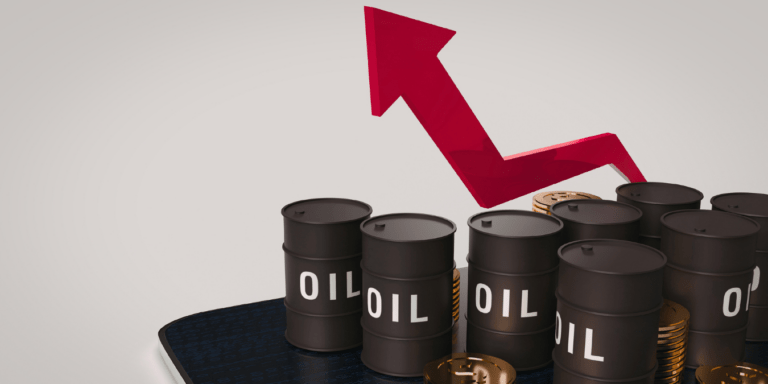
If Trump’s words punctured the hope, oil’s response delivered the knockout blow. After briefly retreating toward $100 per barrel during the rally, crude prices surged more than $5 in a single session following Trump’s April 1 remarks, as traders concluded that Middle East tensions were not only continuing but potentially intensifying. Rising oil prices are not merely bad for airlines and trucking companies — they are a systemic threat to the entire economy. Higher crude raises input costs for manufacturers, pushes consumer prices higher, and squeezes corporate profit margins across virtually every sector. For an economy already watching inflation data nervously, a renewed oil surge was essentially a tax hike on every business and household in America. Iran’s Foreign Ministry responded to Trump’s address by declaring, “We are fully committed and resolute to defend ourselves against this aggression… we must retaliate vigorously” — eliminating any realistic near-term expectation of diplomatic resolution.
The Geopolitical Feedback Loop
What the March 31 to April 2 episode illustrates is how completely markets in 2026 had become slaves to a single geopolitical variable: the Iran war. U.S. intelligence reports, cited by the New York Times, suggested that Iranian officials were doubtful about engaging in meaningful negotiations and had dismissed Trump’s claims that Iran’s missile and drone capabilities had been severely weakened. Meanwhile, reports indicated that Israel and several Persian Gulf nations conducted further drone and missile strikes. The Strait of Hormuz — the 21-mile-wide chokepoint through which 20% of the world’s daily oil supply travels — remained under threat of disruption, keeping every barrel of oil in the world priced with a geopolitical risk premium that traders simply could not ignore. The South Korean Kospi dropped 5.5% as Asian markets reversed gains, leading the regional downturn and reflecting the global nature of the shock. Australian, Japanese, and South Korean indexes all closed sharply lower, as what had briefly looked like a synchronized global rally became a synchronized global retreat.
What This Moment Reveals About Modern Markets
The 1,125-point swing up and near-equivalent reversal down represent something more than a dramatic week in financial news. They expose the structural vulnerabilities baked into today’s equity markets. First, they reveal how headline-driven and sentiment-dependent modern markets have become. A single news report — unverified, unconfirmed, and ultimately unacted upon — was enough to move the Dow by over a thousand points in a matter of hours. Second, the episode demonstrates the danger of end-of-quarter technical dynamics. The fact that March 31 was both the last day of the month and the last day of Q1 amplified the short-covering and portfolio rebalancing that drove prices higher, creating a sugar-rush rally that lacked sustainable fundamental backing. Third, it underscores how a single commodity — oil — now functions as the dominant macro variable in 2026 markets. The Iran war had already forced traders to abandon what the Japan Times called “the investment playbook” established since Liberation Day tariffs in April 2025, tearing apart a year of crowded trades in a matter of weeks.
The Investor Lesson Hidden in the Volatility
For individual investors watching these wild swings, the temptation is either to panic-sell during the collapses or to chase gains during the surges. Both reactions tend to destroy long-term wealth. The March 31 rally — as spectacular as it looked — was built on unconfirmed diplomatic signals, short-covering mechanics, and quarter-end rebalancing flows. None of those are durable foundations for sustained market appreciation. Professional investors who had survived Q1 2026 with their portfolios intact largely did so by maintaining diversification, resisting the urge to make binary bets on geopolitical outcomes, and keeping an eye on the structural reality: that until either the Iran conflict ends with a verifiable agreement or global oil supply routes normalize, equity markets will remain hostage to every headline that crosses the wire from Tehran, Washington, or the Strait of Hormuz.
What Comes Next for Wall Street
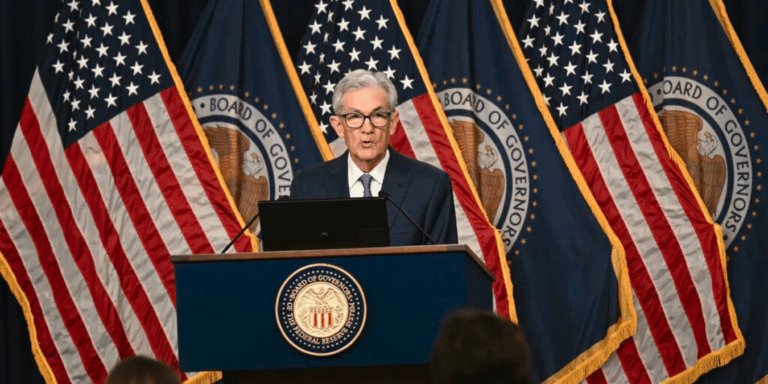
As of early April 2026, the picture remains deeply uncertain. Brent crude is hovering in a range that keeps recession fears alive. The Federal Reserve is watching oil-driven inflation data with growing concern, and bond markets have begun pricing in higher yields as government borrowing costs rise globally. The S&P 500 and Nasdaq remain in negative territory for the year, and the Dow, despite its March 31 heroics, closed Q1 2026 well below where it started. What investors are watching most closely is whether the diplomatic back-channel between Iran and the U.S. — evidenced by Iran’s rare letter to the American people stating it harbored “no hostility towards the U.S.” — can eventually produce the ceasefire agreement that March 31’s rally had prematurely priced in. If and when that agreement materializes, markets are likely to stage a far more durable and fundamentally grounded rally than the one that evaporated over two days at the end of Q1. Until then, the Dow’s 1,125-point miracle day stands as both an inspiring display of market resilience and a cautionary tale about the gap between hope and reality when geopolitics writes the headlines.