Why AMD's 8- and 12-core Ryzen AI processors are perfect for industrial edge AI robots
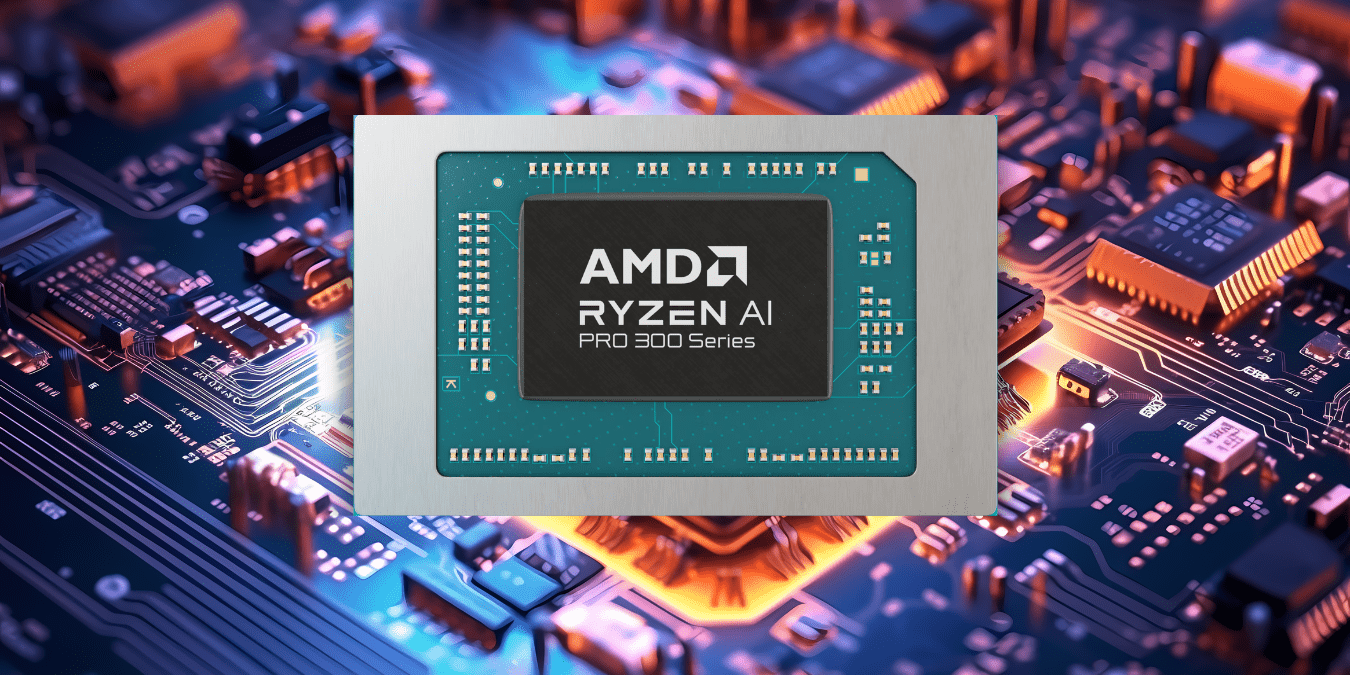
AMD has unveiled a game-changing leap in edge AI computing with its new 8- and 12-core Ryzen AI embedded processors, designed to power next-generation devices from industrial robots to smart kiosks. These chips promise unprecedented performance in compact, power-efficient packages, potentially transforming how AI runs at the edge without cloud dependency.
Ryzen AI Embedded: The New Powerhouses
AMD’s Ryzen AI embedded series targets embedded systems where AI inference must happen locally for speed, privacy, and reliability. The 8-core and 12-core variants, built on Zen 5 architecture, deliver up to 50 TOPS (tera operations per second) of AI performance through integrated Neural Processing Units (NPUs). This positions them as direct rivals to Qualcomm’s Snapdragon and Intel’s Core Ultra in edge scenarios.
These processors support up to 32GB of LPDDR5X memory and feature Radeon 800M graphics for handling vision-based AI tasks like object detection. With a thermal design power (TDP) as low as 15-54W, they suit fanless designs in harsh environments, from factories to retail. Long-term availability—up to 10 years—ensures stability for industrial deployments.



Breaking Down the Core Specs
The 8-core model (likely Ryzen AI 300 series embedded) clocks base frequencies around 2.0GHz boosting to 5.0GHz, while the 12-core pushes higher with multi-threaded prowess for parallel AI workloads. Both integrate XDNA 2 NPUs, AMD’s second-gen AI accelerator, optimized for transformer models like those in large language models (LLMs).
Key specs at a glance:
| Feature | 8-Core Ryzen AI | 12-Core Ryzen AI |
| Cores/Threads | 8/16 | 12/24 |
| AI TOPS | 50 | 60+ (estimated) |
| Graphics | Radeon 800M (12 CUs) | Radeon 800M (16 CUs) |
| Memory | Up to 32GB LPDDR5X-8533 | Up to 64GB LPDDR5X |
| TDP Range | 15-35W | 28-54W |
| Process Node | 4nm (TSMC) | 4nm (TSMC) |
| PCIe Lanes | Gen4/Gen5 | Gen4/Gen5 |
These enable real-time AI at the edge, such as predictive maintenance in manufacturing or personalized retail experiences.
Edge AI Revolution: Why It Matters Now
Edge AI shifts computation from distant data centers to devices, slashing latency to microseconds and cutting bandwidth costs by 90%. AMD’s chips excel here: their NPUs handle INT8/FP16 precision for efficient inference on models like Stable Diffusion or Llama 3, without GPU strain.
In industrial settings, this means robots analyzing sensor data on-the-fly to avoid collisions or optimize assembly lines. For smart cities, kiosks process facial recognition securely without sending biometrics to the cloud. The embedded focus—rugged, compact (e.g., COM Express modules)—makes them ideal for IIoT (Industrial Internet of Things), where downtime costs millions.
Compared to predecessors like Ryzen Embedded V3000, these offer 2x AI uplift and 30% better power efficiency, drawing from consumer Ryzen AI 300 laptops that redefined mobile AI.
Real-World Applications Unleashed
Industrial Automation
Factories deploy these for vision AI: 12-core chips power robotic arms using YOLOv8 for part inspection at 100fps. Predictive analytics on vibration data prevent failures, boosting uptime by 25%. Partners like Advantech integrate them into edge servers for seamless 5G connectivity.
Retail and Hospitality
Self-checkout kiosks with 8-core variants run multimodal AI—scanning items, detecting fraud, and offering upsell recommendations. Low TDP enables all-day battery in portable POS systems, while Radeon graphics handle AR try-ons for fashion retail.
Healthcare Edge Devices
Wearables and diagnostic tools process ECGs or X-rays locally. Privacy-compliant AI flags anomalies instantly, critical in remote clinics. The 10-year lifecycle matches medical certification cycles.
Automotive and Transportation
Infotainment evolves to ADAS lite: 12-core configs fuse camera/LiDAR data for driver monitoring. Fleet telematics predict maintenance, reducing costs amid chip shortages.
Smart Infrastructure
Traffic cams with these chips count vehicles and predict congestion using federated learning, sharing models without raw data.
Performance Edge Over Competitors
AMD claims 40% faster AI inference than Intel’s Meteor Lake embedded and 25% better than Qualcomm’s RB5. Benchmarks (internal AMD data) show Ryzen AI 12-core completing ResNet-50 in 2.5ms vs. 4ms on rivals. Power draw stays under 20W for sustained loads, vs. 30W+ for discrete GPUs.
In MLPerf edge tests, expect top scores: Zen 5’s AVX-512 and NPU synergy crushes CPU-only baselines. For developers, ROCm 6.0 support brings PyTorch/TensorFlow parity to embedded, easing porting from data centers.
Ecosystem and Developer Support
AMD backs this with Ryzen AI Software Stack: pre-optimized models via ONNX Runtime and LM Studio integration. Tools like Vitis AI accelerate quantization for edge deployment. Partnerships with congatec, IBase, and OnLogic yield ready modules (e.g., COM-HPC Size A).
Pricing starts at $200-400 per chip in volume, competitive with Intel’s 200V series. Availability Q2 2026 via distributors like Arrow Electronics.
Challenges and Future Outlook
Heat in sealed enclosures demands advanced cooling, though liquid options emerge. Software maturity lags datacenter GPUs, but AMD’s $700M AI roadmap closes gaps.
By 2028, expect Zen 6 embedded with 100+ TOPS, eyeing AGI-lite at edge. This launch cements AMD’s embedded resurgence post-Xilinx acquisition, challenging Nvidia’s Jetson in cost-sensitive markets.
Economic and Market Impact
Global edge AI market hits $50B by 2027; AMD captures 20% via these chips. Supply chain wins: TSMC 4nm scales production, dodging shortages. For SMBs, $500 edge boxes democratize AI, leveling playfields vs. hyperscalers.
India’s “Make in India” benefits: embedded AI powers semiconductors fabs and drone swarms for agriculture.
In summary, AMD’s 8/12-core Ryzen AI embedded chips aren’t incremental—they’re the ignition for autonomous edge ecosystems. Businesses ignoring this risk obsolescence in an AI-everywhere world.