The Real Reason Nifty Crossed 23,100 on April 7 Is NOT What You Think — RBI MPC Decision, Rupee at 92.98, and the Hidden Market Signal Experts Are Watching
Most financial headlines on April 7, 2026 told you the same story: “IT stocks drove the rally.” But if you have been tracking Indian markets long enough, you know that single-sector narratives almost never tell the complete story. The Nifty 50 closed at 23,123.65, gaining 155.40 points or 0.68% on the day, while the Sensex advanced 509.73 points to settle at 74,616.58. That is the visible surface. Beneath it lies a web of intersecting signals — from a watershed RBI MPC meeting whose outcome is still pending, to a Rupee clawing back from historic lows, to a hidden rotation in institutional money that most retail investors completely missed. Let us dig into all of it.
The Morning Panic Nobody Talks About
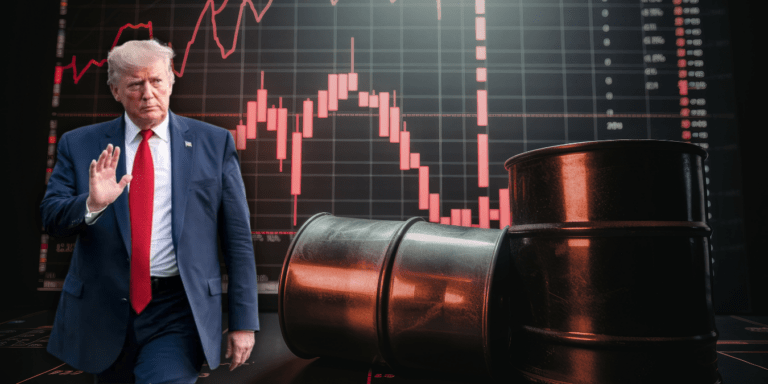
Before the closing bell celebration, April 7 opened in brutal fashion. The Sensex cratered more than 800 points in early trade, and the Nifty tumbled below 22,750 as U.S. President Donald Trump’s fresh threats against Iran sent shockwaves through global risk assets. Crude oil, already elevated, was trading near $109 per barrel after cooling marginally from $111.80. For a net oil-importing nation like India, elevated crude is a double-edged sword — it widens the current account deficit and simultaneously pressures the Rupee, making imports costlier and stoking inflation.
The panic selling in the morning session was real, rational, and — critically — short-lived. By midday, bulls had not just reclaimed lost ground; they had pushed the index sharply into the green. This V-shaped intraday recovery is itself a market signal. When a benchmark index absorbs bad news at open, falls hard, and then reclaims every rupee of loss to close near day-high, it is telling you something fundamental about the underlying demand for equities. Smart money was clearly waiting for exactly this dip.
Why IT Stocks Were the Messenger, Not the Message
Yes, IT stocks led the charge. Infosys, TCS, Wipro, HCL Tech, and Bharti Airtel were the five stocks that contributed the most to Sensex’s recovery. Wipro specifically attracted aggressive buying following a significant long-term deal announcement, which reinforced earnings visibility at a time when broader market uncertainty remained elevated, according to SEBI-registered research analyst Hariprasad K, founder of Livelong Wealth. Infosys and TCS also caught institutional bids ahead of quarterly earnings season.
But here is what mainstream media glossed over: IT stocks are a classic “defensive rotation” play. When global macro uncertainty spikes — think geopolitical threats, oil price surges, and currency volatility — fund managers rotate into sectors with dollar-denominated revenues, globally diversified client bases, and low dependence on domestic commodity cycles. India’s IT majors tick all those boxes. The buying in IT on April 7 was therefore less of an “optimism trade” and more of a “risk management trade.” Institutions were not buying IT because they were bullish; they were buying IT because they were nervous about everything else, and IT offered the safest risk-reward in the short term.
The RBI MPC Shadow Looming Over Every Trade
The single biggest macro event influencing market psychology on April 7 was not the IT deal news. It was the RBI Monetary Policy Committee meeting, which began on April 6 and whose outcome is scheduled to be announced on April 8 at 10:00 AM. Every institutional trader placed their bets on April 7 with one eye firmly fixed on what Governor Sanjay Malhotra would say the next morning.
The RBI has been on a complex rate cycle. Since February 2025, the central bank has cumulatively cut the repo rate by 125 basis points, bringing it down to 5.25%. However, rates were held steady in August 2025, October 2025, and February 2026. A Moneycontrol poll of economists, FX strategists, and treasury heads widely expects the MPC to keep rates unchanged at 5.25% in this April meeting as well. The rationale is straightforward: escalating geopolitical tensions in West Asia are expected to keep inflation elevated, and the RBI cannot afford to ease further into a currency depreciation cycle.
This “pause with caution” narrative is actually what gave markets confidence on April 7. Here is the counterintuitive logic — markets had already priced in a hold. There was no rate-cut disappointment risk on the table. What investors were really watching was the tone of the MPC statement: Would the RBI signal a future cut? Would it revise its GDP or inflation projections? Would it announce any emergency currency stabilization tools? The absence of negative surprises was itself the positive catalyst. In market language, “no bad news is good news” when macro uncertainty is peaking.
The Rupee at 92.98: A Story of Historic Turbulence and Fragile Recovery
The Indian Rupee trading around 92.93-92.98 per U.S. dollar on April 6-7 would have been unthinkable even a year ago. To put this in context, the USD/INR rate has weakened by approximately 9.25% over the last 12 months, and the Rupee had briefly touched a record low of 99.82 per dollar as recently as March 2026. The rebound to the 92-93 range is significant, but it is not organic strength — it is engineered stability.
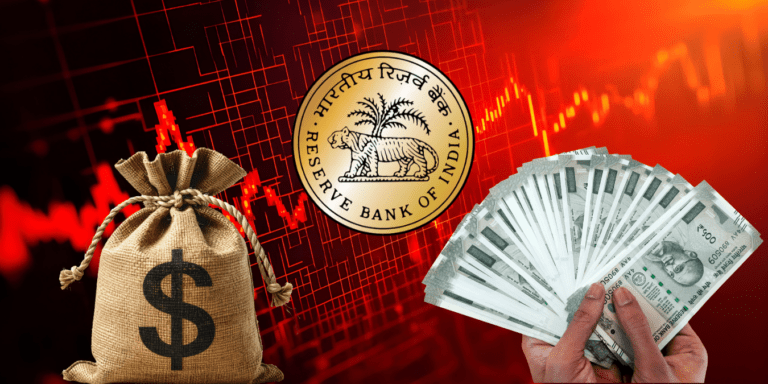
The Reserve Bank of India intervened decisively to contain the currency rout. The RBI announced new limits on banks’ foreign-exchange exposure, capping onshore open positions at $100 million per day effective April 10. This regulatory intervention, combined with RBI’s direct dollar sales from foreign exchange reserves, helped engineer a Rupee recovery from those catastrophic lows. For equity markets, a stabilizing currency is crucial because it reduces imported inflation, improves corporate earnings visibility for import-dependent sectors, and — most importantly — reduces the risk of foreign portfolio investor (FPI) outflows triggered by currency depreciation losses.
The Rupee at 92.98 is not a sign of strength. It is a sign that the floor has been administratively reinforced. That distinction matters enormously for how long this equity rally can sustain itself. Markets that rally on policy-engineered stability rather than fundamental improvement tend to be volatile once the policy crutch is removed or tested.
The Hidden Market Signal Experts Are Watching
Beyond headlines, technical analysts tracking the Nifty are focused on a very specific zone. Sudeep Shah, Head of Technical and Derivatives Research at SBI Securities, identified 23,230-23,250 as the immediate resistance for the Nifty. Any sustainable close above this zone could trigger an extension of the pullback rally toward 23,400 and potentially 23,600 in the short term. On the downside, the 23,020-23,000 zone acts as immediate support. The fact that Nifty closed at 23,123 means it is sitting right in the middle of a contested technical range — not a breakout, not a breakdown.
The “hidden signal” that institutional desks and experienced traders are watching is the options market structure. Nifty’s weekly expiry coincided with April 7, which means options data around the 23,300 strike represented a crucial resistance zone. Heavy call writing at 23,300 suggests that large market participants were not expecting — or were actively hedging against — a move above that level. When the “smart money” through options positioning disagrees with the direction of cash market momentum, it creates a tug of war. That friction is precisely why the Nifty’s intraday recovery was volatile rather than clean.
The Crude Oil Variable That Changes Everything
Crude oil cracking from $111.80 to $109 per barrel was cited as a supporting factor for the market recovery. But a marginal $2.80 drop in crude price does not move equity indices by 500+ Sensex points on its own. What it does is signal direction. For traders operating in a macro-driven environment, the direction of crude oil is more important than its absolute level. A crude oil price that is falling — even marginally — from elevated levels tells markets that the inflation peak may be nearby, that the geopolitical risk premium is not infinitely escalating, and that the RBI has a slightly better chance of maintaining its easing bias without triggering a currency collapse.
For sectors like aviation, paints, chemicals, and FMCG, the marginal crude softening is a forward-looking margin-expansion signal. IndiGo (Interglobe Aviation) was actually among the losers on April 7, which appears paradoxical given the crude drop — but this reflects that the stock had already run up significantly in prior sessions pricing in crude softening, and traders were booking profits. This “sell the rally on good news” behavior in individual stocks, even during a broad market up-move, is another signal that the recovery remains fragile and sentiment-driven rather than conviction-driven.
Metal Stocks: The Unsung Heroes of April 7
While IT stocks grabbed the headlines, metal stocks quietly participated in the recovery as well. Hindalco Industries featured among the notable gainers alongside Wipro and TCS. This matters because metal stocks are a completely different macro bet than IT stocks. Metals are cyclical, commodity-linked, and sensitive to global growth expectations. The fact that both defensive IT and cyclical metals moved higher simultaneously on the same day suggests that the rally was not driven by a single narrative.
When seemingly contradictory sectors — defensives and cyclicals — rise together, it typically indicates broad-based institutional buying that is sector-agnostic. This kind of “everything goes up” buying pattern is most commonly seen when a specific macro uncertainty is about to be resolved. In this case, that uncertainty is the RBI MPC outcome on April 8. Institutional investors were reducing cash holdings and getting invested before the policy announcement, betting that whatever the RBI said, it would be market-neutral to positive. The positioning was less about conviction and more about not wanting to be caught underinvested if the outcome proved dovish.
What This Means for Retail Investors Right Now
The Nifty’s four-day winning streak heading into the RBI decision is a textbook example of “pre-event positioning.” Markets tend to drift upward in the 24-48 hours before major policy events when the consensus expects a benign outcome, because institutional money needs to be deployed at scale and cannot wait until after the announcement. By the time the RBI speaks on April 8, a significant portion of the “good news” has already been priced in.
For retail investors, the risk is falling into the trap of chasing the rally after the fact. If the RBI announces a hold — which the market has already priced — the initial reaction could range from flat to mildly negative as “buy the rumor, sell the news” dynamics kick in. The real opportunity, as always, lies not in reacting to headlines but in understanding the layers beneath them. The Nifty at 23,123 is not cheap. It is not in a confirmed bull market recovery. It is in a technically contested range, propped up by a combination of IT earnings optimism, policy pre-positioning, engineered Rupee stability, and marginally softer crude. Every one of those props has an expiry date.
The Structural Story Behind the Noise
Step back from the daily noise and a clearer structural picture emerges. The RBI has cut rates by 125 basis points since early 2025. Despite those cuts, the Rupee has fallen nearly 9.25% over 12 months, which means real monetary conditions are tighter than they appear on paper because currency depreciation erodes the benefit of lower rates for companies with import costs or foreign-currency debt. The RBI’s decision to cap banks’ FX exposure is an unconventional tool that buys short-term Rupee stability at the cost of reduced market flexibility.
Meanwhile, crude oil at $109 per barrel — even if slightly off its highs — represents a structurally elevated input cost for the Indian economy. West Asian geopolitical tensions show no signs of resolution. In this environment, the RBI faces a genuine policy dilemma: cut rates to support growth and risk a currency and inflation spiral, or hold rates and accept slower economic recovery. The market’s comfort on April 7 rested on the assumption that the RBI would hold and provide a soothing forward guidance. Whether that comfort survives contact with the actual announcement on April 8 is the question every serious investor should be asking right now.
The Bottom Line Every Investor Needs to Hear
The Nifty did not cross 23,100 on April 7 simply because Wipro signed a large deal or because crude fell $2.80. It crossed 23,100 because a convergence of factors — a technically expected pre-event rally, a Rupee that had stabilized after RBI intervention, IT stocks acting as defensive anchors, and institutions reducing cash ahead of the MPC announcement — created the conditions for a sharp intraday reversal from deep losses. The morning’s 800-point Sensex decline was the actual signal; the subsequent recovery was the market’s answer to that signal.
Experienced investors do not just read closing prices. They read the intraday narrative, the options positioning, the currency stability mechanisms, and the institutional rotation patterns. The Nifty at 23,123 is a number. The story behind it — involving the RBI’s delicate balancing act, a Rupee at 92.98 that is one geopolitical shock away from fresh lows, and an IT sector carrying the entire market on its shoulders — is the real market intelligence. That is what separates investors who build long-term wealth from those who simply follow headlines and wonder why their portfolio never performs the way the index promises.