The "American" Baby Trap: Why SCOTUS’s 2025 Review Could Leave Your Child Stateless
Think your US-born child is American? A hidden Supreme Court case could leave H-1B babies legally stateless in 2026. From a “marriage market” crash to the “Hereditary H-4” trap, uncover the shocking fine print rewriting the Indian American Dream—and the urgent step every parent must take before summer.
Imagine this: You are a senior software engineer in Seattle. You pay six-figure taxes, you’ve owned a home for five years, and you’ve just welcomed a baby girl at Swedish Medical Center. The nurse hands you the birth certificate forms. You fill them out with pride.
But six weeks later, a letter arrives—not a passport, but a denial. Your daughter, born on US soil, is classified not as a citizen, but as a “dependent alien.” Even worse, because you haven’t yet registered her with the Indian consulate—assuming she was American—she is now, legally, a ghost. She belongs to no nation.
This sounds like dystopian fiction. But as of December 5, 2025, it is a looming constitutional reality that the United States Supreme Court has agreed to review.
While the world headlines scream about “illegal immigration,” a quiet, devastating legal revolution is underway that targets the most law-abiding immigrants in America: the Indian diaspora. The “surprise” isn’t that the rules are changing for the undocumented. The shock is that they are changing for the documented—specifically, the H-1B holders who built Silicon Valley.
Here is the deep, unvarnished truth about Trump v. Washington that most mainstream media is missing, and why it poses an existential threat to the “American Dream” for Indians in 2026.


The News That Shook the Diaspora: SCOTUS Steps In
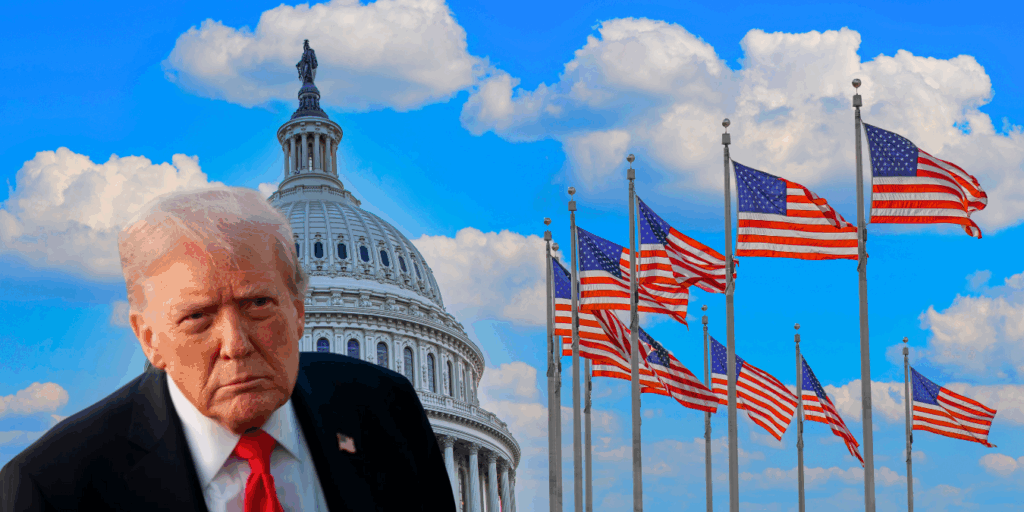
On December 5, 2025, the US Supreme Court granted certiorari in the case challenging President Donald Trump’s Executive Order 14160.
The Background: On his first day in office, January 20, 2025, President Trump signed an order titled “Protecting the Meaning and Value of American Citizenship.” The order directed federal agencies to stop granting automatic citizenship to children born in the US unless at least one parent is a US citizen or a Lawful Permanent Resident (Green Card holder).
The Status: The order was initially blocked by lower courts, allowing babies born in 2025 to (mostly) keep their status. However, the administration appealed, arguing that the 14th Amendment has been misinterpreted for a century. The Supreme Court, with its 6-3 conservative majority, will now decide if the phrase “subject to the jurisdiction thereof” excludes children of foreign nationals.
The Timeline: Arguments will be heard in early 2026, with a decision expected by June. That means for every pregnancy planned or currently underway in the H-1B community, the child’s future hangs in the balance.
The “Jurisdiction” Trap: Why H-1B Holders Are Not Safe
The common belief among Indian techies has always been: “I am legal. I followed the rules. This is about border crossers.”
This is a fatal misunderstanding.
The legal argument the Trump administration is using relies on a strict definition of “consent.” They argue that for a child to be a citizen, the US government must consent to the family’s permanent presence.
- Green Card: The government has consented to your permanent residence.
- H-1B/L-1 Visa: These are Non-Immigrant visas. They have an expiration date. By definition, the government has not consented to your permanent stay, even if you have an I-140 approved.
The “Wong Kim Ark” Loophole
Legal scholars supporting the EO argue that the 1898 Wong Kim Ark ruling—which established birthright citizenship—only applied to permanent residents. They claim the court never explicitly settled the question for temporary workers. If the Supreme Court accepts this narrow reading, 71% of H-1B holders (who are Indian) will fall into the same legal bucket as undocumented immigrants regarding their children’s rights.
The Statelessness Nightmare: A Bureaucratic Black Hole
Here is the hidden aspect that genuinely terrifies legal experts: The risk of creating stateless babies.
Unlike the US, India does not have jus soli (citizenship by birth). India follows jus sanguinis (citizenship by blood). However, it is not automatic for children born abroad.
The Catch-22:
Under Section 4 of the Citizenship Act, 1955, a child born outside India is a citizen only if the birth is registered with an Indian consulate within one year.
- Scenario A (Current Law): You assume your child is American. You don’t register them with India (because India bans dual citizenship). They are US citizens.
- Scenario B (New Law): The US denies citizenship. You panic and try to register them as Indian. But if you miss the one-year window, or if the Indian consulate demands proof that the child is not a US citizen (which the US might not provide immediately due to bureaucratic chaos), your child is left with no citizenship at all.
This “stateless” status means no passport, no travel ability, and potentially no access to public services in either country. You would be raising a ghost.
The “Documented Dreamer” Problem on Steroids
We are already familiar with the tragedy of “Documented Dreamers”—H-4 kids who age out at 21 and face deportation.
If birthright citizenship ends, the “age out” problem disappears—because it is replaced by an “age zero” problem.
Every child born to H-1B parents would effectively be born an H-4 dependent.
- No Social Security Number at birth.
- No eligibility for federal financial aid for college.
- Deportation Risk: If the primary H-1B holder loses their job and has to leave the US in 60 days, the US-born child must leave too. The child has no independent right to stay in the country of their birth.
This transforms the H-1B from a “golden ticket” into a “generational treadmill,” where your children inherit your temporary status, not your freedom.
The Marriage Market Crash: “No Visa, No Wedding?”
The cultural ripple effects are already hitting Hyderabad, Bangalore, and Punjab. For decades, a US visa was a premium asset in the arranged marriage market. That asset is now becoming a liability.
The “Passport to Love” is Expiring:
Reports from late 2025 show a sharp decline in interest for US-based grooms.
- The Fear: Parents in India are asking, “Why send our daughter to a place where her children won’t be citizens?”.
- The Shift: Matrimonial queries are pivoting toward Canada, the UK, and even Australia. In these countries, the path to PR is predictable, and birthright citizenship (in Canada) remains intact.
One matchmaker in Delhi noted, “The US groom was once the jackpot. Now, he’s seen as a high-risk gamble. Families prefer a lower salary in Toronto over a high salary in San Jose if it means stability”.
The Great Reverse Migration: Is the “Brain Drain” Over?
The psychological contract has been broken. The deal was: “Pay high taxes, endure the wait, and your kids will be Americans.” Without that promise, the ROI of the US life collapses.
The “Self-Deportation” Trend:
We are seeing the early signs of a “Reverse Brain Drain.”
- Tech Talent Returning: Senior leaders in AI and Cloud are moving back to Bengaluru and Pune to join Global Capability Centers (GCCs). The salaries in Indian metros have risen, and the purchasing power parity (PPP) gap is closing.
- The “Canada Insurance” Policy: Thousands of H-1B holders are aggressively pursuing Canadian PR as a backup. The Canadian government has even launched targeted draws to poach US tech talent unnerved by Trump’s policies.
If the Supreme Court rules against birthright citizenship, we expect a mass exodus of mid-career Indian professionals. The US tech sector’s loss will be India’s gain.
The “Desi” Political Paradox
There is a bitter irony in this moment. The 2024 election saw a record shift of Indian-American voters toward the Republican party, driven by concerns over taxes, meritocracy, and education.
Prominent figures like Vivek Ramaswamy have historically supported ending birthright citizenship for illegal immigrants, often arguing that the 14th amendment shouldn’t reward law-breaking.
The Surprise: The policy they supported is now eating their own base. The distinction between “legal” and “illegal” is being erased by the broader “nativist” interpretation of the constitution. It turns out that to the hardline wing of the movement, an H-1B worker is just a “temporary guest” who overstayed their welcome, not a future American.
The “Paperless” Generation: How a Supreme Court Ruling Could Erase Your Child’s Future And What You Can Do
It is the ultimate immigrant nightmare: You are legally in the United States. You pay taxes. Your child is born in a top-tier American hospital. But when you apply for their passport, you are told they don’t have a country. They are not American. And because you didn’t register them with New Delhi in time, they are not Indian. They are stateless.
For decades, the H-1B visa was a stepping stone to the American Dream. Now, with the Supreme Court agreeing to review Trump v. Washington, it is poised to become a trap. While the media focuses on “border walls,” the real earthquake is happening in the suburbs of San Jose, Dallas, and Edison, NJ.
If you are an Indian parent in the US—or planning to become one—here is the unvarnished truth about how a single court ruling in 2026 could rewrite your family’s destiny.
1. The Verdict: Documented, Yet Denied
The most shocking aspect of President Trump’s Executive Order 14160 isn’t that it targets “illegal” immigration—it’s that it explicitly redefines legal, tax-paying visa holders as “temporary outsiders”.
The Core Shift:
The Supreme Court is reviewing whether the 14th Amendment’s phrase “subject to the jurisdiction thereof” applies to children of foreign nationals on temporary visas.
- Old Interpretation: If you are born here, you are a citizen (unless you are a diplomat).
- New Interpretation (Proposed): You are only a citizen if your parents have permanent allegiance to the US (i.e., US Citizens or Green Card holders).
Why This Hits Indians Hardest:
Indians hold over 70% of H-1B visas. Because of the decades-long Green Card backlog, hundreds of thousands of Indian families live in a “temporary” status for 20+ years. If the Court rules in Trump’s favor, your “temporary” status becomes hereditary. Your US-born child inherits your visa, not your freedom.
2. The “Grandfather” Clause: Are Existing Citizens Safe?
The Good News:
Legal experts largely agree that the Executive Order is not retroactive. The text explicitly states it applies prospectively.
- Born Before the Ruling: If your child was born before the Executive Order’s effective date (or potentially before the final Supreme Court ruling in mid-2026), their citizenship is likely constitutionally locked. The Supreme Court precedent (Afroyim v. Rusk) makes it nearly impossible to strip citizenship once granted.
The Bad News:
The danger is for future births. If you are planning a family in late 2026 or 2027, you are entering a danger zone. If the ruling drops in June 2026, a child born in July could be denied a US birth certificate.
3. The Hidden Trap: The Risk of Statelessness
This is the detail that no one is talking about, and it is terrifying.
India does not offer automatic citizenship by birth (jus soli). It offers citizenship by descent (jus sanguinis), but with a strict condition: Registration.
Under Section 4 of the Citizenship Act, 1955, a child born abroad must be registered with an Indian consulate within one year of birth to be eligible for citizenship.
The Scenario:
- 2026: You have a baby in the US. You assume they are American, so you don’t register them with the Indian consulate (since India forbids dual citizenship).
- 2027: The US government, enforcing the new ruling, refuses to issue a US passport.
- The Crisis: You rush to the Indian consulate. But if the one-year window has passed, or if bureaucratic hurdles arise, your child is left with no citizenship. They cannot travel. They cannot attend school as a resident. They effectively do not exist.
4. The “Hereditary H-4” Curse
If the ruling stands, the concept of the “Anchor Baby” vanishes. In its place comes the “Hereditary H-4.”
A child born to H-1B parents would be issued an H-4 dependent visa at birth.
The Real-World Impact:
- No Social Security Number: No part-time jobs in high school.
- International Tuition: Even if they live in Texas their whole life, they could be charged “international student” rates at UT Austin—often 3x the local cost.
- The Age-Out Cliff: At age 21, they face the same deportation nightmare as today’s “Documented Dreamers,” but with zero years of protection.
5. Actionable Steps: Protect Your Family NOW
If you are an H-1B holder, “wait and see” is a dangerous strategy.
- 1. The “Dual” Paperwork Strategy: If you have a child born during this uncertain period (2025-2026), consult an immigration lawyer about conditionally registering with the Indian consulate. Ensure you have a path to Indian citizenship if the US door closes.
- 2. Secure the Passport ASAP: If your child is already born, apply for their US passport now. Do not wait for a vacation. A physical passport is stronger proof of status than just a birth certificate in chaotic times.
- 3. The “Canada” Contingency: If you are in the early stages of family planning, consider securing Canadian PR. Canada still retains birthright citizenship. A move north might be the only way to guarantee your child a western passport.
- 4. Financial Planning: Start saving for your child’s college education as if they were an international student. The “in-state tuition” benefit may vanish for non-citizen children.
Actionable Takeaways for the H-1B Family (2025 Edition)
Panic is not a strategy. Here is what you need to do now while the legal machinery turns:
- Register Births Immediately: If you have a child born in late 2025 or 2026, do NOT assume they are safe. Register their birth with the Indian consulate immediately to secure their Indian citizenship rights as a backup.
- Expedite the Green Card: If you qualify for EB-1 (extraordinary ability), spend the money on a lawyer and file. It is the only visa category that offers safety from this EO.
- Check “Grandfather” Clauses: The current injunction means babies born before a final Supreme Court ruling are likely safe. If you are expecting, pray for a birth date before June 2026.
- Diversify Your Geography: If you don’t have a Canadian PR or an OCI (Overseas Citizen of India) card, get your paperwork in order. You need an exit chute.
- Vote with Your Wallet: Support organizations like the ACLU or immigration advocacy groups that are fighting this in court. They are the only barrier between you and the EO.
Final Thought: The Summer of 2026
The summer of 2026 will not just be about the World Cup or the heatwave. It will be the season that decides the fate of millions of unborn children.
Will America remain a nation of immigrants, or will it become a fortress where bloodline determines destiny?
For the Indian diaspora, the era of “passive waiting” is over. The “Anchor Baby” slur was once something you thought applied to others. Now, the Supreme Court is deciding if your baby is the anchor—or if they will be cut loose.
The Twist
Legal insiders are whispering about a potential “nuclear option.” If the US ends birthright citizenship, India might retaliate by revising the tax treaties that allow US companies to operate so cheaply in Bangalore. Could the H-1B issue spark a full-blown trade war between Modi and Trump?
Watch this space. The real game has just begun.
Disclaimer: This blog post is for informational purposes only and does not constitute legal advice. Immigration laws are volatile. Always consult with a qualified attorney for your specific case.