Spirit Airlines Bankruptcy and Flight Cancellations — The Real Reason!
Spirit Airlines just canceled hundreds of flights across 15+ US airports — and the list keeps growing. Fort Lauderdale, Newark, Orlando, Detroit: no route feels safe right now. Before you check your boarding pass, find out exactly which routes are at highest risk and what to do if yours is next.
It was supposed to be a long Presidents’ Day weekend getaway. Instead, thousands of Spirit Airlines passengers across the United States found themselves sleeping on terminal floors, staring at departure boards flashing “CANCELED,” and desperately searching for last-minute alternatives that cost three times their original fare.
Since Friday, February 13, 2026, Spirit Airlines has cancelled over 250 flights, with no signs of a full recovery in sight. Fort Lauderdale, Newark, Orlando, Miami, Detroit, and at least a dozen other major airports have been hit hard. For an airline already operating under Chapter 11 bankruptcy — for the second time in less than a year — this operational meltdown is more than a bad week. It’s a flashing red warning sign that America’s most budget-friendly carrier may be running out of runway.
What Exactly Happened With Spirit Airlines’ Flight Cancellations?
The root cause is deceptively simple: Spirit doesn’t have enough people to fly its planes.
The airline, currently in Chapter 11 bankruptcy for the second time in less than a year, has acknowledged that it has been experiencing flight cancellations and delays tied to staffing shortages. Specifically, the carrier has struggled to find adequate crews and flight attendants to staff its aircraft — a crisis that intensified heading into one of the busiest travel weekends of the winter.
According to the website FlightAware, 89 Spirit flights were cancelled during Presidents’ Day weekend alone, and 66 of them were Spirit flights.
The staffing problem didn’t appear overnight. The airline has been in the midst of a sweeping restructuring that includes reducing capacity and furloughing hundreds of pilots and thousands of flight attendants as it attempts to stabilize its finances and emerge from bankruptcy protection. When you furlough your workforce and then face a surge in demand, the math simply doesn’t work. Even modest weather disruptions or air traffic congestion can trigger a chain reaction when you have almost no crew buffer.
When crews time out under federal duty rules, or when a single inbound aircraft is delayed, the disruption can ripple across several flights in a single day, leaving passengers stranded for 24 hours or more.
Which Airports and Routes Were Hit the Hardest?
The disruptions were not contained to one corner of the country. The cities and airports impacted by Spirit Airlines’ flight suspensions include Newark (EWR), Orlando (MCO), Detroit (DTW), Fort Lauderdale (FLL), Miami (MIA), LaGuardia (LGA), Myrtle Beach, Baltimore/Washington (BWI), Atlantic City, San Antonio, Charlotte, Nashville, Richmond, John Wayne Airport in California, and Las Vegas.
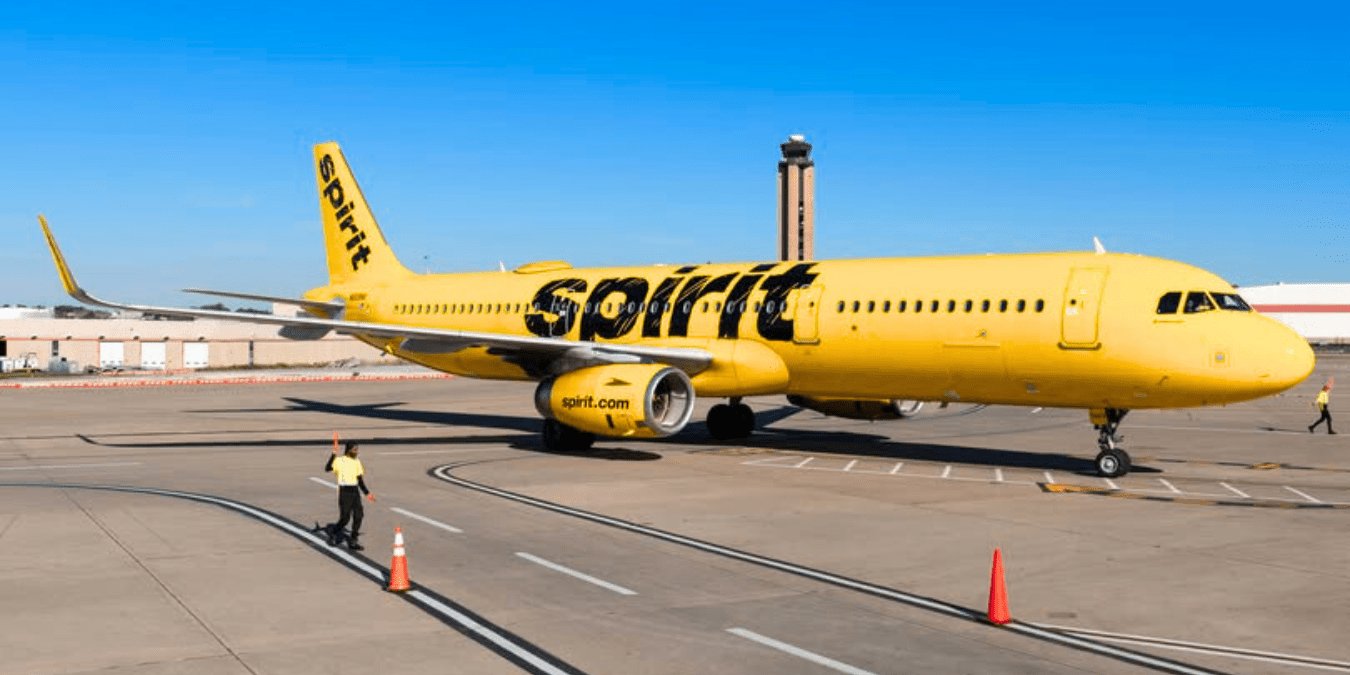
But South Florida bore the worst of it. Fort Lauderdale-Hollywood International Airport, where Spirit Airlines is the dominant carrier, has been among the most heavily affected airports in the country. At Fort Lauderdale, row after row of Spirit’s yellow-and-white aircraft sat parked at gates while departure boards repeatedly showed “cancelled” for flights bound to cities up and down the East Coast.
For passengers at smaller markets — cities that may only have one or two Spirit departures per day — the calculus became brutal. Travellers flying from cities that may only see a handful of Spirit flights per week often confronted a stark choice when their flight was cancelled: wait days for the next available seat, buy a last-minute ticket on a legacy carrier at significantly higher cost, or abandon their trip altogether.
Families who booked Spirit specifically because they couldn’t afford a Delta or United ticket suddenly faced $400–$600 last-minute fares on competing carriers — the very situation budget travel is supposed to prevent.




Why Spirit Can’t Just Put You on Another Airline
Here’s the part that makes Spirit cancellations uniquely painful — and it’s something most passengers don’t know until it’s too late.
Unlike larger carriers, Spirit does not have interline agreements with other airlines, meaning it cannot automatically rebook passengers onto competing carriers when disruptions mount. This is the critical structural difference between flying Spirit and flying, say, United or Delta.
When a United Airlines or Delta Air Lines flight gets canceled, those airlines often leverage existing agreements to rebook affected customers on partner carriers at no extra cost. Spirit Airlines passengers do not have access to this safety net. Competitors are not under any contractual obligation to help, and there is no systematic way to rebook passengers across airlines without these arrangements.
That means when Spirit cancels your flight, your only options are:
- Wait for the next available Spirit flight (which could be days away)
- Accept a refund and book a new ticket yourself at whatever price the market demands
- File a complaint and hope for additional compensation
Spirit’s model is incredibly efficient when it’s working — but it doesn’t have much shock absorption when it’s not. That’s not a random observation — it’s the fundamental economic trade-off of ultra-low-cost flying. You get a cheap seat, but you also get an airline with very little resilience when things go sideways.
Spirit’s Bankruptcy Context: Why This Matters Now
To understand the full picture, you have to zoom out on Spirit’s financial history. The airline filed for Chapter 11 bankruptcy in November 2024, emerged from that restructuring in March 2025, and then filed again for Chapter 11 in August 2025. The second bankruptcy was completed just months ago, and the airline has been operating under extreme financial constraints ever since.
As part of that restructuring, Spirit has been aggressively cutting routes, shrinking its fleet, and trimming staff to reduce costs. Industry data in recent months has highlighted how those cutbacks have translated into a tighter operation. With fewer crews and aircraft available, even modest weather issues or air traffic control constraints can quickly trigger a chain reaction of delays and cancellations.
Some furloughed employees have chosen not to return. Reports have pointed to difficulties recalling furloughed employees, with some flight attendants and pilots opting not to return. That has further constrained Spirit’s ability to rebuild its schedule and has raised questions about how robust its summer operation will be if demand remains strong.
What Industry Experts Are Saying
The aviation industry is watching this closely — and the analysis is sobering.
Mike McCormick, managing partner of Travel Again Advisory, was direct in his assessment. “Airlines fail because of prolonged cash flow deterioration, not because of one difficult operational week. The bigger question is whether this is a short-term operational breakdown or part of a broader pattern.”
He also flagged the competitive risk: “Spirit’s customers are price-sensitive, but they also have alternatives. If disruptions feel systemic rather than isolated, competitors will benefit.”
That point about competition is important. Spirit has historically dominated budget routes out of South Florida and served as a crucial affordable option for communities that depend on low fares to fly. If passenger confidence collapses — even among travelers who would otherwise absorb occasional disruptions — the airline’s booking revenue could take a hit at exactly the moment it can least afford one.
“Operational meltdowns don’t kill airlines overnight — but they’re often the first visible sign that the margin for error is disappearing.”
Know Your Rights as a Stranded Spirit Passenger
If you’re among the thousands affected by Spirit’s cancellations, here’s what you’re legally entitled to in the United States:
Full Refund: Under U.S. Department of Transportation rules, if your flight is canceled for any reason — including staffing shortages — you are entitled to a full cash refund to your original form of payment. You do not have to accept a travel credit or voucher. Insist on cash back if that’s what you want.
Rebooking at No Extra Cost: Spirit is obligated to rebook you on the next available Spirit flight at no additional charge. However, as discussed above, they are not required to book you on other carriers.
Additional Compensation: The DOT does not currently mandate cash compensation for domestic cancellations beyond the refund (unlike EU regulations). However, Spirit may offer travel credits or vouchers as a goodwill gesture — you can negotiate.
Credit Card Protections: If you paid with a credit card that includes travel protection (many Chase, Amex, and Citi cards do), you may be entitled to reimbursement for additional hotel, meal, and transportation expenses. Check your card benefits now if you’re stranded.
DOT Complaint: If Spirit is unresponsive or refuses a refund, file a complaint directly at aviation.consumer.dot.gov. This creates an official record and often accelerates resolution.
Should You Keep Flying Spirit?
This is the question on every budget traveler’s mind right now — and it deserves an honest answer.
Spirit still has value for price-sensitive travelers on stable routes, particularly those with flexible schedules and no critical time constraints. If a $49 fare to Orlando suits your trip, and missing a connection won’t ruin a business meeting or a wedding, Spirit can still be a rational choice.
But if you are traveling for an event with a hard deadline — a cruise departure, a wedding, a graduation, a medical appointment — Spirit’s current operational fragility makes it a risky bet. The airline has thin crew reserves, no interline safety net, and a financial backdrop that leaves it vulnerable to further disruptions. A missed flight on Spirit today means you’re on your own.
Travel insurance has never been more relevant for Spirit passengers. A policy that covers trip cancellations, missed connections, and emergency rebooking can transform a potential disaster into a manageable inconvenience.
The Bigger Picture: What Spirit’s Troubles Say About Budget Air Travel
Spirit’s meltdown is a reminder of a broader truth about ultra-low-cost carriers: the margins that keep fares low also strip out the redundancy that makes airline operations resilient.
Legacy carriers like United, Delta, and American can absorb crew shortages more easily because they operate hub-and-spoke networks with larger fleets, deeper crew pools, and interline partnerships that allow them to disperse disrupted passengers across a broader system. Spirit operates point-to-point with lean staffing and maximum aircraft utilization — a model that prints money in perfect conditions and implodes when conditions aren’t perfect.
Spirit’s stand-alone network is a glaring liability, one that adds to its mounting financial challenges in an era of heightened consumer expectations.
For the 45 million Americans who fly Spirit annually, the events of mid-February 2026 are a wake-up call. Budget travel is not inherently unreliable — but it comes with trade-offs that are easy to forget when everything goes smoothly. Right now, nothing is going smoothly for Spirit Airlines.
What Happens Next for Spirit Airlines?
Industry observers are watching Spirit’s next moves carefully. The airline needs to demonstrate that it can stabilize operations, rebuild crew confidence, and retain passengers who are now understandably skittish.
In the short term, expect Spirit to attempt a gradual return to normal scheduling. The airline has financial incentives to resolve the staffing crisis quickly — every canceled flight is revenue lost and refunds paid out. Whether they can execute a recovery while still in bankruptcy restructuring mode is an open question.
Longer term, Spirit’s survival depends on whether the current disruption is, as experts say, an isolated operational breakdown or a signal of deeper structural dysfunction. The answer will likely become clear by summer — the crucial high-demand season that could either stabilize Spirit’s finances or tip them further toward the edge.
For now, if you have an upcoming Spirit flight, monitor the airline’s website and the FlightAware tracking site closely. Know your rights. Have a backup plan. And consider whether the savings on your original ticket are worth the risk of a much larger unplanned expense on the other side of a cancellation.