Should a First-Time Homebuyer Take the Maximum Home Loan or Play It Safe?
Should a First-Time Homebuyer Take the Maximum Home Loan or Play It Safe?
The decision that shapes your financial future for the next 20 years deserves more than guesswork. Here’s what the numbers and real-world experience reveal.
The excitement of buying your first home often comes with a critical financial crossroads: should you borrow the maximum amount the bank approves, or should you play it safe with a smaller loan? This decision will define your lifestyle, savings capacity, and financial resilience for decades to come.
After spending 15 years in banking and financial services, I have witnessed countless first-time homebuyers make decisions they later regretted. The common thread? They focused solely on what they could borrow rather than what they should borrow. Let me walk you through the framework that separates financially comfortable homeowners from those perpetually stressed about EMIs.
Understanding Maximum Loan Eligibility: What Banks Actually Calculate
Banks determine your maximum home loan eligibility based on several interconnected factors. The primary consideration is your Fixed Obligations to Income Ratio (FOIR), which measures what percentage of your monthly income goes toward existing debt obligations plus the proposed home loan EMI.
Most banks in India cap FOIR at 50-60% for salaried individuals. This means if you earn Rs 1,00,000 per month and have no existing debts, a bank might approve an EMI of Rs 50,000-60,000. However, here lies the first trap: just because a bank approves this amount does not mean you should accept it.
Bank eligibility calculations are designed to minimize the bank’s risk of default, not to optimize your financial wellness. Their threshold represents the maximum stress your finances can handle, not the ideal amount you should borrow.
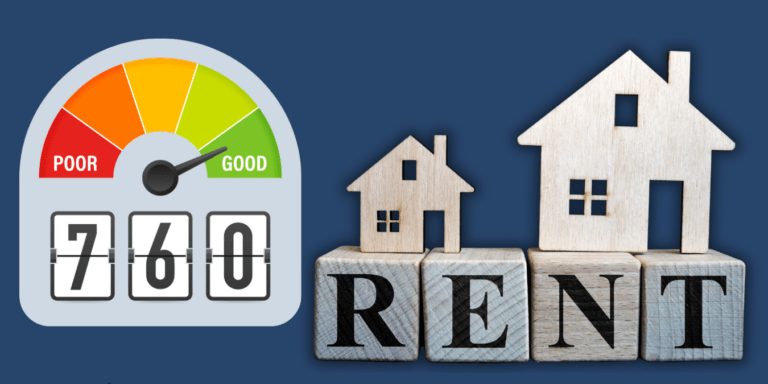
Beyond FOIR, lenders examine your credit score, employment stability, existing assets, and the property’s value. A CIBIL score above 750 typically unlocks better interest rates and higher loan amounts. However, qualifying for more does not translate to affording more in real-world terms.
The Hidden Costs That Maximum Borrowers Discover Too Late
When you stretch to the maximum loan amount, several hidden expenses compound your financial pressure. Property registration and stamp duty typically consume 7-10% of the property value in most Indian states. Interior work, modular kitchen installations, and essential furniture add another 10-15% to your initial outlay.
Maintenance charges, property taxes, and society fees represent recurring costs that many first-time buyers underestimate. In metropolitan areas, these can range from Rs 5,000 to Rs 20,000 monthly depending on the property type and amenities.
Maximum borrowers often deplete their emergency funds to cover down payments and initial costs. This leaves them financially vulnerable to job loss, medical emergencies, or interest rate hikes during the loan tenure.
The Conservative Approach: Benefits of Borrowing Less
Borrowing 20-30% below your maximum eligibility creates breathing room that compounds into significant advantages over time. Lower EMIs mean greater monthly surplus for investments, allowing your wealth to grow alongside your property equity.
Consider this scenario: on a Rs 50 lakh loan at 8.5% for 20 years, the EMI is approximately Rs 43,391. If you instead borrow Rs 40 lakh, the EMI drops to Rs 34,713, freeing up Rs 8,678 monthly. Invested in equity mutual funds averaging 12% annual returns, this surplus grows to approximately Rs 80 lakhs over the loan tenure.
Psychological Benefits of Financial Cushioning
Beyond mathematics, conservative borrowing delivers peace of mind that maximum borrowers rarely experience. The constant stress of meeting steep EMIs affects career decisions, family planning, and overall quality of life.
I have observed that homeowners with comfortable EMIs are more likely to take calculated career risks, pursue higher education, or start side businesses. Their financial cushion enables choices that stretched borrowers cannot afford to make.
| Factor | Maximum Loan | Conservative Loan |
|---|---|---|
| Monthly Savings Capacity | Minimal to none | 15-25% of income preserved |
| Emergency Fund Status | Often depleted | Intact and growing |
| Interest Rate Sensitivity | High vulnerability | Manageable impact |
| Prepayment Ability | Unlikely | Regular partial prepayments possible |
| Career Flexibility | Locked into current income | Freedom to explore opportunities |
| Family Planning Impact | Significant constraints | Minimal financial pressure |
When Maximum Borrowing Actually Makes Sense
Despite advocating for conservative borrowing, I acknowledge scenarios where stretching closer to your limit is financially rational. Property markets in high-growth cities demonstrate consistent appreciation that may justify aggressive borrowing.
If you are purchasing in an established locality with proven price appreciation exceeding your loan interest rate, the mathematics favor larger borrowing. Similarly, if your career trajectory strongly suggests significant income growth within 3-5 years, temporarily stretching your budget becomes more defensible.
Consider Maximum Loan When:
- Property location shows 10%+ annual appreciation historically
- Your income is expected to double within 5 years
- You have substantial liquid investments as backup
- Interest rates are at cyclical lows
- Rental income from the property is feasible
Play It Safe When:
- Single-income household with dependents
- Job stability is uncertain or industry is volatile
- No emergency fund beyond down payment
- Interest rates are rising or at historical highs
- First property in an unproven micro-market
The Golden Rules for First-Time Homebuyers
After analyzing thousands of home loan cases, I have distilled the decision framework into actionable principles that balance aspiration with prudence.
Rule 1: The 30% EMI Threshold
Regardless of what banks approve, cap your home loan EMI at 30% of your take-home salary. This leaves adequate room for other goals, emergencies, and lifestyle maintenance. Banks might approve 50-60%, but your financial comfort zone lies around 30%.
Rule 2: The Six-Month Buffer
Before taking any home loan, ensure you retain emergency savings covering six months of all expenses including the new EMI. This buffer protects against job transitions, health emergencies, and economic downturns.
Rule 3: The Prepayment Strategy
Choose a loan amount where you can comfortably make annual prepayments of at least one additional EMI. This accelerates principal reduction, saving lakhs in interest over the tenure while building equity faster.
Use home loan prepayment as your primary wealth-building tool in early years. Every rupee prepaid saves Rs 2.5-3 in interest over a 20-year loan tenure at current rates.
Calculating Your Ideal Loan Amount: A Practical Framework
Instead of working backward from bank eligibility, calculate forward from your financial comfort zone. Start with your post-tax monthly income and deduct all essential expenses, existing EMIs, and a minimum 20% savings allocation.
The remaining amount represents your maximum comfortable EMI. Use any online EMI calculator to determine the loan principal this EMI supports at current interest rates and your preferred tenure. This becomes your practical borrowing limit, which is often 20-40% below bank-approved maximums.
Factor in expected income growth conservatively. If you anticipate a 10% annual increment, assume only 5% in your calculations. This builds in safety margins while still acknowledging career progression.
Interest Rate Risk: The Variable Most Buyers Ignore
Home loans in India are predominantly floating-rate products linked to external benchmarks like repo rate. When interest rates rise, your EMI increases proportionally, often catching maximum borrowers off guard.
A 1% interest rate increase on a Rs 50 lakh loan raises the EMI by approximately Rs 3,000 monthly. Over a 20-year tenure, this translates to additional interest outflow exceeding Rs 7 lakhs. Maximum borrowers have no absorption capacity for such increases, while conservative borrowers can adjust without lifestyle disruption.
Frequently Asked Questions
Financial experts recommend capping home loan EMI at 30-35% of your net monthly salary. While banks may approve loans with EMIs consuming 50-60% of income, maintaining a lower ratio ensures you have adequate funds for savings, emergencies, and quality of life. This threshold becomes especially important for single-income households or those with dependent family members.
The optimal strategy is taking a longer tenure for lower mandatory EMIs while making voluntary prepayments equivalent to the shorter tenure EMI. This provides flexibility during tight months while still achieving faster loan closure. You save almost as much interest as the shorter tenure option but retain control over cash flows.
Generally, a larger down payment is preferable as it reduces your loan principal, EMI burden, and total interest outflow. However, if property prices in your target location are appreciating faster than your savings rate, early purchase with minimum down payment may prove financially advantageous. Calculate both scenarios using realistic appreciation and investment return assumptions.
Maximum home loan borrowing significantly impacts your ability to obtain other credit products. Your FOIR ratio remains elevated, potentially disqualifying you from car loans, personal loans, or business credit. This creates financial rigidity precisely when you might need flexibility for opportunities or emergencies. Conservative borrowing preserves future credit access.
The Verdict: Calibrated Caution Wins
After weighing all factors, the evidence strongly favors conservative borrowing for most first-time homebuyers. The opportunity cost of maximum borrowing, measured in depleted savings, elevated stress, and reduced life flexibility, typically outweighs the benefits of purchasing a marginally larger or better-located property.
Your first home need not be your forever home. Building equity through manageable EMIs while simultaneously growing investments creates the foundation for upgrading to your dream property within 7-10 years, debt-free or with minimal leverage.
The wisest first-time homebuyers I have encountered treat their purchase as a financial milestone rather than a destination. They borrow conservatively, invest the savings diligently, and position themselves for far better second purchases than their stretched counterparts ever achieve.