RBI's New Weekly Rule: Why You Must Pay Your Bills Before These 5 Dates Every Month
Your 30-day financial “invisibility cloak” vanishes in 2026. The RBI’s new weekly credit reporting rule exposes your loan stacking and credit card hacks 4x faster. Will this “live feed” of your debt trap you or slash your interest rates? The answer lies in when you pay, not just if you pay.
Did you know that for years, you’ve had a financial superpower you probably didn’t even realize you were using? It was a 30-day “invisibility cloak” that allowed you to make financial moves—good or bad—without the rest of the banking world seeing them until weeks later. That silence allowed smart borrowers to maximize credit and desperate ones to juggle loans. But as of this week, the Reserve Bank of India (RBI) has officially signed the death warrant for that delay. By April 1, 2026, your financial life will no longer be a monthly newsletter; it’s becoming a weekly live feed. And for millions of Indians, this changes the rules of the game in ways the headlines aren’t telling you.
The News: The 7-Day Ticker
The RBI has ordered all banks and Non-Banking Financial Companies (NBFCs) to report borrower data to Credit Information Companies (CICs) like CIBIL, Experian, and Equifax on a weekly basis starting April 1, 2026.
Currently, most reporting happens monthly or fortnightly. This meant that if you maxed out your credit card on the 5th, a lender checking your score on the 20th might still see your “clean” status from the previous month.
The New Schedule:
Data will now be pushed to bureaus five times a month:
- 7th
- 14th
- 21st
- 28th
- Last day of the month
This isn’t just an administrative update; it is a fundamental shift in the “physics” of Indian credit.
The “Hidden” Target: The Death of Loan Stacking
Why is the RBI doing this? The obvious answer is “transparency,” but the hidden reason is “Loan Stacking.”
In the age of instant digital lending, a borrower could apply for a ₹50,000 loan from App A on Monday, App B on Tuesday, and App C on Wednesday. Because of the reporting lag, App B and App C wouldn’t know about the loan from App A until the next month. The borrower could accumulate ₹1.5 Lakhs in debt despite only qualifying for ₹50,000.
The Reality Check:
With weekly reporting, that window slams shut. If you take a loan on the 7th, it’s visible by the 14th. The system is designed to stop you from over-leveraging yourself before the system catches up.
The Trap: Your Credit Card “Utilization Hack” Just Broke
This is the aspect almost no one is talking about. Savvy credit card users often play a game with their Credit Utilization Ratio (CUR).
- The Old Way: You could max out your card for a big purchase, then quickly pay it off before the “reporting date” (usually the statement generation date) so your CIBIL score never showed high utilization.
- The New Way: With data flowing every 7 days, your “high balance” moments are far more likely to be captured. Even if you pay your bill in full by the due date, a lender pulling your report mid-month might see that you were 90% utilized last week.
Why this matters: High utilization (even temporary) temporarily dips your score. If you are planning to apply for a home loan, that random “big spend” week could now result in a slightly higher interest rate if the lender checks your file at the wrong moment.




How will Weekly Reporting Affect my Credit Score Timing and Loan Approval
The shift to weekly reporting is a game-changer for how quickly your financial behavior reflects on your scorecard. Here is how it specifically impacts your timing and approval chances.
1. The “New” Timing: From 45 Days to ~7 Days
Historically, if you paid off a loan or maxed out a credit card, you sat in a “blind spot” for 30-45 days until the bank reported it and the bureau processed it.
- Old World: You clear a debt on the 1st. The bank reports it on the 30th. CIBIL updates it by the 15th of the next month. Total lag: ~45 days.
- New World (Post-April 2026): You clear a debt on the 1st. The bank reports it by the 7th. The bureau processes it shortly after. Total lag: ~7–10 days.
Impact:
- Score Repair is Faster: If you are denied a loan due to high utilization or an outstanding balance, you can pay it down and reapply in roughly 10 days rather than waiting two months.
- Mistakes Hit Harder & Faster: Missed payments will now dent your score almost immediately. You lose the “buffer” period where you could potentially make a late payment before the monthly report was sent.
2. Loan Approvals: Faster but Stricter
The “Weekly Refresh” changes how lenders view you when you hit “Apply.”
| Feature | Old System (Monthly) | New System (Weekly) |
| Approval Speed | Slower: Lenders often asked for bank statements to verify “current” status because the credit report was stale. | Instant: The credit report is “fresh,” giving lenders confidence to approve instantly without asking for extra docs . |
| Loan Shopping | Safe Zone: You could apply to 3 banks in a week, and Bank C might not know you applied to Bank A yet. | Danger Zone: Bank C will likely see Bank A’s inquiry or rejection if you space your applications out by more than a week . |
| Interest Rates | Static: Your rate was based on month-old data. | Dynamic: Lenders may offer “real-time” rates. A score improvement last week could mean a lower interest rate this week . |
3. The “Timing Trap” for Borrowers
You now have to play the calendar game.
- The 5 “Danger Dates”: 7th, 14th, 21st, 28th, and End of Month.
- Strategy: If you plan to apply for a major loan (Home/Car), ensure your credit card balances are paid down 3-4 days before one of these dates. Do not wait for your “Bill Due Date.”
- Example: If you apply on the 15th, the lender sees your status as of the 14th. If you maxed out your card on the 12th and haven’t paid it, your score on the 15th will be lower, potentially risking your approval or interest rate.
Bottom Line: The system is now faster, which is great if you are fixing mistakes but unforgiving if you are slipping up. “Timing” your application around the 7th/14th/21st/28th reporting cycles is your new secret weapon.
Could Weekly Updates Lower Interest Rates for Timely Payers Faster
Weekly updates can lower your interest rates faster, primarily because lenders are increasingly moving toward “Risk-Based Pricing”—a model where your interest rate is not fixed but tailored to your specific credit score at the moment of application.
Here is why the new weekly system (effective April 2026) helps timely payers get cheaper loans faster:
1. The “Fresh Data” Advantage
- Old System (Monthly/Fortnightly): If you paid off a large credit card bill or closed a personal loan on the 2nd of the month, your credit score might not reflect this improvement until the 20th or later. If you applied for a new loan on the 10th, the lender would still see your “old,” higher debt level and might charge you a higher interest rate (e.g., 12% instead of 10.5%).
- New System (Weekly): Your payment on the 2nd gets reported by the 7th. By the 8th or 9th, your score improves. If you apply on the 10th, the lender sees your improved score and can offer you the lower rate immediately.
2. Dynamic Interest Rates Are Real
Many Indian banks and fintech lenders now use automated algorithms to set interest rates.
- Score Tiers: A score of 750 might get you a home loan at 8.50%, while 749 might push you to 8.65%.
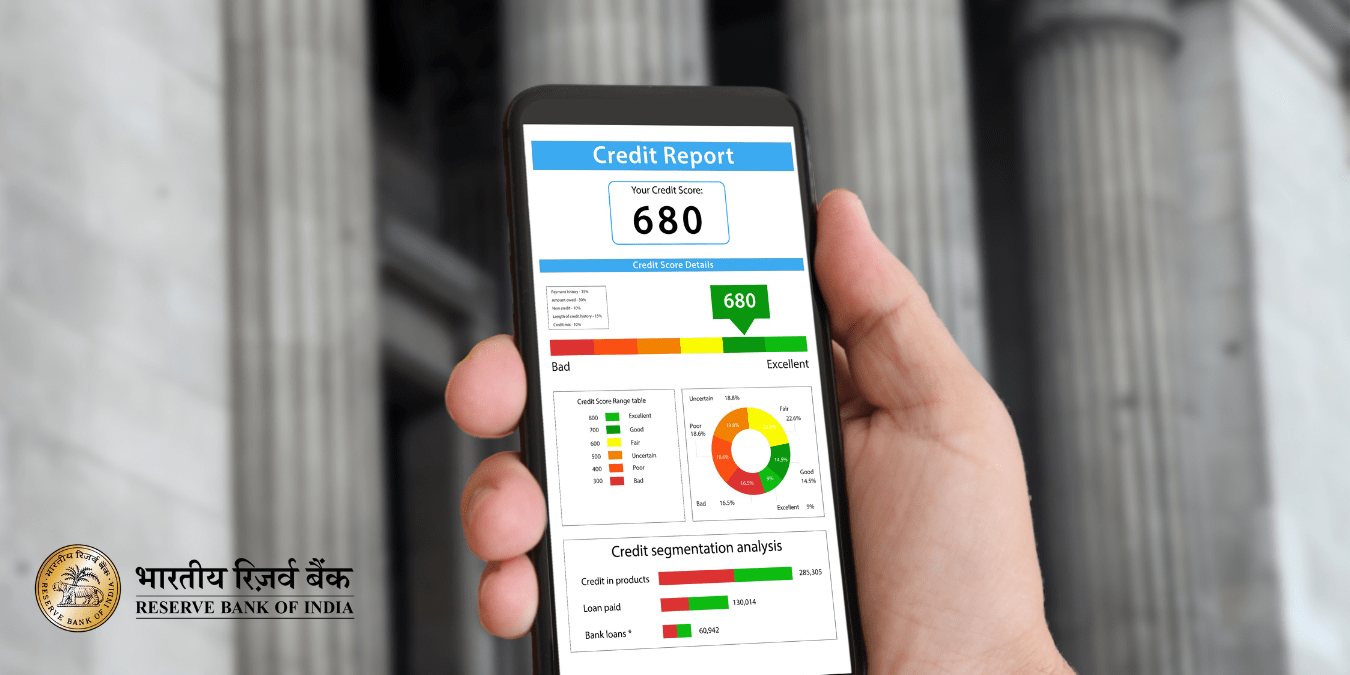
- The Weekly Edge: A single weekly update that bumps your score from 745 to 755 (because your card balance dropped) can literally save you 0.15%–0.50% on interest. On a ₹50 Lakh home loan, a 0.15% difference saves you roughly ₹1.8 Lakhs over 20 years.
3. Proof of “Good Behavior” is Instant
Lenders love stability. Under the weekly system, a lender can see that you have consistently kept your credit utilization low every week for the past month. This granular data proves you aren’t just “cleaning up” your act once a month before the reporting date (a common trick). This consistency can qualify you for “pre-approved” offers with preferential rates that are generated automatically by banking systems.
Summary
If you are a disciplined borrower who pays on time, weekly reporting is your best friend. It ensures your “good deeds” (payments) are broadcast to the world in near real-time, allowing you to negotiate better rates without waiting weeks for your score to catch up.
What Steps Can Consumers Take now to Benefit from Faster Score Updates
Don’t wait for April 2026—your preparation starts now. The shift to weekly reporting is not just a technical change; it requires a behavioral shift. Here is how you can adapt your financial habits today to stay ahead of the curve and maximize your benefits when the new system kicks in.
1. Master the “Before the Cut-off” Payment Habit
Currently, most people pay their credit card bills by the “Due Date.” Under weekly reporting, this might be too late to optimize your score.
- The Shift: Move your payment date to 3-4 days before the reporting cycles (7th, 14th, 21st, 28th).
- Why: If your bill is due on the 18th but you pay it on the 13th, the bank reports a “Zero Balance” or “Low Balance” on the 14th. If you wait until the 18th, the report on the 14th might show a high balance, temporarily depressing your score until the next cycle.
2. Keep Your Credit Utilization Ratio (CUR) Steady
In the monthly reporting era, you could spike your utilization to 80% and pay it off before the report date without consequence. Weekly reporting captures these spikes.
- Action: Aim to keep your utilization below 30% at all times, not just at the end of the month.
- Pro Tip: If you need to make a large purchase (e.g., ₹1 Lakh on a ₹2 Lakh limit), make an immediate pre-payment of ₹50,000 or more the same week to bring the net balance down before the weekly snapshot.
3. Audit Your Credit Report Now
Errors in your report (like a closed loan still showing as active) will be refreshed more frequently, but they still need to be fixed.
- Action: Check your credit report now. If you find an error, dispute it immediately.
- The Benefit: Dispute resolution is faster with weekly updates. If you fix an error today, the correction will reflect in the next weekly batch rather than next month, saving you precious time if you are applying for a loan.
4. Avoid “Panic Applications”
When you need money, applying to 5 banks in 3 days is a red flag.
- Action: Space out your loan applications. If Bank A rejects you, wait at least 10–15 days before applying to Bank B.
- Why: This ensures that any negative impact from the first inquiry has stabilized, or allows you time to fix the reason for rejection (e.g., paying down a card) before the next lender checks your file.
5. Request Higher Credit Limits
If you are a responsible user, ask your bank to increase your credit limit.
- Why: A higher limit automatically lowers your utilization ratio for the same spending. If you spend ₹30k on a ₹50k limit (60% utilization), it looks risky. On a ₹1L limit, that same ₹30k is just 30% utilization—a “safe” zone that weekly reporting will reward consistently.
Action Plan for April 2026
- Stop the “Rotation”: If you use one credit card to pay off another or rotate funds, the tighter reporting window increases the risk of getting caught in a debt trap visibility cycle.
- Time Your Applications: If you close a loan, wait 8-10 days before applying for a new one to ensure the closure is reflected in your score.
- Check Your Dates: Know the 7/14/21/28 cycle. If you are about to apply for a mortgage, ensure your credit card balances are low before these cut-off dates, not just before your billing date.
The Teaser: Is Real-Time Next?
The RBI has moved from monthly to fortnightly, and now to weekly reporting. The trend is clear. We are inching toward the ultimate frontier: Real-Time Credit Reporting. Imagine a world where swiping your card at a coffee shop updates your credit score before your cappuccino is ready. It sounds dystopian, but with the Account Aggregator framework and UPI rails already in place, 2026’s weekly update might just be the dress rehearsal for the instant future.